- Being fired triggers three recruiter fears: trust, judgment, and performance. Your explanation must address at least one of these directly.
- The goal is not to hide that you were fired. It is to show accountability without self-destruction and prove you have changed what needed changing.
- Your resume, application forms, interview answers, and references must tell the same story. Mismatches kill offers faster than the termination itself.
- Short answers work better than long explanations. Own it, show growth, pivot to fit.
What Termination Actually Signals to Recruiters
When a recruiter learns you were fired, they are not thinking about punishment. They are running a risk calculation. Three questions flash through their mind simultaneously: Can I trust this person? Does this person have good judgment? Can this person perform?
A sales manager named Aaron came to me after bombing four interviews in a row. He had been terminated for missing quota three quarters straight. His instinct was to explain the quota was unrealistic, his territory was bad, and his manager set him up to fail. All of that might have been true. But every time he said it, the interviewer heard: this person blames others and does not take responsibility.
We rebuilt his answer. Instead of defending himself, he acknowledged the miss, explained what he learned about pipeline discipline, and described the systems he now uses to stay ahead of targets. Same facts. Completely different signal. He got an offer within three weeks.
The challenge with explaining how to explain being fired is not hiding what happened. Recruiters often find out anyway through reference checks or background verification. The challenge is showing accountability without destroying your candidacy, and proving you have addressed whatever caused the termination.
Key Point: Termination triggers a trust and judgment evaluation. Your answer must demonstrate accountability and growth, not defense and blame.
Termination Risk Checklist: What Gets You Rejected
Before you craft your story, understand what kills candidacies. These patterns trigger immediate rejection or deep skepticism:
| Risk Signal | What Recruiter Thinks | How to Avoid |
|---|---|---|
| Blame tone | “This person does not take responsibility” | Own your part first, even if others contributed |
| Vague excuses | “They are hiding something worse” | Be specific about what happened and what changed |
| Overconfession | “This is more serious than I thought” | Give enough detail to be credible, then stop |
| Mismatch with references | “They are lying to me” | Align your story with what references will say |
| Defensive body language | “They are not over it” | Practice until you can discuss it calmly |
| No growth story | “This could happen again” | Show concrete changes you made since then |
| Attacking former employer | “They will do this to us too” | Stay factual, never personal |
| Inconsistent timeline | “What else are they hiding?” | Make sure resume, forms, and verbal answers match |
A marketing coordinator named Alicia kept getting to final rounds and losing offers. Her termination story was polished and accountable. The problem was her reference. Her former manager was saying something slightly different about the timeline. That mismatch, not the termination itself, was killing her chances.
💡 Pro Tip: Before you interview anywhere, call your former employer’s HR to ask exactly what they will say when contacted. Many companies have policies limiting disclosure to dates and title only. Know what they will actually say.
Decision Map: Resume, Forms, Interview, References
Termination creates decisions at every stage of the job search. Here is how to approach each one:
Resume: Label or Omit
You are not required to label a termination on your resume. The resume shows what you did, not how you left. However, there are situations where adding a brief note helps:
- The job was very short and the gap would look worse unexplained
- Background check will definitely surface it and you want to control the narrative
- You want to screen out employers who would reject you anyway
If you add a note, keep it neutral and brief:
Role ended due to performance expectations mismatch; since completed advanced analytics certification
Application Forms: The Checkbox Question
Many applications ask directly: “Have you ever been terminated?” or “Reason for leaving?” Answer honestly but briefly. Lying on applications can be grounds for rescinding offers or future termination if discovered.
Safe form answers:
- ✅ “Position ended – performance expectations”
- ✅ “Terminated – role fit mismatch”
- ✅ “Let go – will discuss in interview”
- ✅ “Employment ended – ready to discuss”
Interview: The Core Answer
When asked directly, use this structure:
[Brief fact] + [Accountability] + [What changed] + [Pivot to fit]
Keep it under 45 seconds. Longer answers sound like you are still processing it emotionally.
References: Alignment Is Everything
Your story and your references’ story must match. Before listing anyone as a reference, brief them on exactly what you are saying and confirm they will support that narrative. If your former manager will contradict you, do not use them. Find colleagues, clients, or other managers who can speak to your work.
Four Mini Scripts for Termination Situations
These scripts cover the most common scenarios. Adapt the structure to your situation, but keep the pattern: brief fact, accountability, growth, pivot.
Script 1: Short Answer (When They Ask Directly)
“I was let go from my last role. The expectations for the position and my approach did not align well. I have since taken time to understand where I work best, and this role matches that much more closely. I am excited about the opportunity to contribute here because…”
This script works for most situations. It acknowledges the termination without excessive detail, shows reflection, and pivots to fit.
Script 2: Accountability Line (Performance Issues)
“I was terminated for not meeting performance targets. Looking back, I did not ramp up my pipeline fast enough in the first quarter, and that gap compounded. Since then, I have built a weekly tracking system that keeps me ahead of targets. In my freelance work over the past six months, I have consistently exceeded goals using that approach.”
This script works when the termination was clearly performance-related. It owns the issue specifically, shows the fix, and provides proof the fix works.
Script 3: Policy Constraint Line (When Details Are Limited)
“I left that role under circumstances I am not able to discuss in detail due to a separation agreement. What I can say is that I learned important lessons about communication and alignment, and I have applied those lessons in my work since then. I am happy to provide references who can speak to my recent performance.”
This script works when NDAs or separation agreements limit what you can say. It acknowledges limits without being evasive, signals learning, and redirects to verifiable proof.
Script 4: Pivot Line (Moving Past the Topic)
“That experience taught me a lot about the kind of environment where I do my best work. What excites me about this role is that it aligns much better with my strengths in [specific skill]. Could I share an example of how I have applied that skill recently?”
This script works after you have given your core answer and want to move the conversation forward. It shows maturity and redirects to your value.
Common Termination Scenarios
Different termination reasons require different approaches. Here is how to handle the most common ones:
Performance Termination
This is the most common and, paradoxically, often the easiest to explain. Performance issues are understandable. People struggle in roles that are not right for them. The key is showing you understand what went wrong and have fixed it.
Conflict or Culture Mismatch
Interpersonal conflicts are tricky. Recruiters worry you will bring drama to their team. The key is showing you understand your part without making excuses.
Policy Violation
Minor policy violations can be explained. Major ones are harder. Be honest but brief, and focus heavily on what changed.
Short Tenure Termination
Being fired from a job you held for only a few months raises extra concerns. The framing needs to address both the termination and the short stay.
✅ Strong: “I was let go after four months. The role turned out to be quite different from what was described in interviews, and I was not able to adjust quickly enough. I have learned to ask much more detailed questions during hiring processes to ensure better alignment.”
The Eligible for Rehire Question
Some interviewers ask: “Would your former employer rehire you?” or “What would they say if we called?” This question tests your self-awareness and honesty.
If you are genuinely eligible for rehire:
“Yes, I left on professional terms despite the circumstances. They would confirm my dates and role, and my direct colleagues would speak positively about my work.”
If you are not eligible for rehire:
“Given the circumstances of my departure, I am likely not eligible for rehire there. However, I have strong references from colleagues and clients who worked with me directly and can speak to my capabilities.”
If you do not know:
“I am not certain of their policy. I know they confirm dates and titles. I would be happy to provide alternative references who can speak in detail about my work.”
⚠️ Warning: Never claim you are eligible for rehire if you are not. This is easily verifiable and lying about it can cost you an offer or get you fired later if discovered.
Consistency Checklist
Mismatches between your documents and verbal answers create doubt. Before applying anywhere, verify alignment across all touchpoints:
| Touchpoint | What to Check |
|---|---|
| Resume | Dates match exactly. Any note about departure aligns with interview story. |
| Dates match resume. No contradictory details in descriptions. | |
| Application forms | “Reason for leaving” field matches what you will say verbally. |
| Phone screen | 20-second version ready. Same facts as written materials. |
| Interview | 45-second version ready. Consistent with phone screen. |
| References | Briefed on your story. Will not contradict key facts. |
| Former employer HR | Know exactly what they will disclose if contacted. |
| Background check | Employment dates will verify correctly. |
Common Mistakes When Explaining Termination
After coaching dozens of candidates through termination explanations, I see the same mistakes repeatedly. Avoid these:
Overexplaining
The longer your explanation, the more it sounds like you are still processing it emotionally. Keep your answer under 45 seconds. If they want more detail, they will ask.
Rehearsed Defensiveness
Some candidates practice their answer so much it sounds robotic and defensive. Practice until you can discuss it calmly and naturally, like you would explain any past challenge you have overcome.
Forgetting to Pivot
Many candidates answer the termination question thoroughly but forget to redirect to their qualifications. Always end with a pivot toward the role and what you offer.
Inconsistent Energy
If you discuss your termination with tension in your voice or body, then shift to enthusiasm for the new role, the contrast is jarring. Maintain steady, professional energy throughout.
Choose Your Next Step
This hub covered the termination framework. The clusters below go deep on specific situations. Choose based on your immediate challenge: if you need help with the resume decision, start with the label guide. If interviews are your weak point, the core answer cluster walks you through the 45-second structure in detail.
If you know exactly what you need, jump directly to that guide:
| Article | Description |
|---|---|
| Terminated vs Fired vs Let Go: What Recruiters Assume From Each Word | Decision rules for choosing the least risky truthful label, with 10 options and 8 to avoid |
| Should You Put Being Fired on Your Resume: When to Label It and When Not To | 7-question checklist for the resume disclosure decision, with 3 positioning options |
| Termination on a Resume: 8 Short Lines That Sound Accountable, Not Defensive | Resume line formula with 8 examples for different termination scenarios |
| Why Were You Fired: A 45 Second Interview Answer That Rebuilds Trust | Core interview structure with 6 scenario variations and 8 trust rebuilding lines |
| What Did You Do Wrong: Answer Without Self-Sabotage After a Termination | 5 accountability patterns with safe phrasing that shows ownership without spiraling |
| Fired for Performance: A Calm Answer That Shows You Fixed the Root Cause | Script focused on concrete changes with 10 proof cues for performance terminations |
| Fired for Attendance: Explain It Without Sounding Unreliable | Script for reliability concerns with 8 stability signals and phrases to avoid |
| Eligible for Rehire: How to Answer the Question Without Panicking | 4 answer options based on your actual status with bridge lines to shift focus |
| Reason for Leaving When You Were Fired: Short Answers for Applications | 12 form answers by scenario with consistency rules |
| Fired After a Short Tenure: Explain It Without Looking Dangerous | Framework for the dual risk of short tenure plus termination |
| Should You Tell a Recruiter You Were Fired: Timing Rules That Reduce Damage | Disclosure timing strategy with 3 scripts and 6 pivots |
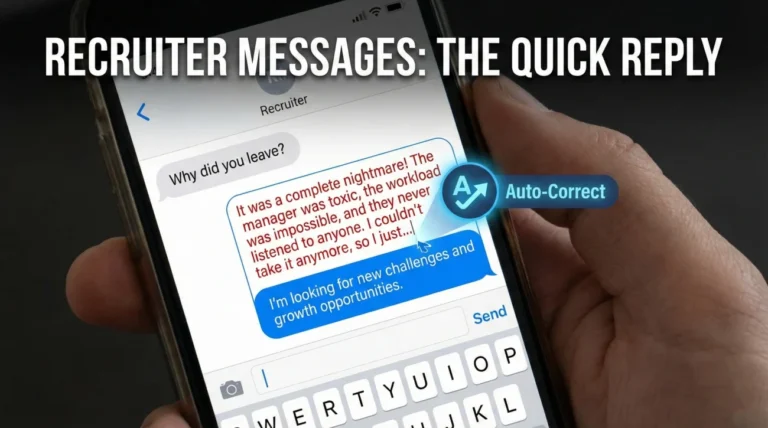
| Recruiter Asked About the Termination: 3 Replies That Keep Momentum | Async message templates that stay brief and redirect to next steps |
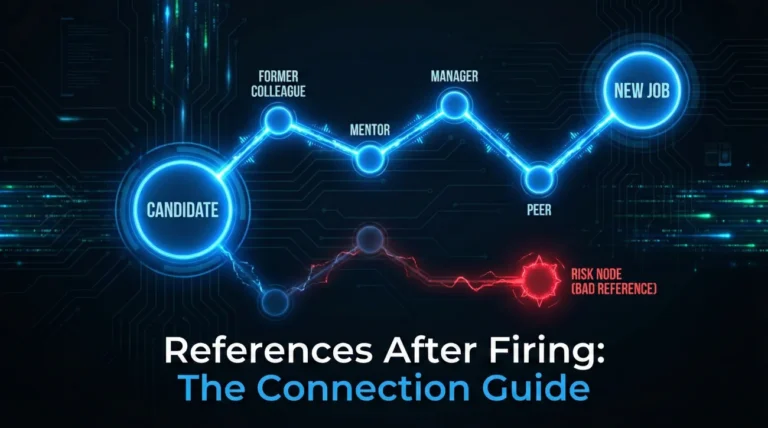
| References After Being Fired: How to Prevent Mixed Signals | Reference selection rules and briefing script for termination situations |
| How to Explain Being Fired in a Cover Letter: One Tight Paragraph Only | A single-paragraph cover letter framework that stays factual, shows accountability, and pivots to fit, without overexplaining |
For other crisis exit situations, see the hubs on layoffs, job hopping, and toxic workplace exits in the main Crisis Management section.
Moving Forward After Termination
Being fired is not a career death sentence. People get terminated every day for reasons ranging from genuine performance issues to bad fit to office politics to circumstances beyond their control. Many of them go on to successful careers elsewhere.
The key to understanding how to explain being fired is recognizing what recruiters actually fear: that you have not learned from the experience and might repeat whatever caused it. When you demonstrate accountability, show genuine growth, and prove you have addressed the root cause, you transform a red flag into evidence of resilience and self-awareness.
Own what happened. Show what changed. Pivot to what you offer. That is the formula that works.
❓ FAQ
🎯 Should I bring up the termination if they do not ask?
Generally, no. Let them ask. If they do not bring it up, focus on your qualifications and fit. However, if you know a background check will surface it, some candidates prefer to address it proactively to control the narrative. This is a judgment call based on your specific situation.
📝 What if the termination was unfair?
It might have been. But arguing that in an interview makes you look like someone who does not take responsibility. Focus on what you learned and how you have grown. Save the unfairness conversation for your friends, not your interviewers.
💼 Can I say I was laid off instead of fired?
Only if it is true. Layoffs are structural and not your fault. Terminations are individual and often performance-related. If your former employer will confirm you were terminated, claiming you were laid off will backfire badly when they check references.
🔍 How long does a termination follow you?
It depends on your subsequent track record. If you have held successful roles since then, the termination becomes a smaller part of your story. Most recruiters care most about recent history. A termination from five years ago followed by strong performance matters much less than one from six months ago.
⚠️ What if I signed a non-disclosure agreement about my termination?
Honor it. You can acknowledge that you left under circumstances you cannot discuss in detail, mention what you learned generally, and redirect to references who can speak to your work. Most interviewers will respect legal constraints as long as you are not evasive about everything.
⚠️ Disclaimer: ResumeSolving provides resume, cover letter, job search communication, and career transition guidance for informational purposes only. Hiring practices vary by employer, role, location, industry, and individual circumstances. We do not guarantee interviews, job offers, ATS results, or other outcomes. Verify employer requirements directly and follow applicable laws and workplace policies. For sensitive situations, use only information you are comfortable disclosing and keep all statements accurate.