- If your summary starts with “Founder” and stops there, many recruiters will quietly worry about fit, stability, and working style.
- Use one of 3 founder-specific patterns: Target role first, add one scope cue, then proof that matches.
- Steal the structure of the 10 examples below and avoid the red-flag phrases that make you sound unavailable or inflated.
Why Founder Summaries Get Side-Eyed (Even When The Experience Is Real)
I have reviewed a lot of founder resumes where the experience was genuinely impressive, but the summary accidentally created doubt. Not because the person lacked skill. Because the first 4 lines made the reader imagine a hard-to-manage teammate.
Most hiring teams do not say it out loud, but they are scanning for a few silent questions: Will you stay. Will you take direction. Will you operate inside constraints. Will you ship work that looks like this role.
If your goal is to get interviews for employee roles, your resume summary for founders has one job: Make your founder background feel like a stable, transferable operating advantage, not an ongoing side mission.
“This is interesting. I’m just not sure you’ll be happy here once you realize it’s not your company.”
That line is the subtext behind a lot of polite rejections. The fix is not hiding that you were a founder. The fix is writing a summary that reads like an employee who happens to have founder-level context.
The 4 Signals Recruiters Look For In Founder Summaries
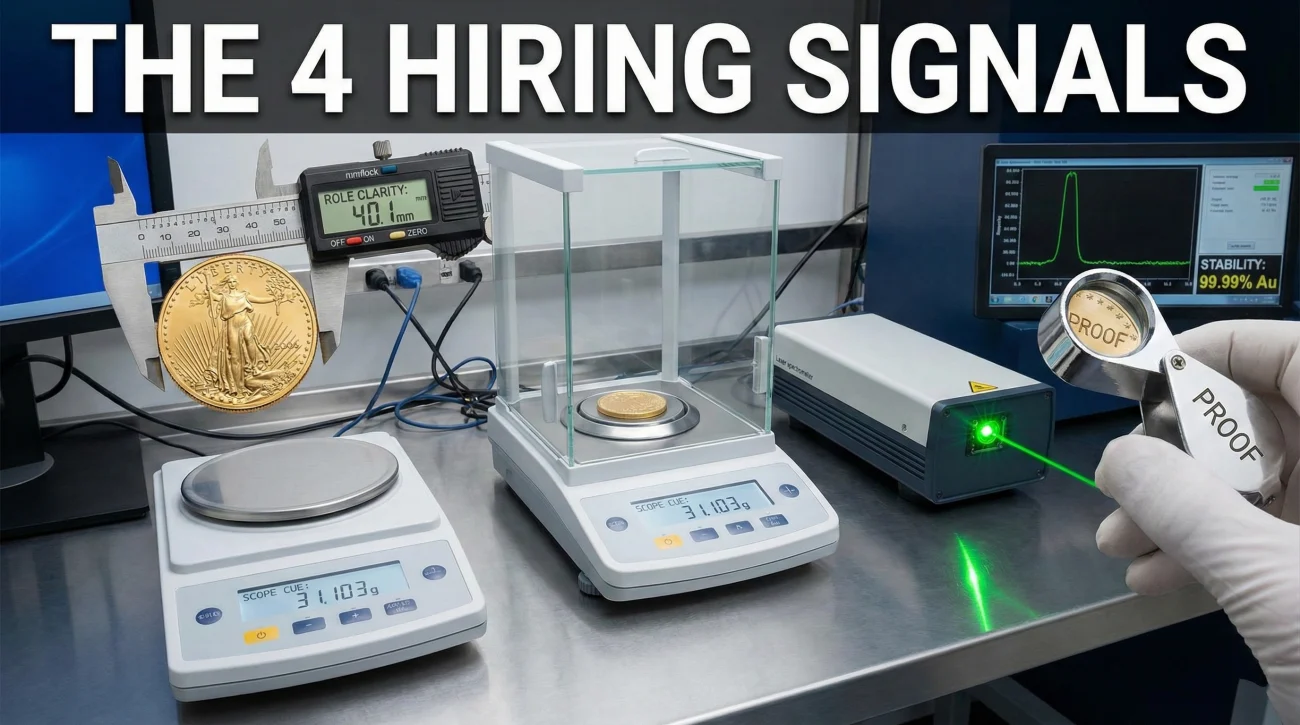
Signal 1: Role clarity in the first seven words
When a summary begins with “Founder” as the main identity, the reader does not know what job you want. They only know what job you had. So they fill in the blanks with stereotypes: Visionary. Generalist. Maybe chaotic. Maybe bored easily.
Role clarity means the first noun is the target role, not the origin story. Founder can still appear, but it should act like context, not the headline of your identity.
Signal 2: A scope cue that feels employee-shaped
Founders naturally think in huge scope: Built product, hired team, raised money, drove growth, managed everything. The problem is that “everything” is not a job description. It can read like you are either inflating, or you do not understand what matters in a structured role.
A scope cue is one detail that anchors your experience to something concrete: Stage, team size, revenue range, users, or operational complexity. One cue is enough. Two is risky unless they are short and clean.
Signal 3: Proof that matches how employees prove value
Employees prove impact through outcomes inside constraints: revenue influenced, systems built, retention improved, cycle time reduced, pipelines created. Founders often describe vision or ownership, which sounds inspiring but not measurable.
💡 Pro Tip: Pick proof that maps to the target function. For Product roles, ship and adoption. For Ops, reliability and scale. For Growth, CAC, conversion, pipeline.
Signal 4: A “stability line” that removes the unspoken fear
This is the founder-specific piece most articles skip. The fear is not that you failed. The fear is that you will treat the job like a temporary stop, or you will resist collaboration because you are used to being the final decision-maker.
A stability line is a calm, non-defensive phrase that signals you can work inside a team. It is not an apology. It is not oversharing. It is a simple orientation toward the role.
| Red-flag cue in a founder summary | What the reader may assume | Cleaner swap that keeps you honest |
|---|---|---|
| “Serial entrepreneur seeking my next challenge” | You will leave quickly, you are restless | “Operator focused on shipping, scaling, and cross-functional execution” |
| “Wore many hats and did everything” | Vague, inflated, unfocused | “Owned product delivery, GTM experimentation, and early-stage ops for a 6-person team” |
| “Passionate visionary and thought leader” | Soft, hard to verify | “Built a product from 0 to 1, then improved activation and retention with weekly experiments” |
| “Currently building my startup” | Unavailable, distracted | “Ex-founder transitioning into a full-time Product role” |
| “Looking for a stable company after startup stress” | Burnout risk, emotional framing | “Seeking a team environment with clear priorities and strong delivery rhythms” |
3 Founder Summary Patterns That Sound Hireable Without Shrinking Yourself
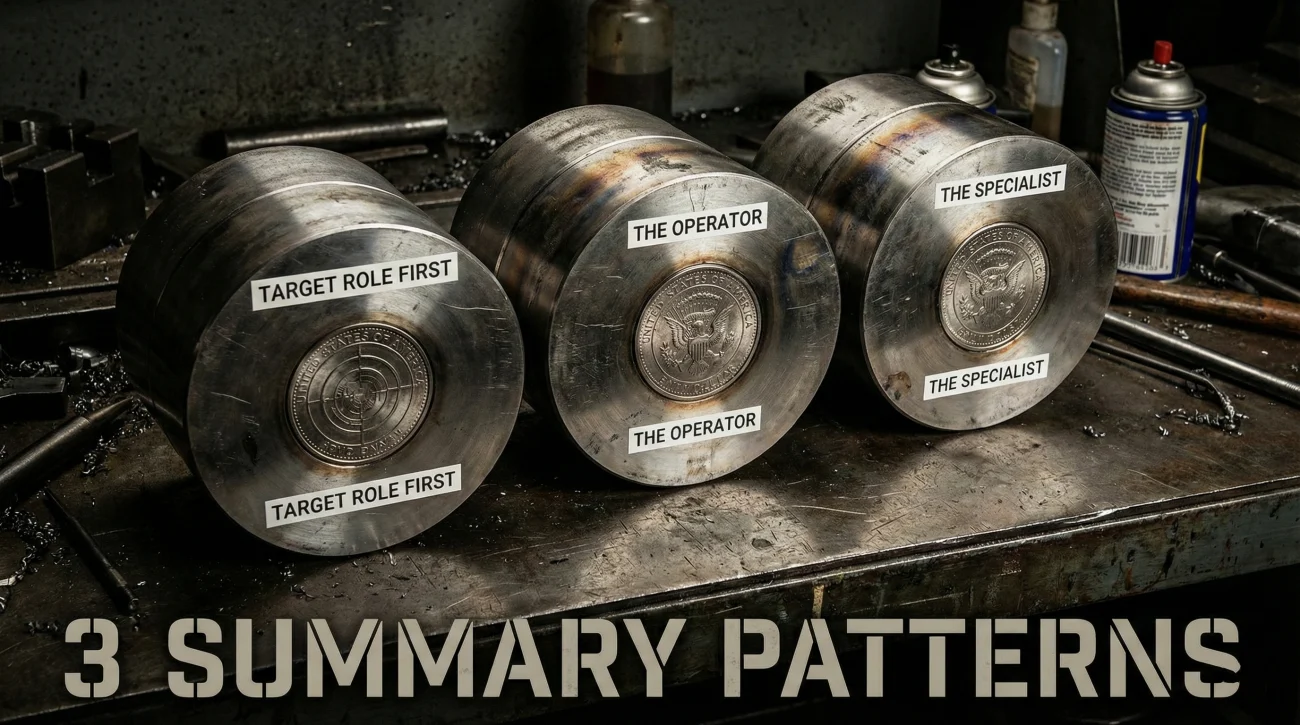
Pattern 1: Target Role First, Founder Second
This is the safest pattern when you are moving into a standard employee role (Product Manager, Growth Lead, Operations Manager, Engineering Manager). The goal is to remove confusion in the first line.
[Target Role] + [Functional focus] + [Founder context] + [Proof]
One founder I worked with, Nella, had eight years running a small SaaS company. Her first summary line was “Founder and CEO with a proven track record.” It sounded fine, but it did not tell the reader what job she wanted. We rewrote it to lead with Product, because that was the role she was applying for. Her response rate changed fast because the reader stopped guessing.
⚠️ Warning: This pattern only works if you actually support the target role with proof. Do not lead with “Product Manager” if your bullets never show product work.
Where this pattern shines is when your founder identity is the context, not the main pitch. It tells the hiring team: “I am not asking you to imagine where I fit. I am showing you.”
Use this pattern if you want a clean founder resume summary that reads like a normal candidate, just sharper.
Pattern 2: The Operator Pattern (Scale, Systems, Rhythm)
Some founders are not trying to sell “vision.” They are trying to sell execution. If you built systems, created operating cadence, managed cross-functional delivery, or turned chaos into repeatable process, this pattern makes you feel immediately employee-compatible.
[Operator identity] + [Stage and complexity cue] + [Systems built] + [Outcome metric]
Cyrus was a co-founder at a venture-backed startup that shut down. On paper, he did a bit of everything. In interviews, he kept getting stuck defending the company outcome. In his summary, we stopped talking about the shutdown and started talking about what he repeatedly did well: building an operating system for the business.
This pattern is especially strong for Ops, Program Management, BizOps, and even Customer Success leadership, because it signals comfort with constraints.
Key Point: The operator pattern makes you sound like someone who can join an org and improve how work moves, not someone who needs to own the org to be effective.
Pattern 3: The Specialist Pattern (One Lane, Deep Proof)
If you were a founder but your real strength is a function (Growth, Engineering, Sales, Data), use the specialist pattern. It removes the “generalist founder” stereotype by picking a lane and backing it with proof.
[Specialty] + [Business context] + [Signature outcomes] + [Collaboration cue]
I remember a founder named Paige who built an e-commerce brand. Her summary said she “led brand strategy, partnerships, and growth.” True, but broad. She was applying for Performance Marketing roles, so we made the summary read like a marketer who happened to run a business. We kept one founder cue, then went all in on CAC, ROAS, and testing rhythm. Recruiters finally knew what to do with her.
Use this pattern if you want to compete with specialists from traditional companies. Your edge is that you learned fast, owned outcomes, and understand the full funnel. But you still need to speak the language of the function.
And yes, if someone is searching for an entrepreneur resume summary, this is often what they are really looking for: A way to sound like a functionally-hireable candidate, not a biography.
Founder Title Choices: What Is Safe, What Is Risky, What Is Just Confusing
There is a reason so many founders debate whether “Founder” helps or hurts. Some hiring teams hear “Founder” and assume leadership. Others assume ego, instability, or mismatch. The internet advice usually swings to extremes: Hide it, or lean into it.
The practical answer is more boring: Use the title that is accurate and most legible for the target role, then clarify in the context line.
A clean structure that works in most cases
Here is a structure I have seen work across conservative companies and fast-moving teams:
Early-stage SaaS: Built MVP, ran weekly discovery, shipped onboarding improvements, partnered with 2 engineers and 1 designer
This keeps you honest, keeps you legible, and avoids making the entire resume about the founder label.
Do not “upgrade” your title without matching evidence
❌ Note: If you write “Director” or “VP” because it sounds more corporate, but your scope and bullets do not match, you will trigger skepticism fast.
Instead, translate your work into corporate-shaped outcomes. You can still keep Founder, but your proof needs to look like the job you want.
When a business-owner framing is better
If you ran a non-startup business (agency, local service, ecommerce brand) and the founder label feels awkward, a business owner framing can be cleaner. A business owner professional summary can still be sharp, but it should avoid sounding like a lifestyle narrative.
Make it operational: systems, revenue, retention, process, team leadership, and measurable outcomes.
10 Resume Summary Examples For Founders (By Target Role)
These are intentionally short. Most founder summaries fail because they read like a pitch deck. A summary is not a pitch deck. It is a routing label that tells the reader what to pay attention to.
Product roles
Shipped weekly experiments, improved activation through clearer first-use flows, and partnered closely with engineering on delivery cadence.
Operations and Program roles
Set weekly operating rhythms, implemented KPI reporting, and improved handoffs across product, sales, and support in a 7-person team.
Growth marketing roles
Owned acquisition experiments across paid and lifecycle, improved conversion with tighter targeting, and built reporting that tied spend to pipeline outcomes.
Sales and partnerships roles
Built outbound and partner motion, tightened messaging based on discovery calls, and improved close rates by refining qualification and follow-up cadence.
Engineering roles
Built core product functionality end-to-end, improved performance through targeted refactors, and collaborated with design to simplify workflows.
Customer Success roles
Built onboarding playbooks, reduced churn by tightening early adoption, and partnered with product to prioritize fixes that removed repeat pain points.
Data and analytics roles
Defined KPIs, created dashboards for weekly reviews, and translated messy inputs into action-oriented insights for product and growth.
Finance and business roles
Built budgets, forecasting, and scenario models, improved cash discipline, and supported leadership decisions with clear tradeoff analysis.
People and HR-adjacent roles
Set hiring process, structured onboarding, and introduced lightweight performance check-ins that improved clarity and team execution.
Strategy and BizOps roles
Ran market experiments, clarified positioning with real customer feedback, and built operating metrics that aligned teams on execution.
💡 Pro Tip: Notice the pattern across all 10. The target role comes first, founder context is brief, proof is employee-shaped, and the tone is calm.
Founder Summary Mistakes That Quietly Kill Credibility

Mistake 1: Sounding like you are still running the company
Even if you are not, phrases like “currently building” or “actively scaling” create an availability question. You want the summary to read like the next role is the main focus.
Mistake 2: Listing responsibilities instead of proof
“Managed marketing, sales, product, and operations” is not proof. It is a list of departments. The reader cannot validate it, so they discount it.
Mistake 3: Overselling the narrative
Words like visionary, disruptive, thought leader can feel like PR. If you earned those labels, your outcomes will show it anyway. Keep the summary grounded.
Mistake 4: Being defensive about leaving
⚠️ Warning: Your summary is not the place to explain why the startup ended. If you need a line, keep it neutral and short. Save nuance for interviews.
A quick swap list you can use today
- Swap “wore many hats” for “owned X and Y, partnered with Z.”
- Swap “serial entrepreneur” for “operator” or “builder” plus a specific function.
- Swap “passionate” for a measurable outcome or a repeatable practice.
- Swap “seeking stability” for “seeking a team environment with clear priorities and delivery rhythm.”
Final
If you were a founder, you already know how fast people make decisions with incomplete information. Recruiters do the same. The good news is you can shape what they infer, without pretending you were someone else.
Your best move is simple: Lead with the role you want, add one clean scope cue, then prove value the way employees prove value. Do that, and you stop sounding like a “special case.” You start sounding like the obvious hire who just happens to have deeper context than most.
When you rewrite your resume summary for founders, aim for calm clarity, not a pitch. That tone alone removes half the doubt.
❓ FAQ
🎯 Should I remove the word “Founder” from my summary?
Not automatically. If Founder is accurate, you can keep it, but it should not be the first identity if you are applying for employee roles. Lead with the target role, then add founder as context.
🧩 How long should a founder resume summary be?
Usually 3 to 5 lines. Long summaries often drift into biography. Keep it tight: Role, focus, scope cue, proof, and one stability signal if needed.
🛠️ What if my founder work was “a bit of everything”?
Pick the lane that matches the job you want and write the summary as if that lane was always the core. Your resume bullets can show breadth, but the summary should route the reader.
📌 Is it okay to use a corporate-sounding title instead of Founder?
It can be okay if it is honest and supported by evidence. A safe approach is “Product Lead (Founder)” or “Operations Lead (Founder)” so you stay accurate while staying legible.
🔍 How do I handle a startup that shut down without sounding negative?
Do not put that story in the summary. Keep the summary focused on role fit and proof. If you need a line later in the resume, keep it neutral and short.
✅ What is the fastest way to tell if my summary works?
Show it to someone who hires for your target role and ask one question: “What job do you think I am applying for?” If they hesitate, your first line needs to change.
⚠️ Disclaimer: ResumeSolving provides resume, cover letter, job search communication, and career transition guidance for informational purposes only. Hiring practices vary by employer, role, location, industry, and individual circumstances. We do not guarantee interviews, job offers, ATS results, or other outcomes. Verify employer requirements directly and follow applicable laws and workplace policies. For sensitive situations, use only information you are comfortable disclosing and keep all statements accurate.