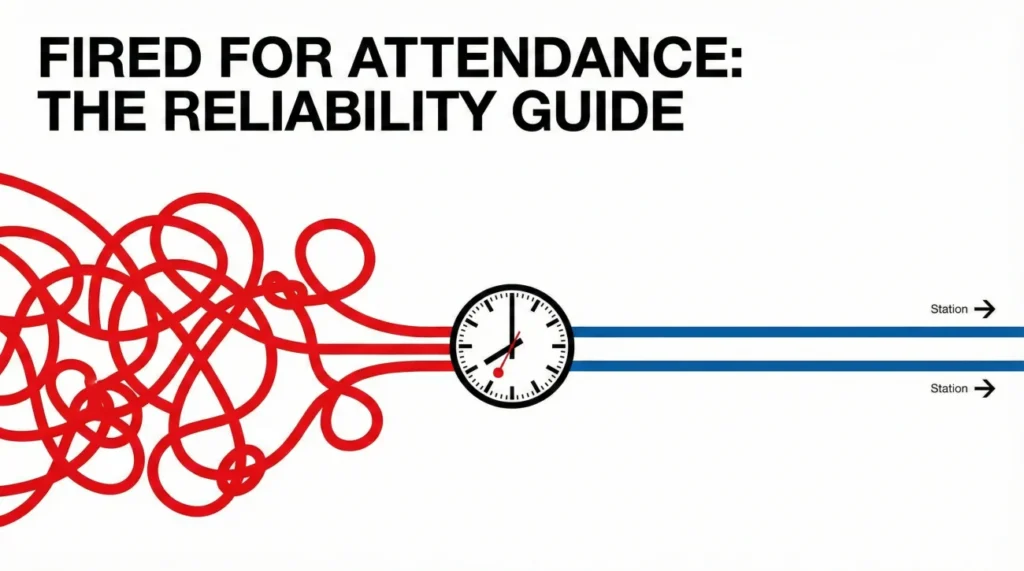
- If you were fired for attendance, your goal is not persuasion. Your goal is predictability: One clean sentence, one fix, one proof marker.
- Never turn attendance into a life story. Give a closed chapter, then show a stability system you now run.
- Use two to three “stability signals” that match the job type (shift work, on-site, hybrid). Do not over explain.
Why “Attendance” Is A Special Kind of Red Flag
I have seen candidates recover from messy exits, even public ones, because the story still lets a recruiter believe the future will be steady. Attendance is different. When a manager hears it, their brain goes straight to: “Will this happen again on my team?”
That is why a fired for attendance interview answer cannot be emotional, defensive, or creative. It has to sound like something that is already solved. Not improving, not hoping, solved.
I learned this the hard way through someone I coached years ago, “Mina”, a strong operations coordinator who was great at the work but kept losing trust on the same question. Her first version was heartfelt and honest, but it sounded like the problem was still alive. Once we rebuilt it into a “closed chapter + stability system” story, she stopped getting stuck on it.
Key Point: Recruiters do not need every reason. They need confidence that your reliability is now boring.
What Recruiters Hear When You Say “Attendance”
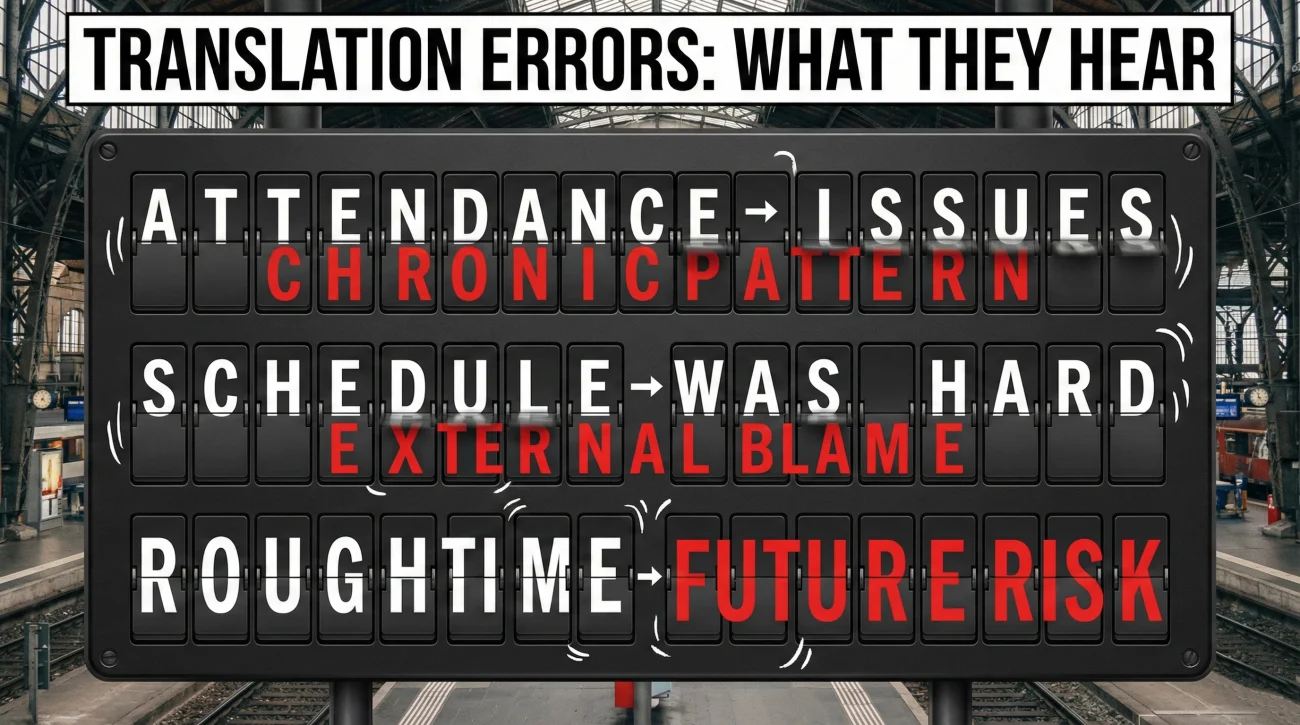
Most advice says “be honest” and “take responsibility”. True, but it skips the part that changes decisions: The mental movie your words create.
Common “Translation Errors” In Their Head
- “Attendance issues” often lands as: Chronic pattern, unpredictable mornings.
- “Schedule was hard” often lands as: External blame, still unresolved.
- “Rough time” often lands as: Ongoing instability, future risk.
- “The job was strict” often lands as: Resentment, repeat conflict.
The mistake I hear most often is not dishonesty. It is leaving the listener with the impression that your life still runs the same way it did when you got fired.
Pick The Right “Truth Level” Without Oversharing
There are three ways to be truthful. Only one of them is useful here.
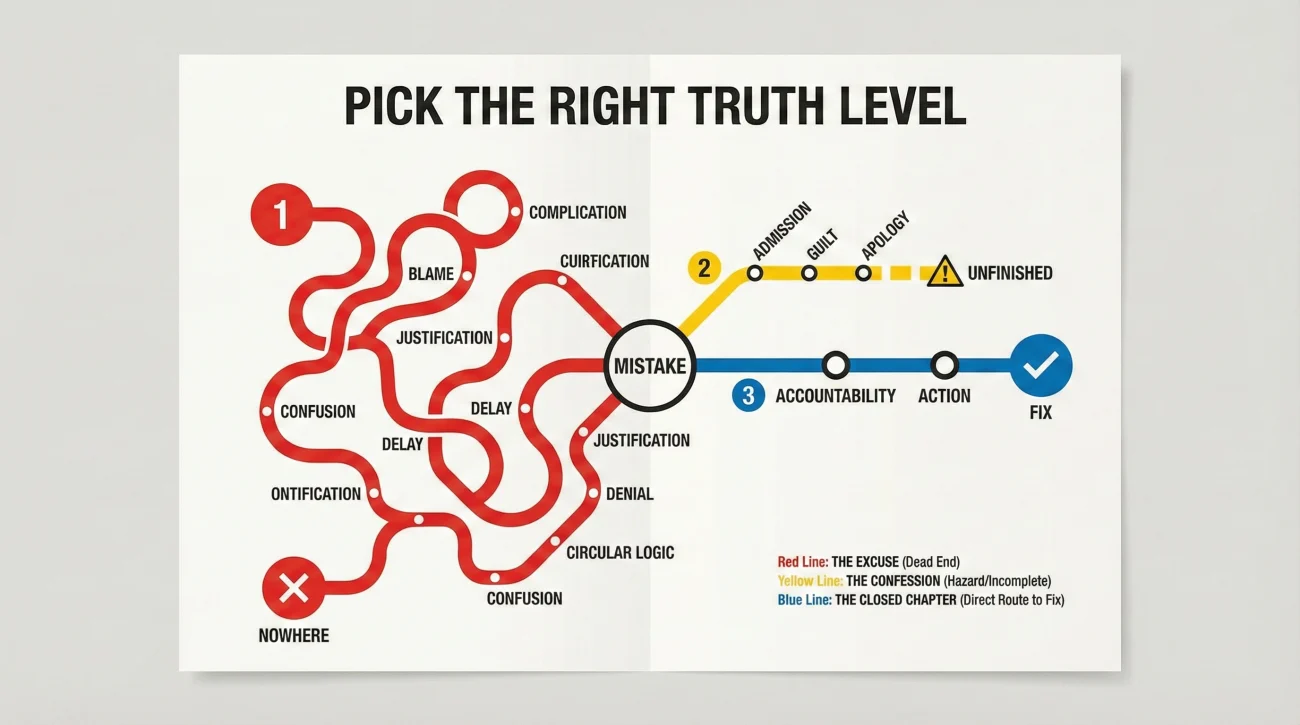
Truth That Sounds Like An Excuse
This version includes detail, context, and emotion. It may be accurate, but it invites debate. The interviewer starts testing your story instead of picturing you in the role.
❌ Note: If your answer contains multiple “because” clauses, you are probably feeding the doubt.
Truth That Sounds Like A Confession
This version is blunt but unframed: “I was late a lot.” It is honest, yet it leaves a big unanswered question: “Why should I trust you now?”
Truth That Sounds Like A Closed Chapter
This version is concise and unemotional. It names the category, accepts responsibility, then moves immediately to the stability system you now use.
💡 Pro Tip: You do not need the full reason. You need a credible fix and a proof marker.
A colleague of mine in HR once put it in a sentence I still use when coaching: “The explanation should be short enough that it does not become the interview.” That is the standard.
The 45 Second Script That Usually Works
Can you share why you left your last role?
Here is the core script. You will tailor one line depending on your situation, but the structure stays the same.
“I was let go because I did not meet the attendance expectations, and I take responsibility for that. The issue was tied to a situation that is now resolved, and I put a reliability system in place so it does not repeat. Since then, I have been consistent, and I am looking for a role where I can bring my strengths while meeting a clear schedule.”
Why this works: It is honest, it is calm, it signals the chapter is closed, and it gives the interviewer a reason to move on.
Four “Swap Lines” For Different Attendance Scenarios
| Your situation | Swap line you can use | What it signals |
|---|---|---|
| Transportation or commute instability | “It was tied to transportation reliability, and that is now fixed with a stable commute plan and backups.” | Constraint removed |
| Childcare or family schedule changes | “It was tied to a temporary family scheduling issue, and my coverage plan is stable now.” | Predictability without details |
| Time management and routine | “It came down to my routine and planning, and I changed how I manage mornings and buffers.” | Ownership, not excuses |
| Personal health matter, kept private | “It was tied to a personal health matter that is resolved, and I am fully able to meet attendance expectations now.” | Privacy plus confidence |
⚠️ Warning: If you mention health, keep it at one sentence and do not add a timeline that invites follow up.
8 Stability Signals You Can Add Without Making It Weird
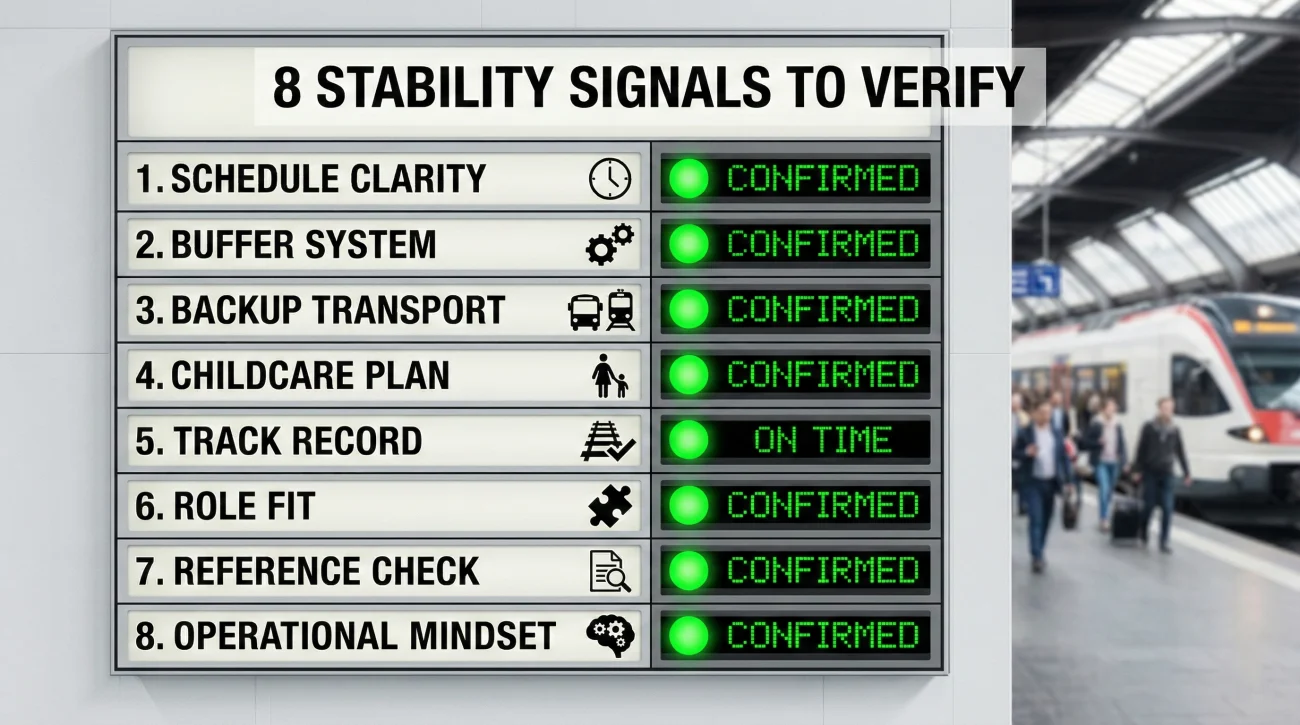
The biggest gap in most advice is this: They tell you to “say you fixed it” but they do not tell you what a recruiter counts as proof. Proof does not have to be dramatic. It has to be believable and job-relevant.
Pick two to three signals that fit the role. If you list all eight, it starts sounding scripted.
- Schedule clarity: “I am targeting roles with a schedule I can reliably meet long term.”
- Buffer system: “I now plan with a built-in time buffer so delays do not cascade.”
- Backup transportation: “I have a primary commute plan plus a backup option.”
- Childcare coverage plan: “I have dependable coverage and a backup if something changes.”
- Attendance track record since: “In my most recent work, I consistently met schedule expectations.”
- Role fit shift: “I am choosing environments where expectations are clear and consistent.”
- Manager reference framing: “My references can speak to my reliability and performance.”
- Operational mindset: “I treat attendance like a baseline commitment, not a preference.”
When candidates get stuck here, it is usually because they are trying to “sound forgiven” instead of “sound stable”. That difference sits at the center of most crisis management situations on a resume: The listener does not need your pain. They need your plan.
One candidate I remember clearly, “Manuel”, had been fired from a warehouse role after repeated tardiness during a chaotic stretch at home. The first time we practiced, he kept trying to justify the past. What finally helped was choosing three signals that were boring and provable: A new commute plan, a stable schedule target, and a recent reference who could speak to consistency. He did not “win the argument”. He made it safe to hire him.
6 Lines That Make You Sound Unreliable
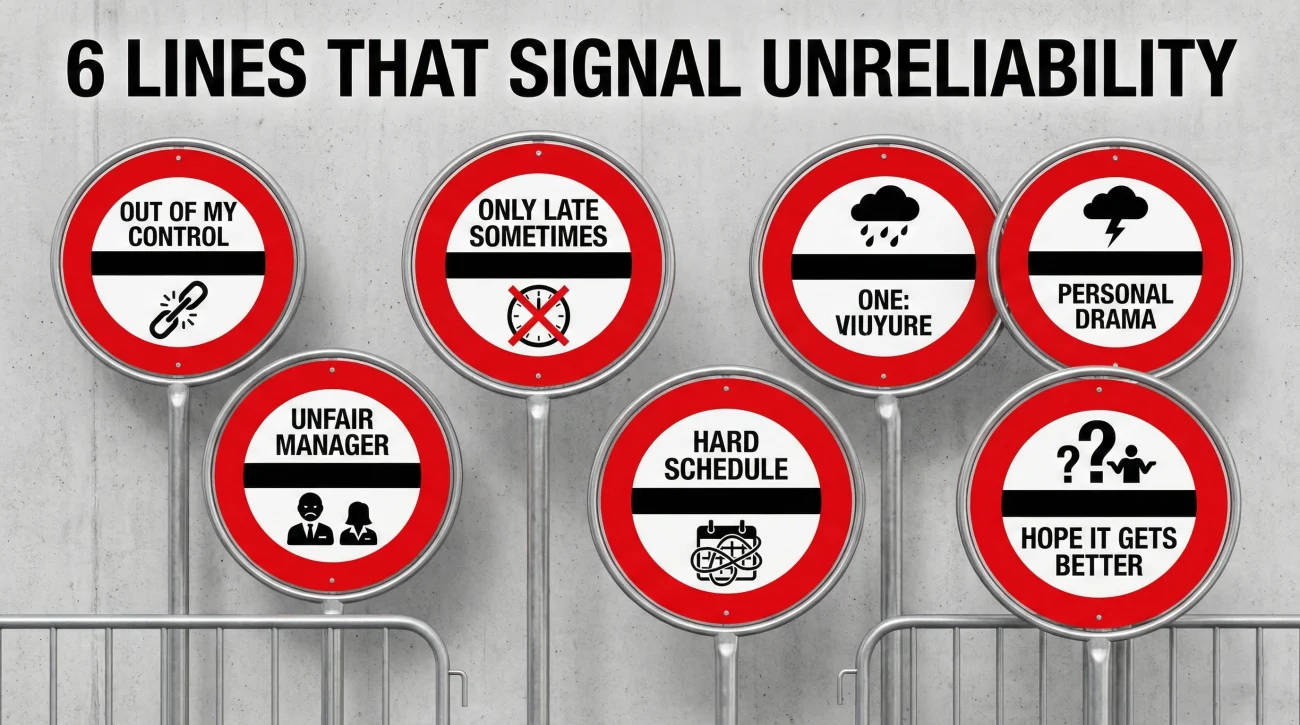
These phrases fail because they create uncertainty. Some sound like excuses. Some sound like you are still negotiating the idea of showing up.
- 🧨 “It was out of my control.”
- 🧨 “My manager was unfair about it.”
- 🧨 “I was only late sometimes.”
- 🧨 “It won’t happen again, I promise.”
- 🧨 “I had a lot going on.”
- 🧨 “I’m just not a morning person.”
What to do instead: Replace each one with a stability statement that does not invite debate.
| Instead of | Say |
|---|---|
| “It was out of my control.” | “It was tied to a temporary situation that is now resolved.” |
| “My manager was unfair.” | “The attendance expectation was clear, and I did not meet it at that time.” |
| “I promise it won’t happen.” | “I changed my routine and built a buffer system so it does not repeat.” |
| “I had a lot going on.” | “I handled a personal situation, and it is no longer impacting my reliability.” |
💡 Pro Tip: Your goal is not to sound perfect. Your goal is to sound stable.
How To Practice So You Do Not Ramble In The Moment
Most people fail this question because they practice the facts, not the pacing. You need a stop point built into your answer.
Use This Simple Formula
[Honest Label] + [Ownership] + [Resolved Constraint] + [Stability System] + [Forward Fit]
Two Follow Up Questions You Should Prepare For
What changed since then?
“The situation that caused the inconsistency is resolved, and I now run a schedule and buffer system that keeps my mornings predictable.”
How can we be sure it will not happen here?
“I am choosing roles with a schedule I can meet consistently, and I can point to recent work where I met expectations reliably. I treat attendance as a baseline commitment.”
I have also seen candidates help themselves by asking a calm, practical question at the end. Not as a negotiation, but as confirmation of fit.
“Can you share what ‘reliable attendance’ looks like on this team, especially during peak periods?”
If the interviewer answers clearly and you can genuinely meet it, your confidence reads as earned, not defensive.
Final: Make Reliability Sound Boring Again
If you were fired for attendance, you do not need a dramatic explanation. You need a calm one that sounds finished. Name it plainly, own it without self-punishment, and show the stability system you run now. Then stop.
A strong fired for attendance interview answer does one quiet thing really well: It makes the interviewer feel like your reliability is predictable, not a topic they need to manage.
❓ FAQ
🧭 Should I say “fired” or “let go” when it was attendance related?
If you were terminated for policy reasons, do not play word games. You can say: “I was let go because I did not meet attendance expectations,” then move straight to what changed.
🧩 What if the interviewer asks for the exact reason I was late?
Give one sentence, then stop. You can say it was transportation, a temporary family scheduling issue, or a private personal matter that is resolved. Do not add details that invite debate.
🔎 Will a background check show I was fired for attendance?
Many employers only verify dates and title, but you cannot rely on that. References, eligibility for rehire questions, and inconsistent stories are where candidates usually get hurt. Keep your story honest and consistent.
🧱 How do I answer if my attendance issue was tied to a health situation?
Keep it private and short. One clean line is enough: “It was tied to a personal health matter that is resolved, and I am fully able to meet attendance expectations now.”
✅ What is the fastest way to rebuild trust after an attendance termination?
Be calm, be brief, and be specific about the stability system you now use. Then reinforce fit: Target roles where the schedule expectation matches your reality long term.
⚠️ Disclaimer: ResumeSolving provides resume, cover letter, job search communication, and career transition guidance for informational purposes only. Hiring practices vary by employer, role, location, industry, and individual circumstances. We do not guarantee interviews, job offers, ATS results, or other outcomes. Verify employer requirements directly and follow applicable laws and workplace policies. For sensitive situations, use only information you are comfortable disclosing and keep all statements accurate.