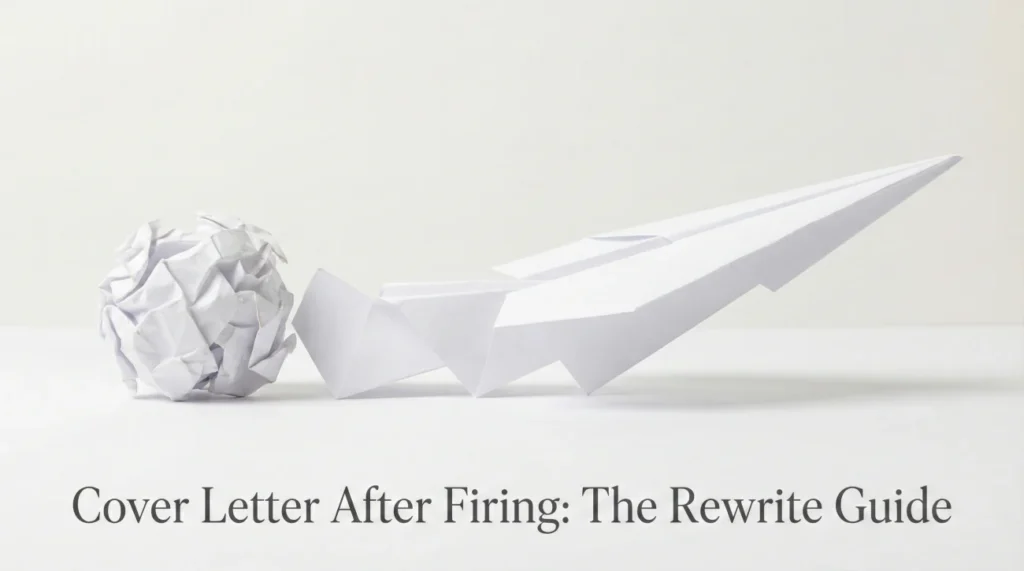
- If you were fired, your cover letter usually should not “confess.” It should prevent the reader from inventing a scarier story than the real one.
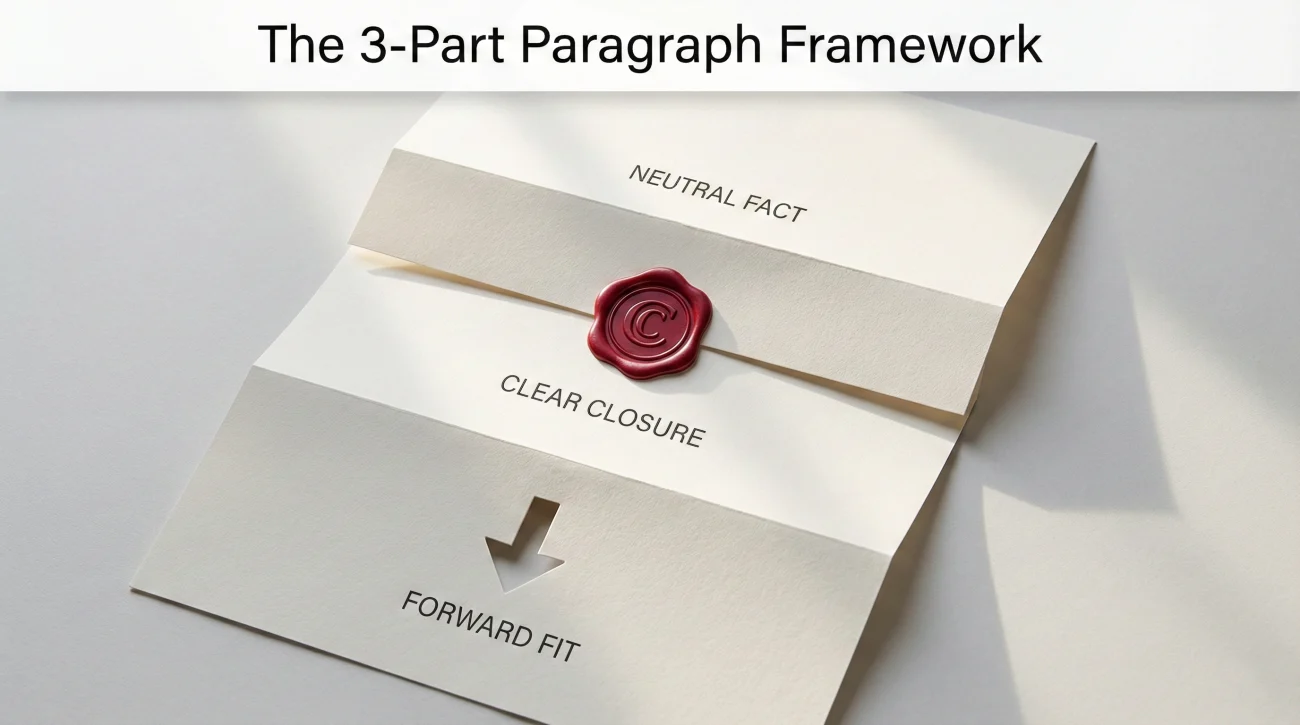
- Use a 3-part paragraph: Neutral fact, clear closure, and a forward-looking fit signal that matches the role.
- Copy one of the two templates, then swap in a sentence from the bank so it sounds like you, not a script.
The uncomfortable truth: Most cover letters fail because they try to “explain” too much
I have read thousands of cover letters across layoffs, resignations, and terminations. The pattern is predictable: When someone tries to defend a firing, they often turn a one-line concern into a full-page doubt.
So this guide is not about writing a dramatic redemption arc. It is about writing how to explain being fired in a cover letter in a way that feels calm, bounded, and done.
One candidate I worked with, Amanda, made this mistake on her first draft. She wrote three paragraphs about “misalignment” and “unfair expectations.” The hiring manager did not read it as nuance. They read it as risk. We cut it down to four lines, added a closure signal, and her response rate changed within two weeks.
💡 Pro Tip: A cover letter is not court. You are not proving innocence. You are removing uncertainty so the reader can focus on fit.
When you should mention being fired in a cover letter, and when you should not
Online advice is split. Some sources tell you never to mention a termination in a cover letter. Others say you should address it quickly so the employer does not assume the worst. Both can be right, depending on what the employer will notice in five seconds.
| What the employer will likely notice | Should the cover letter address it | What to do instead of overexplaining |
|---|---|---|
| Application form explicitly asks why you left or whether you were terminated | Yes, add a short stabilizing paragraph | Use a neutral fact line and a closure signal, then pivot to role fit |
| Very short tenure (under 6 to 9 months) plus a visible gap | Usually yes, one paragraph only | Keep it “bounded” and show momentum since |
| You were fired long ago and have stable roles since | Usually no | Let your recent track record do the talking |
| You can frame it as structural (reorg, leadership change) and it matches your references | Sometimes | Write it as context, not a grievance |
| It is complicated, emotional, or involves conflict you cannot summarize cleanly | No | Save it for interview, and prepare a 2-sentence answer |
Here are the simplest decision rules I use in practice:
- ✅ Mention it if a form asks directly, or your timeline creates a loud question you cannot ignore.
- ✅ Mention it if you can describe it without blaming, diagnosing, or narrating private company details.
- ❌ Do not mention it if you need three paragraphs to make it “make sense.” That is your signal to stop.
⚠️ Warning: If your explanation requires naming a manager, describing an argument, or listing “unfair” events, it will almost always backfire in a cover letter.
The paragraph framework that does not sound defensive
Most candidates think the goal is to “prove” the firing was not their fault. Recruiters are not scoring blame. They are scoring predictability: Will this person bring surprise risk into the team.
This is the framework I give candidates when they need a termination cover letter paragraph that feels adult and finished:
[Neutral Fact] + [Closure Signal] + [Forward Fit]
Part 1: Neutral fact, not a euphemism contest
Choose a plain label and keep it factual. You are not trying to “win language.” You are trying to stop the reader from imagining something worse.
- Good: “My role ended after a performance review cycle where expectations and delivery did not align.”
- Good: “My employment ended during a leadership change and a shift in priorities for the team.”
- Risky: “Mutual separation” (often reads like you are hiding the real label).
Part 2: Closure signal that makes it feel resolved
A closure signal is a short line that tells the reader the issue is not ongoing. This is where most cover letters fail. They keep the story open.
- “We agreed on a clean transition, and I am ready for a role with clearer success metrics.”
- “It clarified the environment where I do my best work, and I have been intentional about targeting that fit.”
Part 3: Forward fit tied to the job you want
This is where you earn your space. Tie your next step to what the employer needs.
One of my colleagues, Marcus, coached a candidate who wrote a perfect “I learned a lot” paragraph. It still failed because it did not connect to the role. When they rewrote it to match the job’s metrics, the termination line stopped being the headline.
Key Point: Your explanation is not a confession. It is a bridge from “What happened” to “Why I fit this role now.”
Two cover letter templates you can paste, then personalize
These are designed for the only two times a firing belongs in a cover letter: When the employer will notice it immediately, or when the application forces the topic.
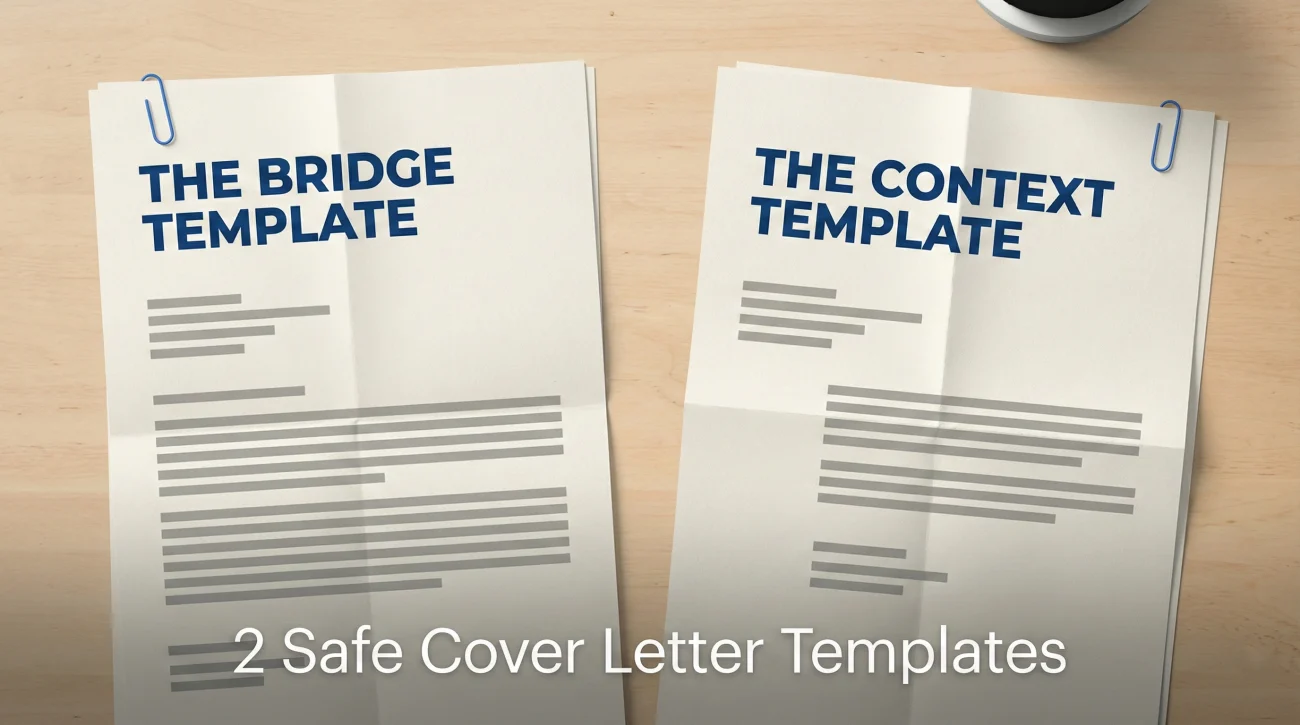
Template A: Short tenure plus a visible gap
[Your Name]
[City, State] | [Phone] | [Email] | [LinkedIn or Portfolio URL]
[Month Day, Year]
[Hiring Manager Name]
[Company Name]
[Company City, State]
Dear [Hiring Manager Name],
I am applying for the [Job Title] role at [Company Name]. What caught my attention is your team’s focus on [specific requirement from the posting], because that is the environment where I have delivered my best work in [proof: project, metric, or portfolio item].
In [Month Year], my employment with [Company] ended after it became clear that the role’s expectations and my delivery were not aligning within the timeline. The separation is complete. Since then, I have focused on [one concrete step: training, project, freelance work] to strengthen how I execute in [skill area], and I can point to [a checkable result] as evidence of that improvement.
I am interested in this position because it is built around [same requirement from the posting] and clearer success metrics, which matches how I work best. If helpful, I am happy to share [work sample / short case study / portfolio link] that shows the type of output you can expect from me in a role like this.
Sincerely,
[Your Name]
How to personalize it without adding drama:
- ✅ Replace “[one concrete step]” with something checkable: A course, a portfolio, a measurable project.
- ✅ Replace “[specific requirement]” with a real line from the job post.
- 📌 Keep the termination mention to one paragraph only. If you want to add context, save it for the interview.
Template B: The application asks directly
[Your Name]
[City, State] | [Phone] | [Email] | [LinkedIn or Portfolio URL]
[Month Day, Year]
[Hiring Manager Name]
[Company Name]
[Company City, State]
Dear [Hiring Manager Name],
I am applying for the [Job Title] role at [Company Name]. I am excited about this position because it is built around [job requirement], and my recent work in [proof of performance] shows consistent results in that lane.
You will see on my application that my last role ended in termination, and I want to address it briefly and clearly. The role required [expectation], and I did not meet the bar within the timeframe. I made a specific correction by [concrete change: process, coaching, training, system], and I have been applying it in [recent context] with outcomes like [measurable or checkable proof].
What matters for this role is whether I can deliver [job requirement] reliably. Based on my track record in [proof] and how I work when success metrics are clear, I am confident I can contribute quickly to your team’s goals.
Sincerely,
[Your Name]
❌ Note: If you cannot write the “correction” as one specific, professional change, do not use Template B. Keep the letter silent about the termination and prepare a clean interview answer instead.
Sentence bank: Safe lines that sound steady, not rehearsed
Most “cover letter fired explanation” examples online sound the same because they use the same emotional vocabulary. This bank gives you language that is calmer and more specific.
| What you need to say | Safer sentence options | What to avoid |
|---|---|---|
| State the fact | “My employment ended after performance expectations were not met within the timeline.” “The role ended after a review cycle where fit and execution did not align.” | “It was unfair.” “They had it out for me.” |
| Show closure | “The separation is complete, and I am focused on roles where success measures are clearer.” “I am ready to move forward in an environment that matches how I deliver best.” | “I hope you understand.” “I promise it will not happen again.” |
| Show learning without begging | “I changed my approach by [specific process], and my recent results in [proof] reflect that.” | “I learned so much.” (with no evidence) |
| Pivot to fit | “This role’s focus on [requirement] is exactly where I have delivered strong outcomes in [proof].” | “I really need a chance.” |
One more line that helps if you are worried about tone:
💡 Pro Tip: Replace emotional words with operational ones. “Stressful” becomes “unclear priorities.” “Toxic” becomes “misaligned feedback and expectations.”
Common mistakes that quietly scream “risk”

I want to be blunt here because this is where good candidates accidentally sink themselves. If you are going to address being fired cover letter style, do not do it like a diary entry.
- Too many details: Dates, names, internal policies, or “what really happened” turns your cover letter into a dispute.
- Blame language: Even if you were treated poorly, blame reads like future conflict.
- Open-ended framing: Anything that sounds ongoing makes the reader wonder if you are still unstable or unavailable.
- Apology spiral: A brief acknowledgement can work. A page of remorse reads like a confidence problem.
“I appreciate you asking. My last role ended because I did not meet the performance bar fast enough for that team’s timeline. I took specific steps to close that gap, and I can walk you through the results I have delivered since.”
The quote above is not for your cover letter. It is the interview version. Your cover letter should be calmer than your interview answer, not more intense.
What to prepare so your cover letter does not carry the whole burden

A cover letter is only one touchpoint. If you include a termination paragraph, assume the interviewer may ask one follow-up question. Your job is to answer it in a way that matches your cover letter tone.
The 4 things I tell candidates to have ready:
- ✅ A 2-sentence explanation that matches your paragraph (no new story).
- ✅ One concrete improvement you made (course, process, coaching, portfolio proof).
- ✅ One reference or work sample that shows you perform well in the environment you want now.
- 📌 A clean transition line back to the job: “What matters for this role is…”
Another real example: Devon was fired during probation because the role demanded a pace he had not handled before. He did not write a cover letter apology. He wrote a calm paragraph, then brought a small portfolio showing weekly output improvements. That combination worked because it was consistent.
Final: Your cover letter should make the firing feel contained, not contagious
The goal is not to erase what happened. The goal is to keep it from becoming the employer’s main story about you. A neutral fact line, a closure signal, and one forward-fit proof is usually enough.
If you need a clean, repeatable way to handle hard exits without spiraling into over-explaining, the simplest version of how to explain being fired in a cover letter is the one that sounds finished, professional, and focused on the work you can deliver next.
❓ FAQ
🎯 Should I say “fired” directly in my cover letter?
Only if you can say it plainly and briefly, and only if the employer will notice the issue anyway. If the termination is old and your recent work is stable, you usually do not need to bring it up.
🧩 What if the termination was complicated or unfair?
A cover letter is the wrong place to argue context. Keep your letter focused on fit and results, then prepare a calm interview answer that does not sound like a dispute.
🧯 Can I write “mutual separation” instead?
Be careful. Many recruiters read vague labels as avoidance. A neutral, factual line often feels safer than a polished euphemism.
🛠️ How long should the termination explanation be?
One paragraph, usually 3 sentences. If you need more than that, your explanation belongs in the interview, not the letter.
🔍 What is the best “proof” to include after a firing?
Something concrete and recent: a portfolio, a short project with measurable outcomes, a certification tied to the role, or a reference who can speak to your performance in the environment you are targeting.
⚠️ Disclaimer: ResumeSolving provides resume, cover letter, job search communication, and career transition guidance for informational purposes only. Hiring practices vary by employer, role, location, industry, and individual circumstances. We do not guarantee interviews, job offers, ATS results, or other outcomes. Verify employer requirements directly and follow applicable laws and workplace policies. For sensitive situations, use only information you are comfortable disclosing and keep all statements accurate.