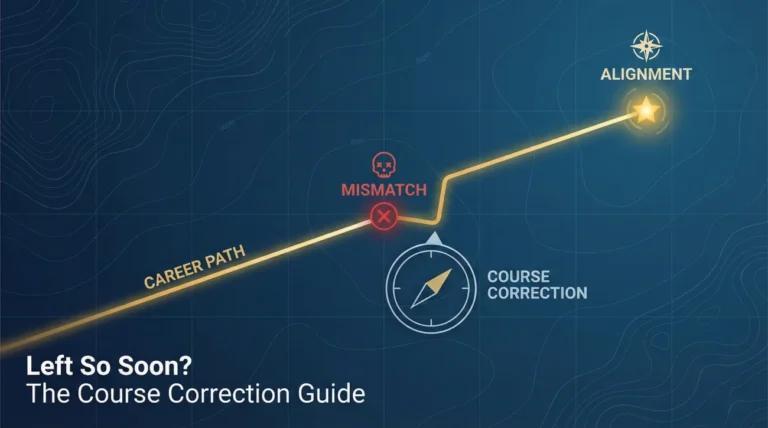
- A recruiter email about termination is a risk check, not a cross examination. Your job is to keep the process moving.
- Use a simple structure: Neutral category, accountability line, closure signal, forward step.
- Do not overshare. Do not blame. Do not sound evasive. Write like you are closing a file and returning to work.
When a Recruiter Asks About Termination by Email, Your Tone Becomes the Signal
I have seen strong candidates lose momentum over a single reply. Not because they were fired, but because the email made it feel messy, emotional, and still active.
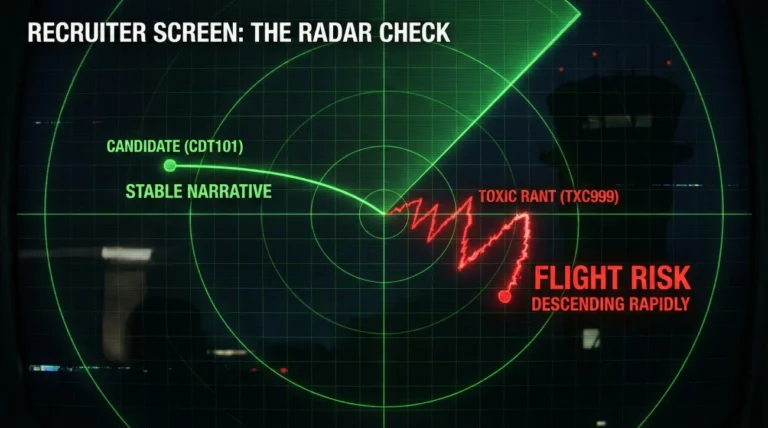
Recruiters do not have time to read a full story inside an email thread. They scan for whether you sound stable, whether the situation is closed, and whether the risk is contained. If your message sounds like a confession letter, they worry you are still stuck in it. If your message sounds like a dodge, they worry you are hiding something.
This guide is built for that exact moment: You get a recruiter outreach email that asks why your last role ended. You want a reply that is brief, honest, and forward. In other words, you want a recruiter message about being fired that keeps momentum without oversharing.
Rule of thumb: If you would feel uncomfortable having your email forwarded to a hiring manager, rewrite it.
What Recruiters Actually Need From Your Reply
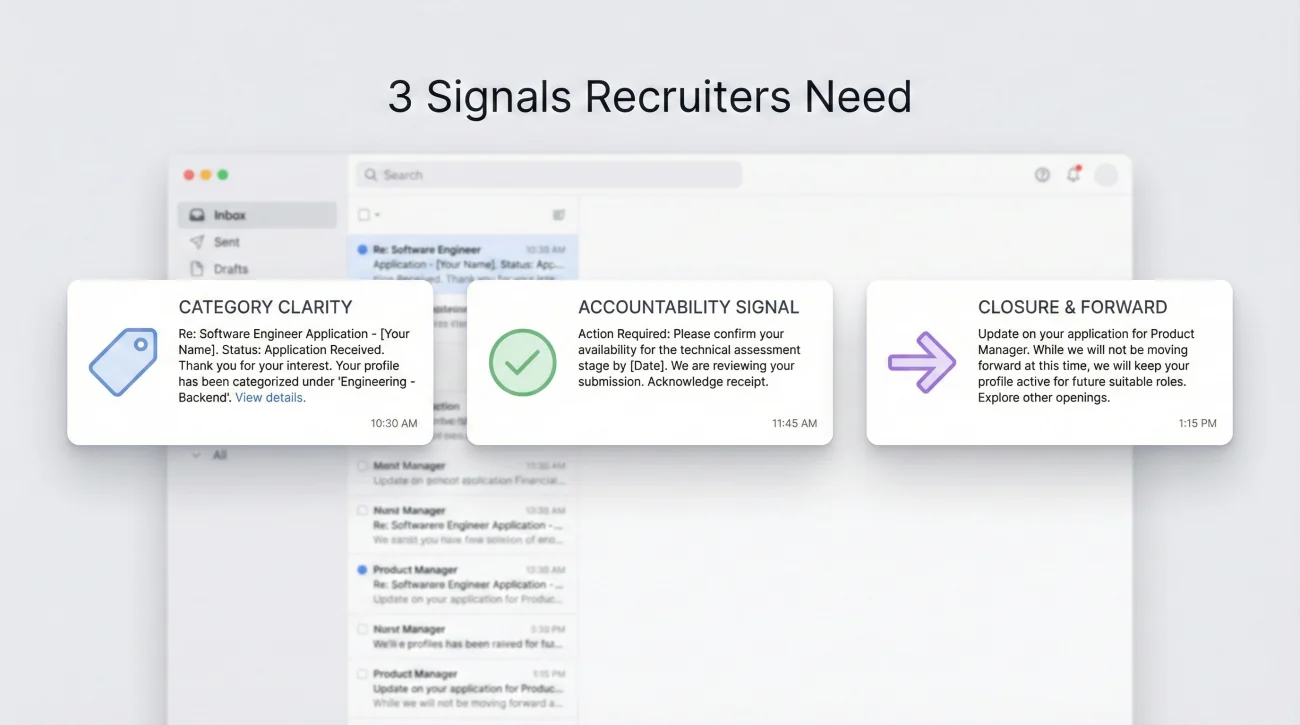
Most recruiters are not trying to extract details. They are trying to decide if they can safely keep investing time. In email, they want three things.
- Category clarity: A neutral label so they do not have to guess.
- Accountability signal: A sentence that shows maturity without self destruction.
- Closure and forward motion: A sign it is finished, plus a next step that makes scheduling easy.
What they do not want is a timeline, a villain, or an emotional spiral.
Even when you were treated unfairly, the recruiter email is not the place to argue it. If the recruiter is working for a client, they will default to the path of least risk. A calm, contained reply reduces the perceived risk. A long reply increases it.
One of my hiring partners once put it this way: “If the candidate can explain it in two calm sentences, I assume they have processed it. If it takes four paragraphs, I assume it is still a live wire.”
Tone Rules That Prevent Your Email From Sounding Like a Confession
The fastest way to lose a recruiter is to make your message feel unstable. The second fastest way is to make it feel slippery. Your goal is a narrow lane: Calm and cooperative.
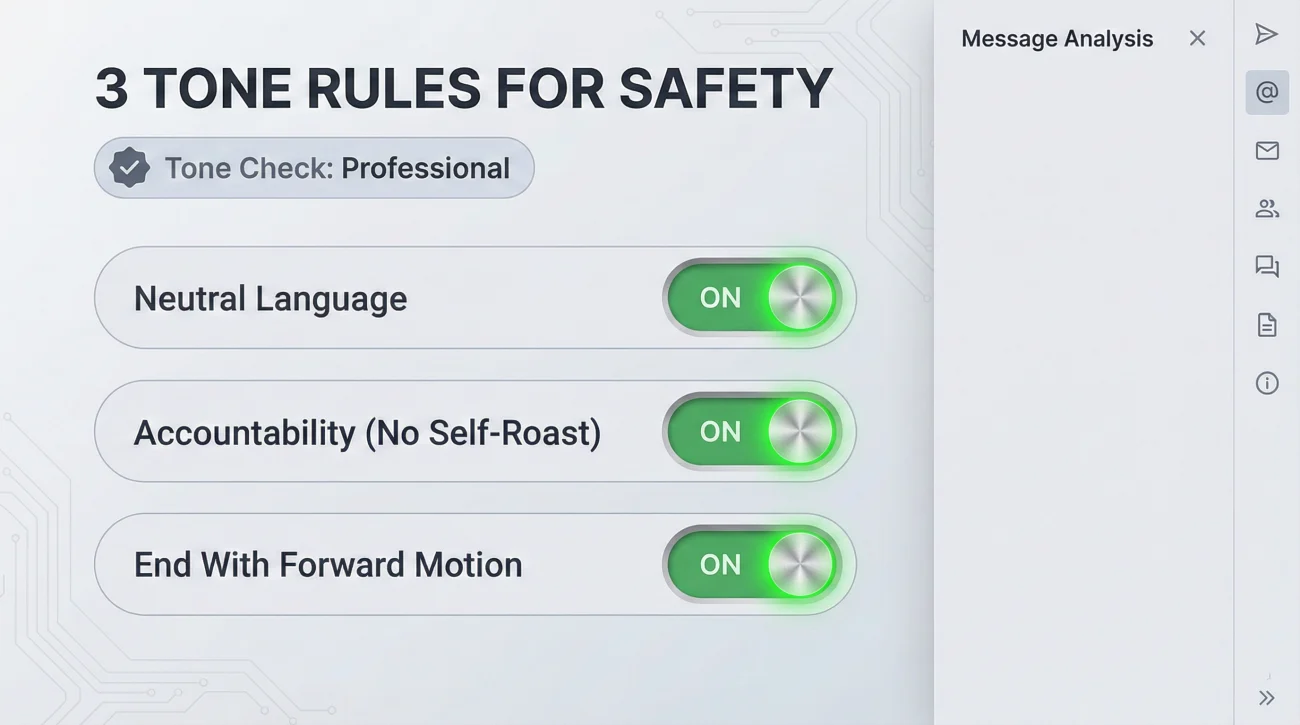
Use neutral language that still sounds human
You do not need dramatic words like “unfair,” “toxic,” “betrayed,” or “shocked.” You also do not want robotic filler that feels copied. A simple, neutral category often works best: Performance mismatch, role fit issue, shifting expectations, or not meeting the pace required.
If you are searching message explaining termination ideas, start by stripping emotion out of the label. You can be honest without making it loud.
Show accountability without self roasting
Accountability is not the same as blame. A good accountability sentence is short and practical. It sounds like you learned something and applied it. A bad accountability sentence sounds like you are begging for forgiveness or branding yourself as risky.
Too much: “I failed badly and I regret everything, but I hope you can still give me a chance.”
Notice what makes the first version feel unsafe: It asks for emotional reassurance. It also implies the situation is still raw. Recruiters read that as unpredictable, even when you mean well.
Better: “I take responsibility for what I could have handled differently, and I have adjusted how I manage expectations and priorities.”
The second version does not beg. It signals maturity, then moves forward. That is the tone you want in a recruiter thread.
End with forward motion every time
If your email ends on the past, the recruiter stays in the past with you. Your closer should make the next step easy: Offer a quick call, share availability, or confirm interest in the role.
Most candidates lose momentum because they answer the question but forget the handoff. Your last sentence should gently pull the thread forward.
A Simple Email Framework That Works Across Industries
When candidates panic, they write in circles. The fix is a structure you can follow when your brain is noisy.
Framework: Neutral category, accountability line, closure signal, forward step.
| Part | What It Communicates | Example |
|---|---|---|
| Neutral category | Stops guessing and gossip. | “My last role ended due to a performance mismatch.” |
| Accountability | Shows maturity without drama. | “I take responsibility for what I could have done differently.” |
| Closure signal | Proves it is processed and finished. | “Since then, I have tightened how I set expectations and track delivery.” |
| Forward step | Makes scheduling and continuation easy. | “Happy to cover it briefly in a call. I am available Tuesday or Thursday.” |
This is the core of a strong email to recruiter fired response. It is short, but it still gives the recruiter what they need to keep moving.
Three Replies You Can Copy and Adjust Without Sounding Scripted
Choose the reply that matches your reality. Do not combine all three. Recruiters do not reward complexity in email, they reward clarity.
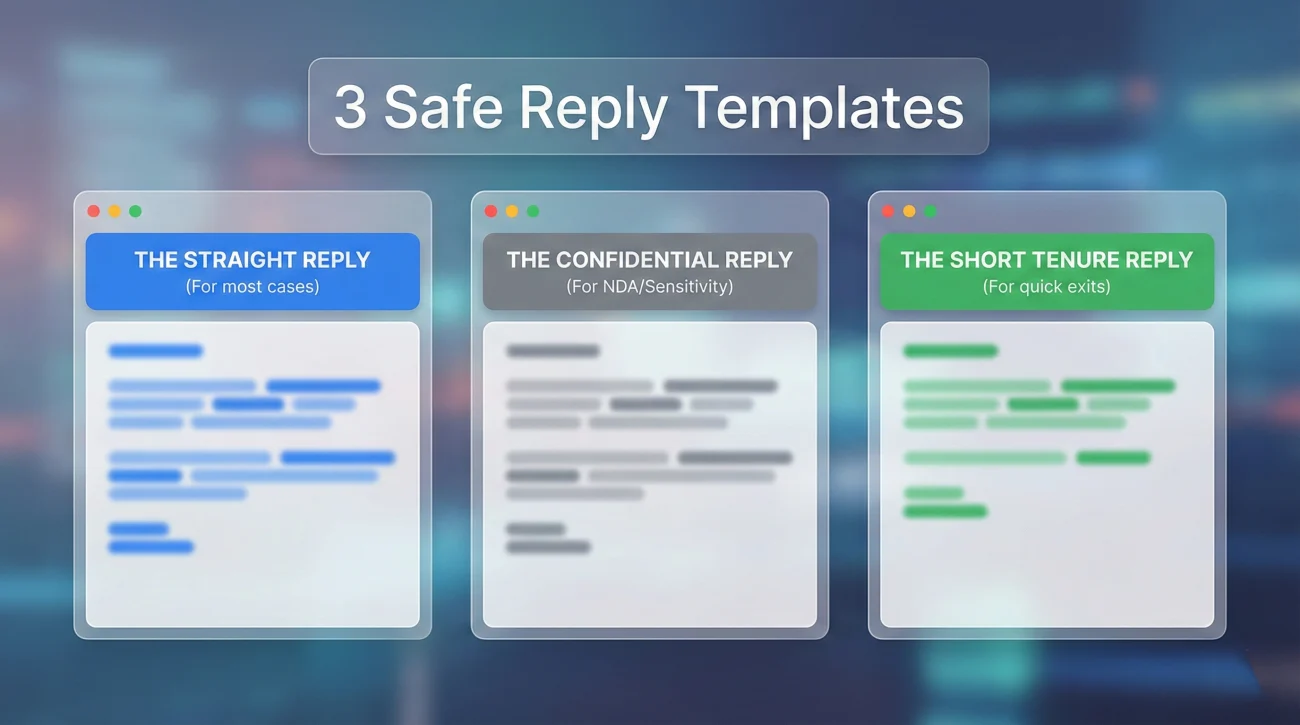
Reply 1: Straight, calm, and broadly acceptable
Use this when the termination was real, the details are not helpful in writing, and you want a clean, professional tone. This reply keeps the category neutral and gives one accountability line without turning it into a therapy session.
It also includes a forward step that makes the recruiter’s job easier. That matters. Recruiters live in calendars.
Subject: Quick clarification on my last role
Hi [Recruiter Name],
Thanks for checking. My last role ended due to a performance mismatch. I take responsibility for my part, and I have been intentional about tightening how I set expectations and prioritize delivery.
I am very interested in the role. If helpful, I can cover this briefly in a call. I am available [Day, Time Window] or [Day, Time Window].
Best regards,
[Your Name]
💡 Why this works: It sounds processed. It does not invite debate. It makes the next step simple.
Reply 2: You cannot share details in writing, but you still sound cooperative
Use this when there are internal circumstances you should not put in email, such as HR restrictions, client sensitivity, or a situation that would be easy to misread without full context. The goal is not secrecy. The goal is choosing the right channel.
This reply gives a general category, sets a boundary, and offers a short call. That combination feels professional instead of evasive.
Subject: Clarifying reason for leaving
Hi [Recruiter Name],
Of course. My last role ended following a company decision related to fit and expectations. I can share the general context, but I am not able to go into detailed internal circumstances in writing.
What I can say clearly is that the situation is closed, and I am focused on roles where the scope, success metrics, and communication cadence are aligned from the start. If you would like, I can address this briefly on a call and then focus on my fit for the position.
Thank you,
[Your Name]
Do not add: “I cannot discuss it for legal reasons” unless you genuinely need that phrase. It can make the situation sound bigger than it is.
Reply 3: Short tenure termination where you need to control the narrative fast
Short tenures create recruiter anxiety because they fear a repeat. Candidates often respond by dumping context, trying to prove the situation was not their fault. In email, that rarely helps. It reads like you are still in the argument.
This reply acknowledges mismatch, shows accountability, and makes a clean connection to why this role is different. Keep the “why this role” part to one line. If you overdo it, it sounds like you are trying to sell through stress.
Subject: Brief context on my last position
Hi [Recruiter Name],
Happy to clarify. My last position ended early because the role evolved quickly and the expectations shifted in a way that was not the right match. I take responsibility for not addressing the gap sooner, and I have been more precise since then about scope and success measures before accepting a role.
Based on what I have seen so far, this opportunity looks like a stronger match because [one line about scope, pace, or structure]. If helpful, I can cover the context in two minutes on a call.
Sincerely,
[Your Name]
If you are dealing with a recruiter follow up termination question, this reply keeps the story contained while still sounding honest and steady.
How to Add a Proof Marker Without Turning the Email Into a Portfolio Drop
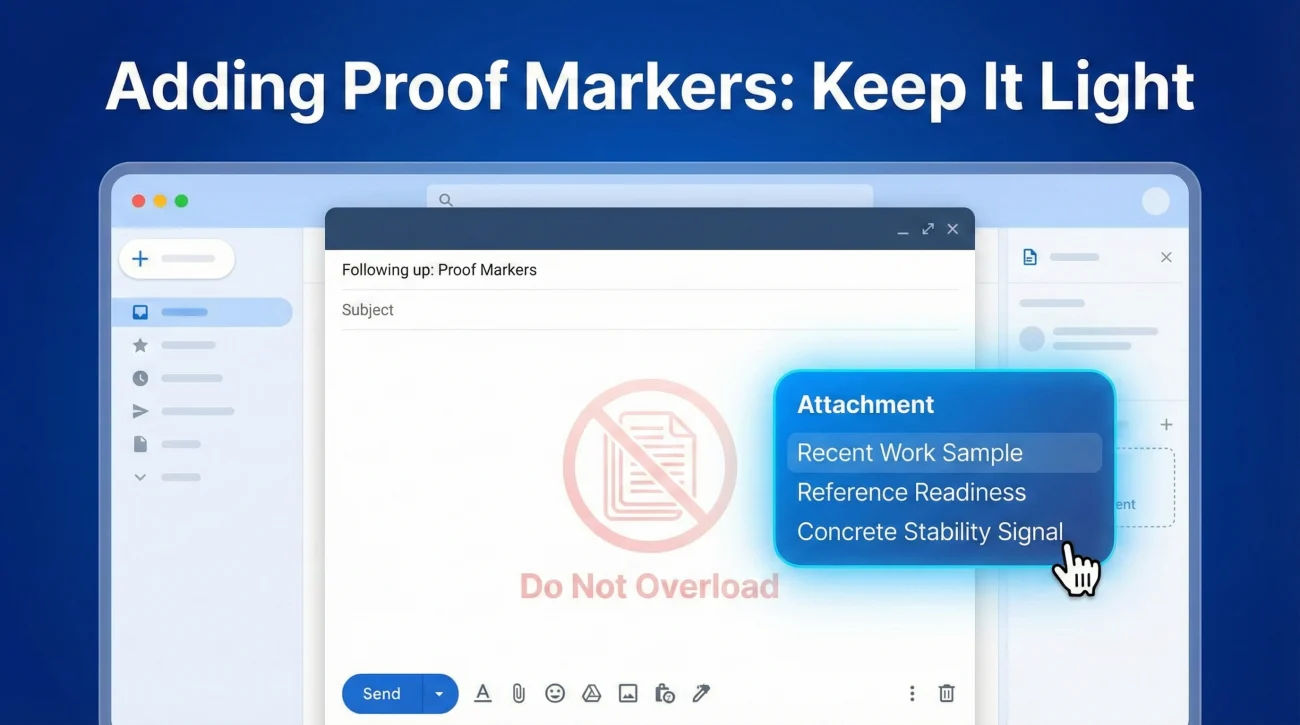
Your plan for this email should include the option to point to proof, but only when it reduces doubt. Proof is not about showing off. Proof is about easing skill freshness anxiety and repeat risk.
Keep proof markers small. One line is enough. Two lines is the maximum in most recruiter threads.
- Recent work sample: “If helpful, I can share a recent [type] sample that reflects my current approach.”
- Reference readiness: “I can also provide references who can speak to my delivery and collaboration.”
- Concrete stability signal: “Since then, I have been working in a structured cadence with weekly goals and measurable output.”
Six Subject Lines That Do Not Sound Defensive
Subject lines should be boring in a good way. You want normal, clear, and easy to scan.
| Use When | Subject Line |
|---|---|
| General clarification | Quick clarification on my last role |
| Replying to a direct question | Re: Reason for leaving |
| Short tenure context | Brief context on my last position |
| Keeping it simple | Following up with details |
| Offering a call | Happy to discuss briefly |
| Fast reply | Thanks, here is the context |
Six Closers That Move the Conversation to Scheduling
A strong closer does one job: It makes the next step easy. These options stay professional without sounding pushy.
- Option 1: “If helpful, I can cover this briefly in a call. I am available [two time windows].”
- Option 2: “Happy to address it quickly and then focus on the role. What times work best for you?”
- Option 3: “Thanks again. I am looking forward to the next step.”
- Option 4: “Appreciate you asking. I can share a quick overview on a call if that is easier.”
- Option 5: “Let me know what would be most useful to your process.”
- Option 6: “Thanks, and I am excited to discuss how I can contribute in this role.”
People ask what to say to recruiter after being fired because they want the recruiter to keep replying. Closers like these keep the thread moving instead of leaving it hanging.
Consistency Checks So Your Email Matches Applications and References
This is the part many low quality guides skip. Your email is not isolated. It can be compared with your application form, reference feedback, and background check fields.
You do not need to overthink it, but you do need to avoid contradictions. Recruiters can forgive a rough ending. They struggle with a story that changes shape.
Keep your category stable across channels
If your email says “role mismatch” and your application form says “laid off,” that is a problem. Even if the emotional truth feels close, the category is different.
Pick the most accurate category you can defend and keep it stable. If you are unsure what HR recorded internally, choose a neutral phrasing that stays honest, like “expectations and performance alignment,” and do not decorate it.
Do not volunteer extra risk topics unless asked
Recruiters sometimes ask “eligible for rehire” later. You do not need to introduce it. You also do not need to add a mini defense of your character.
This email has one job: Answer the question they asked, then move toward the next step. Extra risk topics can create new questions that did not exist five minutes earlier.
If it was termination for cause, do not rename it into a different event
This is where people get into trouble. A neutral label is not the same as a false label. “Performance mismatch” can be accurate for many terminations. “Reduction in force” is a different claim.
If you try to swap categories, you might pass one screen and fail the next. A steady, defensible label protects you better than a clever one.
A Quick Checklist Before You Hit Send
- Did you use one neutral category instead of emotional language?
- Did you include one accountability sentence that sounds practical?
- Did you include a closure signal that makes it feel finished?
- Did you include a forward step, like availability or a brief call?
- Would the email read cleanly if forwarded to a hiring manager?
Small but important: Read your email once as if you do not know you. If it sounds like a conflict is still active, rewrite it until it sounds closed.
Final: The Goal Is Not a Perfect Story, It Is a Stable Signal
Termination makes people freeze, especially when a recruiter asks about it in writing. The instinct is to explain everything so you will not be misunderstood. In practice, that usually makes the situation feel bigger, not smaller.
The better move is calm containment: Name a neutral category, add one accountability line, signal closure, and make the next step easy. That is what a recruiter message about being fired should do when you want the process to keep moving.
If the recruiter still cannot continue after a brief, professional reply, that is also useful information. It tells you their pipeline has low tolerance for anything outside a perfect story. You would rather learn that early, before you invest weeks into a process that was never going to handle complexity fairly.
❓ FAQ
🧠 Should I use the word “fired” in the email?
Most of the time, you do not need that exact word. A neutral category that is still truthful, like performance mismatch or role fit issue, usually communicates enough without making the email feel explosive. The key is that your label must match reality. Neutral is fine. False is not.
📩 What if the recruiter asks for the detailed reason in writing?
Give a short category and suggest a brief call for any additional context. Email strips tone and invites misreading, especially when the situation is sensitive. A quick call lets you communicate stability, answer the question, and return to discussing the role.
🧾 What if I cannot share details because of policy or sensitivity?
Set a calm boundary and still provide general context. You can say you can share the broad reason but cannot go into internal details in writing. Then offer a short call. That reads cooperative and professional, not evasive.
🧰 Should I attach proof, like a portfolio or references, right away?
Only if it reduces doubt and you can keep it small. A single sentence offering a work sample or references is usually enough. Attaching multiple files or dropping a long list of links can make the email feel like you are trying to compensate for a hidden problem.
⚠️ Disclaimer: ResumeSolving provides resume, cover letter, job search communication, and career transition guidance for informational purposes only. Hiring practices vary by employer, role, location, industry, and individual circumstances. We do not guarantee interviews, job offers, ATS results, or other outcomes. Verify employer requirements directly and follow applicable laws and workplace policies. For sensitive situations, use only information you are comfortable disclosing and keep all statements accurate.