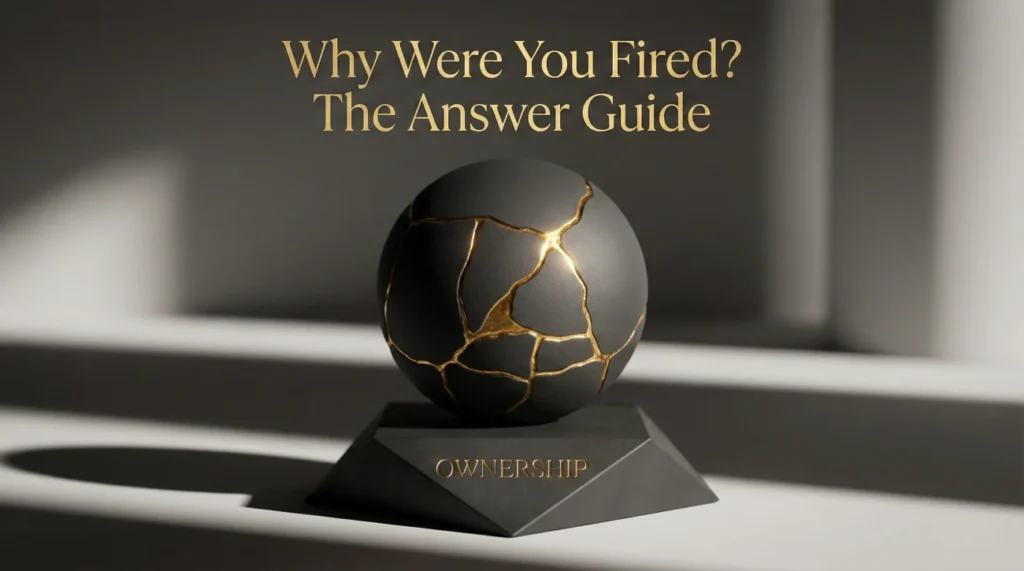
- A good answer is not a confession. It is a risk-reduction story told in under a minute.
- The 45 second structure is: Neutral fact, ownership, specific fix, one proof point, then a bridge back to fit.
- Your goal is closure. If it sounds finished, most interviewers stop digging.
Why This Question Feels Brutal: It Reopens A Chapter You Want Closed
I have seen smart, capable people freeze on this question because they think the interviewer is asking, “Are you a bad employee?” In reality, they are usually asking something narrower: “Is this going to happen again if we hire you?”
If you answer with a long explanation, you accidentally make the event feel bigger. If you answer with blame, you make the risk feel ongoing. A strong why were you fired interview answer does the opposite. It makes the situation feel contained, understood, and already corrected.
⚠️ Warning: The biggest mistake is treating this like a courtroom story. The interviewer is not choosing a side. They are trying to predict your next 90 days.
One of my colleagues in HR once described it perfectly: “I don’t need details. I need to know you can name the issue and show me you built guardrails.” That is what this page gives you: A short script that sounds calm, accountable, and finished.
What Interviewers Are Actually Listening For In The First 45 Seconds
Most advice online says “be honest and stay positive.” That is fine, but it is not a working plan. Interviewers are listening for signals, and your job is to deliver them in a clean order.
| Signal | What It Sounds Like | What Makes Them Nervous |
|---|---|---|
| Clarity | One sentence, neutral, factual | Long setup, vague timeline |
| Ownership | You name your part plainly | Blame, sarcasm, “they were unfair” |
| Fix | A specific change you now use | “I learned a lot” with no detail |
| Proof | One result or system that shows it worked | Promises, motivation speeches |
| Closure | The story feels completed | The story feels unresolved |
Key Point: Your answer should sound like a closed case file: Brief fact, clear lesson, new process, one proof point, then back to the job.
When you hit those signals, most interviewers move on quickly. When you miss them, they keep circling, not to punish you, but because they still do not understand the risk.
The 45 Second Structure That Stops The Spiral
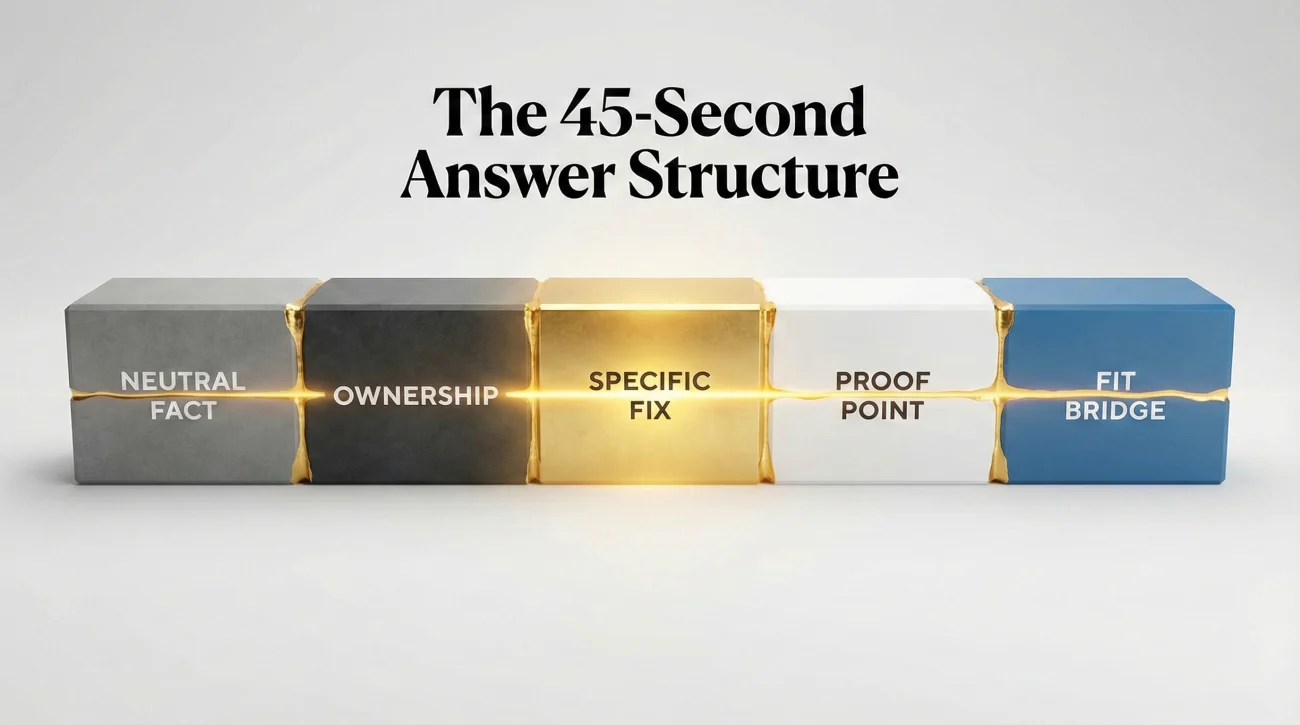
Here is the structure that works under pressure. It is short, repeatable, and it naturally prevents you from oversharing.
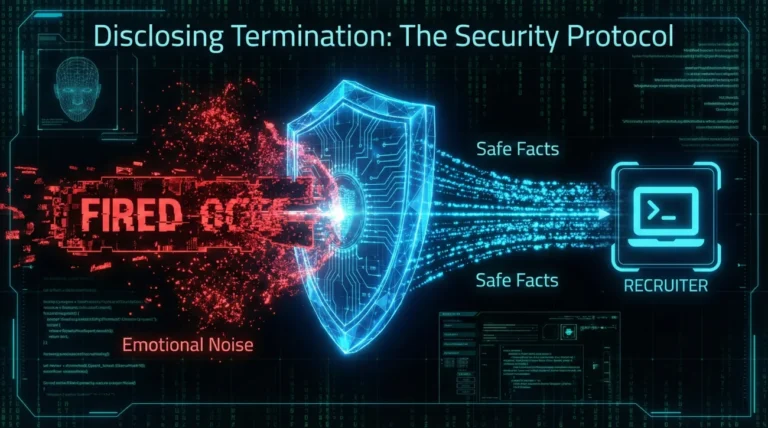
[Neutral Fact] + [Ownership] + [Specific Fix] + [One Proof Point] + [Fit Bridge]
Neutral Fact: One Sentence With No Extra Color
Use plain language. Your tone matters more than your vocabulary. “I was let go” is often easier than “I was fired,” but do not play word games if the interviewer uses “fired.” Match their language calmly and keep moving.
Example: “I was fired because I wasn’t consistently meeting the performance expectations in that role.”
Ownership: Clear Responsibility Without Self-Punishment
Ownership is not humiliation. It is a clean acknowledgement that you understand your part. One sentence is enough.
If you keep adding “but,” you sound like you are negotiating accountability. If you keep apologizing, you sound unstable. Aim for calm and direct.
Specific Fix: The Part That Rebuilds Trust
This is where most candidates fail. They say “I learned” but cannot name what changed. Your fix must sound like something you actually do.
Examples: Weekly metric review, mid-week checkpoints, written priority confirmation, early risk flags, shorter planning cycles, documented approvals.
One Proof Point: The Receipt
Proof makes the fix believable. You only need one proof point, not a pile of them. Too much proof can feel defensive.
Proof can be a measurable outcome, a recent project result, or a habit you can describe clearly. This is what turns a fired interview answer from “story” into “signal.”
Fit Bridge: Close The Topic And Return To The Job
End by bringing the conversation back to the role. If you do not bridge, the interviewer stays in the termination topic and keeps digging.
Bridge line example: “That system is how I work now, and it matches the execution rhythm you described for this role.”
Eight Truth Anchors That Keep You Honest Without Oversharing

People get stuck because they think the only honest answer is the full story. You can be truthful without turning the interview into a long explanation.
- Use one sentence to explain firing in interview, then pivot to what changed.
- Use role language, not personality language.
- Focus on what you control now: process, communication, scope, decision rules.
- Do not name people. Do not describe conflict scenes.
- Add timeframe when true: “In the first 60 days” signals ramp mismatch, not a long pattern.
- Use closure words: “Since then,” “After that,” “Now I do X.”
- Give one proof point, then stop.
- End with fit: What you learned makes you stronger for this job.
Note: Avoid answers that are mostly about fairness. Even if you were treated unfairly, fairness is hard to verify in an interview.
There is a safer translation when you feel the story was “political.” You can keep the truth while removing the emotion: unclear expectations, shifting metrics, role mismatch, or a scope change you did not manage well.
💡 Pro Tip: If you feel tempted to say “It was political,” translate it into something testable: unclear expectations, shifting metrics, role mismatch, or a scope change you did not manage well.
A Ready 45 Second Script You Can Adapt
This script is intentionally plain. It is built to sound stable, not dramatic.
“I was fired because I wasn’t consistently meeting the expectations for that role. I own that I didn’t adjust fast enough, especially around prioritization and reporting progress early. Since then, I changed how I work: I use weekly metrics, mid-week checkpoints, and I flag risks early instead of trying to recover quietly. In my most recent work, that system improved my on-time delivery and made my updates much clearer. That structure is what I’d bring to this role.”
If that feels too polished, good. Your job is to practice it until it sounds like your normal speaking voice. The structure is what matters, not the exact words.
Six Scenario Variations For Different Reasons People Get Fired
Pick the closest scenario, then swap the fix and proof point to match your real situation. Do not mix three scenarios into one answer. One clean story beats three half-stories.
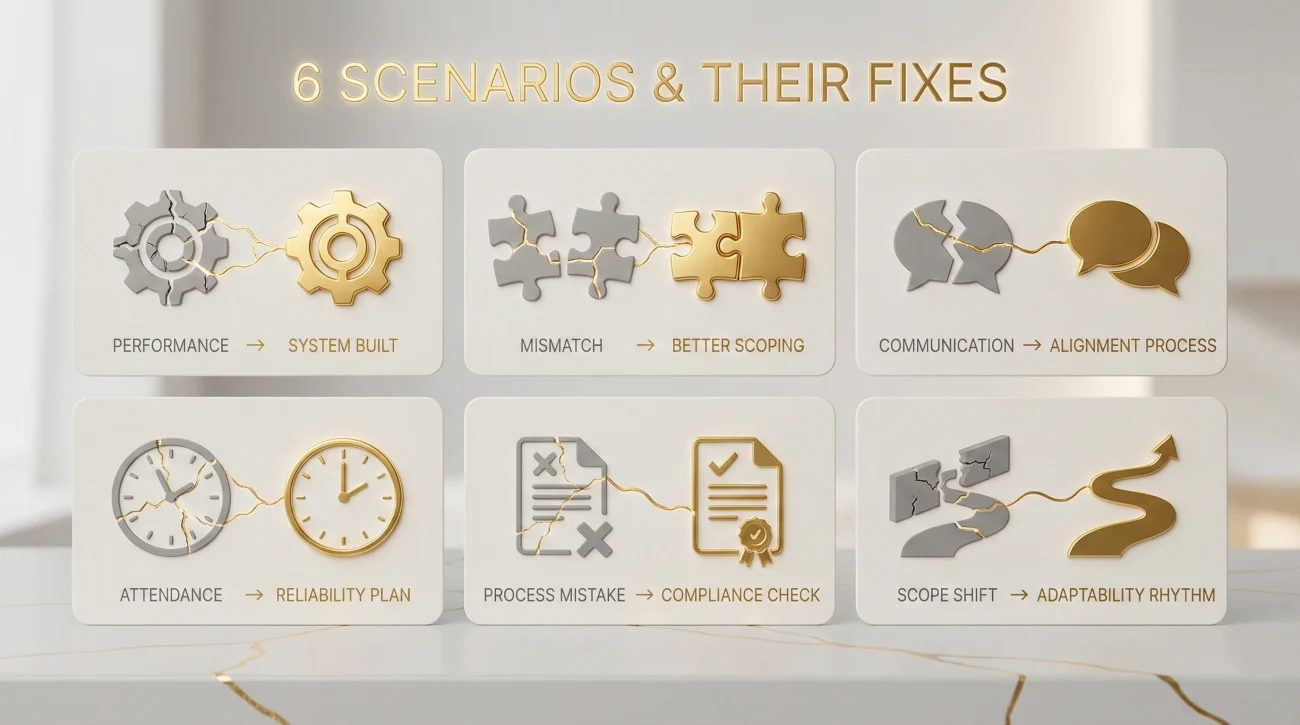
Performance Expectations: You Missed Targets
Keep it neutral and focus on the system you built. The interviewer wants to know you can manage execution, not that you can explain your manager.
“I was fired because I wasn’t consistently meeting the performance expectations in that role. I didn’t adjust my workflow fast enough, especially around prioritization. Since then, I rebuilt my operating rhythm with weekly metrics, mid-week checkpoints, and earlier risk flags. In my most recent work, my delivery became consistent and my updates were clearer. That’s how I operate now.”
Role Fit Mismatch: You Took The Wrong Job
This works when you own the mismatch and show you scope roles better now. Avoid making it sound like the company tricked you.
“I was fired because the role turned out to be a mismatch with what the team needed at that stage. I own that I didn’t recognize the mismatch early and course-correct fast enough. Since then, I clarify success metrics, pace, and first 90 day priorities before I accept a role. That’s why I’m confident here, because what you described aligns with how I do my best work.”
Communication Breakdown: Conflict With A Manager
Your job is to sound mature. Do not argue your case. Show how you prevent misalignment now.
“I was fired after a breakdown in communication about priorities and decision-making. I didn’t handle the misalignment well, and I waited too long to reset expectations. Since then, I confirm priorities in writing, I ask for decision criteria upfront, and I flag misalignment early in a calm way. That approach has helped me keep work moving even when people disagree.”
Attendance Or Reliability: A Short Disruption You Handled Poorly
This triggers “unreliable” fear, so you need closure and stability. Keep it factual and forward.
“I was fired because I had an attendance issue during a short period when I was dealing with an unexpected situation at home. I take responsibility for how I handled it. The situation is resolved now, and I built better contingency planning, including earlier communication and backup coverage. I’m in a stable place, and reliability is non-negotiable for me going forward.”
Process Or Policy Mistake: A Discipline Gap
Name it at a high level and avoid details that create new concerns. The fix should be a repeatable process.
“I was fired after a mistake related to internal process expectations. I should have clarified the process earlier and I didn’t. Since then, I confirm requirements upfront, document approvals, and do a quick compliance check before key steps. That discipline has reduced rework and made my execution cleaner.”
Startup Scope Shift: You Did Not Adapt Fast Enough
Startups move fast. Your answer still needs structure. Show a better operating cadence, not frustration.
“I was fired during a period when priorities changed quickly and I didn’t adapt as effectively as I should have. I relied too much on the original plan and didn’t re-scope fast enough. Since then, I work in shorter planning cycles with clearer metrics and faster check-ins when goals shift. That has made me more effective in changing environments.”
If They Push For Details: Use Calm Boundaries That Still Sound Cooperative

Follow-up questions are normal. The danger is answering them with a full replay. Your goal is to give one extra sentence, then return to the fix.
What if they ask: What exactly happened?
Answer with one clarifying sentence, then pivot. Example: “The feedback was about consistency and deadlines. I didn’t build the right tracking system early enough. Since then, I use checkpoints and risk flags, and my delivery is consistent.”
What if they ask: Was it misconduct?
If that is not accurate, say it directly: “No. It was related to performance expectations and fit.” Then move to what changed.
What if they ask: Would they rehire you?
If you know the official answer, use it. If you do not, do not guess. You can say: “I’m not sure how they would label it now. What I can say is I understood the feedback and I made specific changes since then.”
💡 Pro Tip: Practice the follow-ups out loud. A good boundary line is short, calm, and it returns to what you control now.
Final: Make The Answer Sound Finished, Not Negotiated
You do not win this question by sounding innocent. You win it by sounding stable. Keep the facts clean, own your part, name the fix, offer one proof point, and bridge back to the job before the topic grows.
When you deliver it that way, a why were you fired interview answer becomes a brief checkpoint in the interview, not a permanent shadow over the rest of your conversation.
❓FAQ
🎯 Should I volunteer that I was fired if they do not ask?
Usually you answer what you are asked. If they do not ask, do not force the topic. If an application form requires disclosure, keep your story consistent with what you submit there.
🧠 How short should my answer be?
Aim for 35 to 55 seconds for the first pass. If they ask a follow-up, add one extra sentence and pivot back to your fix and fit.
🧩 What if I was fired very recently?
Keep it factual, focus on what you changed immediately, and avoid sounding like you are still emotionally processing it in the interview. Structure matters even more when it is recent.
🛡️ What if the situation was unfair?
You can acknowledge misalignment without turning the interview into a trial. Translate “unfair” into something testable and professional, then emphasize how you operate differently now.
✅ Can I say “it was mutual” if I was fired?
Only if that is accurate and consistent across your story. If the cleanest truth is “I was let go,” use that and move to the fix. Consistency builds trust faster than phrasing tricks.
⚠️ Disclaimer: ResumeSolving provides resume, cover letter, job search communication, and career transition guidance for informational purposes only. Hiring practices vary by employer, role, location, industry, and individual circumstances. We do not guarantee interviews, job offers, ATS results, or other outcomes. Verify employer requirements directly and follow applicable laws and workplace policies. For sensitive situations, use only information you are comfortable disclosing and keep all statements accurate.