- If you were fired for performance, your goal is not to “defend” yourself. Your goal is to sound stable, self-aware, and already corrected.
- A calm answer needs one ownership line, one concrete change, and one proof cue. Without proof cues, you sound like you are still guessing.
- Use two versions of the script: 20 seconds for screening, 60 seconds for a hiring manager who asks follow-ups.
The Real Problem With This Question: They’re Testing Predictability
I have watched strong candidates lose control of an interview with one sentence. Not because they were “bad,” but because they answered the wrong fear.
One candidate I coached, Connor, had a sales background and got let go after missing targets. He was smart and likeable, but the moment he said, “It was a tough environment,” the interviewer’s face changed. The conversation turned into a subtle cross-examination about pressure, accountability, and whether Connor would repeat the same pattern.
What fixed it was not a prettier story. What fixed it was predictability. A calm, closed chapter. A clear correction. One small piece of proof.
That’s what a fired for performance interview answer has to do. It has to close the risk, not reopen the case.
💡 Pro Tip: Performance is not a moral issue. In interviews, it is a risk signal. Treat it like risk management, not confession.
What “Fired for Performance” Usually Means to a Hiring Manager
Online advice often says “be honest and move on,” which sounds good until you’re sitting in front of someone who has to defend their hiring decision later.
When a hiring manager hears “I was let go for performance,” they silently sort it into one of these buckets.
| What they suspect | What they are really trying to prevent | What your answer must include |
|---|---|---|
| Skill mismatch | They hire you and you cannot meet the role’s baseline | One specific capability you improved and how you work now |
| Execution inconsistency | Missed deadlines, missed handoffs, messy prioritization | A system change: planning rhythm, review cadence, QA checklist |
| Expectation misalignment | Same work, different standards, unclear measurement | A calibration method: how you confirm expectations early |
| Coachability issues | They cannot manage you without drama | How you take feedback and how you report progress |
| Repeat risk | They get stuck with the same story again in 6 months | A proof cue that shows change already happened |
Key Point: You do not need a dramatic redemption arc. You need a credible mechanism that makes the outcome unlikely to repeat.
The Calm Framework That Works: Own, Fix, Prove, Fit
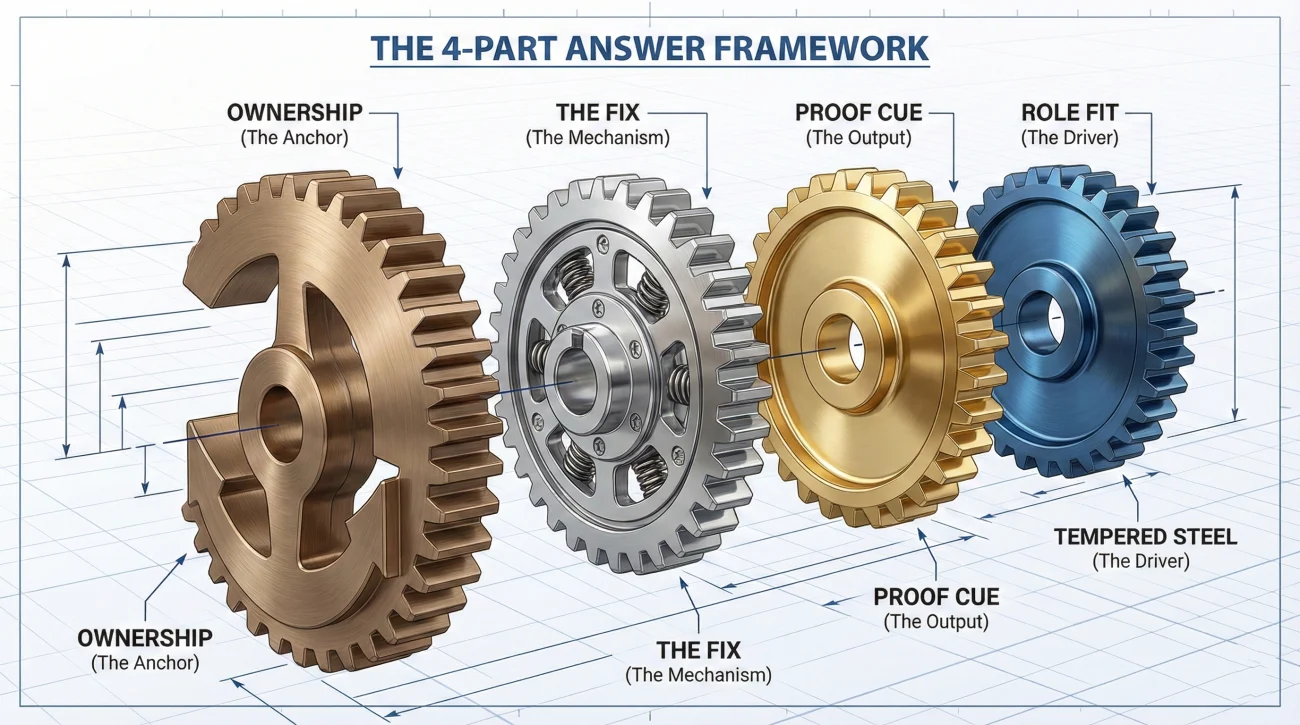
Most generic articles stop at “own it and focus on growth.” The missing piece is: Growth has to sound measurable, not emotional.
Here is the structure I use with candidates when the reason really is fired for performance and we cannot pretend it was a layoff.
[Neutral ownership] + [Concrete fix] + [Proof cue] + [Role fit bridge]
Notice what’s not there: Long context, blame, and “it was complicated.” Those lines invite follow-up questions you do not want.
Version A: 20 Seconds (Recruiter Screen)
“I was let go because I wasn’t consistently meeting the role’s performance expectations. I took accountability, and I changed how I work: I now set weekly output targets, review them with a manager-style check-in, and track quality metrics, not just effort. Since then, I’ve delivered consistently in similar work, and I’m confident this role matches my strengths in [X] and the expectations you’ve described.”
Version B: 60 Seconds (Hiring Manager Follow-up)
“I was let go for performance because my execution wasn’t consistent enough for that team’s pace and measurement style. The important part is what changed: I rebuilt my operating system. I now clarify success metrics in week one, I break work into weekly deliverables, and I ask for calibration early instead of waiting for a quarterly review. I also strengthened the specific skill gap that showed up, which for me was [example: prioritization under competing stakeholders / translating analysis into decisions / managing a higher volume queue]. Since then, I’ve been able to hit deadlines and quality targets reliably, and the way you described this role, it lines up with what I do best and how I work today.”
⚠️ Warning: If your answer does not include a “how I work now” line, the interviewer assumes nothing changed. That is why honesty alone sometimes backfires.
10 Proof Cues That Make Your Answer Believable

A lot of advice online ranges from “be matter of fact” to “never say you were fired,” which shows how anxious this topic makes people. The way out is proof cues: small, practical signals that you have already corrected the issue.
Pick two or three cues that match the job you want. Do not dump all ten in one answer.
- Weekly deliverable cadence: “I work in weekly outputs with a Friday review.”
- Early calibration: “I confirm what ‘good’ looks like in week one, not month three.”
- Scoreboard metric: “I track [cycle time / QA defects / quota coverage / ticket resolution] weekly.”
- Feedback loop: “I ask for a midpoint check before final delivery.”
- Priority filter: “I use a simple priority rule: revenue impact, deadline risk, stakeholder dependency.”
- Documented updates: “I send a short progress note with next steps and blockers.”
- Scope control: “I name what is not included so expectations stay aligned.”
- Quality checkpoint: “I built a checklist so I do not rely on memory under pressure.”
- Skill reinforcement: “I took targeted practice in [tool, domain, communication], not generic courses.”
- Comparable wins: “In my most recent work, I delivered [result] under similar constraints.”
One colleague of mine, Yoshie, was terminated after an internal performance plan because her stakeholder management was messy. She did not “become a different person.” She started sending weekly written updates with decisions needed, risks, and deadlines. The next hiring manager loved it because it made her work legible. That single habit did more than any inspirational speech.
6 Credibility Pivots That Move the Conversation Back to Fit
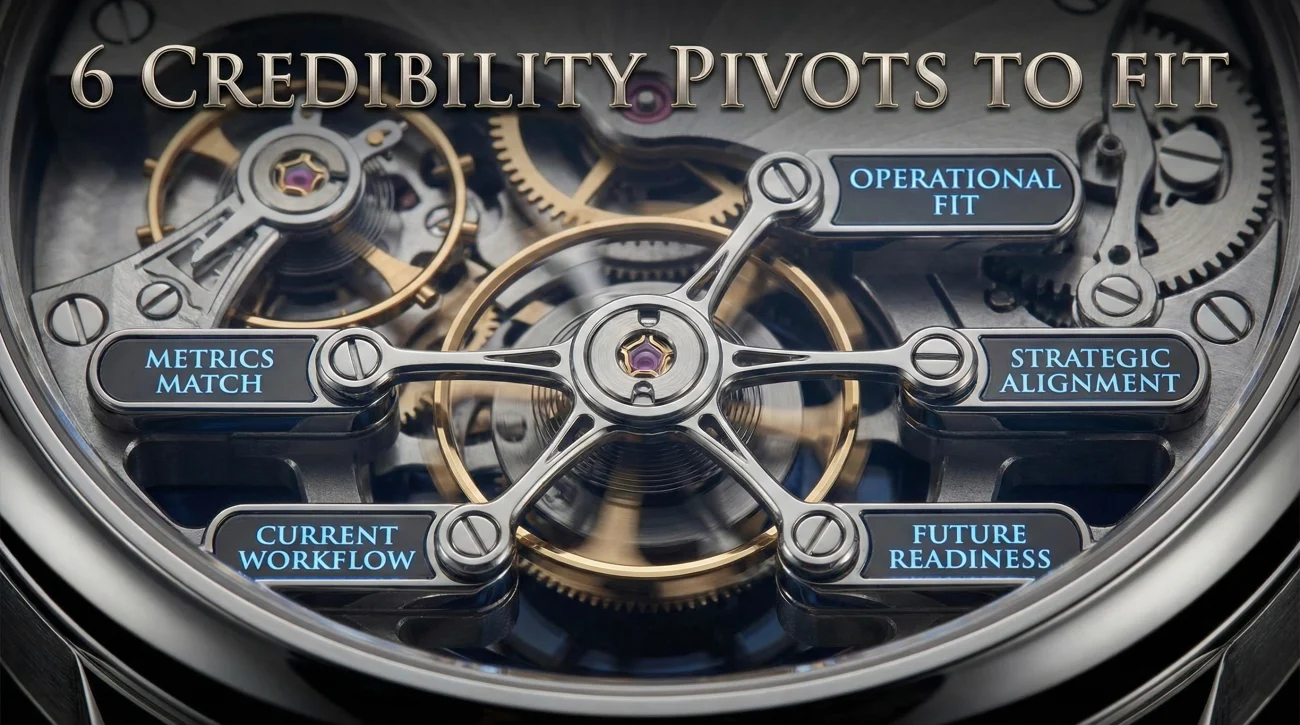
The interviewer’s next move is predictable: They either ask “What did you do wrong?” or they quietly decide you are risky. Your pivot lines prevent both outcomes by guiding them to the job in front of them.
What do you pivot to, without sounding scripted?
Use one of these lines after your proof cue.
- ✅ “The reason I’m confident here is: The success metrics you described are the metrics I already operate with.”
- ✅ “I’m not looking for a softer environment. I’m looking for a role where the expectations match my strengths and are measurable.”
- ✅ “If it helps, I can walk you through how I manage week-to-week execution now.”
- ✅ “What I learned is how to calibrate early. That’s why I’m asking about success measures in the first 30 days.”
- ✅ “The work you described is exactly where I perform best: Clear priorities, visible outputs, and tight feedback loops.”
- ✅ “I’d rather address it directly once, then focus on what I can deliver for you.”
Benjamin, an engineer I met through a friend, had a similar situation. He kept calling it “a bad culture fit,” and it sounded like blame. When he changed it to “a mismatch in pace and expectation clarity, and here’s how I prevent that now,” he stopped getting stuck in the past. He got better interviews because he sounded like someone who learned, not someone who escaped.
If It Was a PIP: How to Mention It Without Making It Worse
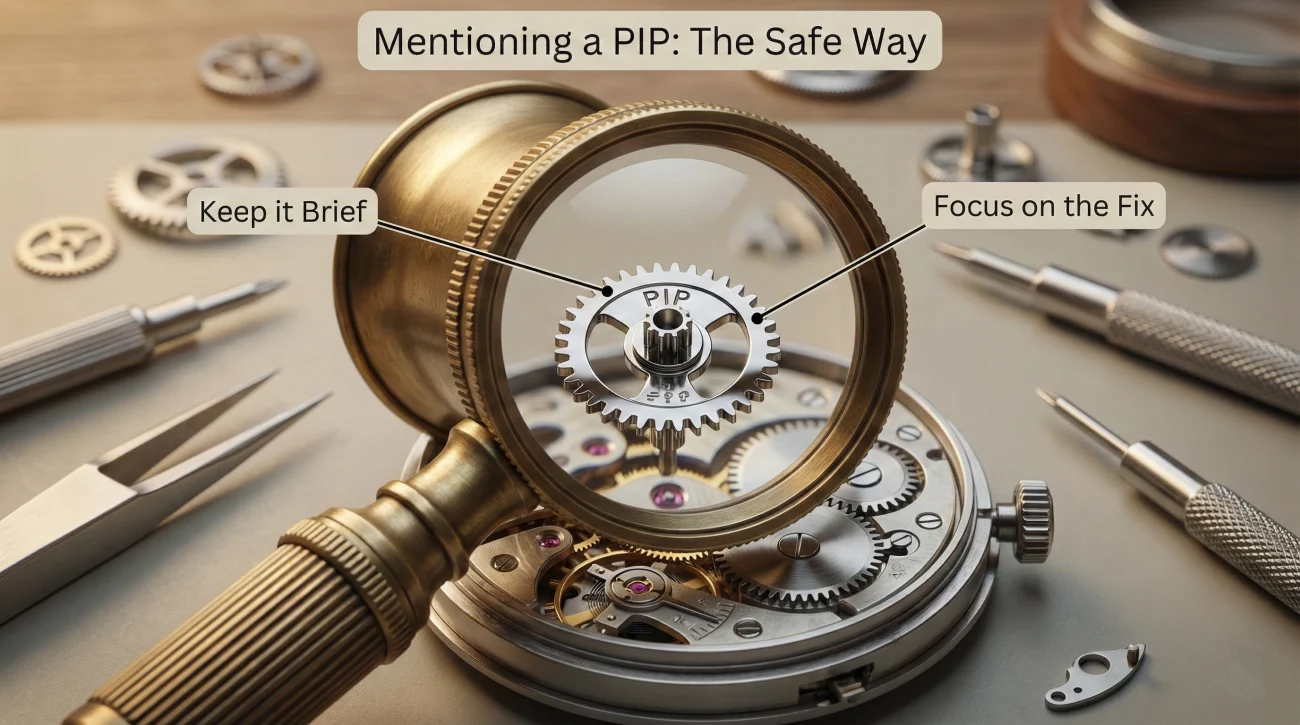
If you were terminated after a PIP, you do not need to describe the plan. You only need to show the correction is real and already in place.
Two rules:
- Keep “PIP” out of the first sentence unless they ask directly.
- Translate the issue into an operational fix, not a story about management.
“There was a period where my output consistency wasn’t where it needed to be, and the company decided to end the role. I took that seriously and changed how I execute: I set weekly deliverables, I confirm expectations early, and I use a checklist for quality under deadlines. That’s why I’m confident this role is a better match for my strengths and working style.”
Remember that the best performance termination explanation is short, calm, and mechanically credible. If you sound emotional, the interviewer assumes the situation is still raw.
What Not to Say: The Lines That Trigger Follow-ups
You can be honest and still sabotage yourself. These are the patterns that usually create a second problem. The fastest way to keep control is to avoid lines that sound like blame, effort-only, or vague “growth.”
- Avoid blame language: “It was politics” or “My manager didn’t like me.” Even if true, it sounds like you avoid accountability.
- Avoid effort as proof: “I worked really hard.” Effort is not the same as output, and interviewers know it.
- Avoid vague wrap-ups: “I learned so much.” Without proof cues, this reads like a closing line, not evidence.
- Avoid one-line ‘fit’ answers: “It was not the right fit.” It can work, but only if you define the mismatch and what you changed.
💡 Pro Tip: If you want to use “fit,” make it practical: Fit means metrics, pace, scope, and feedback loops. Not vibes.
When They Push: “So What Did You Do Wrong?”
This question can trap you into self-criticism. The better move is to name one bounded issue and one bounded fix.
Situation
In my last role, I was in a high-volume environment where priorities shifted weekly. My performance dipped because I was not controlling scope well and I waited too long to recalibrate expectations.
Task
I needed to rebuild how I planned work and how I communicated progress so deadlines and quality were visible and predictable to stakeholders.
Action
I started operating in weekly deliverables, and I sent a short written update with priorities, risks, and decisions needed.
I also began confirming success metrics in week one, and I asked for calibration early instead of waiting for a formal review cycle.
Result
That change made my output consistent and measurable. More importantly, it’s how I work now, which is why I’m comfortable discussing the termination directly and then focusing on the impact I can deliver in this role.
That is the difference between “I messed up” and “I corrected a bounded operational problem.” If you want a phrase bank, your core goal is simple: Answer what they asked, then bridge back to the job.
References and Backchannels: How to Reduce Surprise Without Over-sharing
I am not going to make promises about what your former employer will or won’t say, because that varies. The practical move is to control what you can control: consistency.
- Keep your reason for leaving consistent across recruiter screen, application, and interviews.
- If you have a strong internal ally, ask for a reference that speaks to how you work now: reliability, cadence, accountability.
- Do not volunteer extra detail. If they ask, you answer. If they do not ask, you do not “confess.”
This is also where many low-quality takes online go too far, pushing people to “just say laid off.” It feels safe, but it can create a mismatch later.
⚠️ Warning: The safest strategy is not maximum disclosure. It is stable disclosure. One clean version you can repeat without drifting.
A Quick Practice Method So You Don’t Sound Defensive
Defensiveness usually shows up in your tone before it shows up in your words. A simple practice routine helps your answer come out flat and calm, which is exactly what you want.
📌 Record the 20-second version until you can say it without speeding up.
📌 Then record the 60-second version and cut one sentence. Most people overshare.
📌 Finally, answer a follow-up question: “What changed?” using only one proof cue.
If you can say it like it is boring, you win. Because boring means: Closed chapter.
What to say when you were fired is not a poetic question. It is an operational one. Your job is to sound like a person who built a better system, not a person who is still processing what happened.
Final: A Good Answer Sounds Like a Closed File, Not a Debate
The strongest candidates don’t “spin” performance terminations. They contain them. One ownership line, one concrete correction, and one proof cue that makes the correction believable.
If you remember nothing else, remember this: Your fired for performance interview answer should feel predictable. Predictable is what makes a hiring manager comfortable taking the risk.
And if you want a final check on tone: If your answer sounds like you are asking for sympathy, it is too much. If your answer sounds like a calm status update, you are in the right zone.
❓ FAQ
🎯 Should I say I was fired for performance if they don’t ask?
No. You should not volunteer extra detail. If the interviewer asks why you left, answer directly and briefly. If they do not ask, focus on your fit and your work. The goal is stable disclosure, not maximum disclosure.
🧭 Can I say “It wasn’t a good fit” instead?
You can, but only if you define the mismatch in practical terms and show what changed. “Fit” without specifics sounds like blame. “Fit” with a clear metric, pace, or expectation alignment can sound mature.
🧩 What if they ask whether I was on a PIP?
Answer briefly and move to the correction. You can say there was a formal performance process and the role ended, then immediately state the concrete fix and one proof cue. Do not describe the plan in detail.
🛡️ What if my manager was unfair?
In an interview, “unfair” is rarely useful. Even if true, your safest move is to stay neutral and focus on what you control: how you work now, how you clarify expectations, and how you prevent misalignment early.
📍 How long should my answer be?
Use a 15 to 25 second version for recruiter screens. Use a 45 to 60 second version only if the hiring manager follows up. Longer answers usually read as defensiveness or oversharing.
⚠️ Disclaimer: ResumeSolving provides resume, cover letter, job search communication, and career transition guidance for informational purposes only. Hiring practices vary by employer, role, location, industry, and individual circumstances. We do not guarantee interviews, job offers, ATS results, or other outcomes. Verify employer requirements directly and follow applicable laws and workplace policies. For sensitive situations, use only information you are comfortable disclosing and keep all statements accurate.