- You do not owe a recruiter a full story. You owe them a clean, consistent one.
- Timing is situational: Disclose only when asked, when a form requires it, or when your story could be contradicted later.
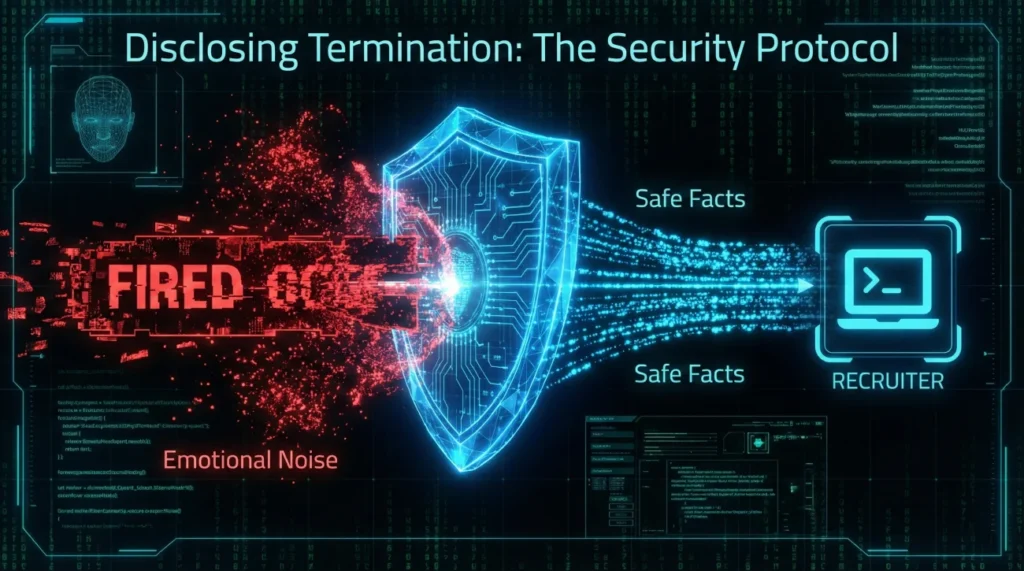
- Your safest answer structure is: Brief accountability, a closure signal, then a fast pivot to proof of fit.
The Real Question Behind the Recruiter Screen
If you are asking should i tell recruiter i was fired, you are usually not asking a moral question. You are trying to avoid a hiring process that turns into a long interrogation.
Recruiter screens are designed to reduce risk fast. The recruiter is typically checking four things: Role fit, availability, compensation range, and whether there is a hidden landmine that will explode later in the process.
Being fired can be a landmine, but not always for the reason candidates assume. In many cases, the fear is not: “This person is bad.” The fear is: “This person will be hard to place, and I will spend extra cycles defending them to a hiring manager.”
That is why the best approach is not over-disclosure. It is controlled disclosure: Enough to stay consistent if it comes up, not so much that you create new questions.
💡 Pro Tip: Think of this like crisis communication. Your goal is not to prove you were treated unfairly. Your goal is to sound stable, employable, and easy to move forward.
What Recruiters Are Actually Listening For
I have sat in enough intake meetings to know the pattern. Recruiters do not usually have time to adjudicate who was right or wrong. They listen for signals that the story will stay small.
| Signal the recruiter wants | What it sounds like | What it avoids |
|---|---|---|
| Closure | “It is resolved and not repeating.” | Fear you will recreate the same issue |
| Accountability | “Here is what I learned and changed.” | Blame stories and drama |
| Predictability | “This is a normal, explainable event.” | Extra probing and surprise objections |
| Proof | “Here is evidence I can do this job.” | Vibes-based trust decisions |
A colleague of mine once described it perfectly: “If the story sounds like a documentary, I cannot sell it. If it sounds like a footnote, I can.”
Key Point: The recruiter does not need the full reason. They need a version that stays consistent across screens, forms, and checks.
Consistency Beats Disclosure
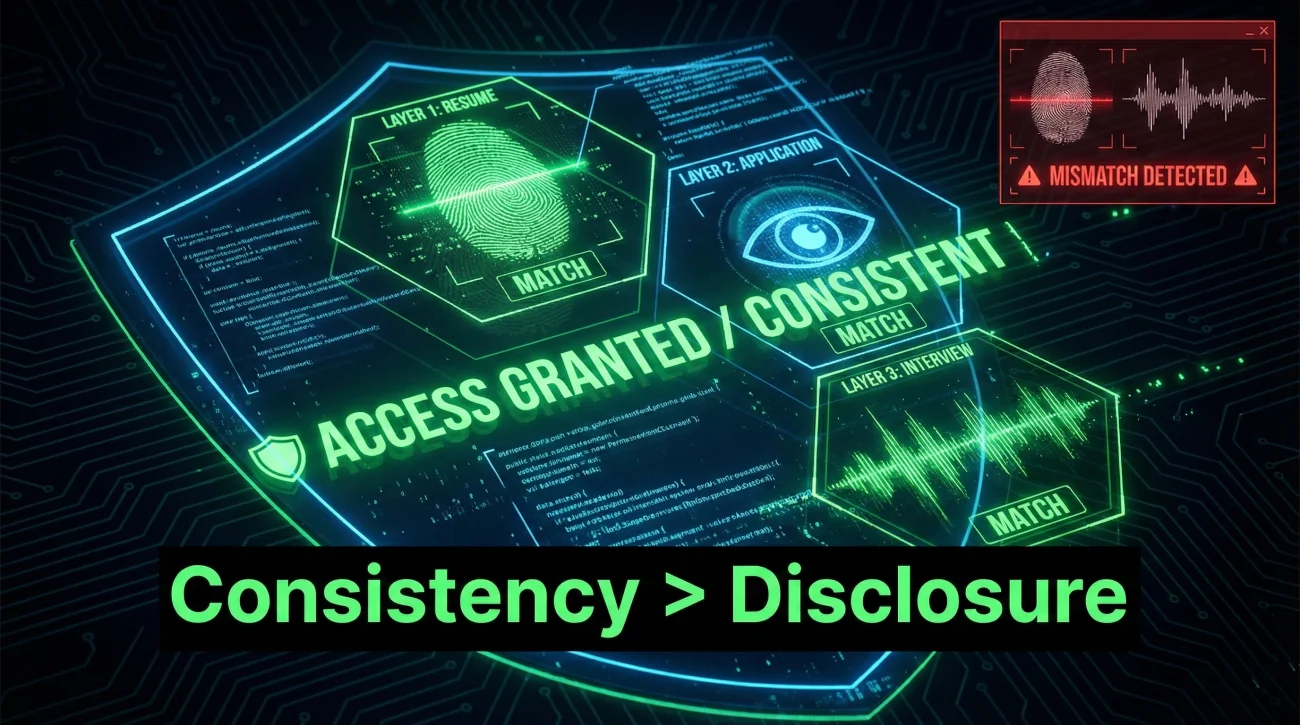
The internet is full of advice that sounds confident but ignores how messy real hiring flows can get. One company may only confirm dates and titles. Another may ask extra separation questions through internal HR or a third-party verification step.
Here is the practical takeaway: You do not need to volunteer “I was fired” as your headline. But you should not invent a story that collapses later either.
So what is the safe middle path?
Use a minimal label that is true, then control the rest of the bandwidth with closure and proof. “The role ended after performance expectations were not met” is very different from a long explanation about the manager, the politics, and the exact day it happened.
⚠️ Warning: The fastest way to lose trust is not being fired. It is sounding like you are editing the story depending on who is listening.
I saw this play out with a candidate who told a recruiter it was “a restructure,” then later an application asked a separation reason and he chose “terminated.” The recruiter did not reject him because he was terminated. The recruiter rejected him because the story now looked managed.
Timing Rules: When To Disclose vs When To Wait
Most bad advice treats disclosure like a binary. In real hiring flows, timing changes based on what the recruiter asked, what the process requires, and what might surface later.
| Situation | What to do | Why it works |
|---|---|---|
| The recruiter does not ask why you left | Do not volunteer. Keep it as a neutral transition, then move on. | You avoid creating a new line of questioning. |
| recruiter asked why left directly | Answer in two sentences, then pivot to fit and proof. | You stay honest without inviting a debate. |
| A form or screening step requires a separation reason | Use a factual, minimal label and keep it consistent with your spoken version. | You reduce mismatch risk later. |
| You are in a small industry where backchannel references are likely | Acknowledge it briefly if asked, then emphasize what changed. | You control the framing instead of letting rumors frame it. |
| The termination was very recent and you still sound raw | Keep it calm and short now, then let proof markers carry the weight later. | Recruiters can hear “rawness” and interpret it as instability. |
❌ Note: “I signed an NDA so I cannot say anything” can sound like you are hiding misconduct. If you use it, add a stability signal right after it: “It is resolved, and I can share recent results and references.”
Agency Recruiter vs In-House Recruiter: Same Truth, Different Pressure
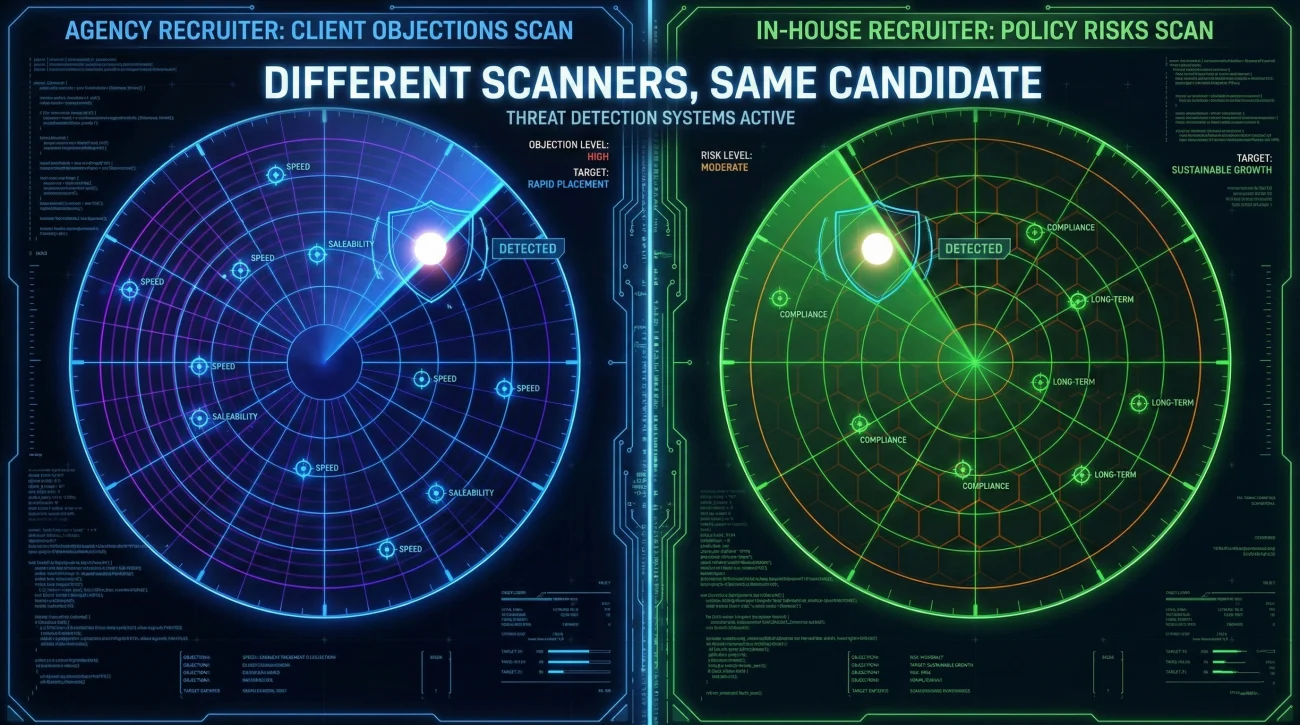
This is under-covered online, but it matters. The same truth can land differently depending on who is screening you, not because one is “nicer,” but because their job is different.
Agency recruiters are often thinking: “Can I submit this person without creating a client debate?” In-house recruiters are often thinking: “Will this become a policy problem later, or will I have to explain it repeatedly to the hiring manager?”
The good news is you do not need two different stories. You just need one stable version that is easy to repeat. With an agency recruiter, keep it tighter and more proof-forward. With an in-house recruiter, keep it consistent and make sure the same language could survive a form question if it appears later.
💡 Pro Tip: Your goal is to sound like someone who has already digested the lesson, not someone still negotiating the meaning of the event.
Three Recruiter-Safe Scripts That Keep the Story Small
These are not magic lines. They are scaffolding. You use them to say enough truth to stay credible, then you steer the call back to fit.

Script 1: When they ask directly on the phone
“I left my last role after expectations were not aligned on the performance side. I took that feedback seriously, fixed the gap, and I can walk you through the results I delivered in my next projects. What matters most to me now is joining a team where the success metrics are clear from day one.”
Say it once, then stop. If you keep talking, you usually start “defending,” and defending invites cross-examination.
The pivot is the last sentence. It tells the recruiter you are not running from the topic, you are moving forward with a clearer target.
Script 2: When you need consistency for a form or a later verification step
“The role ended as a termination tied to performance expectations. It is resolved, and I have strong references from other managers and peers who can speak to my work. I am focused on roles where my strengths match the job, and I can share examples that map directly to your requirements.”
This version is a little more explicit because it is designed to survive the rest of the process. It names the category, signals closure, and points to references without sounding like a plea.
If the recruiter asks for details after this, you can calmly offer proof markers instead of replaying the story.
Script 3: When the recruiter pushes for details you should not give
“I can give you the high-level context, but I prefer to keep it brief and professional. I own my part in it, I made changes, and I am confident in the work I can do. If it helps, I can share a specific example of a project where I hit the kind of goals this role is measured on.”
This is a boundary without attitude. It keeps you from narrating an incident the recruiter cannot verify and does not want to arbitrate.
It also gives the recruiter an “exit ramp” to a normal screen. Most will take it if you offer it confidently.
💡 Pro Tip: If you want to literally tell recruiter i was fired, do it only when asked or when a process step requires it. Otherwise, let the structure carry the truth without making it your headline.
Six Pivots That Return the Call to Fit and Proof
After a termination disclosure, the next 20 seconds matter more than the disclosure itself. These pivots are designed to stop the recruiter from digging and start them thinking: “Okay, this person can still do the job.”
- “What I am looking for now is a role with clear success metrics, and that is why this job caught my attention.”
- “If it helps, I can share one result that matches your top priority for this role.”
- “The lesson I took from it was one change, and it has shown up in my recent work.”
- “I am happy to answer questions, and I also want to make sure we cover why I am a strong match for what you need.”
- “The best evidence is my work. I can describe the kind of output I have delivered recently.”
- “If the hiring manager wants more context later, I can give it then. For now, I want to keep us focused on fit.”
A candidate I coached used a version of this after being terminated from a high-pressure environment. The recruiter stopped probing, moved to compensation and availability, and she got the hiring manager call. The termination did not disappear. It just stopped owning the conversation.
Mistakes That Trigger Extra Probing
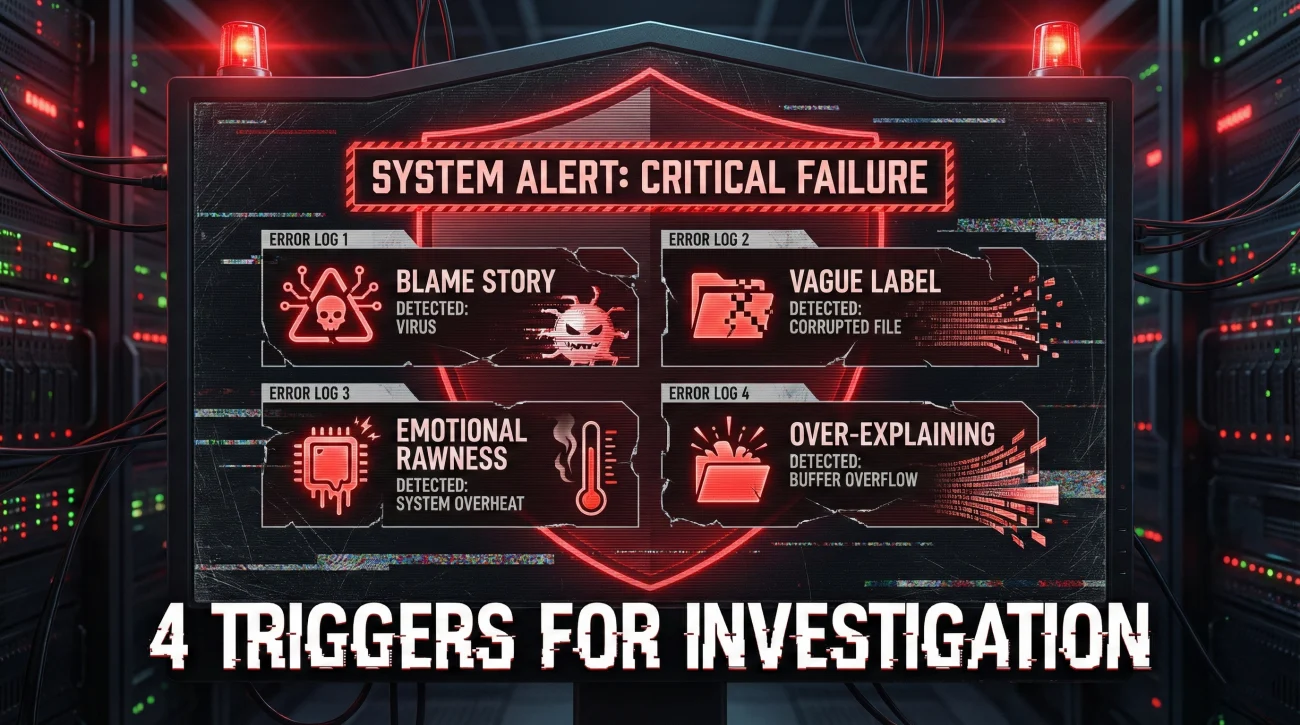
Recruiters ask follow-ups when your language creates uncertainty. These are the patterns that reliably cause that.
- Blame stories: Even if the workplace was toxic, long blaming narratives sound like future conflict risk.
- Vague edited labels: “It was mutual” can be true, but it often sounds like a cover when asked a simple question.
- Emotional rawness: Frustration and sarcasm read as instability, even when the facts are reasonable.
- Over-explaining: Five minutes of context signals there is more here than the recruiter can confidently pass forward.
⚠️ Warning: The more detail you add, the more angles the recruiter can probe. If you feel yourself starting to “justify,” stop and pivot to proof.
Your Best Damage Control Is Proof Markers
If you were terminated for performance, the recruiter’s quiet question is: “Is this still true?” Your answer should be proof markers, not reassurance.
- A recent project with measurable output you can explain in 30 seconds.
- A reference from someone who supervised your work closely, even if it is not from that employer.
- A work sample, portfolio artifact, or a clear before-and-after story.
- A short learning loop: What changed, and how it showed up in results.
What if you worry the recruiter will assume the worst anyway?
Then your language needs more structure, not more pleading. Keep it calm, keep it brief, and give them something they can confidently pass forward.
💡 Pro Tip: If you are trying to disclose termination to recruiter without spiraling the call, keep the explanation shorter than the proof that follows it.
A 15-Second Self-Check Before You Say Anything
This is the part most people skip, and it is exactly why the answer comes out messy in real time.
- Is my first sentence factual, not emotional?
- Did I include one accountability phrase without blaming?
- Did I include one closure phrase that signals it will not repeat?
- Did I pivot to proof within two sentences?
- Could this exact version stay consistent on a form if asked later?
If you can answer “yes” to those five, you are in the safe zone.
Final: A Recruiter Screen Rewards Control, Not Confession
Most people lose ground here because they treat a recruiter screen like a therapy session or a trial. Neither works. You can be honest without turning the firing into your identity.
The timing rule is simple: Do not volunteer it unless the process forces it, but never create a story that will collapse later. Keep the explanation to two sentences, add a closure signal, and pivot to proof fast.
If you are still looping on should i tell recruiter i was fired, treat it like a control problem. Your story should be small, consistent, and easy for someone else to repeat. Your evidence should be louder than your explanation.
❓ FAQ
🧩 What if the recruiter asks, “Were you fired?” with no context?
Answer briefly and stay factual, then pivot. A simple “Yes, the role ended as a termination, and it is resolved” is enough. Your next sentence should be proof and fit, not detail.
🧠 Should I bring it up first to “look honest”?
Only if the process or industry makes it likely to surface early, or if the recruiter directly asks why you left. Otherwise, leading with it often creates unnecessary probing before you have shown any value.
🧯 What if I was fired for attendance, conflict, or a policy issue?
Do not describe the incident. Name the category at a high level, own your part, and describe the change you made. Then move to evidence, such as reliability markers, references, and recent results.
📌 Can a background check show I was terminated?
Some processes capture more than others. Your safest strategy is consistency across every step, so your story never looks managed or rewritten.
🎯 What is the biggest red-flag answer to avoid?
A long blame story. Even if you were treated unfairly, the recruiter hears future conflict risk. Keep it short, professional, and focused on what you changed and what you can deliver.
⚠️ Disclaimer: ResumeSolving provides resume, cover letter, job search communication, and career transition guidance for informational purposes only. Hiring practices vary by employer, role, location, industry, and individual circumstances. We do not guarantee interviews, job offers, ATS results, or other outcomes. Verify employer requirements directly and follow applicable laws and workplace policies. For sensitive situations, use only information you are comfortable disclosing and keep all statements accurate.