
- Employment gaps trigger recruiter concerns about reliability and job readiness, but proper framing neutralizes these doubts
- Four gap types require different strategies: mental health or illness, caregiving, long term unemployment, and sabbatical or burnout
- Use the AREF framework (Acknowledge, Reassure, Evidence, Forward) to explain any gap consistently across resume, applications, interviews, and LinkedIn
- Privacy boundaries matter: you control how much to disclose, and less is usually more
Why Recruiters Care About Employment Gaps
In over a decade working in HR, I have reviewed more resumes with gaps than without. Career breaks are normal. What is not normal is how poorly most candidates handle them.
A gap on your resume is not automatically a problem. The problem is what recruiters imagine when they see unexplained blank space. Without context, hiring managers assume the worst: termination for cause, unreliability, or skills that have gone stale. I have watched hiring committees reject qualified candidates simply because no one could figure out what happened during that mysterious two year window.
According to a LinkedIn survey of over 23,000 workers and 7,000 hiring managers, 62% of employees have taken a career break at some point. Yet one in five hiring managers still automatically reject candidates with unexplained gaps. The difference between rejection and interview often comes down to how you frame the story.
The stakes are real. Recruiters spend an average of six to seven seconds on initial resume review. In that time, unexplained gaps stand out like red flags. But candidates who address gaps proactively and professionally often find that their break becomes a non issue, or even a talking point that demonstrates maturity and self awareness.
Employment gaps on resume explanations need to accomplish three things: remove doubt, demonstrate current readiness, and pivot back to the value you bring. This guide gives you the framework to do exactly that, regardless of why you stepped away from work.
Four Types of Employment Gaps
Not all gaps carry the same assumptions. A sabbatical triggers flight risk concerns. A health gap triggers stability concerns. Caregiving gaps trigger availability concerns. Long unemployment triggers skill decay concerns. Your explanation strategy must address the specific doubt your gap type creates.
Mental Health or Illness Gaps 🏥
Health related gaps require the most careful handling because they sit at the intersection of privacy rights and employer concerns about attendance and reliability.
The core tension: you need to explain enough to neutralize assumptions, but not so much that you create new concerns or violate your own boundaries. Most candidates overshare. The recruiters who reject health gap candidates usually do so because the explanation raised more questions than it answered.
What works: brief acknowledgment, clear statement of resolution, and evidence of current capability. What fails: detailed medical histories, defensive explanations, or complete silence that forces recruiters to guess.
Caregiving Gaps 👨👩👧
Caregiving gaps are increasingly common and increasingly accepted. The pandemic normalized conversations about family responsibilities, and many employers now recognize caregiving as legitimate work that builds transferable skills.
The main recruiter concern is not whether caregiving was valid. It is whether your caregiving responsibilities will interfere with the job you are applying for now. Your explanation needs to address availability directly without being asked.
Long Term Unemployment 📉
Extended unemployment carries the heaviest stigma. After six months, recruiters start wondering why no one else has hired you. After a year, they assume your skills are outdated. After two years, many will not consider you at all without strong evidence of continued professional development.
The strategy here is different from other gap types. You cannot simply explain and move on. You need to show what you did to stay current: courses, certifications, freelance projects, volunteer work, or independent study. The gap itself matters less than what you did during it.
Sabbatical or Burnout Breaks ✈️
Sabbaticals trigger a unique concern that other gaps do not: flight risk. If you chose to leave work once, recruiters wonder if you will do it again. This is especially true if your sabbatical involved travel or personal projects that sound more appealing than a desk job.
Your explanation must include commitment signals. Why are you ready to return now? What has changed? Why this role specifically? Without clear answers to these questions, recruiters will assume you are just looking for a paycheck until your next adventure.
| Gap Type | Primary Recruiter Concern | What Your Explanation Must Address |
|---|---|---|
| Mental Health or Illness | Stability, attendance, recurrence | Resolution, current capability, readiness |
| Caregiving | Ongoing availability, divided attention | Current situation, availability confirmation |
| Long Term Unemployment | Skill decay, rejection by other employers | Continued development, recent activity |
| Sabbatical or Burnout | Flight risk, commitment level | Why now, why this role, closure signals |
The AREF Framework: One Structure for Any Gap
Early in my career, I noticed that candidates who handled gap questions well all did something similar. They acknowledged briefly, reassured directly, provided evidence, and pivoted forward. After years of refining this pattern with job seekers I coached, I started calling it the AREF framework. It works regardless of gap type, and it works across every touchpoint: resumes, application forms, phone screens, and face to face interviews.
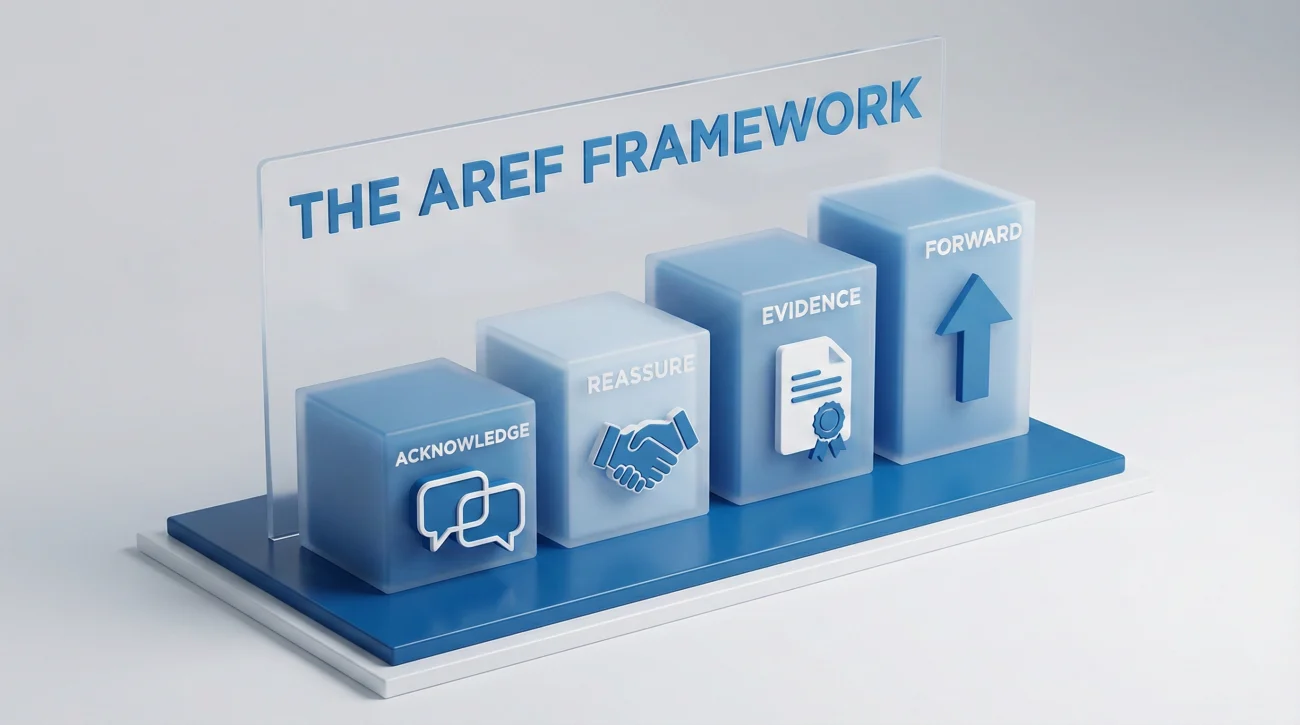
Acknowledge, Reassure, Evidence, Forward
What does AREF stand for?
Acknowledge means naming the gap without drama or apology. State what happened in neutral, professional language. One sentence is enough. Do not over explain at this stage.
Reassure means directly addressing the specific concern your gap type triggers. If it was health related, confirm you have fully recovered. If it was caregiving, confirm your availability. If it was a sabbatical, confirm your commitment to returning to work.
Evidence means proving your reassurance with concrete facts. What have you done recently that demonstrates readiness? Courses completed, projects finished, skills maintained, certifications earned. This is where you show, not just tell.
Forward means pivoting to the value you bring to this specific role. Connect your past experience and current readiness to what the employer needs. End on your qualifications, not on your gap.
Expert Advice: The AREF framework takes 30 to 45 seconds when spoken aloud. If your explanation runs longer, you are over sharing. Practice until you can deliver it smoothly without rushing.
AREF in Action
Here is how the framework sounds for different gap types:
I took time off to address a health issue, which is now fully resolved. During that time, I completed two certifications in project management and stayed current with industry trends. I am excited to bring that knowledge plus my seven years of experience to this role.
I stepped away to care for a family member. That situation has been resolved, and I am now available for full time work. While caregiving, I managed complex logistics and budgets, skills that translate directly to operations management.
I took a planned sabbatical to travel and reset after ten years in the industry. That chapter is closed, and I am fully committed to my next role. I used part of that time to learn data analysis tools that I am eager to apply here.
Notice what these examples have in common: brief acknowledgment, direct reassurance, concrete evidence, and a pivot to value. No apologies. No excessive detail. No defensive tone.
Privacy Boundaries: What You Do Not Have to Disclose
You are not legally required to explain why you have a gap. You are not required to disclose medical conditions, family situations, or personal decisions. Employers cannot legally ask about health status, disabilities, or family planning in interviews.
However, unexplained gaps create assumptions. The question is not whether to explain, but how much to explain. The goal is minimum viable disclosure: enough information to neutralize concerns, but no more than necessary.
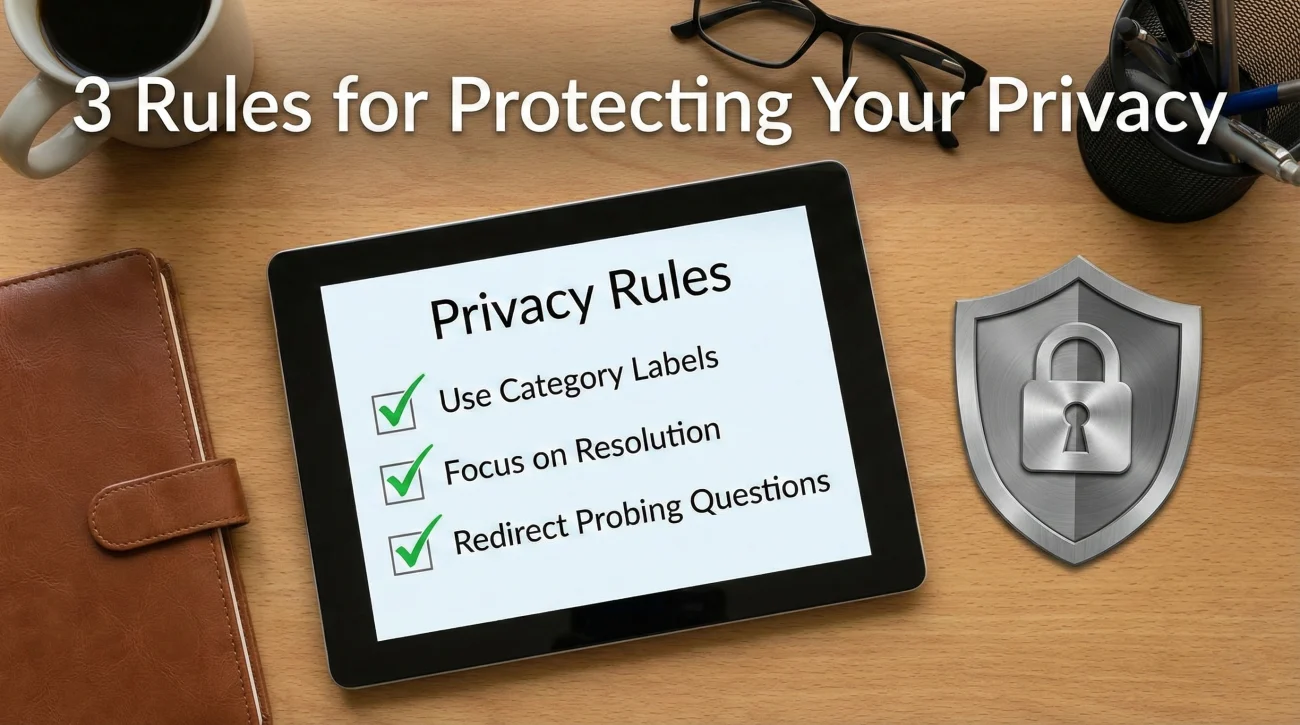
Three Rules for Protecting Your Privacy
- Use category labels, not specifics. Say “health reasons” not “depression treatment.” Say “family caregiving” not “my mother’s dementia.” Say “personal leave” not “divorce recovery.”
- Focus on resolution, not cause. Recruiters care whether the issue is resolved, not what the issue was. Lead with “fully resolved” or “situation has changed” rather than explaining the original problem.
- Redirect probing questions. If an interviewer pushes for details, you can say: “I prefer to keep the specifics private, but I am happy to discuss my qualifications for this role.” This is professional, not evasive.
⚠️ Warning: Some interviewers will push boundaries. Questions about specific diagnoses, medications, family planning, or caregiver responsibilities are often illegal. You can decline to answer and still remain professional.
The Consistency Checklist: Align Your Story Everywhere
Recruiters will see your gap explanation in multiple places: resume, application forms, LinkedIn, phone screen, interviews, and potentially background checks. Inconsistencies raise red flags. Your story must match across every touchpoint.
Five Places Your Gap Story Appears
Resume gap line. One line entry with dates and brief label. Example: “Career Break (2023-2024) – Family caregiving, now resolved.”
Application form text box. One to two sentences using AREF structure. Keep it under 50 words. Many applicant tracking systems have character limits, so brevity matters.
LinkedIn profile. Use LinkedIn’s Career Break feature with a professional description. Match your resume dates exactly. Your network will not be notified when you add this.
Phone screen answer. 10 to 15 second verbal version of AREF. This is usually your first live interaction, so practice until it sounds natural, not rehearsed.
In person interview. 30 to 45 second version with slightly more detail. Prepare follow up answers for probing questions like “Can you tell me more about that?”
Background verification. Employment dates must match exactly. Background checks verify dates with previous employers, not reasons for leaving. Discrepancies here can cost you an offer.
💡 Pro Tip: Write your AREF explanation once, then adapt it for each format. Start with the interview version (longest), then shorten for phone screen, application form, and resume line. This ensures consistency.
Using LinkedIn’s Career Break Feature
In March 2022, LinkedIn introduced a dedicated Career Break feature that allows you to add breaks directly to your Experience section. According to LinkedIn’s announcement, 51% of hiring managers say they are more likely to contact candidates who provide context about their career breaks.
The feature offers 13 predefined categories: bereavement, career transition, caregiving, full time parenting, gap year, health and wellbeing, layoff or position eliminated, personal goal pursuit, professional development, relocation, retirement, travel, and voluntary work.
When to Use the Career Break Feature
- Your break lasted more than three months
- The gap is visible in your timeline and would raise questions
- You can describe what you did or learned during the break
- You want to control the narrative before recruiters make assumptions
You can add up to 2,000 characters of description to explain what you did during the break. Use this space to highlight skills maintained, courses completed, or experiences gained. Your network will not be notified when you add a career break.
Detailed Guides by Gap Type
This pillar page covers the universal framework. For specific scripts, templates, and strategies tailored to your situation, see the detailed guides below.
| Guide | What You Will Learn |
|---|---|
| Mental Health and Illness Gap | Privacy safe scripts, resume wording, interview boundaries, and consistency strategies for health related breaks |
| Caregiving Gap | Availability framing, transferable skills positioning, and return to work signals for family caregivers |
| Long Term Unemployment | Skill decay prevention, recent activity sections, and credibility rebuilding for extended job searches |
| Sabbatical and Burnout Breaks | Flight risk mitigation, commitment signals, and closure framing for voluntary time off |
Seven Mistakes That Make Employment Gaps Worse
After reviewing thousands of resumes and conducting hundreds of interviews over the years, I have seen the same mistakes destroy otherwise strong candidates. Most people sabotage themselves not by having gaps, but by explaining them poorly.
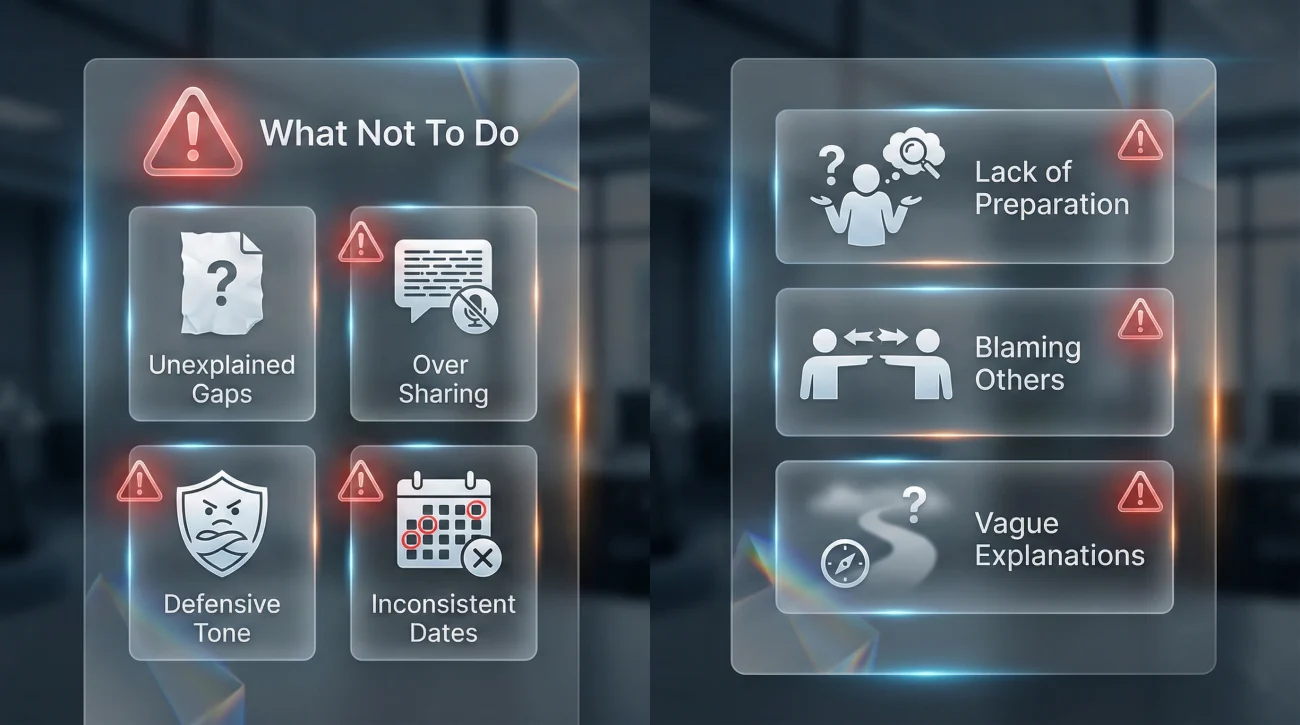
What Not to Do
Leaving gaps completely unexplained. Blank space invites imagination. I once passed on a candidate who turned out to have taken time off to earn a graduate degree. She never mentioned it, and I assumed she had been terminated. When I found out months later through a mutual connection, I felt terrible, but she had already accepted another offer. Control your narrative.
Over explaining with too much personal detail. A colleague of mine interviewed a candidate who spent fifteen minutes describing her divorce proceedings when asked about a one year gap. The explanation was longer than her answer to “Why do you want this job?” Recruiters are not therapists. Two sentences is usually enough.
Sounding apologetic or defensive. Phrases like “I know this looks bad” or “I hope you can understand” signal that you think the gap is a problem. If you treat it as a problem, recruiters will too. I have hired candidates with three year gaps who presented them confidently, and rejected candidates with six month gaps who acted like they had committed a crime.
Inconsistent dates across documents. Background checks catch this constantly. If your resume says 2022 to 2024 but LinkedIn says 2021 to 2024, we notice. One of my HR friends rejected a finalist candidate after discovering a six month discrepancy between his application and his employment verification. The gap itself would not have been a problem. The inconsistency was.
⚠️ Warning: Date inconsistencies are the number one reason offers get rescinded after background checks. Triple check your dates before applying anywhere.
Lying or stretching dates to hide gaps. I cannot stress this enough: we verify employment dates. Every offer I have ever rescinded was due to falsified information, not the underlying gap. A candidate who honestly explains a two year break is hireable. A candidate who lies about a six month break is not.
Failing to show recent activity. Explaining why you were away is only half the job. You also need to prove you are ready to return. A former colleague recently told me she passed on a candidate with strong experience because he had done nothing professionally relevant in three years. No courses, no certifications, no volunteer work, no independent projects. She could not justify the risk to her hiring manager.
Not preparing for follow up questions. Your initial explanation will prompt additional questions. “Why so long?” “What specifically did you do?” “How do we know this will not happen again?” If you stumble or become defensive, it undermines everything you said before. Practice until your answers feel automatic.
Your Action Plan: What to Do This Week
Reading about gap strategies is not enough. You need to implement them before your next application. Here is a concrete action plan:
Five Steps to Gap Proof Your Job Search
- Step 1: Write your AREF statement. Draft a 30 to 45 second explanation using the Acknowledge, Reassure, Evidence, Forward structure. Read it aloud until it sounds natural.
- Step 2: Audit your dates. Compare your resume, LinkedIn, and any previous applications. Fix any inconsistencies immediately.
- Step 3: Update your LinkedIn. Add a Career Break entry if your gap is visible. Use the description field to highlight what you did or learned during the break.
- Step 4: Build your evidence folder. List all courses, certifications, volunteer work, freelance projects, or professional reading from your gap period. You will use these in applications and interviews.
- Step 5: Practice with someone. Have a friend or family member ask you about your gap. Practice answering calmly and confidently until the explanation feels automatic.
Expert Advice: The candidates who handle gap questions best are the ones who practiced out loud. Reading your explanation silently is not the same as saying it to another person. Find someone to role play with before your first interview.
Complete these five steps before submitting your next application. Preparation is the difference between gaps that get you rejected and gaps that barely get noticed.
Final Thoughts
Employment gaps do not disqualify you from good jobs. What disqualifies candidates is poor framing, inconsistent stories, or defensive explanations that raise more questions than they answer.
Use the AREF framework to structure every explanation. Keep your story consistent across resume, applications, LinkedIn, and interviews. Protect your privacy by using category labels instead of specific details. And always pivot back to the value you bring.
Remember that hiring managers are human too. Many have taken breaks themselves or managed employees who did. They are not looking for perfect, uninterrupted career paths. They are looking for capable people who can do the job. Your task is to make it easy for them to see past the gap and focus on your qualifications.
The goal when addressing employment gaps on resume is not to pretend the gap never happened. It is to demonstrate that whatever happened is resolved, you are ready to work, and you are the right person for this role. Do that, and the gap becomes a footnote, not a barrier.
FAQ
📅 How long of a gap is too long to explain?
There is no fixed limit, but expectations change with length. Gaps under six months rarely need explanation. Six months to two years require clear AREF framing. Over two years requires strong evidence of continued professional development. The longer the gap, the more important your “Evidence” component becomes.
🔒 Can employers legally ask why I have a gap?
Employers can ask about gaps in general terms. They cannot legally ask about specific medical conditions, disabilities, pregnancy, or family planning. If an interviewer asks inappropriate questions, you can redirect: “I prefer to keep those details private, but I am happy to discuss my qualifications.”
📝 Should I put the gap on my resume or leave it blank?
For gaps over six months, addressing them directly is usually better than leaving blank space. Unexplained gaps invite assumptions. A brief, professional entry like “Career Break (2023-2024)” with one line of context gives you control of the narrative.
🎯 What if my gap was due to being fired?
Termination is different from voluntary gaps. Use neutral language like “position ended” or “company restructured.” Focus on what you learned and how you have grown. Never speak negatively about former employers. Background checks verify dates, not reasons for leaving.
💼 Do I need to explain gaps from 10+ years ago?
Generally no. Resumes typically cover 10 to 15 years of relevant experience. Gaps from early in your career are less scrutinized than recent ones. If asked, a brief explanation is sufficient: “That was early in my career when I was exploring different paths.”
⚠️ Disclaimer: ResumeSolving provides resume, cover letter, job search communication, and career transition guidance for informational purposes only. Hiring practices vary by employer, role, location, industry, and individual circumstances. We do not guarantee interviews, job offers, ATS results, or other outcomes. Verify employer requirements directly and follow applicable laws and workplace policies. For sensitive situations, use only information you are comfortable disclosing and keep all statements accurate.