- If your summary reads like you are still pitching for gigs, recruiters will assume you are not ready to commit.
- Use one of 3 freelancer-specific patterns: Role-first with client cue, In-house-ready consultant, or Specialist with repeatable outcomes.
- Add 2 proof hooks inside the summary: Scope, signal of continuity, and a team-ready operating style.
When “Freelance” Is True but “Gig Worker” Is the Vibe
I once worked with a UX designer named Kimberly who had a solid book of work, recognizable client logos, and genuinely strong outcomes. Yet she kept hearing the same soft rejection: “We loved your portfolio, but we need someone stable.”
Her experience was stable. Her resume summary was not.
It opened with something like: “Freelance UX designer available for new projects.” That single line quietly told every hiring manager: “I am still in gig mode.” Even if Leah wanted a full-time role, the summary sounded like a pitch for clients, not a signal of continuity.
This article is about fixing that specific gap: Writing a resume summary for freelancers that reads like a hireable teammate, without pretending you were employed by one company the whole time.
What Recruiters Are Actually Decoding in 6 Seconds
Most recruiters do not dislike freelance experience. They dislike ambiguity.
When they skim a summary, they are decoding three things fast:
| What they want to know | What your summary must quietly answer |
|---|---|
| Role clarity | What is your lane, and what roles are you targeting right now. |
| Continuity | Is your work consistent, or a scattered collection of gigs. |
| Team readiness | Can you operate like an internal teammate: deadlines, stakeholders, handoffs, and ownership. |
Freelancers often fail the second and third signals, not because reality is messy, but because the summary reads like a marketplace profile.
🗝️ Key Point: Your summary is not a biography. It is a decoding shortcut. Write it so the recruiter’s brain can categorize you in one pass.
The Phrases That Accidentally Say: “I’m Still Shopping for Gigs”
Sometimes the issue is not what you did. It is the tone. These lines are common in a freelancer resume summary, but they trigger the wrong assumption when you are applying for a role inside a company.
| Sounds like gig hunting | Sounds team-ready |
|---|---|
| Available for new projects | Ready to join a product team as [Target Role] |
| Worked with many clients across industries | Specialized in [Domain] projects for [Client type], delivering [Outcome] |
| Self-motivated freelancer who wears many hats | End-to-end operator: discovery, delivery, stakeholder updates, and measurable results |
| Open to short-term and long-term opportunities | Looking for a long-term scope where I can own outcomes and improve systems |
| Looking for challenging projects | Looking for a role with clear ownership, cross-functional collaboration, and growth scope |
⚠️ Warning: If your summary reads like it belongs on a freelance platform, recruiters will assume your commitment and schedule are flexible for clients, not aligned to a team.
3 Patterns That Make Freelance Experience Look Continuous
Pick one pattern. Do not blend all three. The biggest mistake I see is trying to sound like everything at once.
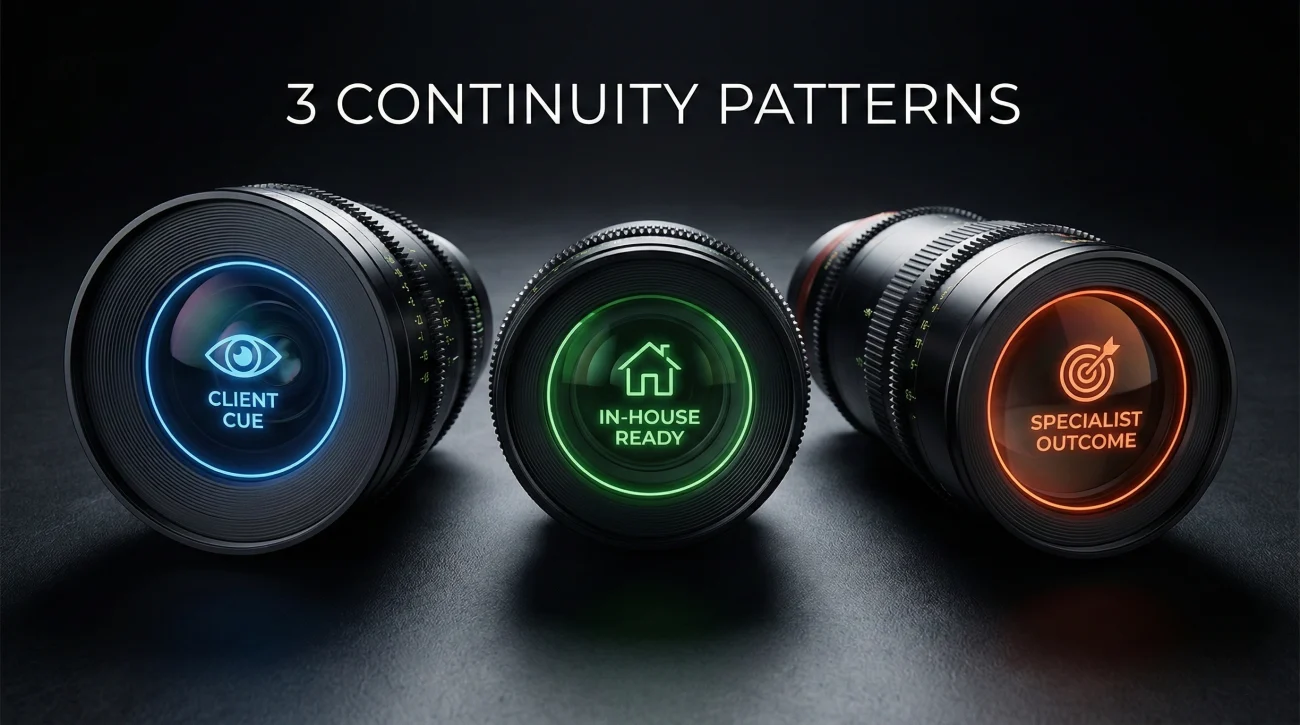
Pattern 1: Role-first with a client-type cue
This pattern works when your freelance work is consistent in function, even if clients changed. You lead with the target role, then use a client-type cue to show your environment.
[Target Role] + [Specialization] + [Client type cue] + [Proof hook]
Example: “Product Designer specializing in onboarding flows for B2B SaaS teams, improving activation and reducing support load.”
Use this if you want the reader to think: “This person has been doing one real job, just in multiple places.”
Pattern 2: In-house-ready consultant
This pattern is for people whose freelance work was closer to advisory, delivery leadership, or internal improvement. It fits especially well if you were effectively an embedded operator.
[Role identity] + [Operating style] + [Stakeholders] + [Measured outcomes]
Example: “Operations consultant who embeds with cross-functional teams to diagnose bottlenecks, redesign workflows, and deliver measurable cycle-time improvements.”
This is where you can naturally include consultant resume summary language without sounding like you are applying to sell services.
Pattern 3: Specialist with repeatable outcomes
This pattern is the strongest antidote to “jack of all trades.” You pick one or two outcomes you repeatedly delivered, then tie them to the target role.
[Specialist label] + [Repeatable outcome] + [Proof scope] + [Team-ready signal]
Example: “Lifecycle marketer focused on retention systems, building email journeys and offers that lifted repeat purchase rates across multiple DTC brands.”
This is the cleanest way to make diverse clients feel like one continuous body of work.
The Proof Hooks List: What to “Plant” Inside 4 to 6 Lines

Freelancers often keep proof for the bullet points. That is fine, but the summary still needs two hooks so the reader believes the story before they scroll.
Pick two proof hooks from this list. Three is sometimes okay, but only if the sentences stay clean.
- Scope: Number of engagements, years, or a stable time frame that implies continuity.
- Client type: Not brand-dropping, but enough to show environment, like “seed-stage SaaS” or “multi-location healthcare.”
- Outcome: One measurable result or a clear before-after impact.
- Operating rhythm: Stakeholders, handoffs, sprint cadence, or ownership style.
- Complexity signal: Cross-functional work, compliance, multi-market, integration, or scale.
- Team intent: One line that signals you want long-term ownership, not short-term gigs.
💡 Pro Tip: If you are worried about sounding arrogant, choose an outcome phrased as an improvement, not a brag. “Reduced rework” reads calmer than “crushed KPIs.”
Three Real Situations I See Over and Over
These are the situations where the summary usually breaks, and what fixed it.
Situation 1: The “Many Clients, No Narrative” problem
Kimberly, the designer, listed seven clients in her summary. The intent was credibility. The effect was chaos.
We rewrote it using Pattern 3. Instead of naming clients, we named the repeatable outcome and the environment. Her summary became legible in one pass, and suddenly the rest of the resume felt more believable.
Situation 2: The “I was basically internal” freelancer
A colleague of mine, Curtis, did contract analytics work where he was embedded for months at a time. His old summary still sounded like he did quick gigs, because he used words like “contractor” as the headline.
We kept the truth, but changed the framing: Role identity first, embedded operating style, stakeholder language, then outcomes. Hiring managers stopped asking “Will you stay?” and started asking “Can you lead this workstream?”
“I’m not trying to be a vendor. I want to own a scope and ship improvements with one team.”
Situation 3: The freelancer who wants stability but fears looking desperate
Millie was a fractional PM. She worried that saying “seeking full-time” would read like she failed at freelancing. That is a common fear, and it is usually unfounded.
The solution was a calm intent line: long-term ownership, team collaboration, and growth scope. No apology, no over-explaining. The tone did the work.
10 Resume Summary Examples for Freelancers
Each example follows one pattern and includes at least two proof hooks. Treat these as templates, not copy-paste scripts. Swap in your actual scope, client type, and outcome.
Example 1: Freelance Product Designer aiming for in-house
Example 2: Freelance Writer aiming for Content Strategist
Example 3: Freelance Developer aiming for Full Stack Engineer
Example 4: Embedded analytics contractor aiming for Data Analyst
Example 5: Marketing freelancer aiming for Lifecycle Marketing
Example 6: Fractional PM aiming for Product Manager
Example 7: Operations consultant aiming for Ops Lead
Example 8: Finance contractor aiming for FP&A Analyst
Example 9: HR contractor aiming for People Ops
Example 10: Generalist freelancer who needs narrowing
Note: If you truly are applying as a contractor, keep the same patterns, but change the intent line. That is where you can naturally use contractor professional summary wording without turning the whole summary into a sales pitch.
A Simple Assembly Checklist Before You Hit Submit
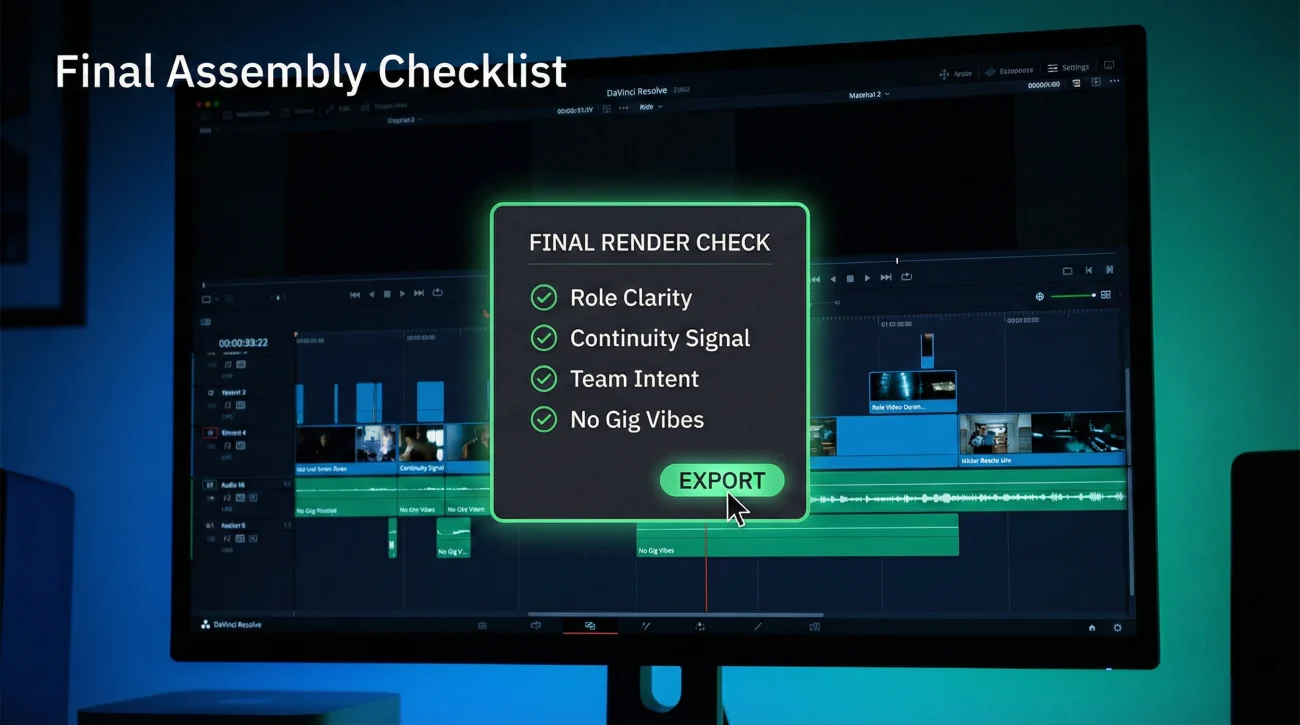
This is the last pass I do with candidates when their summary feels “almost right.” It is not about making it longer. It is about making it decode faster.
- First five words: Do they name the role you want, not your work arrangement.
- Client type cue: Do you give an environment clue without listing seven brands.
- Two proof hooks: Scope, outcome, or operating rhythm, but not all at once.
- One team-intent line: Calm, confident, long-term ownership.
- No marketplace language: Avoid “available”, “open to projects”, “rate”, “short-term”.
💡 Pro Tip: If you feel tempted to add more lines, do not. Move extra detail into bullets under your freelance experience section, where it belongs.
Final
Freelance is not the problem. The problem is when the reader cannot tell whether your freelancing was a coherent career lane or a string of unrelated gigs.
If you choose one pattern, plant two proof hooks, and write one calm intent line, your summary starts to read like continuity instead of hustle. That is the moment hiring managers stop wondering if you will disappear, and start imagining you in the seat.
When you treat the summary like a component that must carry clarity, continuity, and team readiness, resume summary for freelancers stops sounding like a disclaimer and starts sounding like a professional identity.
❓ FAQ
🧩 Should I say “freelance” in my resume summary?
You can, but you do not have to lead with it. If you lead with “freelance” as the identity, you risk being decoded as a vendor. A safer approach is role-first, then a client-type cue. Mention freelance in experience section headers if needed.
🎯 How long should a resume summary be for a freelancer?
Usually 4 to 6 lines. Long enough to show role clarity, continuity, and one measurable outcome, but short enough that it still reads like a scan-friendly hook.
🧠 What is the fastest way to avoid sounding like a gig worker?
Remove marketplace language. Avoid “available”, “open to projects”, and “short-term opportunities”. Replace it with a team-intent line about long-term ownership and collaboration.
📌 Can I list multiple roles in my freelancer summary?
Only if they are tightly related and you are targeting a role that genuinely spans them. Otherwise, pick one target role for the summary and let the rest live in your experience bullets. Role ambiguity is one of the fastest trust killers in a skim.
🔍 What if my freelance work was across many industries?
Use a repeatable-outcomes pattern. You can keep the industry variety, but anchor it to one specialization and one or two outcomes you delivered repeatedly. That makes the variety feel like breadth, not scatter.
🛠️ How do I write a consultant-style summary without sounding salesy?
Focus on operating style and outcomes, not on pitching. Use stakeholder language, embedded delivery rhythm, and measurable improvements. That is what makes a consultant summary read like an internal operator, not a service provider.
⚠️ Disclaimer: ResumeSolving provides resume, cover letter, job search communication, and career transition guidance for informational purposes only. Hiring practices vary by employer, role, location, industry, and individual circumstances. We do not guarantee interviews, job offers, ATS results, or other outcomes. Verify employer requirements directly and follow applicable laws and workplace policies. For sensitive situations, use only information you are comfortable disclosing and keep all statements accurate.