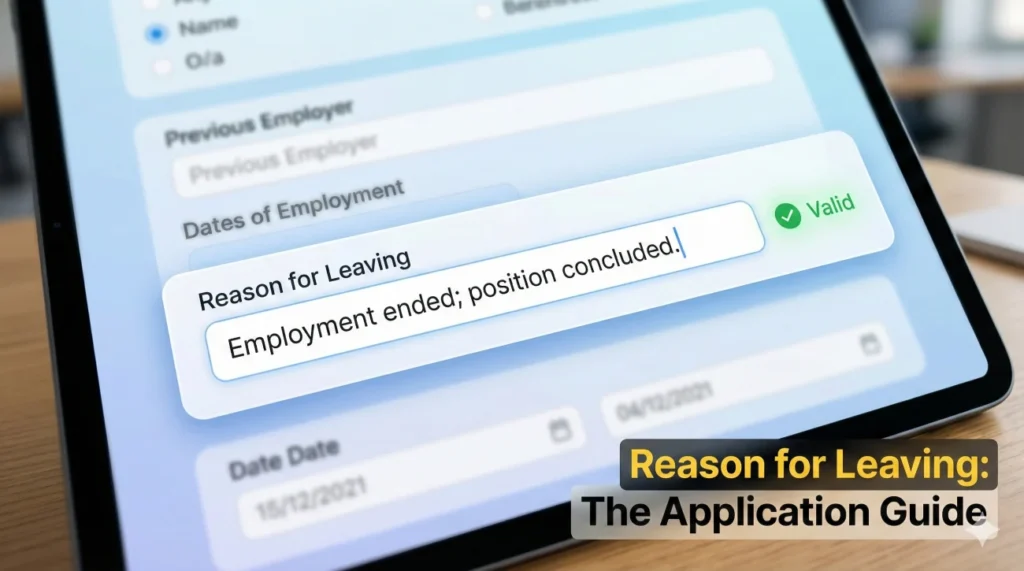
- If you were fired, the application form is not asking for your whole story. It is asking for a stable label that stays consistent later.
- A good “reason for leaving” line is short, neutral, and matches what a reference check could confirm.
- Use scenario-based wording, and follow three consistency rules so your paperwork does not become the red flag.
The Hard Part About Application Forms: They Turn One Sentence Into Your Official Record
I have watched strong candidates freeze at the exact same moment: the application asks for “Reason for leaving,” and their last job ended involuntarily. They are not trying to hide anything dramatic. They are trying to avoid writing something that sounds unstable, emotional, or easy to misread.
That is what this guide is for. If you are searching reason for leaving fired application, you do not need a speech. You need a short line that is honest, neutral, and consistent with what a recruiter can verify.
One of my HR peers, Alina, puts it bluntly: “A form answer is not a redemption arc. It’s a label we can file.” She is right. The goal is not to win empathy. The goal is to keep the process moving until you can speak like a normal human in an interview.
💡 Pro Tip: In most companies, the person reading your form is not judging your character. They are checking whether your story stays stable across paperwork, screenings, and references.
What The “Reason for Leaving” Field Is Really Classifying
Application forms usually collect this information in one of two ways:
- A dropdown (terminated, laid off, resigned, contract ended)
- A short free-text box (often limited to one line)
Those two formats matter because they change what you can safely say. A dropdown is a category. Free text is a micro-explanation. When people get burned, it is usually because they treat free text like a diary entry.
| Form format | What they are trying to learn | What you should give them |
|---|---|---|
| Dropdown only | Separation category for processing and policy | A truthful selection, then keep details for interview |
| Dropdown + short text | Whether the separation sounds contained or ongoing | One neutral line with a closure signal |
| Long text box | Risk check and consistency check | Still short, still neutral, still verifiable |
Key Point: Your form answer is not where you prove you are a great person. It is where you prove you are consistent.
I once worked with a candidate named Claudia who had been fired after a messy performance cycle. She wrote two emotional paragraphs in the form explaining the manager’s “toxic leadership.” The recruiter did not call to debate leadership style. They simply marked her as “high risk: conflict narrative” and moved on.
We replaced it with a single line that was truthful and calm. She got to the phone screen, where she explained context with a steady tone. Same facts, different outcome.
Three Consistency Rules That Keep You Safe Later
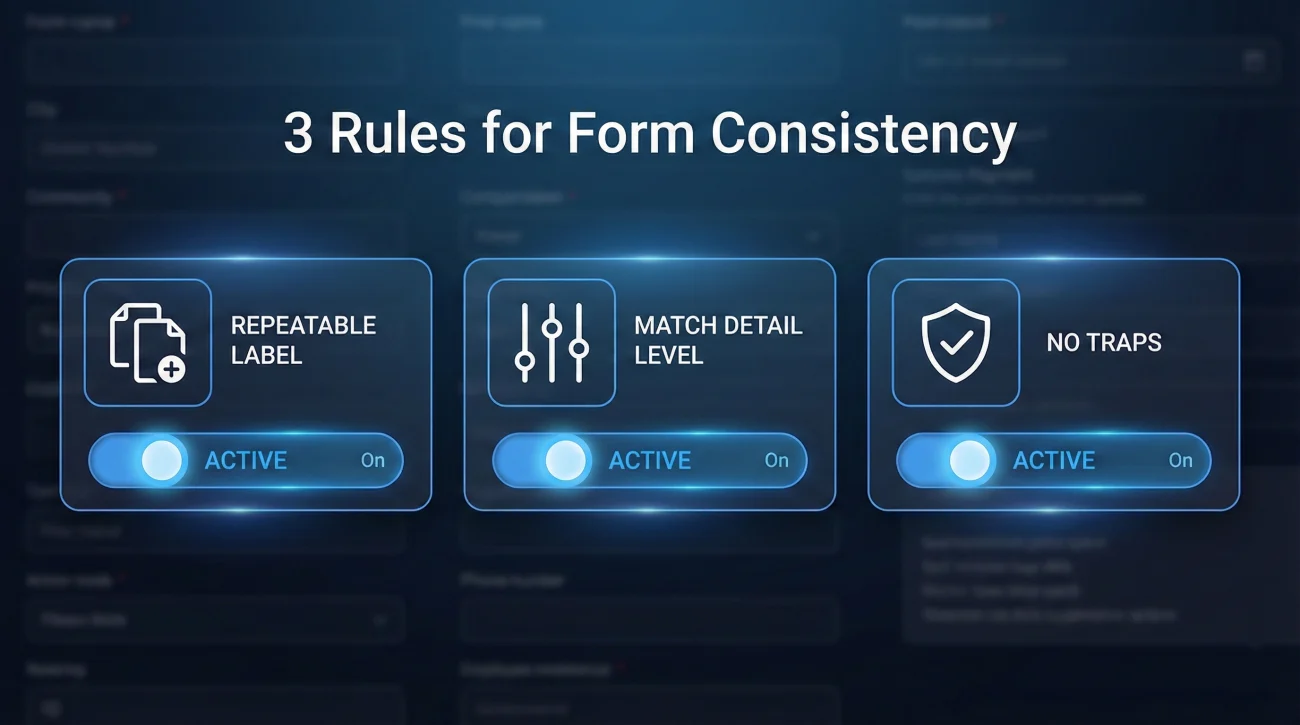
Rule 1: Pick A Label You Can Repeat Without Editing
If the form category is “terminated,” do not rewrite it into “laid off” just because it feels nicer. If your resume implies one thing and the form implies another, you create a credibility gap that did not exist before.
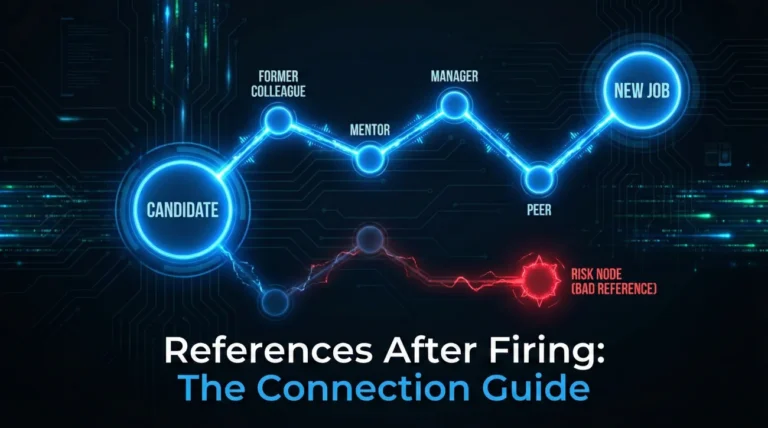
Think of your application as a record that may be seen by different people: recruiter, coordinator, background-check vendor, and hiring manager. The fastest way to turn a manageable situation into a rejection is to make those records disagree.
⚠️ Warning: If you choose a softer label that cannot survive a reference check, the problem is not the firing. The problem becomes credibility.
Here is what “stable” versus “unstable” looks like in plain language. The stable one is boring on purpose, because it can be repeated later without rewriting.
Stable label example:
Unstable label example:
Rule 2: Keep The Detail Level The Same Across Documents
A common mistake is writing one vague line on the application, then giving a highly specific story in an interview, then listing something else on a background-check vendor form. That pattern reads like hiding, even when you are simply nervous.
Consistency is not only the words. It is also the detail level. If your application is one line, your interview answer can be 20 to 40 seconds, but it should match the same category and the same closure signal.
When in doubt, use one simple structure: [Employment ended] + [Neutral category] + [Forward-facing closure].
One clean example that fits the structure:
Rule 3: Do Not Write Anything That Invites A Follow-Up You Cannot Answer Calmly
If you write “Wrongful termination,” expect the next question to be legal and uncomfortable. If you write “Harassment,” expect an investigation conversation. If you are not prepared to handle that in a composed, factual way, do not introduce it in a one-line form field.
This is not about silencing yourself. It is about choosing the right place for sensitive facts. A job application form is a bad stage for complex topics because it removes tone, context, and nuance.
One line should reduce questions, not create a new storyline.
Compare these two lines. One keeps the record calm and closed and the other is a version that usually triggers more questions than it solves.
12 Short “Reason for Leaving” Answers When You Were Fired
Everything below is designed for the box that gives you one line, sometimes two. Each option stays truthful, avoids blame language, and includes a closure signal.
Important nuance: If the form has a dropdown, select the truthful category first. Then use the line as your short explanation.
| Scenario | Short answer you can paste | Why this works |
|---|---|---|
| Performance expectations not met | Employment ended due to performance expectations; skills strengthened since. | Direct, no excuses, signals closure and improvement. |
| Role mismatch, wrong fit | Employment ended due to role fit; pursuing positions aligned to strengths. | Honest without blaming, keeps it contained. |
| Attendance reliability issue | Employment ended due to attendance expectations; reliability is now stabilized. | Names the category, signals it is not ongoing. |
| Probation period did not convert | Employment ended during probation; seeking a better long-term match. | Clear timeline, sounds bounded and common. |
| Policy violation, non-criminal, no details needed | Employment ended due to a policy matter; resolved and moving forward professionally. | Truthful category without oversharing sensitive specifics. |
| Conflict with manager or team dynamics | Employment ended after a management alignment issue; focusing on role expectations. | Avoids blame words, still explains separation. |
| Company recorded it as “terminated” during reorg | Employment ended during organizational changes; position concluded. | Neutral and verifiable, avoids arguing labels in a form. |
| Termination with no clear reason given | Employment ended involuntarily; seeking a role with clearer success metrics. | States involuntary without inventing a story. |
| Sales quota miss, metrics-driven environment | Employment ended due to target outcomes; pursuing roles with better fit to strengths. | Signals realism and avoids sounding defensive. |
| Miscommunication or process error | Employment ended due to a process issue; I have corrected my approach since. | Owns a category, shows action without drama. |
| End of assignment was messy, labeled as termination | Assignment ended; separation recorded as termination; seeking stable long-term role. | Handles system labels without emotional framing. |
| You expect “eligible for rehire” questions later | Employment ended involuntarily; prepared to discuss details in an interview. | Buys time, keeps form clean, signals openness. |
💡 Pro Tip: If you are worried about wording, choose the option that a former employer could confirm without interpretation.
Two quick snapshots from the hiring side that show what “clean” looks like:
- ✅ A candidate wrote: “Employment ended due to performance expectations; skills strengthened since.” In the interview, the story matched the category and stayed calm. No one felt misled.
- ✅ Another wrote: “Employment ended during probation; seeking a better long-term match.” The explanation was brief, factual, and future-focused. The line did its job.
If your situation is the classic “what to put for reason for leaving if fired,” treat this as your constraint: one line, neutral tone, repeatable later without edits.
Five Things That Make Recruiters Nervous In This One Field
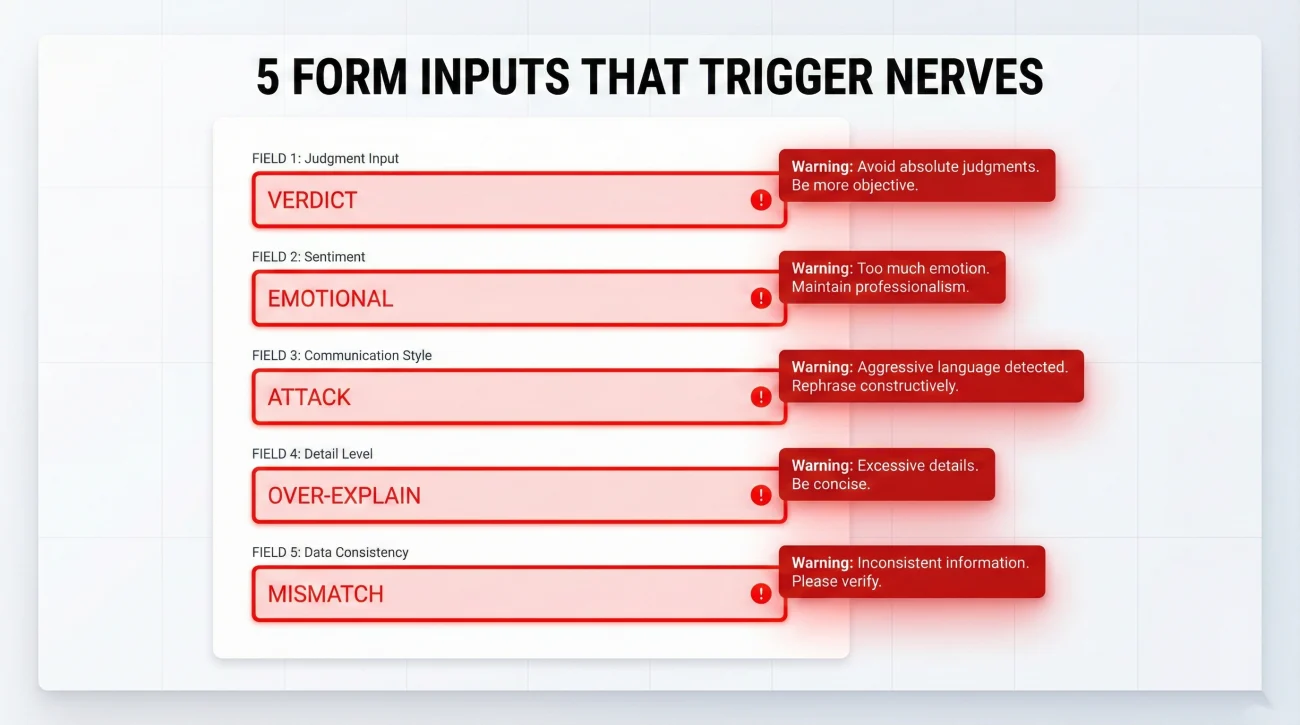
1) Writing A Verdict Instead Of A Reason
“Wrongfully terminated,” “retaliation,” or “set up to fail” might feel accurate to you. On a form, it reads like a conflict case. The reviewer cannot validate it, so they default to caution.
If you need to stay truthful without opening a legal narrative, keep the line category-level and closed.
2) Using Emotional or Moral Language
Words like “toxic,” “abusive,” “unfair,” and “corrupt” are not helpful in a one-line field. Without context, they land as volatility, not clarity.
If something truly serious happened, the form is still the wrong medium. Use a neutral label, then handle nuance later when tone and context exist.
3) Attacking A Specific Person or Team
Names, titles, and “my boss” narratives turn you into a risk case. A recruiter cannot verify your side, so they interpret it as potential drama in the next role.
If the issue was alignment, describe it like a business mismatch, not a personal feud.
4) Over-Explaining Like You Are On Trial
Long explanations create two problems: they read defensive, and they create more chances for inconsistency later. If you cannot repeat it easily, it is too long for a form.
Keep the form answer short, then use the interview for a calm, factual bridge.
5) Creating A Label Mismatch On Purpose
If you were terminated, do not write “resigned” to feel cleaner. That is how a firing becomes a credibility problem. Even when employers only verify dates and title, mismatches can still surface through rehire eligibility questions.
💡 Note: A clean process is worth more than a clever sentence.
If you are worried about “application form fired” wording, boring professionalism is the goal. Boring gets you to the next stage.
Micro-Templates For Different Form Styles
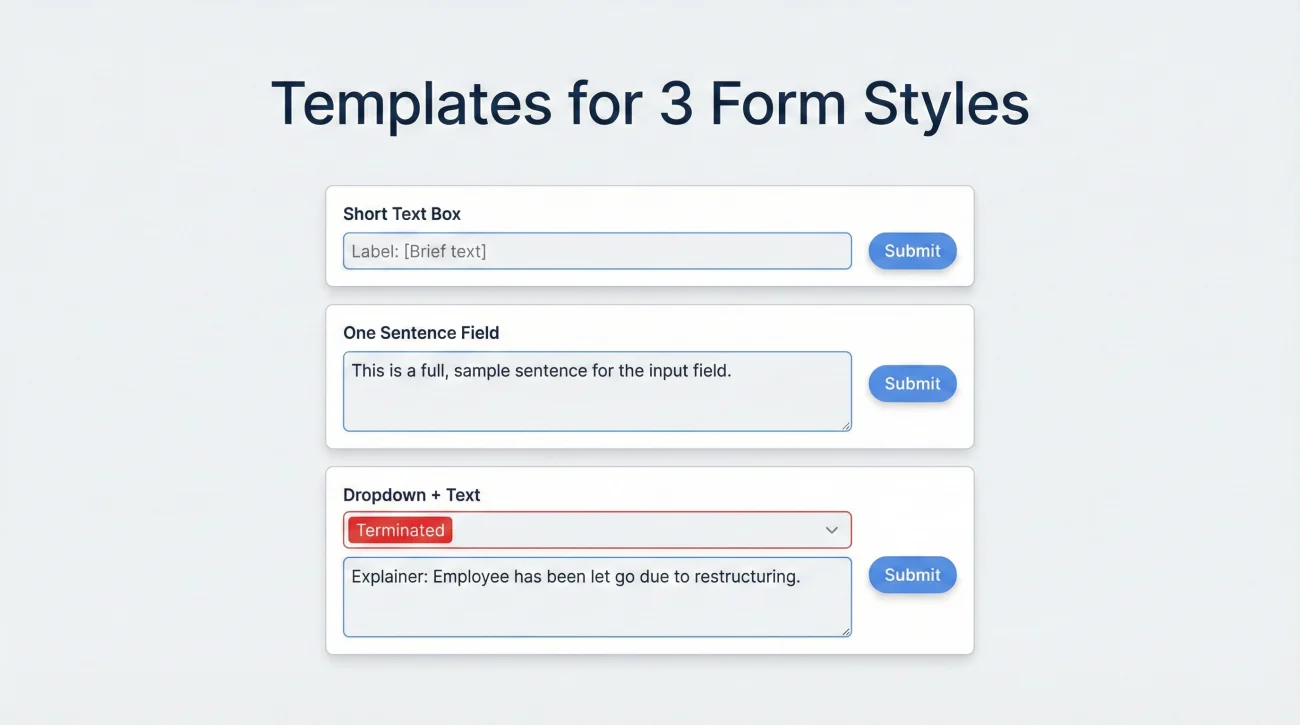
If The Form Gives You Only 30 to 60 Characters
When the space is tight, avoid adjectives and avoid blame language. Your best move is a truthful label that does not start a debate inside a textbox.
Option A works when you want maximum brevity.
Option B reads slightly softer while staying honest.
If The Form Gives You One Short Sentence
This is the sweet spot. State the category, then add one closure signal. The closure signal reduces “ongoing risk” in the reader’s mind.
Pick a sentence that matches the true category of your separation.
If it was more about fit than targets, use a fit-based version.
If The Form Has Dropdown Plus A Text Box
Select the truthful category first. The text box is not where you fight the dropdown. It is where you keep the record readable and stable.
If the dropdown already says “Terminated,” the text does not need to repeat it loudly. It needs to explain the category neutrally and signal closure.
Example 1:
Text box: Employment ended due to role fit; pursuing positions aligned to strengths.
Example 2:
Text box: Employment ended involuntarily; prepared to discuss in an interview.
If your situation is “reason for leaving terminated,” these templates keep the wording neutral while still owning the label.
How To Bridge From The Form Line To A Normal Interview Answer
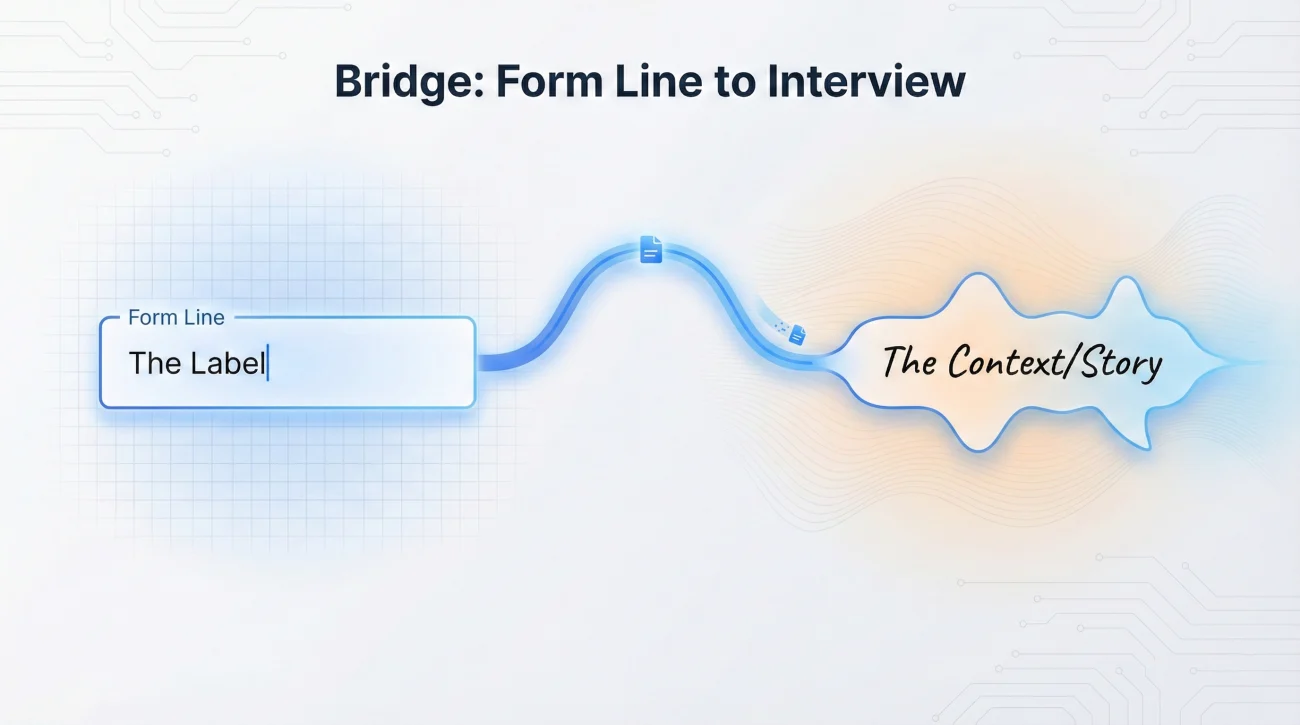
Your form line earns you the chance to speak. Your interview answer proves you are stable now.
You do not need to win an argument about the past. You need to show three things without heat:
- 📌 You understand what went wrong at a category level
- 📌 You have taken a concrete step since
- 📌 You are not carrying the conflict into the new role
“I was terminated after missing performance targets. I took time to rebuild my workflow and upskill, and I’m now focused on roles where the success metrics are clear and aligned with my strengths.”
Notice what that does not include: a villain, a courtroom tone, or a long list of grievances. It is calm. It is forward-looking. It is consistent with the form line.
Final: Make The Form Line Stable, Neutral, And Easy To Repeat
The application form is not where you explain your whole history. It is where you keep your record clean. If you were fired, one short, neutral line with a closure signal does more for you than a detailed defense.
When your wording stays consistent, the termination stops being a moving target. It becomes a past event with a calm label, and that is what lets recruiters focus on whether you can do the job now.
That is the win: a line you can repeat without rewriting, apologizing, or spiraling, the same mindset behind reason for leaving fired application wording.
❓ FAQ
🎯 Should I write “fired” or “terminated” in the text box?
If the dropdown already captures the category, the text box should not repeat it aggressively. Use “employment ended involuntarily” or “employment ended due to performance expectations,” then keep the rest for the interview.
🧩 What if the form forces me to choose “terminated,” but it felt like a layoff?
Choose the truthful option available, then keep the text neutral: “Employment ended during organizational changes; position concluded.” The goal is not to litigate the label inside a form.
🧠 Can I leave the field blank?
If it is optional, you can leave it blank, but many systems treat blanks as incomplete. A short, neutral line is usually safer than silence because it avoids looking evasive.
📌 What if I was fired for attendance because of a temporary personal issue?
Keep it category-level and closed: “Employment ended due to attendance expectations; reliability is now stabilized.” You can share context later if asked, but the form line should stay short.
🔍 Will they verify the reason I left?
Many employers verify dates and title. Some ask rehire eligibility. The bigger risk is inconsistency across your own documents. Write a line that you can repeat without rewriting later.
⚠️ Disclaimer: ResumeSolving provides resume, cover letter, job search communication, and career transition guidance for informational purposes only. Hiring practices vary by employer, role, location, industry, and individual circumstances. We do not guarantee interviews, job offers, ATS results, or other outcomes. Verify employer requirements directly and follow applicable laws and workplace policies. For sensitive situations, use only information you are comfortable disclosing and keep all statements accurate.