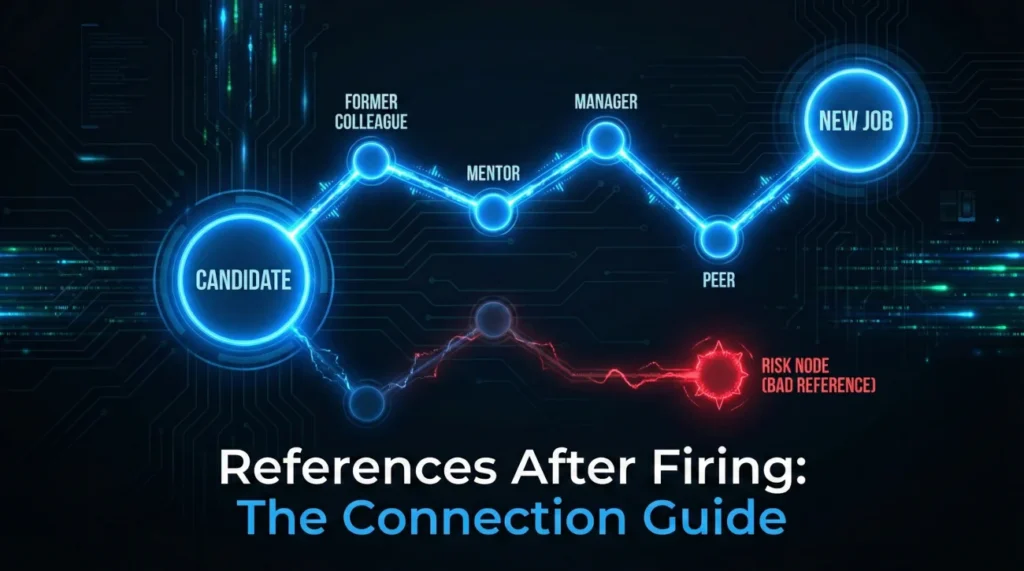
- If you were fired, your reference strategy is not about finding “someone nice.” It is about preventing mixed signals like “eligible for rehire.”
- Build a reference plan first: Who will verify facts, who will speak to performance, and who should not be contacted without your consent.
- Use a one page reference brief so every referee tells the same clean story without sounding coached.
Why References Feel Different After Termination
Most candidates worry about the firing itself. Recruiters usually worry about the second order problem: What will your references accidentally imply?
That is why how to handle references after being fired is less about persuasion and more about stability. A stable story has a clear timeline, a clean ending, and no new surprises when someone checks your background.
I learned this the hard way with a candidate named Devon. He did everything “right” in interviews. He owned the mistake, explained the lesson, and showed recent results. Then a reference check happened. The former employer confirmed dates, but the recruiter asked one extra question: “Would you rehire?” The answer was a quick “No.” Devon did not lose the offer, but it turned a smooth process into a slow, nervous back and forth.
When I debriefed the hiring manager later, the issue was not moral judgment. It was risk math. One tiny signal can outweigh ten strong interview answers.
Key Point: The goal is not to hide a termination. The goal is to prevent your references from creating new uncertainty after you have already addressed it.
The Three Reference Risks Recruiters Actually Screen For
Online advice often frames references as a popularity contest. In real hiring loops, references are more like a risk filter. A recruiter is listening for inconsistencies, unresolved performance patterns, and anything that suggests the problem is ongoing.
| Risk Recruiters Fear | What They Listen For | What You Want Instead |
|---|---|---|
| Ongoing availability or reliability concerns | Hesitation, vague answers, “I cannot really speak to that” | Short, factual scope plus one consistent strength |
| Performance issue that will repeat | Patterns: missed deadlines, conflict, poor judgment | One clear lesson plus evidence of changed behavior |
| Hidden separation details | Mismatch between your story and their wording | Same timeline, same reason category, same closure signal |
⚠️ Warning: Do not bet your offer on “They only confirm dates.” Some employers do, some do not, and recruiters do not always tell you what was asked.
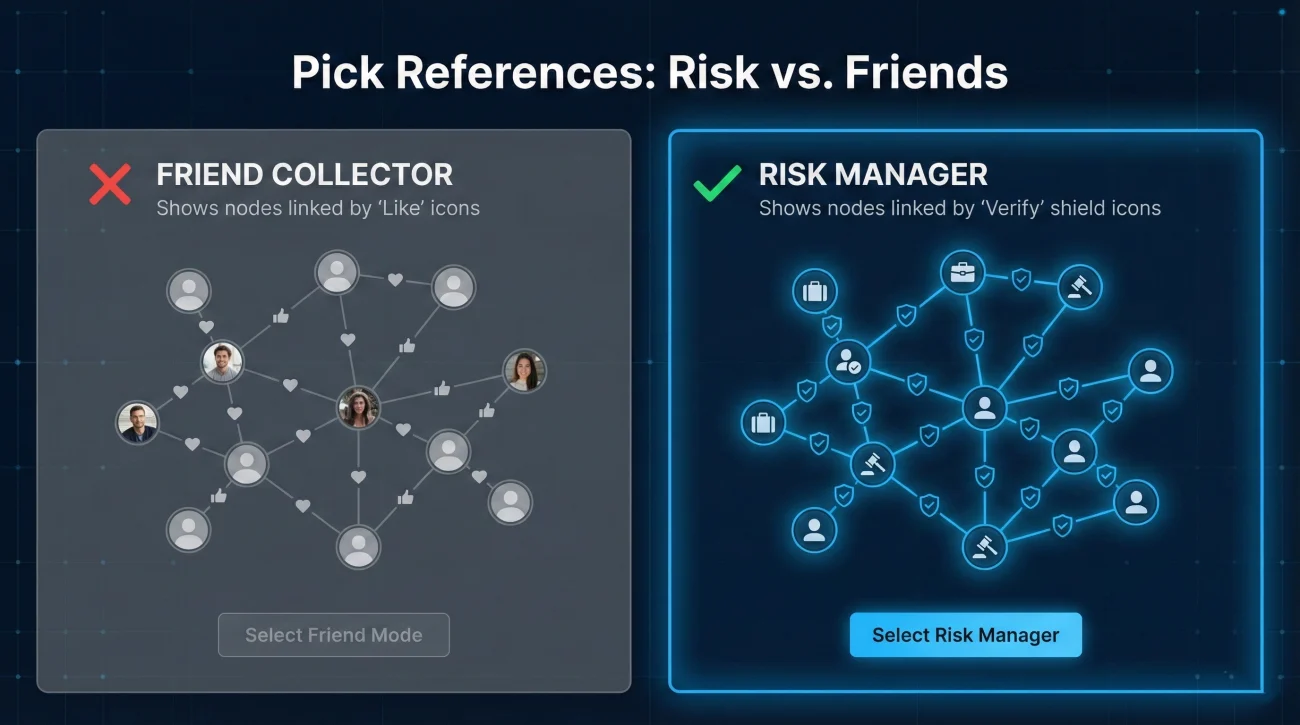
Pick References Like a Risk Manager, Not Like a Friend Collector
If termination is in the background, the safest reference set usually has three layers: A factual verifier, one strong performance witness, and one culture or collaboration witness.
A Simple Selection Rule That Prevents Mixed Signals
Start with this rule: Your references should be people who can talk about your work without needing to explain your exit.
That sounds obvious, but many candidates do the opposite. They pick the last manager because it looks “proper,” even if that manager is the person who terminated them.
- ✅ Pick someone who observed your work outcomes directly.
- ✅ Pick someone who can speak in specifics (projects, metrics, behaviors).
- ✅ Pick someone who will not improvise when asked about your separation.
- ❌ Avoid anyone who is emotionally invested in the conflict.
- ❌ Avoid anyone who says “Sure, I will say whatever you need.”
One of my peers, Lina (another HR lead), calls this the “no improvisation test.” She asks candidates: “If I wake your referee up at 7 AM and ask why you left, what will they say in one sentence?” If the candidate cannot predict it, the reference is not safe.
💡 Pro Tip: A reference who is predictable beats a reference who is enthusiastic but messy.
Create a One Page Reference Brief
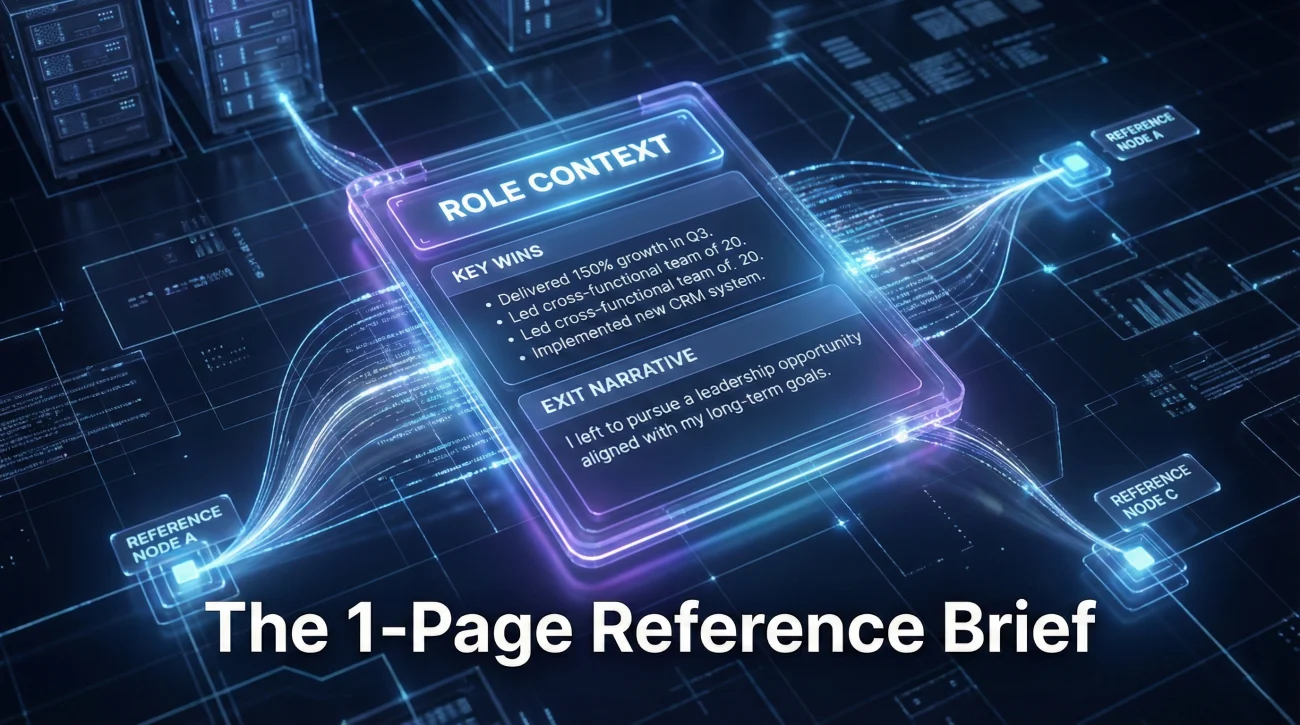
This is the practical tool most generic articles never give you. A reference brief is not a script. It is a clarity sheet so your referee knows what matters, what is off limits, and what “one sentence” to use if separation comes up.
When I coach candidates through termination cases, this one page does more than any motivational advice. It keeps everyone aligned without sounding rehearsed.
Role you knew me in: Senior Analyst, Growth Ops (2022 to 2024)
What I am applying for now: Senior Analyst, Revenue Operations
Top 3 strengths to emphasize:
1) Calm execution under shifting priorities
2) Cross functional alignment with Sales and Product
3) Clear weekly reporting and follow through
One project you can cite:
Rebuilt lead scoring with Sales Ops, reduced junk leads by 28 percent and improved SQL conversion in one quarter.
If asked why I left:
“The role ended after a performance reset. Since then, he has tightened execution systems and delivered strong results in recent work.”
Boundaries:
Please do not speculate about internal disputes. If pressed, keep it factual and short.
Notice what is happening here. You are not asking the referee to lie. You are removing ambiguity. If they only confirm dates, fine. If they get a broader question, they have a stable line that matches your story.
What To Say When They Ask For Your Most Recent Manager
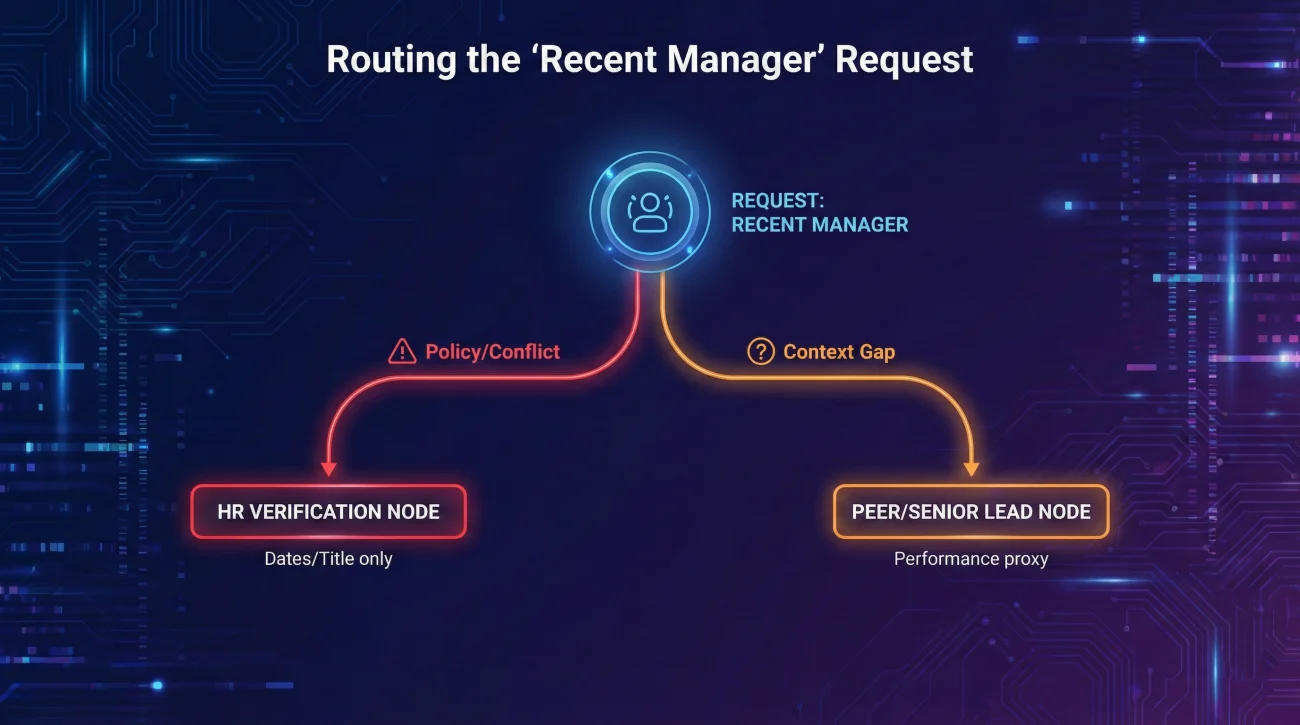
Some recruiters ask directly: “Can we contact your current or most recent manager?” After termination, that can feel like a trap. The key is to answer with calm structure, not defensiveness.
What if I do not want them to call my last manager?
You can say yes to references without saying yes to that specific person. Offer a clean alternative set: HR for verification, a senior peer for performance, and a cross functional partner for collaboration. Many recruiters accept this if your reasoning is stable and not dramatic.
What if they insist on the last manager anyway?
Ask what they need from that call. If it is simply role verification, suggest an HR verification channel instead. If they want performance validation, offer someone who supervised your work earlier, or a dotted line leader who reviewed your outcomes.
What should I say about the termination itself?
Keep it short, factual, and closed. A colleague of mine once summarized it perfectly: “One sentence, one lesson, one proof.” If you start narrating the full conflict, you sound unsettled, even when you are right.
“I can provide references who managed my work directly and can speak to outcomes. For employment verification, HR can confirm dates and title. I prefer that approach so you get the most accurate information.”
This kind of line works because it sounds organized, not evasive.
If “Eligible For Rehire” Might Be a Problem, Do This Before You Apply
Here is the harsh truth: “Would you rehire?” is sometimes used as a shortcut. It is not always fair, and it is not always nuanced. But it exists, so you plan for it.
A Practical Pre Check Sequence
Instead of guessing, take a sequence that reduces surprise:
- Identify whether the company uses centralized HR verification for references.
- Ask a trusted former colleague what the company policy usually sounds like in reference calls.
- If you are still in contact with HR, ask what they confirm as standard (dates, title, rehire eligibility).
- Build your reference set so one single call cannot dominate the story.
💡 Pro Tip: Even if the last employer will not give a positive reference, you can still design your reference set so the hiring team hears real performance evidence elsewhere.
Some content online pretends the only options are “use them” or “hide them.” Reality is more flexible. A candidate named Mei was fired from a small startup where the founder still takes calls personally. She used HR style verification for basics, then relied on a product lead from a partner company and a senior teammate from a prior role. The hiring manager got what they needed: Proof of capability, not a replay of the conflict.
Six Mistakes That Make Your References Sound Like a Cover Up
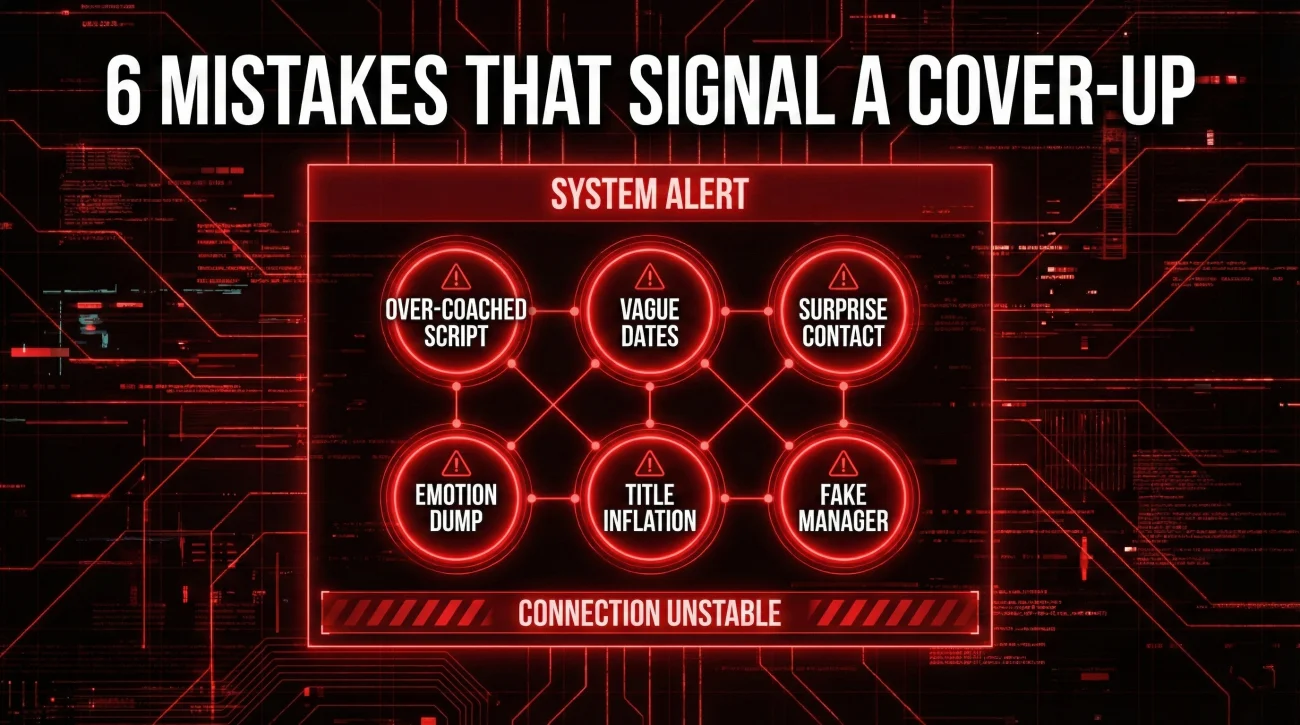
These are patterns I keep seeing, especially with strong candidates who are embarrassed and try to over correct.
- ❌ Asking a referee to “just keep it positive” without giving any context.
- ❌ Using only one reference, especially if it is the most recent manager.
- ❌ Letting different referees tell different timelines.
- ❌ Sounding rehearsed because everyone uses the same unnatural phrases.
- ❌ Picking referees who did not directly observe your work.
- ❌ Trying to solve it with fake references (high risk, low reward).
That last one is everywhere in low quality forum advice. It is tempting, especially when you feel cornered. But it turns an employment story problem into an integrity problem. And integrity problems do not get negotiated away.
Final: Make Your References Confirm Your Stability, Not Your Drama
If you were terminated, you do not need to build a perfect story. You need a consistent one. Pick references who can speak to outcomes, give them a one page brief, and keep any separation language short and closed.
Handled well, how to handle references after being fired becomes a quiet strength: Your story stays steady even when other people are talking.
❓FAQ
🧭 Do I have to use my last manager as a reference?
No. Many employers accept a combination of HR verification plus references who observed your work directly. Offer a structured alternative set instead of refusing vaguely.
🧩 What if my former employer has a neutral reference policy?
That can help. A neutral policy often means they confirm dates and title and avoid commentary. Still, plan for broader questions so you are not surprised.
🛡️ Should I warn my references that I was fired?
Give them context, but keep it clean. Your goal is to prevent surprise and improvisation. A short brief with one sentence on why you left is usually enough.
📌 Can a reference reveal I was terminated?
It depends on policy and practice. Some organizations limit what they share, others may say more if asked. Build your plan so one call does not control the whole narrative.
🌿 How many references should I prepare after a firing?
Have at least three ready: One factual verifier, one performance witness, and one collaboration witness. If your last role is sensitive, add one extra from a prior role as backup.
⚠️ Disclaimer: ResumeSolving provides resume, cover letter, job search communication, and career transition guidance for informational purposes only. Hiring practices vary by employer, role, location, industry, and individual circumstances. We do not guarantee interviews, job offers, ATS results, or other outcomes. Verify employer requirements directly and follow applicable laws and workplace policies. For sensitive situations, use only information you are comfortable disclosing and keep all statements accurate.