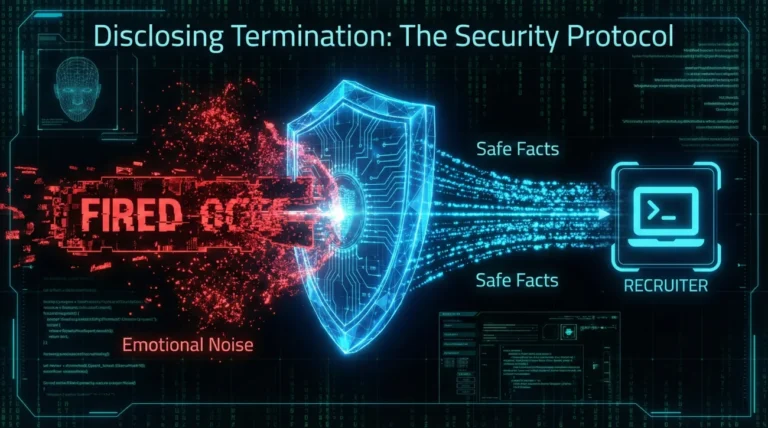
- The “eligible for rehire” prompt is usually a risk screen, not a morality test.
- Pick one of four answer paths: Yes, Yes with context, Unknown due to policy, or No with growth and closure.
- Use bridge lines to move the conversation back to stability signals and performance proof.
The Question That Sounds Small and Feels Huge
I have watched this one line ruin an otherwise calm job search week: “Are you eligible for rehire?”
It shows up in different places: A checkbox on an application, a recruiter’s quick screen, a third party verification form, or a blunt interview follow up. The reason it spikes anxiety is simple: It feels like you are being asked to predict what your former employer will say about you.
Here is the calmer truth: Most hiring teams use this as a shortcut risk screen. They are not asking you to relive the breakup. They are trying to figure out whether there is an unresolved issue that will surprise them later.
If you want a practical way to handle it, this guide is built around one phrase you can keep in your head: eligible for rehire question how to answer. Not as a script to memorize, but as a decision tree you can apply in 20 seconds.
💡 Pro Tip: Your goal is not to “win” the question. Your goal is to sound predictable: Clear, brief, and closed chapter.
What “Eligible for Rehire” Really Measures (And What It Does Not)
In HR terms, “eligible for rehire” is a label that often lives inside a policy, not inside your story. It can reflect performance, conduct, the terms of your exit, or sometimes just a standardized process flag. That means two people can leave in similar ways and still get different labels because their employers define “eligible” differently.
Key Point: Treat this as a stability question. Answer it like you are closing a file, not opening a debate.
Three common interpretations recruiters have in mind
When recruiters ask, they are usually mapping you into one of these buckets:
| What they suspect | What they are really testing | What you should signal |
|---|---|---|
| There was a conflict or a messy exit | Will there be a surprise reference problem? | Calm closure and professional tone |
| You left under pressure | Do you take responsibility without spiraling? | One lesson, one change, one stable present |
| You are guessing | Are you honest when you do not know? | Policy-based “unknown” plus forward proof |
What it does not automatically mean
It does not automatically mean “bad employee.” It does not automatically mean “fired for cause.” And it definitely does not automatically mean “offer gone.” I have seen candidates labeled “not eligible” for reasons like failing to give a full notice period, leaving during a critical project window, or violating a very narrow internal rule that had nothing to do with day-to-day competence.
The mistake is reacting like the label is a courtroom verdict. In reality, it is often just a risk signal they want you to interpret responsibly.
Identify Which Version of the Question You Are Answering
Before you choose wording, identify the format. The same two words can function differently depending on where it appears.
The four formats that change how blunt you should be
| Where it shows up | What it is used for | Best tone |
|---|---|---|
| Application checkbox | Automated filter or compliance record | Minimal, factual, no extra detail |
| Recruiter screening call | Quick risk scan before interview time | Brief plus one stability proof |
| Reference style screen | Consistency check across your story | Policy-based clarity, no defensiveness |
| Direct interview follow up | Character and ownership test | One lesson, one change, one forward signal |
⚠️ Warning: The biggest unforced error is volunteering a long explanation when they only asked for a yes, no, or brief context.
Four Answer Options That Keep You Out of Trouble
This is the part most internet content skips: You do not need one perfect line. You need the right option for your situation.

Option 1: Clear “Yes” with a short anchor
Use this when you left on normal terms, you were laid off, or you have no reason to believe there is a restriction.
“Yes. I left on good terms. My role ended due to a team change, and I kept everything professional through the transition.”
Why it works: It answers the question and adds one calm context sentence. Then you stop.
Option 2: “Yes, with context” when the exit was complicated but not alarming
Use this when you resigned abruptly, left during a conflict, or had a tense manager relationship, but you did not have policy violations. This is also where a rehire status question can be reframed as “terms of exit,” not “quality of person.”
“Yes, I am eligible. The exit was fast because the team direction changed, but I handled the handover cleanly and stayed professional through my last day.”
Why it works: You acknowledge complexity without narrating drama. You also say “handover” which is a stability signal recruiters understand.
Option 3: “I cannot confirm” when policy makes the status unknowable
Use this when you genuinely do not know, or when your former employer only provides limited confirmation and you cannot reliably predict what they will say. This option prevents guessing, which is what makes you sound slippery.
“I cannot confirm a formal rehire label because my former employer keeps that internal. What I can confirm is my work history is accurate, and I have references who can speak to my performance.”
Why it works: It is honest, it is policy-based, and it immediately offers an alternative proof channel.
Option 4: “No” without self-sabotage (Ownership plus closure)
Use this only if you know you are not eligible and the question is direct. The goal is not to confess. The goal is to show you learned, adjusted, and stabilized.
“No. The exit was not handled well on my side, and I learned from it. Since then, I have rebuilt my habits around reliability and communication, and my recent references can speak to that change.”
Why it works: You do not blame. You do not spiral. You deliver one lesson and one forward proof.
❌ Note: Avoid turning this into a speech about fairness. Even if you are right, it makes you sound risky in a time-limited screen.
Six Bridge Lines That Move the Conversation Back to Your Value

Most people lose the moment after they answer. They keep talking because silence feels scary. Instead, answer, then bridge.
Here are six lines you can paste into your own voice. They work whether the prompt is “eligible for rehire” or the harsher version: would you rehire me reference question.
“I can share a reference who worked directly with me and can speak to delivery and teamwork.”
“My focus now is stability and performance, and my recent projects show that pattern.”
“I understand why you ask. The short version is the chapter is closed and professional.”
“If it helps, I can walk you through a quick example of how I handled a tough deadline.”
“I prefer to keep exits factual. I would rather show you what I do in the role.”
If you use a bridge line, stop after it. Let them ask the next question.
Three Boundary Lines When They Push for Details
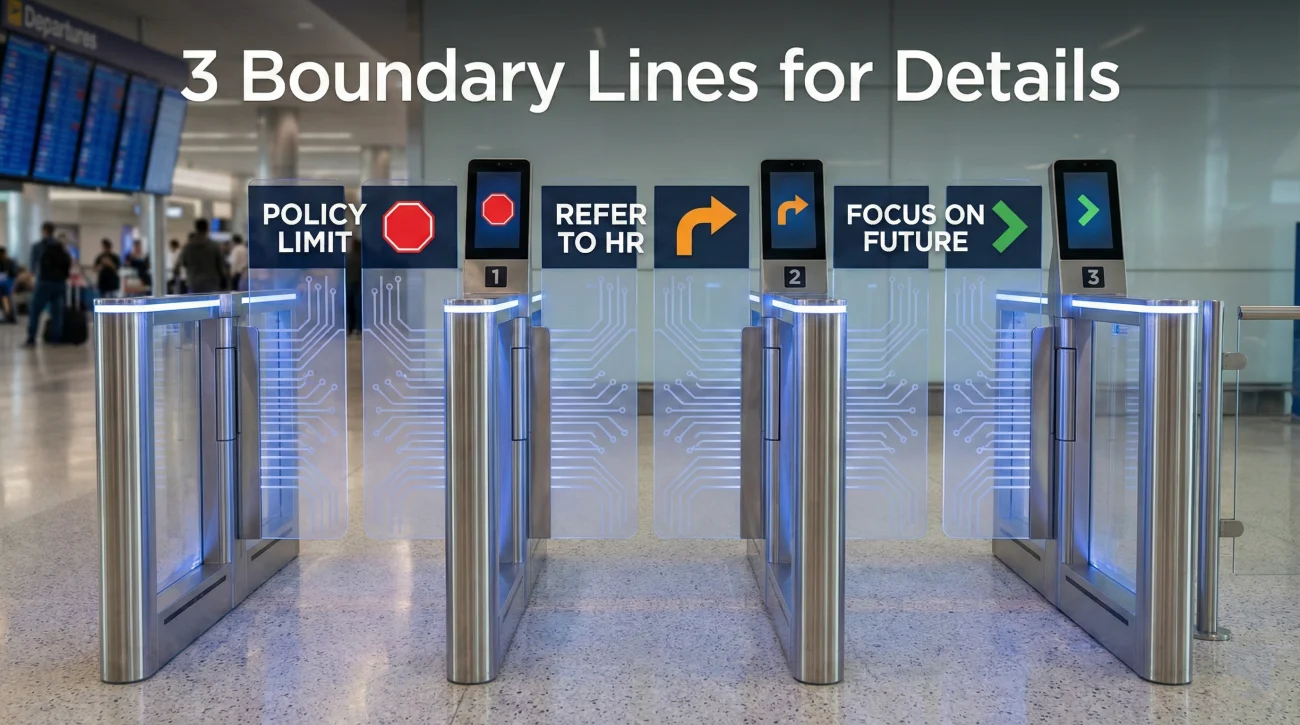
Sometimes a recruiter keeps digging: “What exactly happened?” or “So were you fired?” This is where candidates accidentally talk themselves into a corner.
Use boundaries that are polite and final
These are not evasive. They are structured. They keep you from oversharing and they keep the tone professional.
What if they say: “Just tell me why you are not eligible?”
You can say: “I can share the short version, but I want to keep it professional. The exit had a specific policy outcome, and my focus is showing you my current reliability and results.”
What if they say: “Were you terminated for cause?”
You can say: “The role ended, and I learned from that experience. I am happy to talk about how I improved since then, because that is what matters for this job.”
What if they say: “We need the full story.”
You can say: “I understand. I am comfortable being factual, but I do not want to speculate or vent. I can provide references who can speak to my performance and professionalism.”
💡 Pro Tip: A boundary line works best when you follow it with an offer: A reference, a work sample, or a specific performance story.
Two Real Scenarios I Have Seen (And How We Fixed the Answer)
I will give you two examples from the real world, because this question rarely lives in theory.
Yuki: “Not eligible” after a rushed resignation
Yuki left a mid-sized company during a chaotic re-org. She did not give full notice because her new manager had changed three times in six months and the role no longer matched what she signed up for. HR marked her file in a way that made her panic later.
Her first draft answer sounded defensive: She explained the re-org in detail, talked about broken promises, and tried to convince the recruiter she was right.
We cut it down to one sentence of context and one proof marker.
“I am not sure a formal label applies because the exit was handled through HR policy, but the professional reality is I delivered strong work through the transition. I can share references who worked with me directly.”
Result: The recruiter moved on within 15 seconds. The question stopped being the center of the call.
Daniel: Fired, but trying to sound “too perfect”
Daniel was terminated after repeated missed deadlines early in a new role. He was embarrassed, so he tried to sound flawless: “It was a mutual decision.” It sounded rehearsed, and recruiters could feel the gap.
We changed the strategy. Instead of polishing, we used ownership plus closure plus a forward signal.
“No, I would not be rehired there. The role ended because my execution was not consistent at that time. I adjusted how I plan and communicate, and my recent references can speak to the difference.”
Result: That answer did not make him look weak. It made him look adult. And adult is what Crisis Management is about.
Keep Your Story Consistent Across Forms, Screens, and Interviews
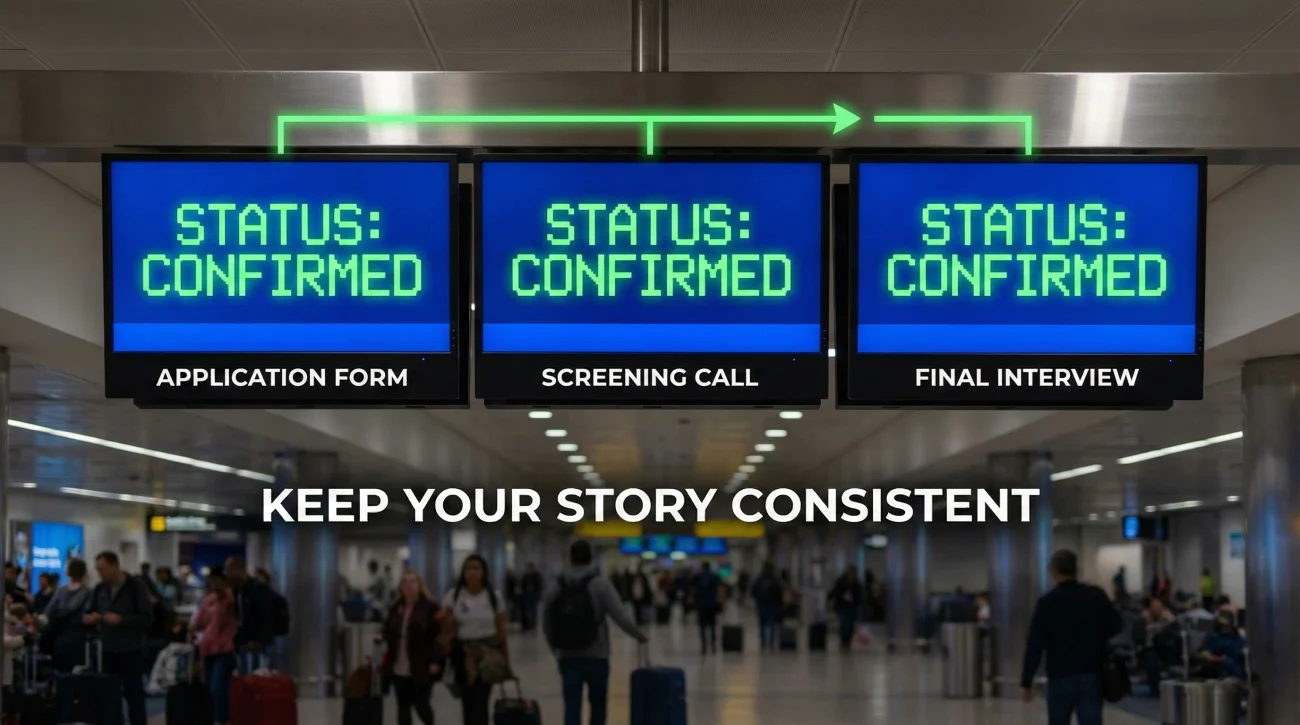
Consistency is what reduces risk. You do not need to share everything. You do need to avoid contradictions.
A simple consistency checklist:
- Use one core label for the exit and keep it stable across conversations.
- Do not invent certainty if you are unsure. Use the policy-based “cannot confirm” option instead.
- Have one proof marker ready: A reference, a portfolio piece, or a measurable outcome.
- Practice a 20 second answer and a 45 second answer. Recruiter screens and interviews have different pacing.
- Never add extra drama to fill silence. Answer, bridge, stop.
⚠️ Warning: If your application says “Yes” and your interview story implies “No,” the mismatch becomes the story. Consistency is the quiet win.
If you are unsure what to select on an automated form, do not guess based on fear. Choose the most factual option you can support, and keep your spoken explanation calm and brief when asked.
Final: Make It a Closed Chapter, Not a Debate
The fastest way to lose control of this moment is to answer like you are defending yourself. You do not need to defend. You need to sound steady.
Keep it simple: Give the cleanest truth you can support, add one calm context line if it helps, then move on. If the label is unclear or internal, say that plainly. If the answer is “No,” own it without punishment language, and point to what changed and what is stable now.
That is the real point of the eligible for rehire question how to answer problem: You are showing that your past exit is not an active fire. It is a finished story with a predictable present.
❓ FAQ
🎯 What if I honestly do not know my rehire status?
Use the policy-based “cannot confirm” option. Say you cannot confirm a formal label, then offer a forward proof marker like references who worked with you directly.
🧩 Should I explain the whole backstory so they understand?
No. In early screens, long explanations usually read as instability. Give one short context sentence, then bridge back to performance and reliability.
🧭 What if the recruiter asks “Would they rehire you” in a blunt way?
Answer directly, then bridge. If the answer is “No,” use ownership plus closure plus a forward signal. Do not blame. Do not argue fairness.
🛠️ Can I say “Yes” to avoid getting filtered out?
Do not create a mismatch you cannot defend later. If you are unsure, the safer move is “cannot confirm due to policy” rather than guessing.
🧠 How do I practice without sounding rehearsed?
Practice the structure, not the exact words. Keep one 20 second version and one 45 second version. If you can deliver it calmly with natural pauses, it will not sound memorized.
⚠️ Disclaimer: ResumeSolving provides resume, cover letter, job search communication, and career transition guidance for informational purposes only. Hiring practices vary by employer, role, location, industry, and individual circumstances. We do not guarantee interviews, job offers, ATS results, or other outcomes. Verify employer requirements directly and follow applicable laws and workplace policies. For sensitive situations, use only information you are comfortable disclosing and keep all statements accurate.