Reset

Founder to Sales Manager: Turn Scrappy Selling Into a Clean Pipeline Story

Founder To Sales Manager Resume

If you led founder-led sales, your resume must show a repeatable pipeline story, not “scrappy hustle”. Translate founder work into Sales Manager signals: Process, forecasting, coaching, deal strategy, and CRM discipline. Use a simple Pipeline Map to turn “I sold” into stages, conversion rates, and revenue hygiene. Build a Proof Pack: A tight set of … Read more

Founder to Operations Manager: Make Your Chaos Read Like Systems

Founder To Operations Manager Resume

Your resume must translate startup chaos into repeatable operating systems, not heroic hustle. Ops hiring managers look for evidence of SOPs, SLAs, cadence, and controls, not “I wore many hats.” A simple rewrite method turns founder bullets into operations bullets that feel stable and scalable. A small “proof pack” of artifacts can signal real ops … Read more

Founder to Engineering Manager: Show Engineering Leadership Without Sounding Like a CEO

Founder To Engineering Manager Resume

If your founder role was a mix of everything, your resume must translate it into Engineering Manager signals: People, Delivery, Technical Direction, Stakeholders. Founder titles can trigger “CEO mode” suspicion: Use scope, team outcomes, and engineering rituals to make it read like management work. Write bullets that prove leverage: Hiring, coaching, prioritization, incident ownership, roadmap … Read more

Founder to Product Manager Resume: Translate Your Startup Work Into PM Signals

How To Write A Founder Resume For Product Manager

You do not need to hide being a founder. You need to translate it into recognizable PM signals: Discovery, prioritization, delivery, and outcomes. Your resume should read like: Problem, decision, trade off, shipped result. Not: “Did everything.” Use a simple structure: One line context, then bullets that prove PM judgment with metrics or clear proxies. … Read more

Founder Resume Summary Examples: 7 Openings That Make You Sound Hireable, Not In Between

Founder Resume Summary Examples

Your summary is not a founder bio: It is a role-mapped hiring pitch with proof. Use a simple 3-part structure: Target role first, outcomes second, commitment line last. Pick one opening below, then swap in two proof hooks that match the job you want. Founder Summaries Fail When They Sound Like You Are Still Pitching … Read more

How to Show Teamwork as a Founder on a Resume (So You Do Not Look Like a Lone Wolf)

How To Show Teamwork As A Founder On A Resume

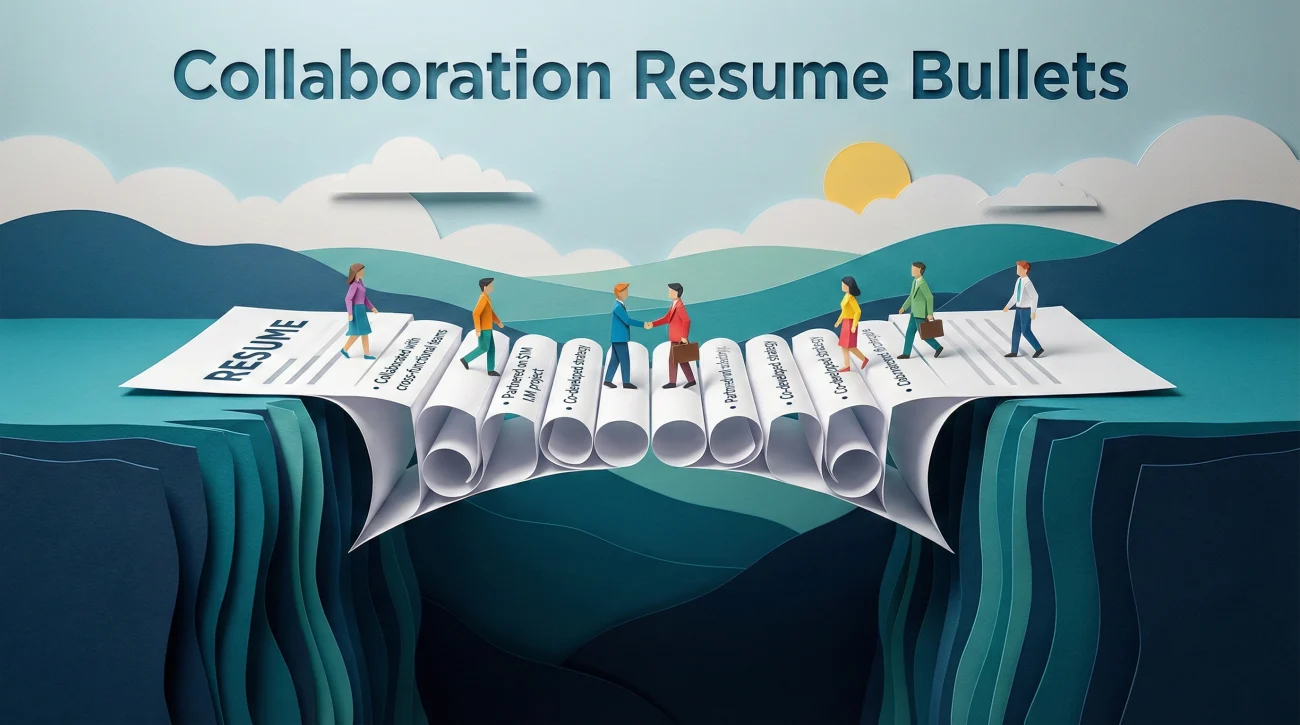
If your founder section reads like “I built everything,” a recruiter may assume you will not collaborate, even if you did. One clear collaboration landmark per role is enough: Partner group, shared goal, your contribution, outcome. Pair the resume signal with one calm interview line that shows you take direction and commit once a decision … Read more

Founder Resume Bullet Points Examples: 25 Starters That Translate Startup Work Into Employee Impact

Founder Resume Bullet Points Examples

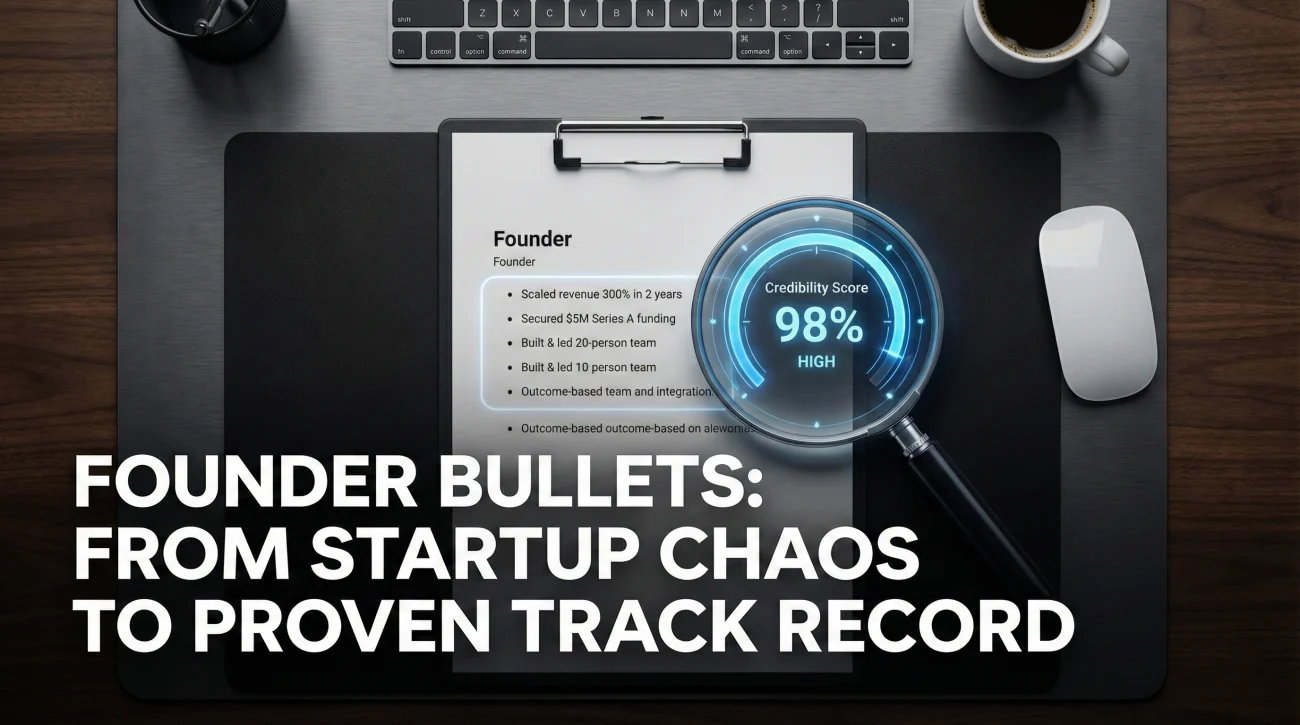
Your bullets should read like employee outcomes, not founder responsibilities. Use a simple structure: Outcome + Scope + Proof marker, then add metrics only if you can support them. Steal the 25 starters, then plug in one of the 10 metric patterns to quantify without inventing numbers. Founder Bullets Fail For One Simple Reason: They … Read more

Why Do You Want to Be an Employee Now: A Founder Interview Answer That Sounds Committed

How To Explain Why You Want To Be An Employee After Being A Founder

This question is really about commitment and risk. Your answer has to close the “temporary employee” fear without sounding defensive. Use one simple structure: what you learned as a founder, what you want now, and one proof of boundaries or stability. Borrow a version that matches your founder outcome (sold, shutdown, consulting, burn out, cofounder … Read more

How to Describe a Startup That Failed on a Resume: 8 Lines That Sound Credible

How To Describe A Failed Startup On A Resume

A failed startup on your resume is not the problem. The problem is when it reads like the story is still open. Your fix is three signals in one calm line: Value, Closure, Stability. No defending, no drama. Use the framework below to write one credible description, then pick from 8 resume lines and 6 … Read more

Should You Put Your Startup on Your Resume and What Recruiters Assume

Should I Put My Startup On My Resume

If your startup fills a timeline gap and maps to the job, include it, but frame it so it does not read like a second full-time life. The real question is what your startup “signals” in a six-second scan, then how you steer that signal with one stability line and one proof line. Use the … Read more

Founder Job Title on a Resume: What to Use So Recruiters Do Not Roll Their Eyes

Founder Job Title On A Resume

Your founder title is not a trophy. It is a translation layer that helps a recruiter map you to a role in 6 seconds. Use three rules: Truth anchor, target role mapping, and seniority calibration. If one rule breaks, the title backfires. Skip “CEO” unless you can defend real scope. Most founders win more interviews … Read more

How to List Founder Experience on a Resume Without Sounding Vague

How To List Founder On Resume

If you are wondering how to list founder on resume, start by choosing one structure that makes your role look verifiable, not “everything-ish”. Recruiters do not reject founders for ambition. They reject ambiguity: Unclear employer, fuzzy scope, and no signal that the chapter is stable or closed. You only need two anchors: One proof marker … Read more

Still Employed in a Toxic Job: How to Answer Why You Are Leaving

How To Answer Why You Want To Leave Your Current Job Toxic Workplace

If you are still employed, your answer must sound controlled: Short, neutral, and closed. Use one boundary sentence to stop follow-up probing, then pivot to what you want in the next role. Bring scripts for recruiter screens and deeper interviews so you do not improvise under stress. Still Employed, Still Exhausted: The Answer That Keeps … Read more

Toxic Workplace on a Resume: When to Add a Note (And When Not To)

Toxic Workplace Resume Explanation Line

If your resume already reads clean, you usually do not need a “toxic workplace” note. Add a note only when it prevents a predictable misunderstanding: Timeline confusion, ultra-short tenure, or a name change that triggers reference questions. The best note is neutral, closed, and boring. It signals: “This chapter ended. I am available.” The Resume … Read more

Culture Fit After a Toxic Job: How to Describe What You Want Without Sounding Bitter

How To Talk About Culture Fit In Interview After Toxic Workplace

You can talk about culture after a toxic workplace by stating requirements, not recounting events. Translate “what went wrong” into 2 or 3 positive constraints and one proof signal that you are easy to work with. Use the copy ready requirements statements and examples below to answer culture fit questions without sounding bitter. Culture Fit … Read more

Recruiter Asked Why You Left: 3 Replies That Stay Neutral

Recruiter Message Why Leaving Toxic Job

If a recruiter asks why you left, your job is to keep momentum, not to tell the whole story. Use one neutral reason category, one stability signal, then ask for the next step. Below are 3 copy ready replies, plus subject lines and closers that move to scheduling. When The Recruiter Message Is One Line, … Read more