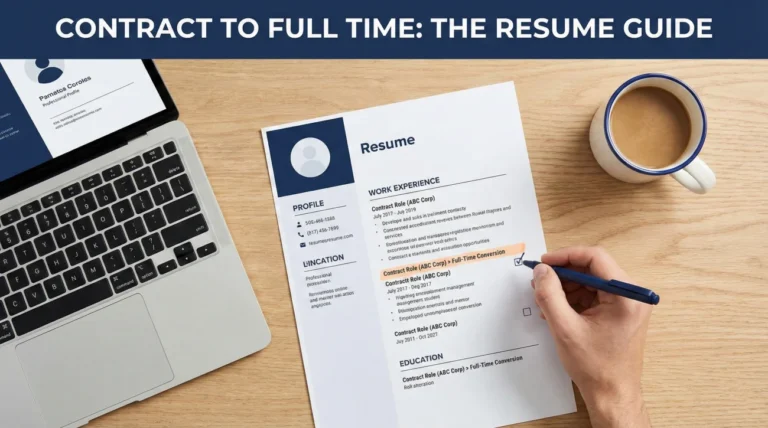
- If your startup fills a timeline gap and maps to the job, include it, but frame it so it does not read like a second full-time life.
- The real question is what your startup “signals” in a six-second scan, then how you steer that signal with one stability line and one proof line.
- Use the 7-question checklist first, then pick one of the 3 packaging options and copy a snippet that matches your reality.
Should You Put Your Startup on Your Resume and What Recruiters Decide in Seconds
I’ve watched strong candidates talk themselves into the worst middle ground. They hide the startup, leave a strange gap, and then sound flustered when someone asks what they did for a year.
So let’s treat this like an HR screening problem, not an identity argument. The question “should i put my startup on my resume” is really about risk signals. A recruiter is quietly scoring you on two things. Will you stay, and can I place you cleanly into this role?
If your startup creates the wrong signal, you do not need to lie. You just need to package it in a way that looks employable, credible, and job-shaped.
Key Point. Your startup is not automatically a flex or a red flag. It becomes one based on how it affects focus, fit, and the story of your last 12 to 24 months.
Why “Startup Founder” Can Trigger Doubt Even When You’re Great
Recruiters don’t have time to decode your whole life. When they see a startup, they often take shortcuts because the resume does not give them enough context to do anything else.

The flight risk assumption shows up fast
If the startup looks active, growing, or emotionally central, some recruiters assume the job is a temporary stop while you keep building “your real thing.” They may never say that out loud, but you will feel it in the way they probe commitment.
The fix is not to sound less ambitious. The fix is to add one stability signal that makes your choice legible. You are choosing employment now, intentionally, for a reason that aligns with the role.
💡 Pro Tip Stability signals work best when they are simple and boring. One clean sentence beats a long explanation that sounds like persuasion.
“Founder” is too wide to compare
Founder can mean product, sales, ops, hiring, customer support, and fundraising all at once. That breadth is real, but it creates a problem. A recruiter cannot quickly map you to the job description they are holding.
If you translate your startup work into role-shaped responsibilities, you make comparison easy. When comparison is easy, interviews happen more often. When it is messy, they move on to someone who looks easier to place.
Think of this as compression. You are not shrinking your value. You are turning it into a shape the reader can recognize.
Vague outcomes feel risky, even if the work was intense
Big company roles come with familiar shorthand. A known brand, a team size, established metrics, and stakeholders that feel “real.” Startup work can be just as demanding, but it often lacks those shortcuts.
So the resume needs two anchors. A proof marker and a boundary marker. The proof marker shows outcomes. The boundary marker shows this does not compete with a full-time job.
Once you add those two anchors, the startup stops feeling like a mystery box.
The 7-Question Checklist That Tells You “Include” vs “Reposition” vs “Leave It Off”
A candidate I worked with, Sydney, built a small B2B tool after a layoff. She kept calling it her “startup” everywhere, which made her sound like she was still mid-launch. We did not erase it. We changed the signals, and the same story suddenly read as stable and employable.
Run these seven questions in order. They are designed to surface risk early so you can deal with it on the resume, not in a tense interview moment.
| Question | If “Yes” | If “No” |
|---|---|---|
| 1) Does it cover a timeline gap you cannot leave blank? | Leaning include is usually smarter, but you must control wording. | You have flexibility to omit it or reduce its prominence. |
| 2) Does the work map to the job’s core skills? | Include it as Experience or a strong Project, clearly translated. | Reposition it so it does not dominate the resume’s story. |
| 3) Is it still active in a way that competes with full-time focus? | Add a boundary line that makes priorities obvious. | You can present it as a completed chapter without extra defense. |
| 4) Are you applying in the same industry space or customer segment? | Keep scope clean, avoid sensitive detail, be conflict-aware. | Lower conflict risk, easier to keep it simple. |
| 5) Can you name two credible proof markers? | Include it with confidence, the proof will do the heavy lifting. | Simplify claims or add proof that is not inflated. |
| 6) Will “Founder” create a level mismatch for the role? | Use a role-mapped title that reflects what you actually did. | Keeping Founder can work if it supports the target level. |
| 7) If asked “Why not keep building it?”, can you answer calmly? | Include it and prep a short, grounded explanation. | Reposition it until the answer feels simple and believable. |
⚠️ Warning If question 3 and question 4 are both “Yes”, you are in the high-risk zone. That does not mean “hide everything.” It means you must use clean boundaries and careful wording so the reader does not assume divided loyalty.
Now pick a packaging strategy. Most people do not need to delete the startup. They need to stop presenting it like a second full-time identity that competes with employment.
Three Packaging Strategies That Keep Your Startup From Looking Like a Resume Liability
A colleague of mine, Michael, once reviewed a resume that said: “Founder, currently building a stealth startup.” He liked the candidate’s skills, but he still rejected it because it screamed divided priorities. The fix was not to remove the startup. The fix was to present the work as role-relevant, bounded, and either finished or intentionally paused.
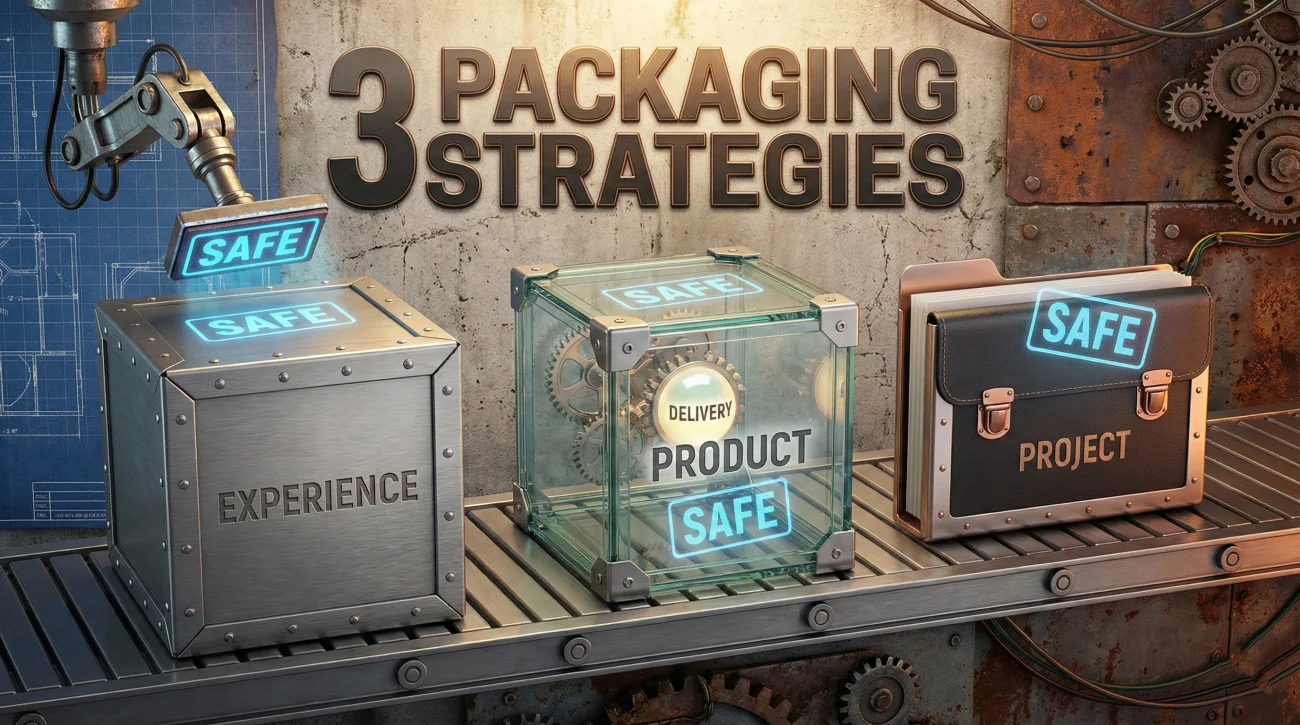
Strategy 1: List it as Experience, but make the title job-shaped
This works best when the startup was your primary work and it fills the timeline. You include it in Experience, but you do not force an ego title that creates a mismatch.
Think in terms of the reader’s job. They are trying to hire a Product Manager, Operations Analyst, Marketing Manager, or Engineer. If your resume says “CEO,” the reader has to guess what you actually did. If your resume says “Product Lead,” they can place you immediately, then read your bullets with less suspicion.
Keep it truthful. Role-mapped titles are fine when they reflect your actual scope and day-to-day work, not when they pretend you did something you didn’t.
💡 Pro Tip The fastest credibility boost here is specificity. Team size, what shipped, who used it, and what changed because of it.
Built and shipped an MVP from discovery to launch, partnering with 2 engineers and 1 designer
Defined roadmap, wrote user stories, and ran weekly release cycles using structured customer feedback
Proof markers include 18 pilot users onboarded, 6 retained into month 2, and 3 paid conversions
Strategy 2: Present it as delivery work so the reader focuses on output
If the startup label creates noise, you can still show the work by presenting it as independent delivery. This is especially useful when the “founder” identity makes you look like you will resist direction, or when the role you want is clearly employee-shaped.
The key is to keep it grounded. Do not invent revenue. Do not imply you had clients if you didn’t. Instead, emphasize what you delivered, how you validated it, and what impact it produced for real users or testers.
Done well, this approach removes the emotional baggage of the word “startup” while keeping the skills visible.
Delivered a workflow tool for a niche operations problem, covering research, prototyping, build, and iteration
Built dashboards and automation that reduced manual admin time by 35% for early testers
Proof markers include a reference available, a demo available on request, and documentation available
Strategy 3: Put it in Projects, then control the status with one clean line
Projects is safer when your timeline is already stable and the startup is an extra signal, not the backbone of your story. It also reduces the “full-time founder” impression, which can be helpful if you are applying to traditional teams.
The most important part is the status line. Recruiters do not need your entire journey. They need to know whether this competes with the job. One calm sentence can prevent ten awkward questions later.
This strategy also works well when the startup is technically ongoing but you can honestly describe it as maintenance mode.
Designed and built an internal tool to automate reporting and approvals, used by a small test group
Focus: Data modeling, UI flows, and process mapping aligned to operations analyst work
All three strategies do the same thing in different ways. They create role legibility, reduce assumptions about divided focus, and give the reader a clear reason to keep going.
Four Copy-Paste Resume Snippets for Common Startup Situations
Using the wrong phrasing can accidentally create the exact concern you are trying to avoid. Pick the snippet that matches your reality, then adjust the proof markers to stay honest.
When it fills a gap and must read like stable work
This version is designed to look like employment, not like a side adventure. It translates the work into job-shaped responsibilities and includes proof without turning into a pitch deck.
Shipped [product/service] end-to-end, owning delivery, stakeholder communication, and iteration cycles
Proof markers include [users or pilots], [retention or repeat usage], and [revenue or measurable operational impact]
When it was short and you fear it reads like a failed detour
Short ventures can look messy when the resume makes them look open-ended. This version time-boxes the work and frames the outcome like a professional decision, not a collapse.
Ran a focused build and validation sprint to test a market problem, producing an MVP and discovery results
Outcome was a clear “no” at scale, learnings documented, and a deliberate return to full-time roles
When it’s technically ongoing but you need to remove “divided focus”
If you keep this, keep it simple. The resume should not sound like a second job listing. The status line is the guardrail, and it should be boring on purpose.
Built and maintained a small tool outside work hours with limited scope and no overlapping clients or employer IP
Current status is maintenance mode while prioritizing a full-time role
When you want the skills, not the startup label
This one keeps attention on delivery and outcomes. It’s a good fit when the word “startup” triggers level mismatch or cultural assumptions in your target market.
Delivered [type of work] across research, build, and iteration, producing measurable outcomes in [impact area]
Proof markers include a portfolio available, references available, and documentation available
❌ Note Avoid “stealth startup” on a resume for typical employee roles. It reads like secrecy plus divided focus, even when you don’t mean it that way.
Three Interview Explanations That Sound Grounded, Not Defensive
If you include the startup, expect at least one question about commitment and why you are not continuing. The goal is to answer once, clearly, then move back to the role.
These examples are written as quick chat exchanges because that’s how interviews feel in real life. You want your answer to land, then you want to move on.
When it didn’t scale and you’re returning to employment
This is the clean close story. You acknowledge the work, name the outcome, then explain why employment fits your next chapter.
Why are you leaving the startup and coming back to a full-time role?
I built it seriously and learned a lot, but it didn’t reach a sustainable growth path. I’m choosing a role where I can apply the same build and delivery skills inside a team, with clearer scale and runway. I’m here because I want this lane long-term.
The strength here is the tone. It reads like a decision you made on purpose, not something that happened to you.
When it still exists, but you’ve set boundaries and priorities
This is where people get stuck. If you dodge, you sound suspicious. If you overshare, you sound distracted. A simple boundary statement keeps it professional.
Are you still working on it? Should we worry about your focus?
It’s in maintenance mode. I’m not fundraising and I’m not running active growth. I’ve structured it so it doesn’t compete with a full-time role. My priority is the job I take next, and I’m happy to clarify boundaries if that’s helpful.
⚠️ Warning If your venture overlaps with the employer’s market, keep details minimal and be ready to discuss conflict boundaries professionally.
When the founder label makes you look over-senior for the role
Level mismatch questions are usually fear-based. They are testing whether you will be unhappy, resist direction, or leave quickly. This answer removes ego and replaces it with fit.
You were a founder. Why are you applying for this level?
The founder title doesn’t map perfectly to level. I’m applying for this role because the work matches what I want to do day-to-day, and the scope fits how I want to grow next. I’m not chasing a vanity title. I’m looking for the right team and a lane I can commit to.
When you say it this way, you sound deliberate and stable, not downgraded.
A Simple Rule That Keeps You Out of the Awkward Middle
If your startup makes your timeline clearer, maps cleanly to the role you are targeting, and you can explain your focus in one steady sentence, include it. It should read like intentional work with outcomes, not a loose thread the reader has to chase.
If adding it creates more uncertainty than clarity, do not wedge it into Experience just because it happened. In that case, tighten it into project style delivery with specific results, or place it under Projects so the reader stays on what you built and shipped.
The aim is simple: Keep the story coherent and stable, so the resume reads like a deliberate direction, not a question mark.
It is the same decision underneath the Identity Pivots lens, especially in should i put my startup on my resume, where the real goal is clarity without accidental mixed signals.
❓ FAQ
🧭 Will listing my startup automatically make recruiters think I am a flight risk?
Not automatically. The concern shows up when your resume implies the venture is still the main priority, or when your wording sounds like you’re mid-launch. A single stability line plus a clear boundary usually removes the worst assumptions.
🧩 Where should I put the startup: Experience or Projects?
If it fills a gap or was your primary work, Experience is often cleaner because it avoids awkward blank space. If you already have stable employment history and the startup is extra signal, Projects can reduce noise while keeping the skills visible.
🎭 Should I call myself Founder or use a different title?
Use a title that matches what you actually did and maps to the role you want. Founder is fine when it supports fit. Role-mapped titles often reduce level confusion and make your resume easier to place in a hiring funnel.
🧪 What if the startup failed and I have no impressive metrics?
Use proof that isn’t vanity. Shipped deliverables, retention of a small pilot, operational impact, documented research outcomes, or a reference can be enough. Keep claims specific, time-boxed, and boringly believable.
🧯 When should I remove the startup from the resume completely?
If it creates a conflict risk you cannot explain cleanly, or it pulls attention away from your core fit, it may be smarter to omit the label and show only relevant delivery work. Another reason is when the founder story creates level mismatch you cannot resolve with titles and boundaries.
🧠 How do I explain why I am leaving the startup without sounding bitter?
Keep it choice-based and calm: it didn’t reach sustainable scale, you learned a lot, and you’re choosing a role where you can apply the same skills inside a team with longer runway. Then stop talking and move back to the job.
⚠️ Disclaimer: ResumeSolving provides resume, cover letter, job search communication, and career transition guidance for informational purposes only. Hiring practices vary by employer, role, location, industry, and individual circumstances. We do not guarantee interviews, job offers, ATS results, or other outcomes. Verify employer requirements directly and follow applicable laws and workplace policies. For sensitive situations, use only information you are comfortable disclosing and keep all statements accurate.