- If your founder role was a mix of everything, your resume must translate it into Engineering Manager signals: People, Delivery, Technical Direction, Stakeholders.
- Founder titles can trigger “CEO mode” suspicion: Use scope, team outcomes, and engineering rituals to make it read like management work.
- Write bullets that prove leverage: Hiring, coaching, prioritization, incident ownership, roadmap execution, and cross functional alignment.
- If your founder time was sales heavy, do not hide it: Reframe with an engineering operating system and show what engineers experienced day to day.
- Use the examples below to sound like an EM who shipped, not a founder who pitched.
Founder to Engineering Manager: Show Engineering Leadership Without Sounding Like a CEO
I have watched strong founders get rejected for Engineering Manager roles for a reason that sounds unfair until you sit on the hiring side: Their resume reads like a CEO highlight reel, not an operating system for an engineering team.
If you are building a founder to engineering manager resume, you are fighting two assumptions at once. The first: You might be allergic to direction. The second: You might be too vague because you did “everything.” Both are fixable, but only if you translate your work into EM signals.
A candidate named Tuan once told me his biggest fear was being seen as “a founder trying to downgrade.” The reality was the opposite. He was trying to move from adrenaline leadership to repeatable leadership. His resume did not show that yet, so recruiters filled in the blanks with the usual story.
Key Point: Your goal is not to defend being a founder. Your goal is to prove you already did the core Engineering Manager job: Multiply engineering output through people, priorities, and systems.
The Engineering Manager Signals Recruiters Actually Look For
Most resume advice tells you to “show leadership.” That is too abstract. Engineering Manager screening is pattern based. When I review EM resumes, I look for evidence in four buckets, because they predict whether a team will ship and stay healthy.
| EM Signal | What It Looks Like On Your Resume | Founder Translation That Works |
|---|---|---|
| People Leadership | Hiring, coaching, performance, growth plans | Promotions, onboarding systems, feedback loops, mentorship outcomes |
| Delivery Ownership | Roadmaps shipped, predictability, tradeoffs | Planning rituals, milestone delivery, incident response ownership, cycle time improvements |
| Technical Direction | Architecture decisions, quality bar, platform thinking | Decision records, technical reviews, de risking, reliability improvements, tech debt strategy |
| Stakeholder Leadership | Cross functional alignment, exec communication | Product partnership, clarity on scope, customer impact translated into engineering priorities |
Notice what is missing: Founder buzzwords. “Vision,” “disrupted,” “built from scratch,” “wore many hats.” Those lines can be true and still useless. Your resume is not a biography. It is an evidence document.
⚠️ Warning: If your bullets mostly describe the company, recruiters will assume you did strategy and chaos, not engineering management.
A Translation Framework That Turns Founder Work Into EM Proof
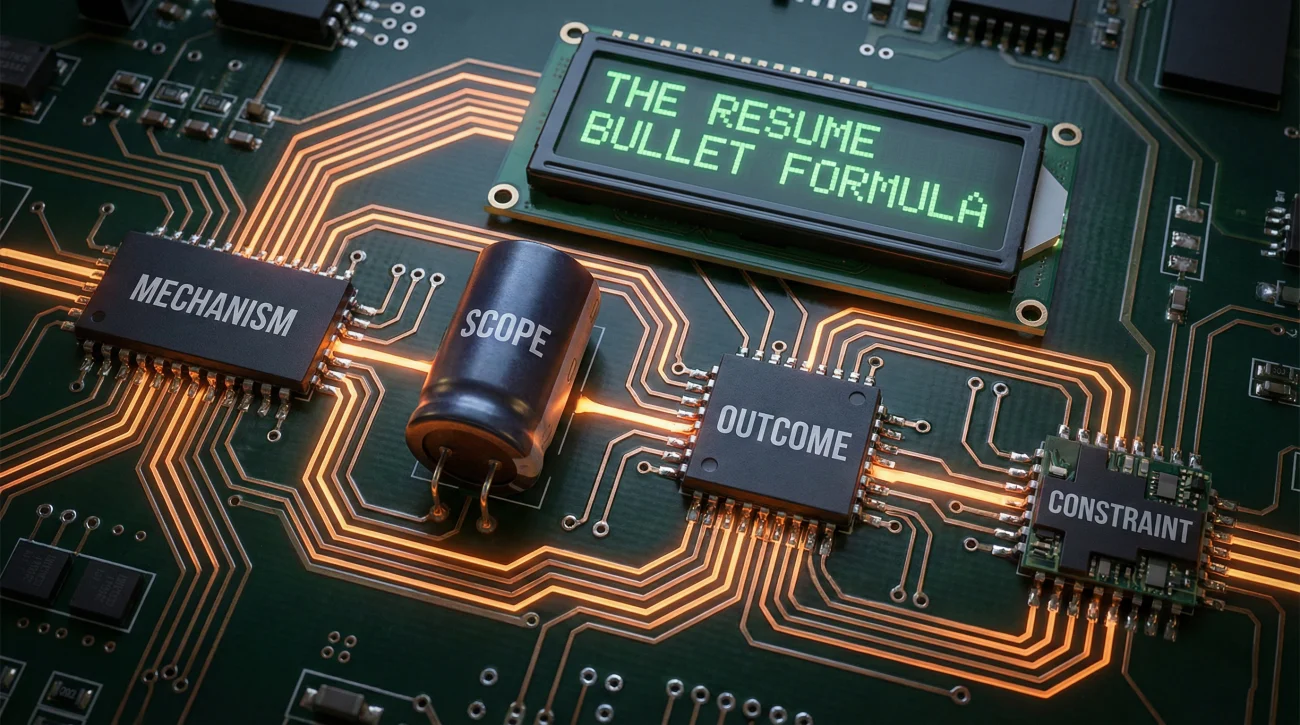
When founder candidates struggle, it is usually because they describe tasks instead of mechanisms. Engineering management is a mechanisms job: Cadences, decision quality, throughput, team health, and tradeoffs.
Use This Simple Bullet Formula
[EM Mechanism] + [Team Or System Scope] + [Delivery Or People Outcome] + [Constraint]
It forces you to sound like an operator. It also prevents you from drifting into CEO narration.
Before and After: The Same Truth, Different Signal
Here is the difference between “founder storytelling” and “Engineering Manager evidence.”
Both may describe the same season. The second one tells me how you lead engineers. A friend of mine, Rika, made this exact change after a string of silent rejections. The next week she got two recruiter calls from companies that previously ignored her application.
Note: If you were hands on as a founder, treat that as context, not the headline. Engineering Manager hires are about leverage, not heroics.
10 Bullet Examples You Can Adapt For Your Founder to Engineering Manager Resume
These bullets are written to land in the four signal buckets. Swap the numbers, scope, and systems to match your reality. Keep the structure.
- Established sprint planning, review, and retro cadence for a cross functional squad, reducing missed commitments by clarifying scope and ownership.
- Hired and onboarded a distributed engineering team, creating role expectations and a feedback cycle that improved ramp time for new hires.
- Partnered with Product to turn customer escalation themes into a prioritized backlog, improving response time and reducing repeat incidents.
- Introduced lightweight engineering metrics and weekly delivery reviews to surface blockers early and protect deep work time.
- Led incident response as DRI, adding post incident reviews and follow up ownership that improved reliability and reduced recurring failures.
- Set a technical quality bar through review standards and release gates, balancing speed with maintainability as the codebase grew.
- Created a growth path for senior engineers that clarified expectations for mentorship, technical leadership, and team impact.
- Aligned engineering work with business goals by translating revenue and retention drivers into concrete platform and product priorities.
- Reduced context switching by defining team boundaries and an intake process, improving cycle time without increasing burnout risk.
- Facilitated architecture tradeoff discussions across engineers and stakeholders, documenting decisions and de risking delivery for critical milestones.
If you read these and think: “But I did more than that,” good. Being a founder often means you did too much. Your resume should show what you did that maps to Engineering Manager work, not everything you ever touched.
Six Collaboration Lines That Remove the CEO Vibe

Founders often sound like they “decided and executed.” Engineering Managers must sound like they “aligned and enabled.” You can keep authority without sounding unilateral.
- Partnered with Product and Design to define a realistic scope and sequencing plan.
- Aligned stakeholders on tradeoffs and documented the decision for execution clarity.
- Enabled senior engineers to lead technical decisions while I managed prioritization and risk.
- Removed blockers by clarifying ownership boundaries and improving intake for urgent work.
- Coached engineers through feedback and growth conversations to raise the team’s quality bar.
- Collaborated with Customer Success to convert escalations into engineering priorities and fixes.
A candidate named Shaun used versions of these lines after his resume kept triggering the same feedback: “Too founder, not enough manager.” He did not change his story. He changed the verbs and the proof. That shift made interviewers picture him inside a real engineering org.
How To Handle The Three Founder Red Flags Without Lying
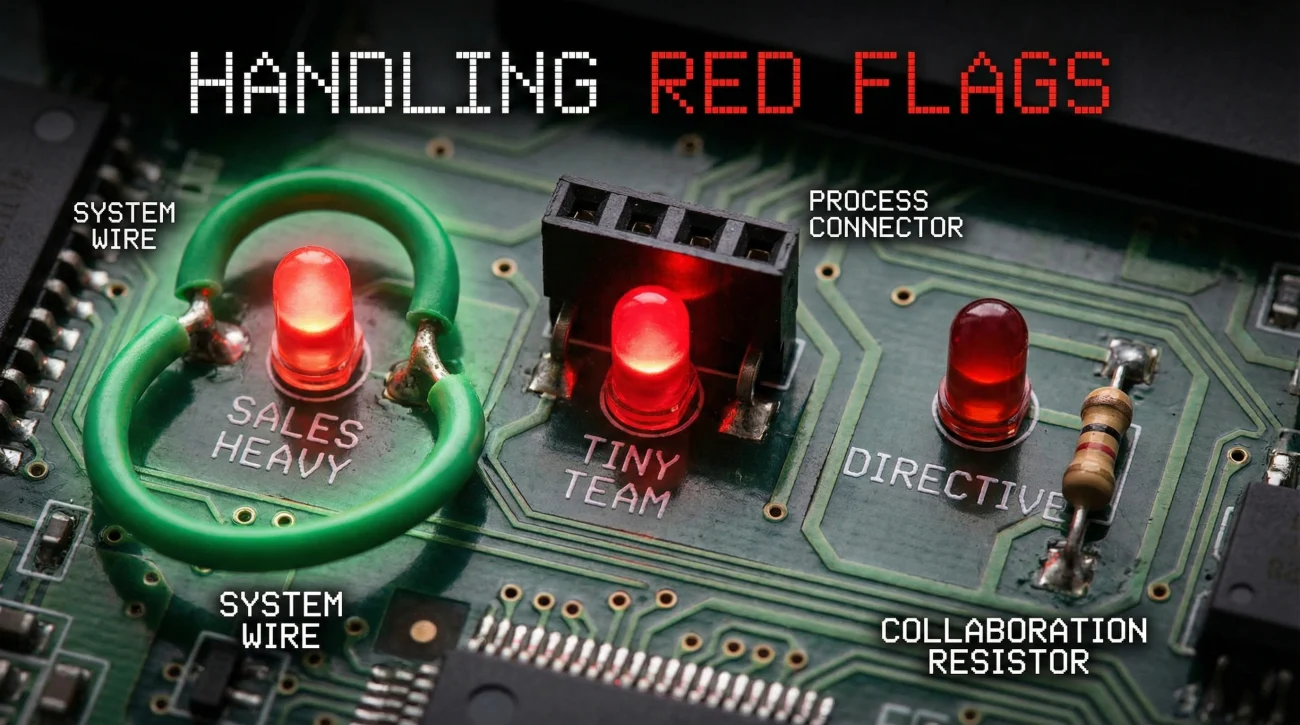
Red Flag One: Your Founder Work Was Sales Heavy
This is common, and it is not fatal. The mistake is pretending it did not happen. If most of your time was pitching, your resume has to show what engineers experienced because of your leadership.
Write bullets about the engineering operating system you built: Planning cadence, incident ownership, prioritization, hiring, delivery rituals. Then put sales in a single neutral line so it does not swallow the story.
❌ Note: If your top bullets are fundraising and GTM, you will be screened as a CEO candidate, not an EM candidate.
Red Flag Two: Your Team Was Tiny Or Mostly Contractors
Small teams can still show real management. The key is to be precise about the people leadership you actually did. Did you hire? Did you set expectations? Did you run feedback? Did you unblock? Did you protect quality? If yes, show that.
If the honest answer is “not really,” then you position yourself closer to Tech Lead with management trajectory. That is not a downgrade. It is accurate positioning, and accuracy builds trust fast.
Red Flag Three: The Resume Reads Like You Cannot Take Direction
Founders often use strong language because they had to move fast. On an EM resume, overly dominant phrasing can read as inflexible. Replace “I decided” with “I aligned,” “I directed” with “I enabled,” and “I owned everything” with “I established a system.”
I worked with a founder named Linh who kept writing: “Owned all engineering decisions.” She meant she cared. Interviewers heard: “Hard to collaborate.” We changed it to: “Facilitated architecture decisions and documented tradeoffs with senior engineers.” Same competence, better signal.
A Calm Interview Answer That Matches Your Resume
Why would a founder want an Engineering Manager role?
You can answer this without sounding defensive. The best responses sound like a promotion into repeatable leadership.
I liked building the product, but the work I kept coming back to was building the team’s operating system: Hiring, coaching, planning, and making delivery predictable.
In my founder role, I learned I am at my best when I multiply engineers, not when I chase every business thread.
I want an Engineering Manager role because it is the same leadership work, but inside a larger org where I can focus on people and delivery at scale.
This answer works because it matches the signals your resume should already show. If your resume reads like CEO mode and your interview answer says “I love coaching,” the mismatch creates doubt. Consistency closes that gap.
Final: The Resume That Makes Your Founder Story Feel Like An EM Promotion
A strong resume for this pivot is not about proving founding was impressive. Most hiring teams already respect it. The real question is whether you can lead engineers inside a shared system: Clear priorities, steady delivery, and healthy team habits.
When you translate founder work into mechanisms, team outcomes, and collaboration proof, you stop reading like a CEO highlight reel. You read like an Engineering Manager who has already built the cadence, the guardrails, and the trust that lets a team ship consistently.
If you want a simple check: Read your top bullets and ask whether they describe how engineers planned, executed, and grew under your leadership. If the answer is yes, your story lands as founder to engineering manager resume evidence, not founder mythology.
❓ FAQ
🎯 Should I keep the Founder title on my resume if I am applying for EM roles?
Keep it if it is truthful, but do not let it drive the story. Your bullets should lead with Engineering Manager signals, and your scope should be clear enough that “Founder” does not become a distraction.
🧩 What if I was the only engineer and also the founder?
Then you are closer to an IC or Tech Lead profile unless you also managed people. You can still apply for EM roles, but position yourself as a leader building toward management with clear examples of planning, stakeholder alignment, and delivery ownership.
🛠️ How many metrics should I include in my bullets?
Use metrics where they clarify scope or outcome: Team size, uptime, cycle time, incident reduction, release frequency, or customer impact. One strong metric beats three fuzzy ones.
🧠 How do I avoid sounding like I cannot take direction?
Swap unilateral verbs for collaboration and mechanisms. Show how decisions were made, how tradeoffs were aligned, and how engineers owned execution within a system you built.
📌 Where should I place my startup experience in the resume?
Place it in Experience like any other role, but keep the description tight and signal based. If it dominates the page, you can compress older details and expand the bullets that map directly to EM responsibilities.
🚀 What is the fastest improvement I can make today?
Rewrite your top three bullets using the mechanism formula. If your first three bullets read like EM work, the rest of your resume gets interpreted more generously.
⚠️ Disclaimer: ResumeSolving provides resume, cover letter, job search communication, and career transition guidance for informational purposes only. Hiring practices vary by employer, role, location, industry, and individual circumstances. We do not guarantee interviews, job offers, ATS results, or other outcomes. Verify employer requirements directly and follow applicable laws and workplace policies. For sensitive situations, use only information you are comfortable disclosing and keep all statements accurate.