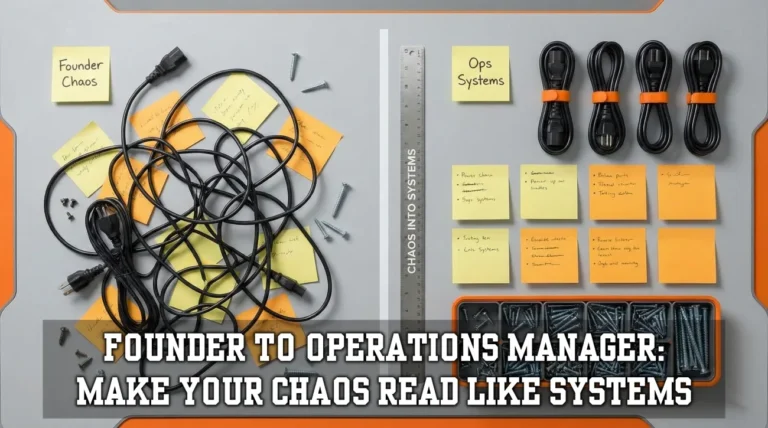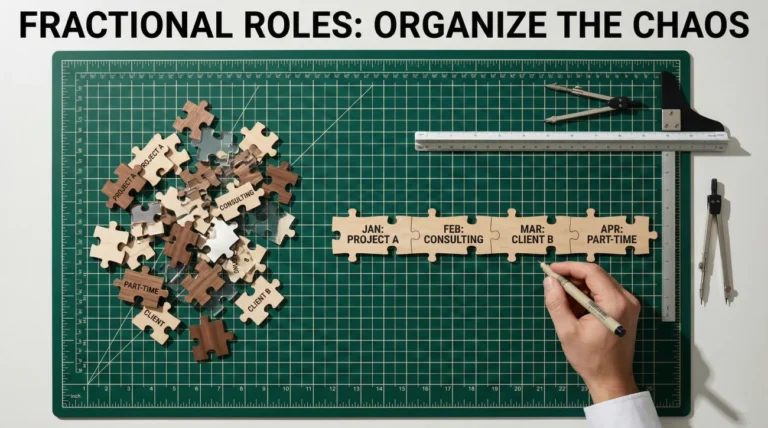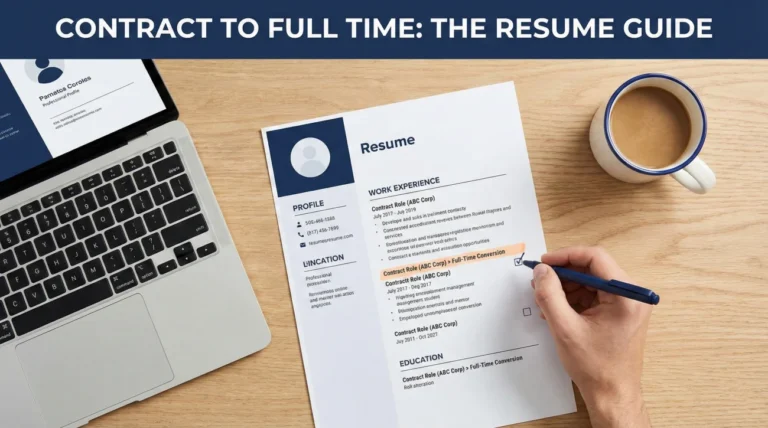
- Your bullets should read like employee outcomes, not founder responsibilities.
- Use a simple structure: Outcome + Scope + Proof marker, then add metrics only if you can support them.
- Steal the 25 starters, then plug in one of the 10 metric patterns to quantify without inventing numbers.
Founder Bullets Fail For One Simple Reason: They Sound Like A Job Description
I have seen the same pattern for years. A smart founder sends a resume that is packed with work, but the bullets read like a list of duties. The recruiter does not doubt you worked hard. They doubt they can map your work to the role they are hiring for.
If you are searching for founder resume bullet points examples, you do not need prettier verbs. You need bullets that translate startup chaos into a familiar “employee impact” shape, without turning your story into corporate cosplay.
One candidate I worked with, Norah, built a small B2B product and wore every hat. When she applied for Product roles, her bullets were technically accurate, but they sounded like: “Oversaw product roadmap, marketing, and sales.” She kept getting polite rejections. We rewrote her bullets around outcomes and proof. The interview rate changed within a month, even before she redesigned the rest of the resume.
What Recruiters Actually Scan For In Founder Experience

When a recruiter sees “Founder”, they are usually scanning for three signals in under 10 seconds:
- Role fit: Did you do the same outcomes this job needs, or did you just “run a business”?
- Scope clarity: What stage, what market, what team size, what customers?
- Proof: Do your bullets carry any evidence, even light evidence, that what you wrote is real?
⚠️ Warning: “Did everything” is not a flex on a resume. It is a fog machine. Your goal is to select, not to confess.
So what did you actually do day to day as a founder?
I did a lot, but for this role I want you to see the parts that match your outcomes: Customer discovery, roadmap decisions, and shipping improvements that moved retention.
That answer works because it narrows the lens. Your resume bullets should do the same job, quietly.
The Bullet Framework That Makes Founder Work Read Like Employee Impact

Use This Structure: Outcome + Scope + Proof Marker
This is the simplest structure I have found that stays truthful and still feels “hireable” to traditional teams.
[Outcome] + [Scope] + [Proof marker]
Outcome is the result you drove. Scope is the context that makes the result meaningful. Proof marker is one detail that signals it is real.
Dave, a founder I met through an HR friend, used to write “Managed vendor relationships.” That is fine, but it is not a hiring signal. We rewrote it into an outcome with scope and proof. Suddenly it sounded like a procurement lead, not a generic business owner.
10 Proof Markers That Make Bullets Feel Real
You do not always need hard numbers. Often you just need one crisp detail that a real operator would naturally include.
- Customer type: “multi location clinics”, “mid market eCommerce brands”, “public sector procurement”
- Stage: “pre revenue MVP”, “post launch growth”, “wind down and transition”
- Constraint: “no paid ads budget”, “regulated approval cycle”, “2 person team”
- System: “HubSpot pipeline”, “Stripe billing”, “GA4 funnels”, “Zendesk tags”
- Artifact: “board update”, “investor memo”, “SOP”, “pricing model”, “playbook”
- Time marker: “in 6 weeks”, “first 90 days”, “within one quarter”
- Scale marker: “top 3 channel”, “largest partner”, “highest volume SKU”
- External validation: “customer reference”, “renewal”, “case study”, “audit pass”
- Decision boundary: “killed low LTV segment”, “paused expansion”, “repositioned ICP”
- Collaboration marker: “with engineering”, “with sales”, “with operations”, “with finance”
10 Metric Patterns You Can Use Without Faking Numbers
Founders often panic here because they think the only “valid” bullet is revenue. That is not true. Metrics can be expressed as ranges, cycle times, conversion movement, cost movement, or capacity movement. The key is that you can explain it if asked.
| Metric pattern | How it looks inside a bullet |
|---|---|
| Range instead of exact | “Grew monthly recurring revenue into the low six figures while keeping churn stable.” |
| Delta over time | “Improved activation rate over 8 weeks by tightening onboarding steps and messaging.” |
| Cycle time | “Cut quote to close cycle by simplifying handoffs and removing approval bottlenecks.” |
| Conversion rate | “Raised landing page conversion by rebuilding the offer and testing pricing anchors.” |
| Cost per outcome | “Lowered cost per qualified lead by shifting targeting and improving lead scoring.” |
| Retention / repeat | “Increased repeat usage by introducing lifecycle messaging and product nudges.” |
| Capacity | “Expanded support capacity by standardizing macros, tags, and escalation rules.” |
| Quality / defect | “Reduced incident volume by adding monitoring and tightening release checks.” |
| Pipeline health | “Built a consistent outbound pipeline with weekly targets and conversion tracking.” |
| Risk reduction | “De risked cash flow by renegotiating terms and building a 90 day forecast.” |
💡 Pro Tip: If you cannot defend a number out loud, do not write it. Use a pattern you can explain, even if it is less flashy.
25 Bullet Starters You Can Copy And Customize
This section is the deliverable people actually want. These starters are designed to sound like “employee outcomes” while staying founder truthful. If you are rebuilding founder bullet points resume language, start here.
Growth And Revenue Bullets
- Built a repeatable pipeline by defining ICP, tightening messaging, and tracking conversion by stage.
- Launched a pricing restructure that improved deal quality and reduced discounting pressure.
- Improved lead quality by aligning targeting, landing pages, and qualification rules across channels.
- Closed strategic partnerships that expanded distribution into new customer segments.
- Reduced churn drivers by mapping cancellation reasons to product and lifecycle fixes.
Product And Customer Bullets
- Turned customer discovery into a prioritized roadmap, focusing on the few changes that moved retention.
- Shipped an MVP from concept to launch by defining scope, sequencing delivery, and validating in production.
- Improved onboarding by removing friction points and clarifying the first successful user action.
- Created a feedback loop from support tickets and sales calls into weekly product decisions.
- Repositioned the product narrative to match real buyer pain and reduce sales cycle confusion.
Operations And Process Bullets
- Standardized core workflows into lightweight SOPs that reduced rework and improved handoffs.
- Built a weekly operating rhythm with clear targets, owners, and follow through on blockers.
- Improved fulfillment reliability by tightening vendor management and setting measurable service standards.
- Implemented tooling and reporting that made performance visible without adding admin drag.
- Reduced operational risk by documenting critical processes and adding backup coverage.
People, Leadership, And Cross Functional Bullets
- Hired and coached a small team by defining expectations, weekly feedback, and outcome based reviews.
- Aligned engineering, sales, and support around shared priorities to reduce conflict and thrash.
- Built a practical performance culture with clear role scope and decision ownership.
- Resolved execution bottlenecks by clarifying decision rights and escalation paths.
- Led partner and stakeholder updates with simple dashboards and action oriented plans.
Finance, Forecasting, And Risk Bullets
- Created a cash flow forecast that improved planning and reduced last minute budget cuts.
- Improved unit economics by identifying cost leaks and renegotiating key spend categories.
- Built a simple KPI set that tied daily work to monthly business outcomes.
- De risked revenue concentration by diversifying channels and segment mix.
- Managed a controlled wind down or transition plan while protecting customers and critical relationships.
These also work as business owner bullet examples if you label the role clearly and keep the bullets tied to the target job outcomes, not the founder ego story.
3 Before And After Rewrites From Real Founder Resumes
I am going to show you the exact kind of rewrite I do with candidates. Same truth, different shape. These are the edits that make startup achievements resume lines land instead of floating.

Rewrite 1: “Did Everything” Becomes A Clear Product Outcome
Lucille ran a bootstrapped SaaS. Her first draft was honest, but it read like a role description that could belong to anyone.
The “after” version is still founder work. It just gives the reader a track to follow.
Rewrite 2: Generic Sales Bullet Becomes Proof Based Execution
Andrei wrote “Did sales and partnerships.” The recruiter brain reads that as vague. We anchored it in pipeline behavior and proof markers.
Note: Avoid “Responsible for” in founder bullets. It sounds like you are describing a task list, not outcomes.
Rewrite 3: Operations Bullet Becomes Employee Ready Impact
Hera also had operations work that mattered, but it was buried under founder wording.
This is the kind of bullet that makes a hiring manager think: “This person can run a function.”
How To Keep Founder Bullets ATS Friendly Without Sounding Corporate
Most ATS issues for founders are not “format issues”. They are vocabulary gaps. Your bullets might be true, but they do not contain the words the job description is scanning for.
Add A Small Translation Layer, Not A Fake Title
If the role is Product, your bullets should naturally include words like: roadmap, discovery, prioritization, release, retention, onboarding, stakeholders. If the role is Ops, include: SOPs, process, vendor, forecasting, capacity, escalation.
You are not keyword stuffing. You are making the same work legible to the system and the human.
Use Scope Markers To Reduce “Founder Stereotypes”
Recruiters sometimes stereotype founders as “too autonomous” or “won’t take direction.” A subtle fix is to add collaboration markers inside bullets: “with engineering”, “with sales”, “with finance”. It reads like a team operator, not a solo hero.
💡 Pro Tip: Add one line of context under the company name if needed: stage, product type, customer type. Then keep bullets clean and outcome focused.
Final: The Founder Bullet Test I Use Before Sending A Resume
Before you hit apply, run this quick test. If a stranger read only your bullets, could they guess what function you can do inside their company?
- Each bullet starts with an outcome, not a duty.
- At least half your bullets include scope: stage, customer, team, constraint, or system.
- Every bullet has one proof marker, even if you do not use numbers.
- Your language matches the job family you are targeting without copying the job post.
If you want one place to anchor this mindset, treat founder resume bullet points examples as a translation exercise, not a writing exercise. The work did not change. The framing did.
❓ FAQ
🧩 How many bullets should I use for a founder role?
Most of the time, 4 to 6 bullets is the sweet spot. If you have multiple phases (build, launch, scale, wind down), you can use 6 to 8, but only if every bullet is outcome based and role relevant.
📌 What if I cannot share revenue or customer numbers?
Use proof markers and safer metric patterns: cycle time, conversion movement, retention movement, cost movement, or ranges you can defend. If you cannot defend a number out loud, do not write it.
🧠 Should I write bullets by function or by timeline?
For most transitions, function wins. Group the bullets so the reader can see the function you are targeting. Timeline detail can live in one scope line or a short phrase inside a bullet.
🛠️ Can I reuse these bullets for different jobs?
Reuse the structure, not the exact bullets. Keep a bullet bank, then choose the 4 to 6 that map to the outcomes of the role you are applying for.
🎯 What is the fastest way to make my founder bullets sound less vague?
Add scope and one proof marker to every bullet. “Did sales” becomes a real signal when you add ICP, pipeline stage behavior, tooling, and decision inputs.
⚠️ Disclaimer: ResumeSolving provides resume, cover letter, job search communication, and career transition guidance for informational purposes only. Hiring practices vary by employer, role, location, industry, and individual circumstances. We do not guarantee interviews, job offers, ATS results, or other outcomes. Verify employer requirements directly and follow applicable laws and workplace policies. For sensitive situations, use only information you are comfortable disclosing and keep all statements accurate.