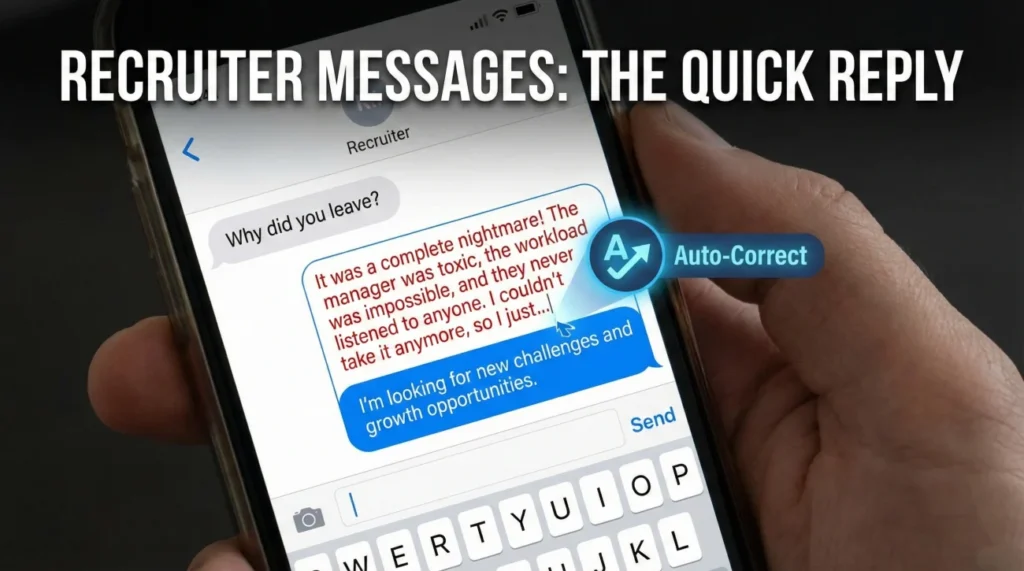
- If a recruiter asks why you left, your job is to keep momentum, not to tell the whole story.
- Use one neutral reason category, one stability signal, then ask for the next step.
- Below are 3 copy ready replies, plus subject lines and closers that move to scheduling.
When The Recruiter Message Is One Line, Your Reply Has One Job
Most people overthink this moment because the truth feels complicated. The recruiter message is not complicated. It is a quick screen for judgment and stability. If you answer like you are still in the fight, you accidentally make the fight the headline.
Here is the real target: A reply that feels boring in the best way. Professional. Closed chapter. Easy to move forward. That is what a recruiter message why leaving toxic job should accomplish.
“Hi. Quick question before we schedule. Why did you leave your last role?”
What are they actually asking for in that sentence?
They are asking whether you will bring friction into their process. They are not asking for a timeline of who said what. The best answer is short, neutral, and forward moving.
💡 Pro Tip: If your reply reads like a complaint, it creates a new task for the recruiter. Their next move becomes risk management instead of scheduling.
What Recruiters Are Testing In A Quick Message
A recruiter asking “Why did you leave” inside a message thread is usually doing a fast filter. They want a reason that fits a familiar category and does not invite a debate.
| What They Want To Hear | What It Signals | What Triggers Follow Ups |
|---|---|---|
| A neutral category | You understand professional boundaries | Specific accusations, emotional language |
| A stability cue | You will not repeat the pattern | “I could not handle it” framing |
| A next step | You are easy to move forward with | No question asked back, no close |
Key Point: The best reply gives them a label they can repeat internally without having to defend you.
That is why vague lines like “I am looking for growth” sometimes work, and sometimes fail. They work when your resume already looks stable. They fail when your timeline has short stints, a fast exit, or a role mismatch. In those cases, you need one extra sentence that makes the exit feel contained.
A Simple Reply Formula That Keeps You Out Of Drama
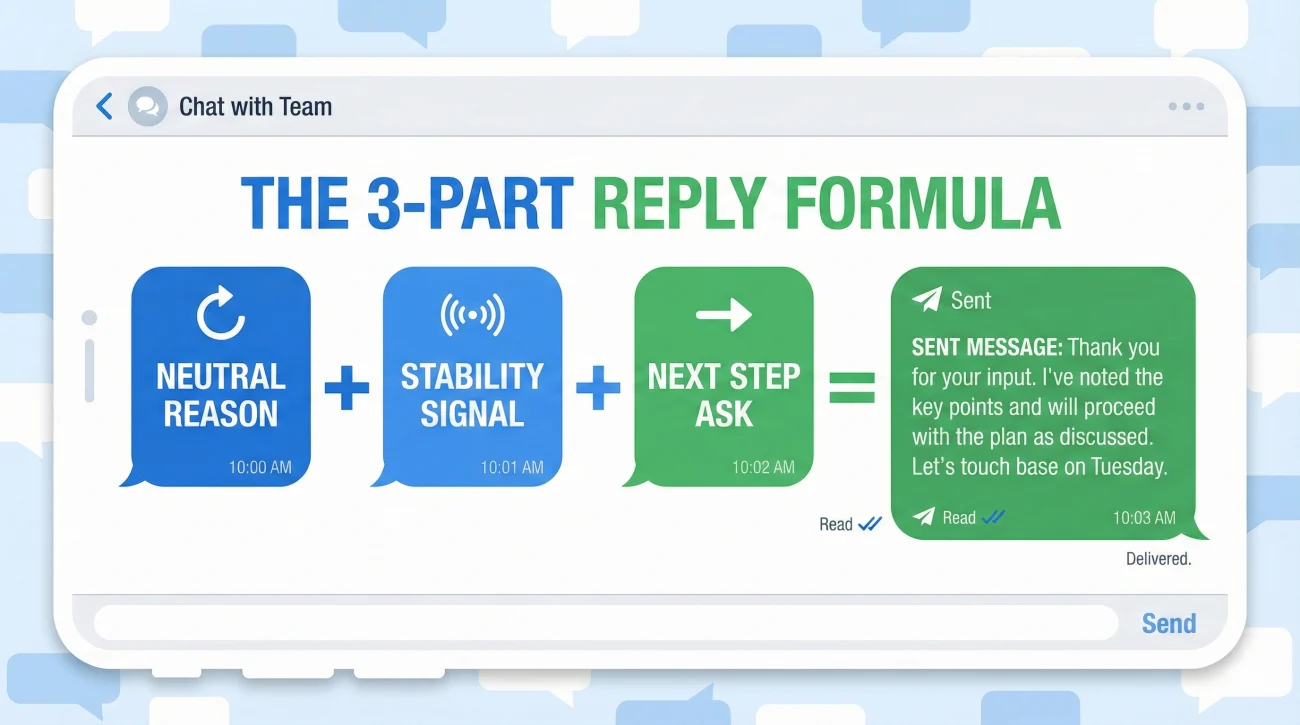
You can treat recruiter outreach like a mini script. Not because you want to sound robotic, but because predictability is what creates trust in low context communication.
[Neutral Reason Category] + [Professionalism Signal] + [Scheduling Nudge]
Here is what each part does:
- Neutral Reason Category: “Role scope changed”, “Team restructure”, “Misalignment in ways of working”.
- Professionalism Signal: “I delivered through the transition”, “I kept a clean handover”, “References available”.
- Scheduling Nudge: “Happy to share more live”, “Are you open to a quick call”, “What is the next step”.
⚠️ Warning: Avoid legal sounding words in recruiter messages. Even if true, they push the thread into compliance mode.
One more detail that helps: Use the same reason label in your reply and later in interviews. Consistency reads as honesty. Inconsistent labels read as story editing.
Three Replies You Can Copy And Send Today
Each template below is built for a different situation. Pick the one that matches your reality, then adjust the bracketed parts. Keep it short enough to fit naturally in a recruiter thread.
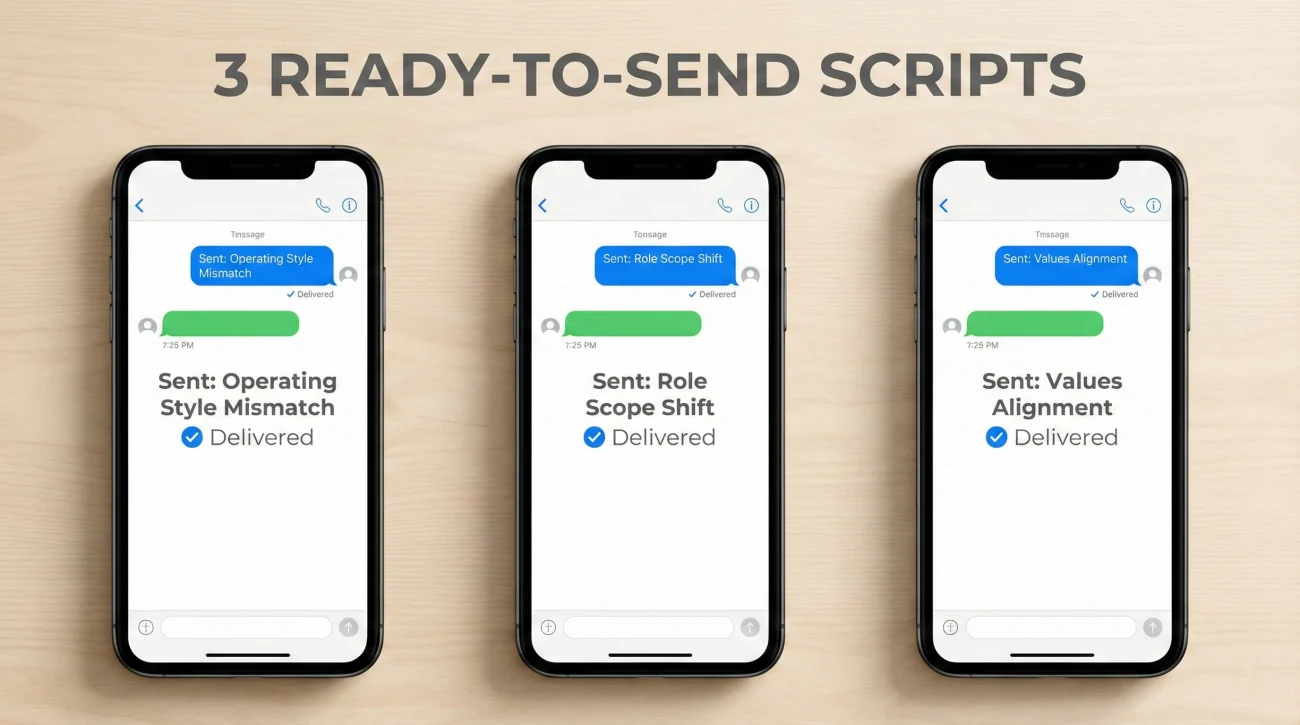
Reply 1: You Want To Stay Neutral And Move Fast
This is the safest default when you do not know the recruiter yet. It protects you from oversharing while still giving a real category.
Hi [Name], thanks for asking. I left because the role and working style became a mismatch after a shift in priorities. I stayed professional through the transition and wrapped up my work cleanly. If it helps, I can share the context in two minutes on a call. What is the next step on your side?
Where to fit the long tail naturally: If you are writing a message to recruiter why leaving, this is the version that stays calm without sounding evasive.
Reply 2: You Left Quickly And Need A Stability Signal
This one is for short tenure exits. Your goal is to make the timeline feel contained and non dramatic.
Hi [Name], I left that role because it was not the right long term fit in terms of expectations and how the team operated day to day. I made the decision early rather than dragging it out, and I left on good terms with a clear handover. I am focused on roles where the scope and ways of working are defined up front. Are we able to schedule a quick screen this week?
💡 Pro Tip: “I made the decision early” is a quiet credibility cue. It signals judgment, not chaos.
Reply 3: The Recruiter Is Following Up And You Need To Close The Loop
This is for follow ups after you already hinted you left a difficult environment. You want to answer, then immediately return the conversation to the role.
Hi [Name], closing the loop on your question. I left because the environment was not set up for sustainable performance, and I prefer teams with clear priorities and respectful collaboration. I kept things professional, delivered what I committed to, and moved on without burning bridges. If the role is still in play, I would love to discuss how my experience maps to your requirements. What times work for you?
Use this version when you are responding to a recruiter follow up toxic job thread and you want it to end with scheduling, not more explanation.
If you are sending a longer email instead of a chat style message, keep the same structure. This also works as an email explaining toxic workplace as long as you keep the details out.
Six Subject Lines And Six Closers That Move To Scheduling
Most recruiter threads die because the message ends with a statement instead of a next step. These options solve that without sounding pushy.
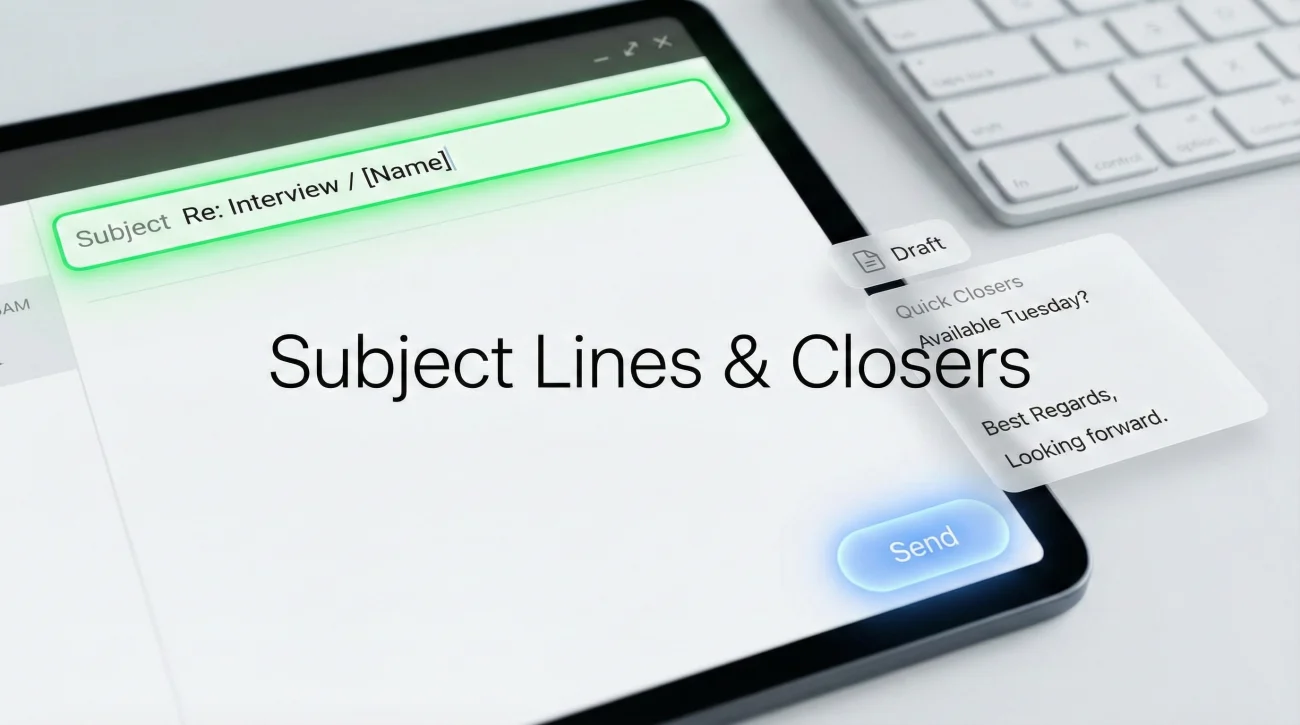
Subject Line Options
- Quick Context On My Recent Move
- Re: Next Steps For [Role Title]
- Follow Up: Availability For A Screen
- Clarifying My Timeline And Fit
- Background Note Before Scheduling
- Role Fit And Next Step
Closer Options
- Would a 10 minute screen help to confirm fit?
- Happy to share more live. What time windows work for you?
- If the role is still open, I can make time [Day] or [Day].
- What is the best next step in your process?
- If helpful, I can send availability for the next two days.
- Would you like a quick call, or should I answer anything else first?
⚠️ Warning: Do not add “I can explain everything” or “It is a long story” in a recruiter message. That invites a deep dive you do not want.
Common Mistakes That Trigger Extra Questions
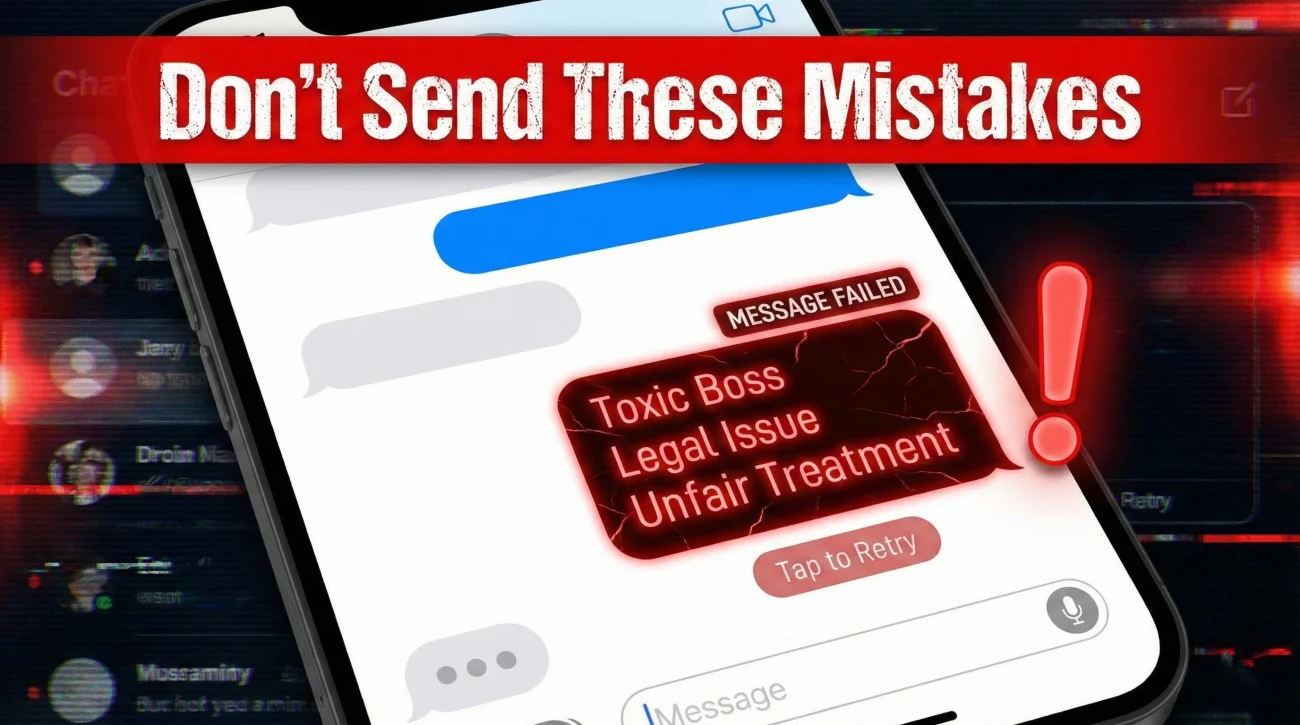
These are the phrases that look honest but create friction. If you want the thread to move, avoid them.
- ❌ “It was toxic and my manager was awful.” This sounds like you are still emotionally inside it.
- ❌ “They were abusive.” This pushes the recruiter into risk mode and they will step back.
- ❌ “I had to get out.” This can read as impulsive unless you add a stability signal.
- ❌ “I signed an NDA so I cannot say.” This sounds dramatic, even when true.
❌ Note: The more you name villains, the more the recruiter wonders whether you will name them next.
If you need one sentence that stays honest without turning into an accusation, choose a neutral category. “Misalignment in expectations” and “Working style mismatch” are boring, and boring is the point.
Final: A Calm Reply Is A Career Signal
Leaving a difficult environment does not make you a risky candidate. The risk comes from how the story lands in low context messaging. If your reply is structured, neutral, and forward moving, the recruiter can keep you in the process without hesitation.
When you are unsure what to write, return to the job of the message: Confirm a neutral category, show professionalism, then ask for the next step. That is how a recruiter message why leaving toxic job stays simple, believable, and easy to move forward with.
❓ FAQ
🎯 Should I use the word “toxic” in a recruiter message?
Usually no. “Toxic” is emotionally loaded and invites follow ups. A neutral label like “working style mismatch” keeps the thread moving while staying truthful.
🧭 What if the recruiter asks for details anyway?
Offer a short call. Details land better live than in writing, and you can keep it professional without creating a permanent record of a complaint.
🛡️ Can I say “values misalignment” without sounding vague?
Yes, if you pair it with one stability signal. Add something like “I stayed professional through the transition” or “I left with a clean handover.”
⏱️ How long should the message be?
Think 3 to 5 sentences. Long enough to feel real, short enough to read on a phone without scrolling.
✅ What is the safest next step to ask for?
Ask for the process step or a short screen. “What is the next step on your side?” is simple and non pushy.
⚠️ Disclaimer: ResumeSolving provides resume, cover letter, job search communication, and career transition guidance for informational purposes only. Hiring practices vary by employer, role, location, industry, and individual circumstances. We do not guarantee interviews, job offers, ATS results, or other outcomes. Verify employer requirements directly and follow applicable laws and workplace policies. For sensitive situations, use only information you are comfortable disclosing and keep all statements accurate.