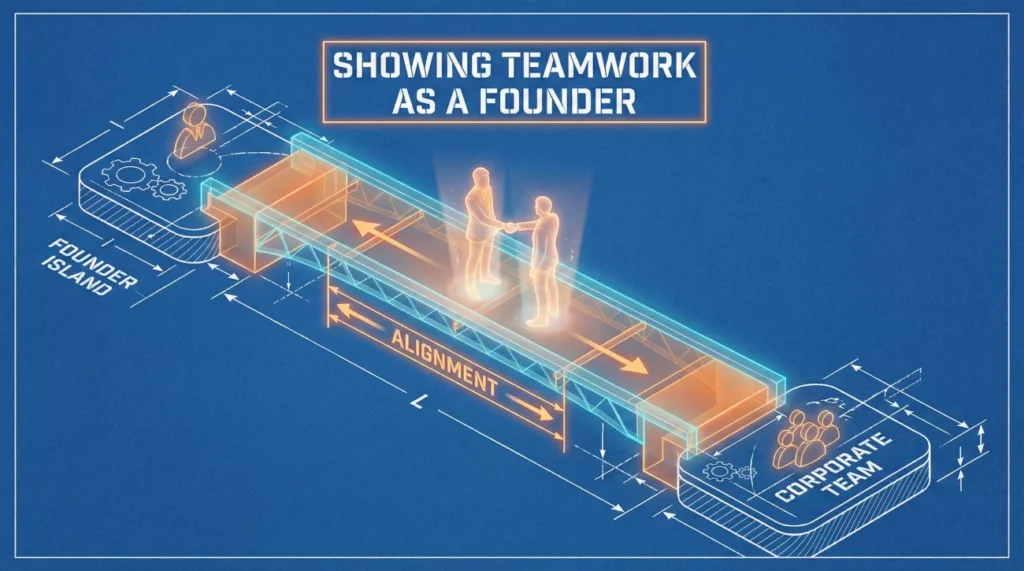
- If your founder section reads like “I built everything,” a recruiter may assume you will not collaborate, even if you did.
- One clear collaboration landmark per role is enough: Partner group, shared goal, your contribution, outcome.
- Pair the resume signal with one calm interview line that shows you take direction and commit once a decision is made.
How to Show Teamwork as a Founder on a Resume (So You Do Not Look Like a Lone Wolf)
I once screened a founder’s resume that looked strong on paper: Revenue growth, launches, hires, partnerships. But the writing made it feel like a solo story. No partner groups. No alignment moments. No handoffs. In the debrief, the hiring manager said what most people only think: “This reads like someone who will do their own thing.”
That is the real tension behind how to show teamwork as a founder on a resume. You are not trying to prove you are friendly. You are trying to make your work legible to a team that already has structure, owners, priorities, and constraints.
💡 Pro Tip: Skip the “Teamwork” skill label. Add one visible collaboration proof inside the role itself: A partner group, a shared goal, and a result that could not happen without alignment.
Why Founder Bullets Often Trigger the Lone Wolf Assumption
Recruiters are not judging founders as people. They are predicting risk. Some founders struggle inside a team environment because they are used to being the final decision maker. Many others collaborate deeply, but write their resumes like a highlight reel where everyone else disappears.
Founder resumes trigger the lone wolf assumption for three practical reasons. None of them require you to rewrite your identity. They just require you to show relationships, not only results.
First: Your verbs imply unilateral control. Words like “owned,” “single-handedly,” and “end-to-end” can be accurate, but when they repeat, they suggest you did not need anyone. Corporate roles are built on dependencies. If your resume hides those dependencies, the reader assumes you avoid them.
Second: Partner landmarks are missing. A corporate reader expects to see who you worked with: Engineering, Design, Sales, Customer Success, Legal, Finance, Ops, Data, Marketing. Founder work usually touched several of these, but the resume often compresses them into “I launched X,” which reads like a one-person machine.
Third: You do not show alignment under disagreement. Teamwork is not harmony. Teamwork is how you handled tradeoffs and competing priorities without blowing up execution. Founder resumes rarely include that, so the interview turns into: “Can you take direction?”
| Reads Like Lone Wolf | Reads Like Collaborative Operator |
|---|---|
| “Owned product roadmap end-to-end.” | “Aligned roadmap with Engineering and Sales, trading off scope vs. timeline to hit a committed launch window.” |
| “Built the go-to-market strategy.” | “Built GTM with Marketing and Customer Success, using churn feedback to refine messaging and onboarding.” |
| “Ran hiring for the company.” | “Partnered with recruiters and team leads on scorecards and calibration, improving decision consistency.” |
| “Handled investor updates.” | “Coordinated investor updates with Finance and Ops, aligning narrative, runway, and next-quarter priorities.” |
⚠️ Warning: Do not swing to the other extreme by sprinkling “collaborated” into every line. If everything is teamwork, nothing stands out.
Eight Collaboration Patterns That Translate Founder Work Into Teamwork Signals
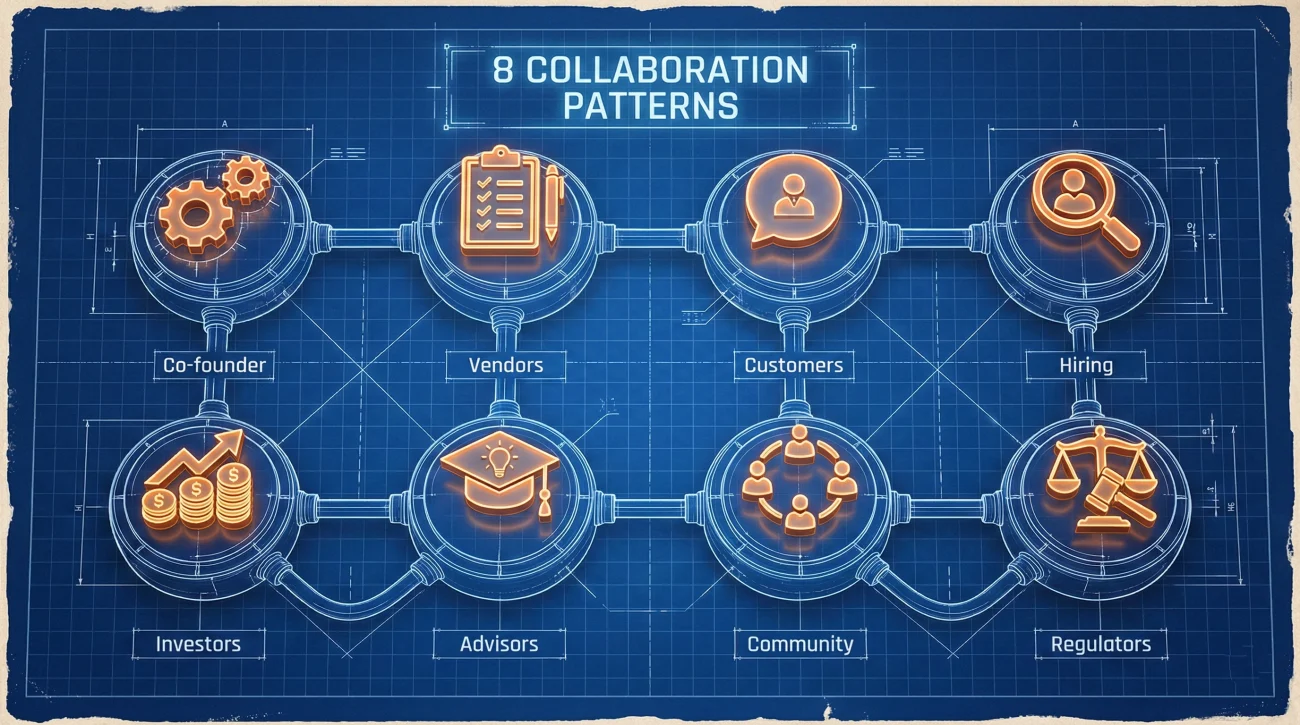
Most articles stop at “show teamwork.” Founders need a translator. The question is not whether you collaborated. The question is which kind of collaboration a corporate reader recognizes quickly.
Pattern 1: Co-founder alignment. If you had a co-founder, you already have one of the strongest teamwork signals. The resume mistake is making it sound like two separate solo tracks. Show how decisions were made, how ownership was split, and how you kept delivery stable when things got messy.
Pattern 2: Cross-functional shipping. Shipping is rarely solo. Even in a small startup, delivery runs through design, engineering, QA, support, and sometimes sales. Show one visible dependency and how you coordinated it. If you are applying into larger orgs, this is where cross functional founder resume language becomes practical instead of forced.
Pattern 3: Customer collaboration. Founder work often blends sales and delivery. That can be a strength if you show how you partnered with customers to define outcomes, manage expectations, and translate needs into something the team could actually build.
Pattern 4: Vendors and agencies. External partners are still teamwork, and often higher-signal teamwork because you cannot rely on hierarchy. You align through clarity, incentives, and feedback loops.
Pattern 5: Investors and advisors. If you reported to investors or advisors, you operated inside constraints you did not control. You negotiated priorities, explained tradeoffs, and kept the narrative consistent with reality.
Pattern 6: Hiring calibration. Hiring is not just “I hired people.” The teamwork angle is how you worked with others to define what “good” looks like: scorecards, structured loops, calibration, and role clarity.
Pattern 7: Conflict navigation. Hiring managers watch for one thing: Can you disagree without turning it into a war? Show a moment where priorities clashed, you created a decision path, and execution stayed clean.
Pattern 8: Operational legibility. Founders often carry context in their head. Teams need handoffs that survive you. Documentation, SOPs, dashboards, and clear ownership boundaries signal maturity.
When people mention collaboration as founder, this is what persuades a recruiter. Not the label, but the proof that you worked through other people, not around them.
Bullet Point Translation: A Rewrite That Sounds Like a Real Person
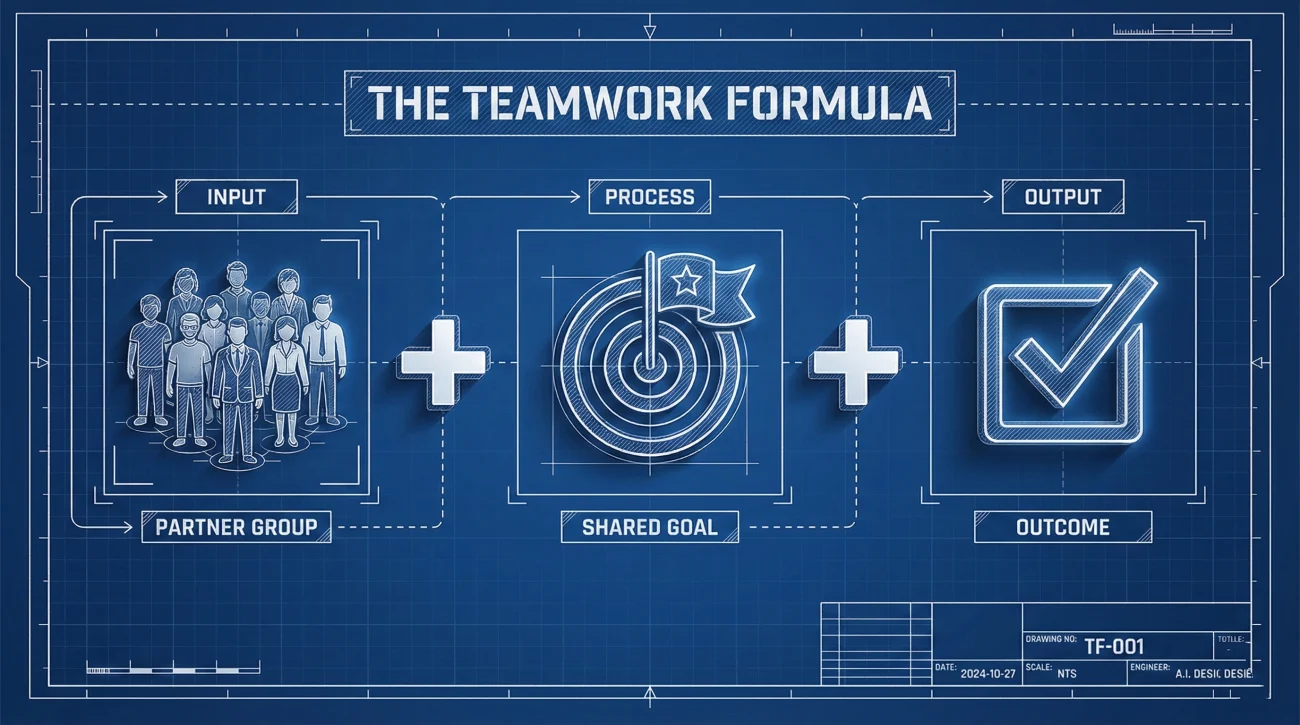
Here is the rewrite rule I use when helping founders move into employee roles. Keep the achievement. Add the relationship that made it possible.
Formula: Partner group, shared goal, your contribution, outcome.
That one move is what shifts your bullets from “I did everything” into “I delivered inside a team environment.”
Phrases to retire when they show up everywhere: “Single-handedly,” “owned everything end-to-end,” “built from scratch with no support,” “did all hiring, sales, and product myself.” These lines are not always wrong. They just stop working when they paint you as someone who avoids dependencies.
Ten founder bullets that prove teamwork without sounding performative:
- Product delivery: “Aligned with engineering and design on scope tradeoffs, shipping a prioritized release that reduced rework and clarified ownership.”
- Customer feedback loop: “Worked with customers and support to map friction points, then partnered with product to simplify onboarding and reduce repeat tickets.”
- Go-to-market: “Built launch plan with marketing and sales, tightening messaging based on pipeline feedback and improving lead quality.”
- Ops and finance: “Coordinated budget decisions with ops support, shifting spend to protect runway while keeping delivery timelines intact.”
- Vendor management: “Managed agency and contractor workflow through weekly reviews, aligning deliverables to product constraints and launch dates.”
- Hiring structure: “Partnered with team leads to define scorecards and interview loops, improving consistency and decision speed.”
- Priority conflict: “Landed a phased roadmap when customer urgency conflicted with capacity limits, keeping stakeholders aligned through clear success metrics.”
- Stakeholder cadence: “Built a weekly update rhythm with leads, reducing last-minute escalations and keeping decisions visible.”
- Partnership delivery: “Negotiated partner deliverables and checkpoints, keeping expectations realistic and execution predictable.”
- Handoffs: “Documented processes and ownership so teams could execute independently, reducing founder bottleneck risk.”
💡 Pro Tip: If you only fix two lines, fix the first two bullets under the founder role. That is where the reader forms their opinion.
Where to Place the Teamwork Signal So It Gets Noticed

Recruiters scan fast. If your collaboration proof sits deep in the bullets, it may never be read. Put it where the eye lands first.
Summary line: Use a short, plain statement if your founder title triggers assumptions. Keep it specific and calm.
Example: “Founder with cross-team delivery experience, partnering across product, engineering, and customer teams to ship outcomes.”
Top two bullets: Make the first bullet a partner landmark and the second a measurable outcome. Then describe scope, systems, and results below.
Stakeholder line: If your role spans multiple groups and bullets get crowded, add one short stakeholder line and keep bullets focused on actions and outcomes.
Six Interview Answers That Show You Can Take Direction Without Losing Your Edge
This is the part where a lot of founder advice goes wrong. People either give you one generic line that sounds like a press release, or they dump a giant wall of Q and A text that nobody would actually read. The goal is simpler: One question, one clean answer, one small proof point you can say out loud without sounding rehearsed.
Think of these as “stability signals.” A hiring manager is not asking because they hate founders. They are asking because they want to know whether you will fit inside an existing decision system. Your answers should show three things: You can work inside a frame, you can disagree without going rogue, and you can commit once a decision is made.
Taking Direction After Being a Founder
What they are really checking is control. Not whether you are obedient, but whether you can operate inside someone else’s priorities without quietly resisting or rewriting the job to match your habits.
Your strongest posture here is calm and practical. You like clarity, you ask what “good” looks like, then you execute. If you disagree, you bring options early, not a speech.
How do you handle taking direction after being a founder?
I like clarity. I ask what success looks like, then I execute inside that frame. If I disagree, I bring options and tradeoffs early, not resistance.
When You Think the Plan Is Wrong
This question is about two fears. Fear one: You argue forever and slow the team down. Fear two: You stop asking and just do your own version. Both read as a trust problem.
Answer it with a simple sequence: Raise the risk early, offer an alternative, accept the decision, then execute hard. The confidence is in the commitment, not in “being right.”
What happens when you think the plan is wrong?
I flag the risk, propose an alternative, and if a decision is made, I commit. My job is to make the chosen path succeed, not to win the argument.
Compromise Without Losing Standards
Founders sometimes answer this like they are defending their identity. That is where it gets awkward. You do not need to sound noble. You just need to show you can adjust quickly when the team has better data or stronger constraints.
A clean line here signals maturity: You separate ego from outcomes. You can let go of your original idea without letting go of quality.
Have you ever had to compromise on your idea?
All the time. I learned to separate ego from outcomes. If someone has better data or a stronger constraint, we adjust and move forward fast.
Joining a Team That Already Has a Process
This is where “founder energy” gets misunderstood. Teams are not afraid of initiative. They are afraid of someone who starts ripping out systems before they understand why those systems exist.
Your answer should show respect for context. You learn the process first. You understand the tradeoffs. Then you suggest improvements in a way that does not create chaos or bruised egos.
How do you work with teams that already have a process?
I start by learning the process and why it exists. I only suggest changes after I understand the tradeoffs, not on day two.
Handling Conflict With Peers
Peer conflict is where “teamwork” becomes real. They are listening for whether you make things personal, whether you escalate unnecessarily, or whether you can keep disagreement focused on the work.
A strong answer has structure. You make the disagreement concrete. You name the goal and constraints. You pick a decision owner. Then you move forward together without dragging resentment into execution.
How do you handle conflict with peers?
I make it concrete: Goals, constraints, and what we are optimizing for. Then we pick a decision owner and move.
What Your Manager Would Say
This is a “maintenance” question in disguise. They want to know whether you will create drama, disappear when blocked, or make work harder for everyone around you.
Answer with believable traits, then one behavior that proves it. “Reliable” means something specific. It means you communicate early, you do not hide problems, and you bring a path forward instead of a complaint.
What would your manager say about working with you?
That I am direct, reliable, and low drama. If something is blocked, I communicate early and propose a path instead of going silent.
💡 Pro Tip: Pick two answers you can deliver naturally. One about direction-taking, one about disagreement. If you say those cleanly, the “founder risk” usually fades fast.
Quick Self-Audit: Does Your Founder Section Read Like a Team Environment?
Before you submit applications, do a fast scan. It catches the “solo operator” vibe before someone else labels you with it.
- Do at least two bullets name a real partner group, not vague “stakeholders”?
- Do you show one tradeoff or alignment moment, not only outcomes?
- Is there a handoff or process signal that makes your work easy for others to run?
- Do your verbs include relationship verbs alongside achievement verbs?
- Could someone describe how you worked with others after a 10-second skim?
If the answer is “not really,” rewrite the first two bullets with partner landmarks and leave the rest focused on impact.
Final: Teamwork Is a Signal, Not a Personality Trait
The founders who transition smoothly are not the ones who pretend they love committees. They are the ones who make collaboration visible without overselling it.
If you change one thing, change this: Add one clear partner landmark that a recruiter can recognize instantly. Not a soft skill label. A partner group, a shared goal, and an outcome that required alignment.
That is the point of how to show teamwork as a founder on a resume. You are not shrinking your founder story. You are translating it into a language teams trust.
❓ FAQ
🧩 Should I add “teamwork” as a skill on my founder resume?
You can, but it rarely changes the decision. What changes the decision is a concrete collaboration proof inside your experience bullets.
If you keep a skills section, treat it as support. Put the evidence in the role description.
🧠 What if I truly worked mostly alone?
Then show the collaboration you did have: Clients, vendors, contractors, advisors, or structured customer research. Teamwork is not only internal headcount.
Also show legibility: Documentation, handoffs, and repeatable processes signal you can work in a team environment.
🎯 How many collaboration bullets do I need?
Usually two is enough for the founder role: One that shows cross-team alignment, one that shows stakeholder management or handoffs.
After that, focus on outcomes and scope. You are proving you can collaborate, not begging for approval.
🧾 Can I list stakeholders as a separate line?
Yes, but only if it helps clarity. Keep it short and real. Do not turn it into a buzzword list.
If you do it, make sure your bullets still contain at least one collaboration action, not just names.
🗣️ How do I answer “Can you take direction?” without sounding defensive?
Keep it practical: You like clear success criteria, you execute within the chosen plan, and when you disagree you raise options early.
Then give one short example of a time you aligned and delivered after adjusting your original view.
🧰 What is the quickest rewrite if my resume sounds too “I did everything”?
Pick your strongest achievement bullet and rewrite it with a partner landmark, a shared goal, and a clean outcome.
One rewrite like that often changes the tone of the whole founder section immediately.
⚠️ Disclaimer: ResumeSolving provides resume, cover letter, job search communication, and career transition guidance for informational purposes only. Hiring practices vary by employer, role, location, industry, and individual circumstances. We do not guarantee interviews, job offers, ATS results, or other outcomes. Verify employer requirements directly and follow applicable laws and workplace policies. For sensitive situations, use only information you are comfortable disclosing and keep all statements accurate.