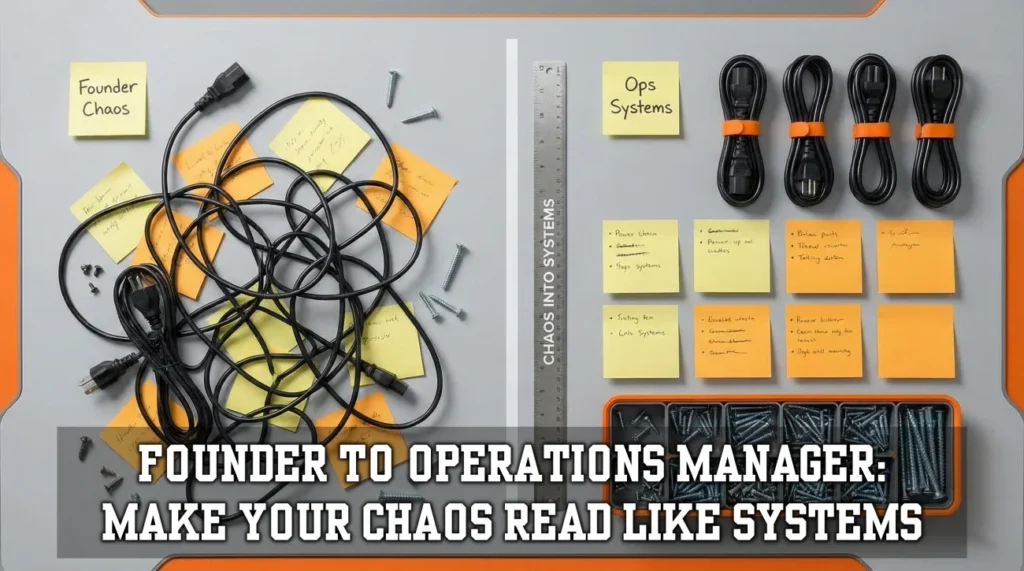
- Your resume must translate startup chaos into repeatable operating systems, not heroic hustle.
- Ops hiring managers look for evidence of SOPs, SLAs, cadence, and controls, not “I wore many hats.”
- A simple rewrite method turns founder bullets into operations bullets that feel stable and scalable.
- A small “proof pack” of artifacts can signal real ops maturity without oversharing or attaching docs.
Why Founder Experience Often Fails in an Ops Manager Screen
If you are building a founder to operations manager resume, the hardest part is not listing what you did. It is making a hiring manager believe you can run a predictable machine, not just survive unpredictable days.
I have seen founders with real operations chops get rejected for a frustrating reason: Their resume reads like adrenaline. Lots of movement, lots of “handled everything,” and almost no evidence that the work became a system other people could follow.
A former candidate I worked with, Emilia, ran a small DTC brand. She had fulfillment chaos, support fires, vendor issues, and weekly cash surprises. She absolutely had ops skills. But her first draft sounded like a diary of emergencies, not the story of someone who built order from noise.
This guide is the conversion layer. We are going to translate startup chaos into the exact signals an Operations Manager is hired for: SOPs, SLAs, planning cadence, dashboards, escalations, and measurable stability.
The Two Founder Signals That Make Ops Teams Hesitate

They worry you will keep reinventing instead of operating
Ops leaders usually hire to reduce variance. A resume full of “jumped in,” “handled,” “supported,” and “helped” reads like constant improvisation, even if you actually built solid processes.
One hiring manager told me something I have heard in different words for years: They do not need another smart person who can save the day. They need someone who makes “the day” boring.
They worry you will leave when it stops being yours
The “Founder” label can trigger flight risk. Not because founders are flaky, but because the role identity looks misaligned. Ops manager work includes repetition, reinforcement, and calm follow-through. If your resume screams speed and novelty, the fit feels wrong.
⚠️ Warning: If your bullets only show hustle, the reader assumes you will be frustrated by maintenance work, even though ops is largely maintenance done well.
Key Point: Your goal is to look like a builder of operating rhythm. Not a person who survived chaos through force of will.
The Ops Systems Map That Turns “Chaos” Into “Operations”
Most operations manager resumes are organized around systems, even when they do not say the word “system.” When you translate founder work, start by mapping your chaos into the same buckets an ops team already recognizes.
Use this map as your backbone. Then your bullets become proof that you built, measured, and stabilized each system.
| Startup Chaos Moment | Ops System (What it becomes) | Proof Artifact | Metric Signal |
|---|---|---|---|
| Orders slipping, fulfillment errors, refunds rising | Order-to-delivery workflow | SOPs, QA checklist, exception routing | On-time rate, error rate, refund rate |
| Support inbox floods, inconsistent answers | Customer support SLAs | Macros, escalation tree, knowledge base | First response time, CSAT, backlog |
| Vendor delays, surprise costs, quality swings | Vendor management cadence | Scorecards, reorder points, contract calendar | OTIF, unit cost, defect rate |
| Hiring ad hoc, training by osmosis | People ops and onboarding | Onboarding plan, role checklists, 30-60-90 | Time to productivity, churn, coverage gaps |
| Everything lives in someone’s head | Documentation and control | SOP library, version control, audit trail | Process adherence, rework rate |
| Decisions made by gut, not visibility | Reporting and operating cadence | KPI dashboard, weekly ops review agenda | Forecast accuracy, cycle time, burn variance |
A colleague of mine, Ben, moved from founder to an ops role at a mid-size logistics company. His turning point was not rewriting his summary. It was swapping “I did everything” for “I built these six systems, and here is the measurable stability that followed.”
The Bullet Rewrite Method Ops Teams Actually Trust

Founder bullets fail when they describe effort. Ops bullets win when they describe a system, a control, and a measurable outcome.
[System] + [Control Mechanism] + [Cadence] + [Result Metric]
That formula forces you to name the machine you built. It also quietly answers the unspoken question: “Will this person create stability here, or bring new chaos?”
Here is another rewrite that shows the difference between “hero mode” and “ops mode.”
What if you cannot share exact numbers because the business was private?
You can still show credibility with ranges, relative movement, and operational signals. For example: “Cut backlog by half,” “Reduced churn quarter over quarter,” or “Improved forecast accuracy enough to prevent stockouts.” Ops hiring managers mainly want to see that you measured reality and used it to change behavior.
12 Bullet Examples for a Founder to Ops Manager Pivot
These examples are written so they can drop into a founder operations resume without sounding like a corporate template. Replace X, Y, Z with your real metrics, ranges, or directional results.
SOPs and process control
Ops managers are hired to reduce variation. Your bullets should show that you documented the work and designed controls that made it repeatable.
- Built a SOP library for fulfillment, returns, and QA checks; reduced rework by X% and improved order accuracy from X% to Y%.
- Introduced exception routing and root-cause tagging for operational issues; cut repeat incidents by X% over Y weeks.
- Standardized daily operations handoffs with checklists and ownership rules; shortened cycle time by X% and reduced missed steps.
SLA, support workflow, and escalation
If you want to look like an ops leader, show service reliability. This is one of the fastest ways to signal ops maturity.
- Implemented support SLAs and an escalation tree across email and chat; improved first response time by X% and stabilized backlog under Y tickets.
- Created a knowledge base and response macros tied to ticket categories; increased first-contact resolution by X%.
Inventory, procurement, and vendors
Founder experience often includes vendor chaos. Translate it into procurement discipline and measurable supplier performance.
- Built vendor scorecards and reorder point logic; reduced stockouts by X% and improved vendor OTIF to Y%.
- Renegotiated supplier cadence and QC acceptance criteria; lowered defect rate by X% while holding unit cost within Y%.
Planning cadence and visibility
Ops teams do not run on vibes. They run on dashboards and predictable reviews. Show the rhythm you created.
- Launched a weekly operating cadence with KPI dashboard reviews and action tracking; improved forecast accuracy by X% and reduced surprise shortages.
- Built a cross-functional incident log with owners and due dates; cut average resolution time by X% and prevented repeat outages.
People ops, coverage, and training
Even small teams need training systems. This is where founders can quietly outshine candidates who only managed large teams by title.
- Designed onboarding checklists and role playbooks for ops and support hires; reduced ramp time from X weeks to Y weeks.
- Created shift coverage rules and a capacity plan for peak demand; maintained service levels during surges without emergency overtime.
💡 Pro Tip: If you are applying as a startup founder ops manager, pick the 6 bullets that best match the job posting, then add 2 that show reliability under pressure. Do not stack all 12.
The SOP Proof Pack That Makes Your Resume Feel Real
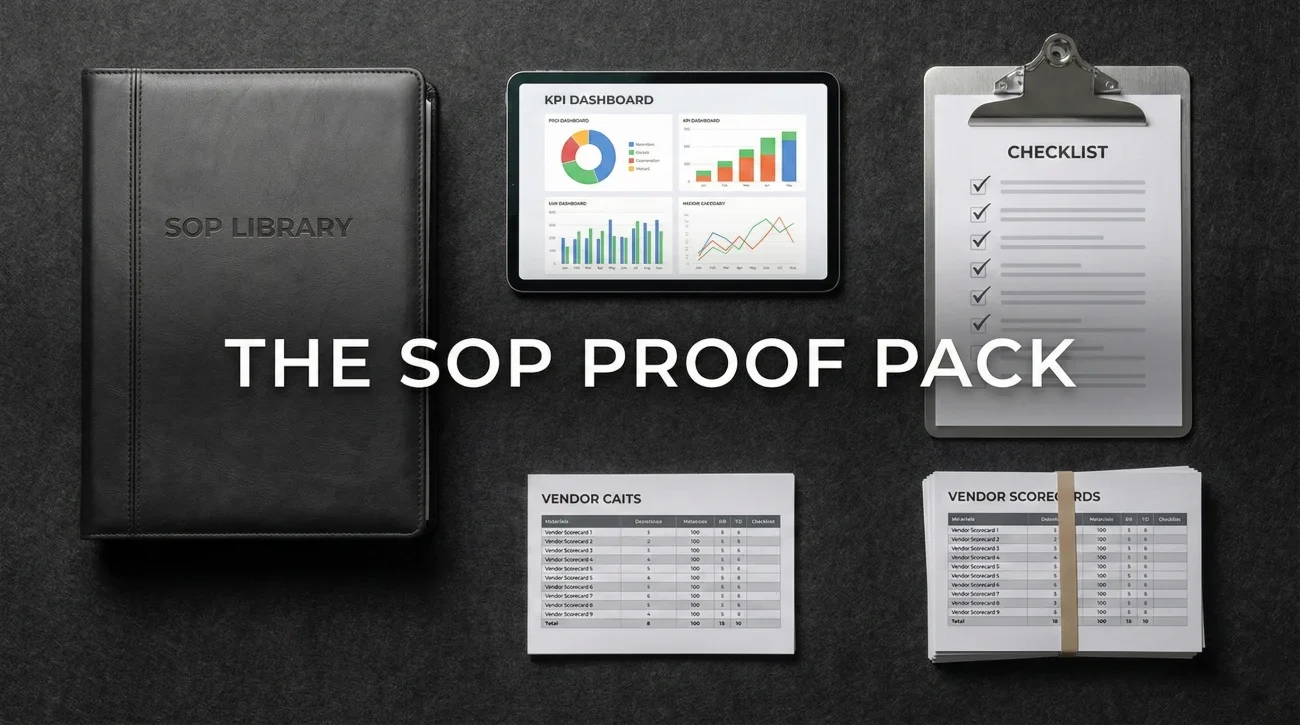
Most candidates claim they “built process.” Very few signal what that process actually looked like. You do not need to attach documents. You just need to reference artifacts in a way that sounds like they exist.
When I helped Emilia rebuild her resume, we added a small “proof pack” line under her experience. It changed the tone instantly. The reader could picture the operating system.
- SOP library: “Fulfillment QA, returns handling, vendor receiving, support escalations.”
- Operating cadence: “Weekly ops review agenda, KPI dashboard, action log.”
- Controls: “Exception routing, approval thresholds, incident postmortems.”
- Training: “Onboarding checklist, shadow schedule, role playbook.”
- Vendor management: “Scorecard, reorder points, contract renewal calendar.”
- Service reliability: “SLA targets, backlog limits, escalation tiers.”
Here is a clean way to show it without turning your resume into a novel.
– Built SOPs for fulfillment, returns, and QA; improved order accuracy from X% to Y% and reduced rework by X%
– Implemented support SLAs, macros, and escalation tiers; cut first response time by X% and stabilized backlog under Y tickets
– Launched weekly operating cadence with KPI dashboard and action tracking; improved forecast accuracy by X% and reduced stockouts by X%Proof Pack: SOP library, KPI dashboard, vendor scorecards, onboarding checklists, incident log
❌ Note: Avoid listing tools like a shopping list unless the job posting asks. The artifacts matter more than the software.
How to Present Your Founder Role So It Reads Like Operations
For this pivot, your title should reduce confusion, not win an argument. “CEO” might be true, but it rarely maps to what an ops manager job is evaluating.
Use a title that matches the work you are asking to be hired for
If your day-to-day was operations, you can use a paired title format that stays truthful and reduces reader friction.
- Founder and Head of Operations
- Founder and Operations Lead
- Founder and Business Operations Manager
This is especially useful when you are aiming for a business owner operations resume framing where the core message is: You already ran systems, now you want to run them inside a larger organization.
Name scope with concrete constraints instead of hype
Founders often oversell without meaning to. A simple scope line prevents that. Mention team size, volume, or complexity in a grounded way.
Examples: “Led ops across fulfillment and support for X orders per month,” or “Owned vendor cadence across Y suppliers.”
Final: Make the Reader Feel the Operating System
A strong founder to ops pivot is not about proving you worked hard. It is about proving you built stability. When your bullets name the system, show the control, and tie to a metric, you stop sounding like a founder in permanent firefighting mode.
The clean test I use is simple: If a hiring manager can picture how your week ran, they trust you more. If they can picture your SOPs, your SLAs, and your cadence, they trust you even more.
That is the whole purpose of a founder to operations manager resume: A translation that makes your chaos read like systems, and your systems read like calm execution.
❓ FAQ
🧭 Do I need to remove the word “Founder” completely?
No. You need to reduce the mental detour it creates. Pair it with an ops-mapped title and make your bullets unmistakably operational.
📊 What if I do not have perfect metrics?
Use directional results and operational signals. Ops readers care that you measured reality and used it to improve reliability.
🧩 Should I list every hat I wore?
No. Pick the hats that map to the ops job. Too many hats reads like lack of focus, even if it was true.
🧾 Can I mention SOPs without sharing documents?
Yes. Reference artifacts as proof signals: SOP library, dashboard cadence, vendor scorecards, onboarding checklists. Keep it short and concrete.
🔍 What is the fastest fix if my resume feels “founder-ish”?
Rewrite your top 4 bullets using the system-control-cadence-metric method. That single change usually flips the reader’s impression.
⚠️ Disclaimer: ResumeSolving provides resume, cover letter, job search communication, and career transition guidance for informational purposes only. Hiring practices vary by employer, role, location, industry, and individual circumstances. We do not guarantee interviews, job offers, ATS results, or other outcomes. Verify employer requirements directly and follow applicable laws and workplace policies. For sensitive situations, use only information you are comfortable disclosing and keep all statements accurate.