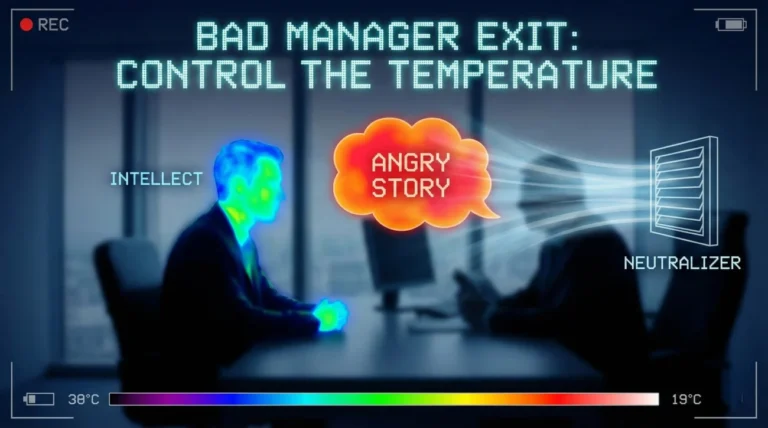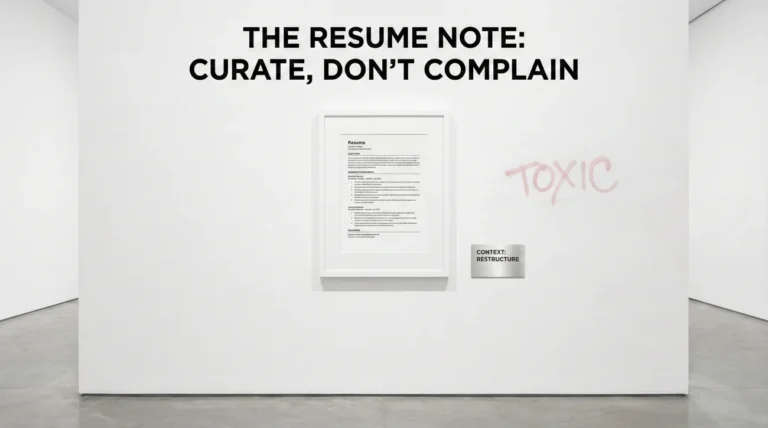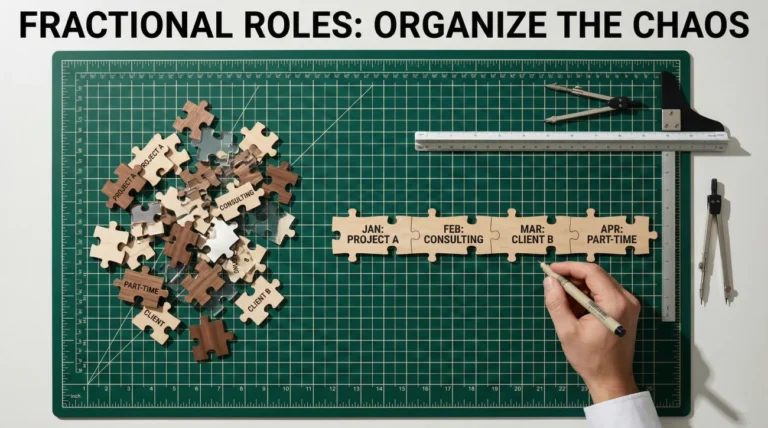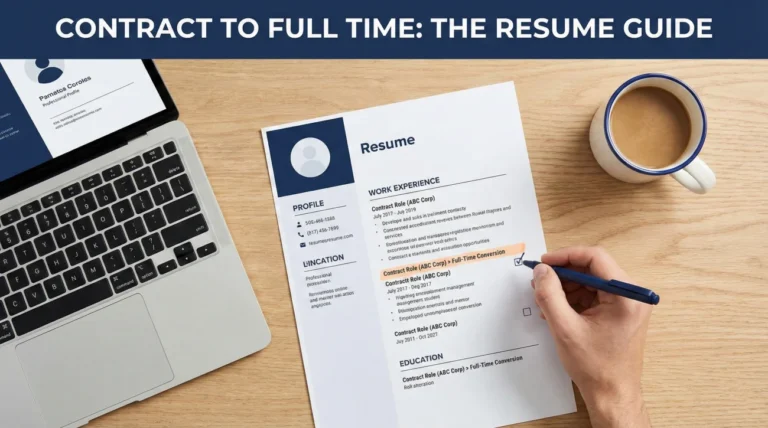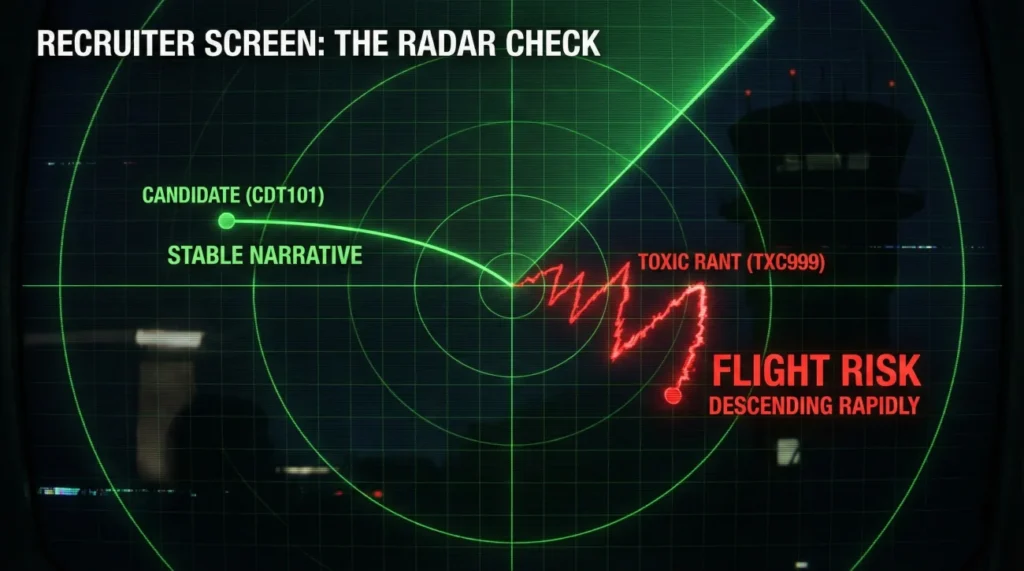
- You usually do not need the word “toxic” to be truthful. Recruiters screen for risk, not your full story.
- Use a timing rule: Start neutral, add one concrete boundary only if they press, and always close with what you want next.
- Keep three scripts ready: one for the first screen, one for a direct follow up, and one for messages.
The Real Question Recruiters Hear When You Say “Toxic”
If you are asking should I say toxic workplace to recruiter, you are usually trying to solve two problems at once: You want to be honest, and you do not want to look like a walking risk report.
Recruiters are not scoring your pain. They are scanning for patterns: conflict, instability, unmanaged emotions, or a story that will explode during references. That is why “toxic” can land badly even when it is true.
Here is the good news: You can keep integrity without donating the most loaded label in your vocabulary. In most recruiter screens, you only need a stable reason, a clean boundary, and a forward focused close.
Key Point: Recruiters do not need your full diagnosis of the workplace. They need to know you will not recreate the same chaos in their pipeline.
A Simple Disclosure Ladder That Keeps You Safe
Most low quality advice says “Never badmouth” and stops there. The missing part is the ladder: how much you reveal at each step, and what triggers the next step.
| Step | What You Say | When To Use It | What It Signals |
|---|---|---|---|
| Step 1: Neutral | “It was no longer the right fit for how I work, so I started a search for a healthier team environment.” | First recruiter screen, early messages | Stable, not dramatic, not evasive |
| Step 2: Boundary | “The role shifted toward unrealistic timelines and constant urgency, and I do my best work in a more sustainable operating rhythm.” | They ask follow ups, or you need to explain a short tenure | You have standards and self management |
| Step 3: Specific (Minimal) | “There were repeated professionalism issues, and I chose to move on rather than stay in a situation that was not aligned with my values.” | Only if pressed, or if facts will surface in references | You can state facts without ranting |
💡 Pro Tip: Your goal is not to convince them the old place was bad. Your goal is to show you are steady, self aware, and moving toward a better match.
What I Have Seen Work in Recruiter Screens
I have watched strong candidates lose momentum because they treated the recruiter screen like a therapy session. I have also watched candidates land interviews while telling the truth, just with the right shape.

Case 1: “Toxic” turned into “Operating model mismatch”
One candidate, Eliza, came from a startup where priorities changed daily and her manager publicly blamed people when deadlines slipped. She wanted to tell recruiter toxic workplace because that felt honest. We rewrote her story into a boundary:
“The operating model became highly reactive, with shifting priorities and constant last minute escalations. I realized I do my best work in a team with clearer planning and realistic timelines, so I started looking for roles with that structure.”
She did not hide anything. She translated it into something a recruiter can process without worrying that she will create conflict in their pipeline.
Case 2: When the recruiter asked directly and the candidate stayed calm
A colleague of mine in HR, Marcus, once coached a finance manager who was blunt by nature. The recruiter asked, “Was it a culture issue?” She wanted to unload. Instead she used a short, factual “boundary plus close” line and it worked:
“It became a misalignment on expectations and how feedback was handled. I learned what I need to do great work, and I am focusing on teams that value clear communication and respectful collaboration.”
The recruiter moved on immediately because the candidate sounded regulated, not raw.
Case 3: The truth that had to be said, but still kept minimal
Sometimes you cannot stay fully neutral. I worked with a candidate, Carrie, who left after a formal HR complaint process. She did not want details on record, but she also could not pretend it was “just growth.” We used a minimal specific line, then redirected:
“There were repeated professionalism issues that HR was involved in, and I chose to move on. I am looking for a team with clear standards and strong leadership, and your role stood out because of how it is structured.”
⚠️ Warning: If your story includes legal claims or protected class discrimination, keep it high level in recruiter screens. You can protect yourself without turning the call into a deposition.
Three Scripts You Can Use Without Sounding Bitter

These are built for real recruiter screens where time is short and impressions are fast. Pick the one that matches the moment.
Script 1: The first screen “Why are you leaving?”
“I am ready for a healthier team environment and clearer expectations. The role I am in has shifted in a way that is not the best fit for how I do my best work. I am focused on roles where I can deliver consistently and grow.”
Script 2: The follow up “What do you mean by that?”
“Mainly a misalignment in working style and standards. It became more reactive than I expected, and I work best with clear priorities and respectful communication. I am being intentional about finding that next.”
Script 3: The message version (LinkedIn or email)
“Thanks for asking. I am exploring new roles because I am looking for a better fit in team culture and expectations. I prefer environments with clear priorities and constructive communication, and I am excited about opportunities where I can deliver strong results long term.”
❌ Note: Avoid dramatic labels and diagnosis language in screens. “Toxic,” “narcissist boss,” and “abusive” may be true, but they force the recruiter into risk mode instead of match mode.
When You Actually Can Say It Was Toxic
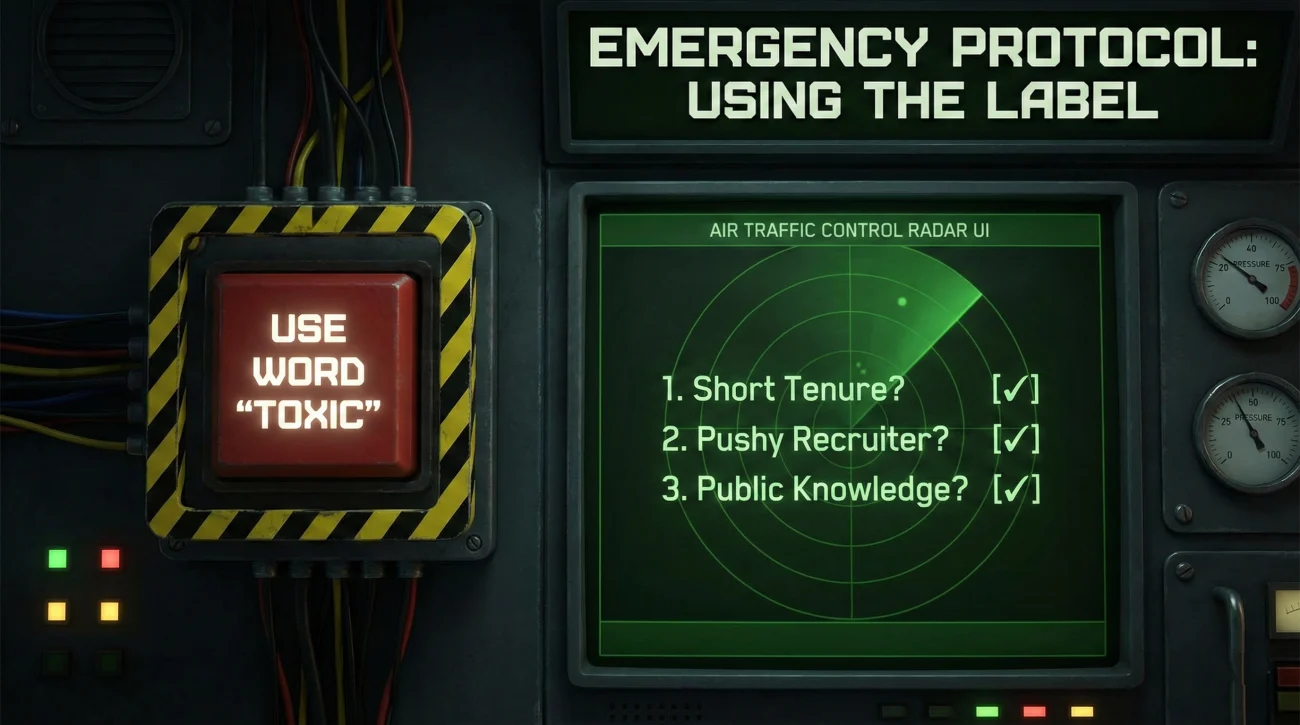
There are moments when a stronger label is reasonable. The trick is making sure it is necessary, not emotional.
So when is it acceptable to use the word “toxic” at all?
Usually only when one of these is true:
- ✅ You have a short tenure and a neutral line sounds evasive
- ✅ The recruiter is pushing hard and neutrality is not landing
- ✅ The issue will surface anyway through references or public context
- ✅ You are drawing a clear boundary about what you will not tolerate again
If you do say it, make it a brief label, then immediately translate it into a professional standard.
“I would describe it as a toxic dynamic in how feedback and accountability were handled. I have learned I thrive in teams with clear standards and respectful communication, which is what I am looking for now.”
This is the difference between venting and framing. One raises alarms. The other communicates maturity.
What Recruiters Worry About and How to Neutralize It
Even when you speak calmly, recruiters often worry about three hidden risks. The fixes are simple, but you have to name them in your own mind.
| Recruiter fear | What triggers it | What to say instead |
|---|---|---|
| You are conflict prone | Blaming language, long story, “everyone was awful” | “Misalignment in expectations and working style, so I moved toward a better fit.” |
| You might quit quickly again | Short tenure with emotional framing | “I am being intentional now, and I am looking for a stable long term fit.” |
| You will badmouth them later | Rants, sarcasm, name calling | “I keep it professional. I focus on what I learned and what I want next.” |
One more thing: If the recruiter asked in a skeptical tone, that is your cue to shorten, not expand. A tight answer reads as control.
The Pivot Line That Makes Your Answer Feel “Closed”

A recruiter screen ends better when you close your reason like a finished chapter. This is where most candidates fail. They explain, then they keep talking, and the story opens back up.
Use this close pattern:
[Neutral reason] + [What you want] + [Why this role fits]
Example:
“It was no longer the right fit in team expectations. I am looking for a role where I can deliver consistently with clear priorities. From what I have seen, this team’s scope and structure look aligned with that.”
If you are answering recruiter asked why left, your close matters more than your explanation. It is the moment you sound like a professional decision maker instead of a survivor.
How to Protect Yourself Without Saying “Toxic”
A quiet power move is to ask one culture question that signals you learned something, without dragging your past into it.
- 🧭 “How does the team handle feedback when priorities change?”
- 🧩 “What does success look like in the first 60 days, and how is it tracked?”
- 🧱 “When there is conflict, what is the usual process to resolve it?”
This does two things: It keeps your story forward, and it reduces your chance of repeating the same environment. It also helps when you are figuring out what to tell recruiter toxic job because it shows you are thoughtful, not bitter.
Final: Say Enough to Sound Honest, Not Enough to Sound Unstable
You do not have to carry the whole truth into the first five minutes of a recruiter screen. Most of the time, the safest move is to start neutral, add one boundary only if needed, and end with what you want next.
If you keep that ladder in mind, should I say toxic workplace to recruiter stops being a fear question and becomes a timing decision.
❓ FAQ
🎯 What if the recruiter asks “Was it your manager?”
Keep it at standards, not personalities. Say it was a misalignment in expectations and feedback style, then pivot to what you work best with.
🧩 Should I mention bullying or harassment in a recruiter screen?
Usually not in detail. Keep it high level, use one sentence, and move to what you want next. If you expect it to surface later, you can use a minimal “HR was involved” line without specifics.
🧠 What if I left after only a few months and it looks suspicious?
That is when Step 2 can help. Use one concrete boundary like “the role scope changed significantly” or “the operating rhythm became unsustainable,” then close with intentionality and fit.
📩 How do I answer in writing without sounding negative?
Use the message script: better fit in culture and expectations, prefer clear priorities and constructive communication, excited about roles where you can deliver long term. Keep it short.
🛡️ Will saying “toxic” hurt my chances every time?
Not always, but it raises the burden of proof. If you use it, translate it immediately into professional standards and keep the explanation minimal.
⚠️ Disclaimer: ResumeSolving provides resume, cover letter, job search communication, and career transition guidance for informational purposes only. Hiring practices vary by employer, role, location, industry, and individual circumstances. We do not guarantee interviews, job offers, ATS results, or other outcomes. Verify employer requirements directly and follow applicable laws and workplace policies. For sensitive situations, use only information you are comfortable disclosing and keep all statements accurate.