- If your headline sounds impressive but can’t be proven in 10 seconds, recruiters assume it’s inflated.
- The fastest fix is replacing adjectives with one “proof hook”: A metric, a scope, or a named outcome.
- Use the contradiction test: Your headline should preview what the next two sections confirm, not introduce a new identity.
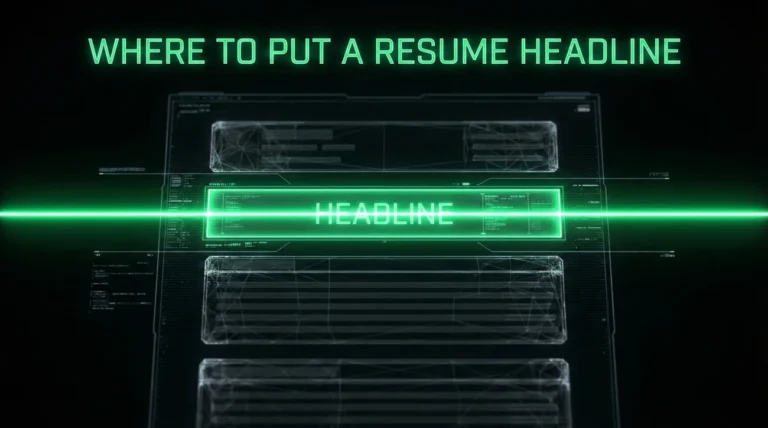
Resume Headline Mistakes: Why Recruiters Decide You’re Unfocused Before They Even Read
I’ve watched this happen in real time: A recruiter opens a resume, scans the top line, and their face does that tiny “hmm” thing. Not angry. Not impressed. Just uncertain. And uncertainty is the real killer, because uncertainty makes people look for the fastest reason to move on.
The frustrating part is that the candidate is often qualified. The experience is fine. The bullets are fine. The problem is that the headline sets the wrong expectation. It signals “I’m not sure what I am,” or “I’m trying to be everything,” or “I’m using marketing language instead of evidence.”
In this guide, I’m focusing on one narrow thing only: resume headline mistakes. Not general resume advice. Not a pile of templates. Just 15 red flags that make you look unfocused, plus clean fixes that stay believable.
Quick story to ground this: Greta (a real candidate I worked with last year) was applying for Product Analyst roles. Her headline read “Data-Driven Business Professional | Strategic Thinker | Problem Solver.” She had solid analytics work. But that headline didn’t preview any of it. It previewed a personality. We rewrote it to “Product Analyst | SQL + Experimentation | Reduced churn 8% via onboarding tests.” Same person, same resume, dramatically different first impression.
💡 Pro Tip: Treat your headline like a movie trailer. It should hint at the best scenes that actually exist in the film, not invent a different genre.
The Contradiction Test: The One Filter Recruiters Apply Without Realizing

Most headline advice says “use keywords” or “show value.” That’s not wrong. But it misses what recruiters actually do when they scan fast: they compare your headline to the next visible proof. Usually that means your most recent job title, your first two bullets, and your skills line.
If the headline promises one identity and the proof shows another, the recruiter does not negotiate with it. They assume the headline is fluff, or the candidate is confused, or both.
Here’s the contradiction test you can run in under a minute:
- Does the role in your headline match the role you are targeting, not just the role you used to have?
- Does your headline claim an outcome that your first 2 to 3 bullets actually show?
- Does your headline match your seniority level, in scope and language?
- Does your headline introduce a specialty that appears nowhere else?
If you fail one of those, it does not mean you are unqualified. It means your top line is creating friction. Fix the top line and the same resume reads “coherent” instead of “uncertain.”
Key Point: Recruiters don’t reject “weak headlines.” They reject contradictions. Your headline is the promise, your next section is the receipt.
15 Resume Headline Red Flags and the Fastest Fix for Each
This is the quality control list. If your headline contains any of these patterns, it often reads unfocused even when you meant it to read impressive.
| Red flag | What it signals | Replace with |
|---|---|---|
| “Results-driven”, “hardworking”, “motivated” | Adjectives without proof | One proof hook (metric, scope, outcome) |
| Three roles in one headline | Unclear target | One target role + one niche |
| “Seeking an opportunity to…” | Neediness, not value | Role + proof, no request language |
| “Expert”, “guru”, “ninja”, “rockstar” | Inflation, immaturity | Level-appropriate credibility markers |
| Buzzword stack (10 skills in one line) | Keyword stuffing | 2 to 3 core keywords + proof |
| Industry mismatch | Generic profile | Industry or domain you actually worked in |
| Seniority mismatch | Either overreach or undersell | Scope cues that match your experience |
| “Proven track record” with no specifics | Empty credibility phrase | Named outcome or measurable impact |
| Passive identity (“experienced professional”) | Vague positioning | Role clarity + specialization |
| Internal titles only | Confusion, translation needed | Standard title + internal label in body |
| Too personal (“empathetic leader”, “people person”) | Soft traits without evidence | Behavioral proof or outcome |
| Contradicting pivot | Career change not explained | Bridge skill + proof artifact |
| Overpromising scope (“global strategy leader”) | Credibility risk | Right-sized scope markers |
| Headline repeats your name or location | Wasted space | Use that space for proof hook |
| Headline says “open to anything” | Low commitment, low fit | One target role + one lane |
Now let’s go deeper on the ones that most often make recruiters say “unfocused,” because the fix is not always obvious.
Red Flags That Make Your Target Role Unclear
1) You list multiple roles like you’re hedging
If your headline reads “Project Manager | Business Analyst | Operations Lead,” you’re telling the recruiter you haven’t chosen. It can also look like you are applying broadly and hoping something sticks.
The fix is not deleting your range. The fix is choosing one target role and letting the rest become support.
One recruiter I worked with (my colleague Donna, who hires for ops roles) described it simply: “If they don’t pick a lane, I assume they’ll leave as soon as a better lane appears.”
2) Your headline is a request, not a preview
“Seeking a challenging role where I can grow” is a classic. It’s also an instant downgrade because it centers your needs. Recruiters are not cruel, they’re just scanning for signal. Request language has low signal.
You can still talk about growth in your cover letter or interview. Your headline is not where you ask. It’s where you position.
3) You hide the role behind “professional” language
“Experienced business professional” can mean anything. When I see it, I assume the candidate is either early career or avoiding a clear target because they’re unsure where they fit.
If your title history is messy, clarity matters even more. Put the target role in plain English, then add one stabilizer: domain, toolset, or outcome.
4) You use an internal job title that needs translation
Some companies have titles that mean nothing outside their walls. If your headline repeats that internal label, you’re forcing the recruiter to interpret. They won’t, because they don’t have time.
Fix it by using a standard market title in the headline, and keep the internal title in the Experience section if you need accuracy.
⚠️ Warning: Don’t invent a higher title. Translate it to the closest industry equivalent, then let your bullets define the scope.
Red Flags That Make You Sound Inflated or Unbelievable
5) You lead with adjectives instead of proof
“Results-driven” is not evil. It’s just empty. The problem is that empty language trains the recruiter to read everything else skeptically.
Replace adjectives with one proof hook. Proof hooks are small. They can be a number, a named deliverable, a scope marker, or a clear outcome.
6) You self-appoint status words like “expert”
When a headline says “AI expert” or “Sales guru,” recruiters don’t hear confidence. They hear risk. Because if you are truly senior, you usually don’t need to announce it like that. Your scope and proof do the announcing.
There are better credibility markers: years (if relevant), specialization, scale, and outcome. Those read mature.
7) Your headline overpromises the scope of your role
“Global strategy leader” can be accurate, but it’s rare. If the resume underneath shows individual contributor execution, the gap feels like exaggeration. Recruiters hate exaggeration because it creates interview risk.
Right-size the scope with honest markers: “regional,” “portfolio,” “multi-site,” “cross-functional,” or the actual size you influenced.
I had a candidate named Miguel who wrote “Enterprise Transformation Leader” after leading a single workstream at a large company. He was not lying about the environment, but the phrasing implied ownership. We changed it to “Transformation Program Workstream Lead | Change comms + rollout | Adopted by 6 departments.” He still looked strong, just credible.
8) Your headline is a keyword dump
If your headline looks like “PM | Agile | Scrum | Jira | Confluence | Stakeholder Mgmt | Roadmaps | OKRs | Data,” it reads like ATS bait. Humans read it as panic.
Pick 2 to 3 core keywords that truly define your lane, then add proof. Proof is what separates “I listed it” from “I did it.”
- Role: Target role title
- Niche: Domain, segment, or specialty
- Proof: Metric, scope, or named outcome
9) Your headline claims leadership, but the resume shows none
Leadership is not a vibe. It’s visible in decisions, scope, and accountability. If the headline says “leader” but the bullets show task execution, recruiters assume the candidate is trying to level up through wording.
The fix is either adding leadership proof (mentoring, ownership, cross-functional influence) or removing leadership language and letting the resume earn it.
“I’m not against ambition. But if the headline says ‘leader’ and the bullets say ‘helped with,’ I know I’m about to have a hard interview.”
Red Flags That Make You Look Generic, Even If You’re Good
10) Your headline could belong to anyone in your field
Generic headlines fail because they don’t give the recruiter a reason to keep reading. “Software Engineer with 5+ years” is not wrong, it’s just not differentiating.
Make it specific by naming your lane. Lane can be domain (fintech, healthcare), product area (payments, identity), or technical focus (backend APIs, mobile performance).
11) You use “track record” language without a track
Phrases like “proven track record” and “history of success” are credibility claims. If you don’t immediately show the track, recruiters treat it as filler.
Swap the phrase for the thing you meant. What track? Revenue? Efficiency? Quality? Retention? Name it.
12) Your headline leans too hard on personality traits
“Empathetic leader” and “people person” can be true, but in a headline they often read soft. Traits need proof, or they feel like self-description.
Turn traits into behavior. Behavior is believable.
13) You signal a career pivot with no bridge
Career change headlines fail when they jump identities. Example: “UX Designer” headline, but the experience is entirely customer support with no portfolio, no projects, no proof artifact.
You don’t have to hide the pivot. You have to bridge it. The bridge is usually one transferable skill plus one proof artifact.
This is where many “bad resume headlines” come from: the person is trying to be seen as the new role, but hasn’t given the recruiter a safe reason to believe it yet.
14) Your headline wastes space repeating obvious info
Names and locations belong in the header. Your headline is prime real estate. If you repeat “New York, NY” or “John Smith” or “Authorized to work,” you’re spending your best line on admin.
Use that space for role, niche, proof.
15) You look “open to anything” instead of committed
Some candidates write “Open to roles in marketing, operations, sales.” They do this because they want options. The recruiter reads it as “low fit.”
Even if you are exploring, pick the lane for this application. Your resume is not your identity. It’s your pitch for one role at one time.
A Simple Rewrite Framework That Doesn’t Feel Like Keyword Stuffing
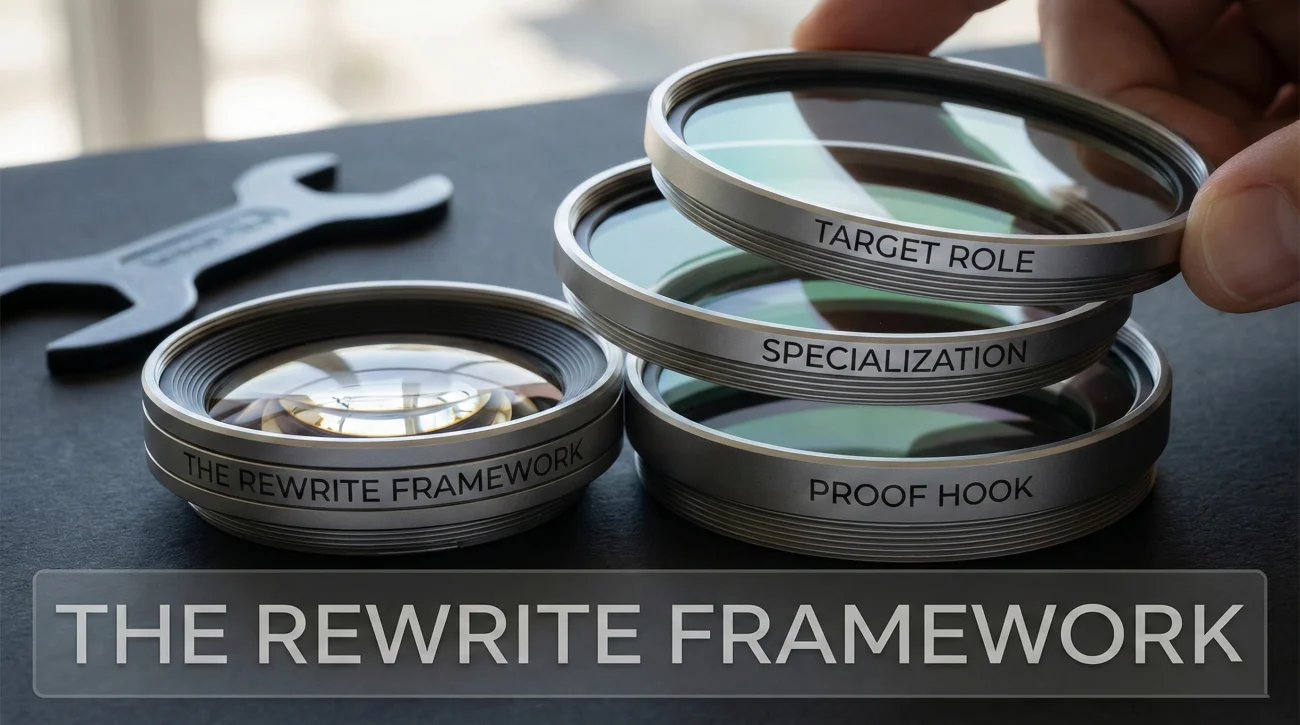
If you want a repeatable way to fix most headline issues without sounding robotic, use this structure:
[Target Role] + [Specialization] + [Proof Hook]
The proof hook is what keeps you honest. It forces the line to match what your resume can actually support.
Here are proof hook options that stay clean and short:
- Metric: “Cut cycle time 18%”
- Scope: “Owned 40-account portfolio”
- Outcome: “Launched onboarding flow adopted by 3 teams”
- Artifact: “Built dashboard used weekly by execs”
One more real-life note: My friend Donna (recruiting ops) always says the best headlines “make the resume feel inevitable.” That’s the goal. Not to sound smart. To sound aligned.
The 60-Second Self-Check Before You Hit Apply
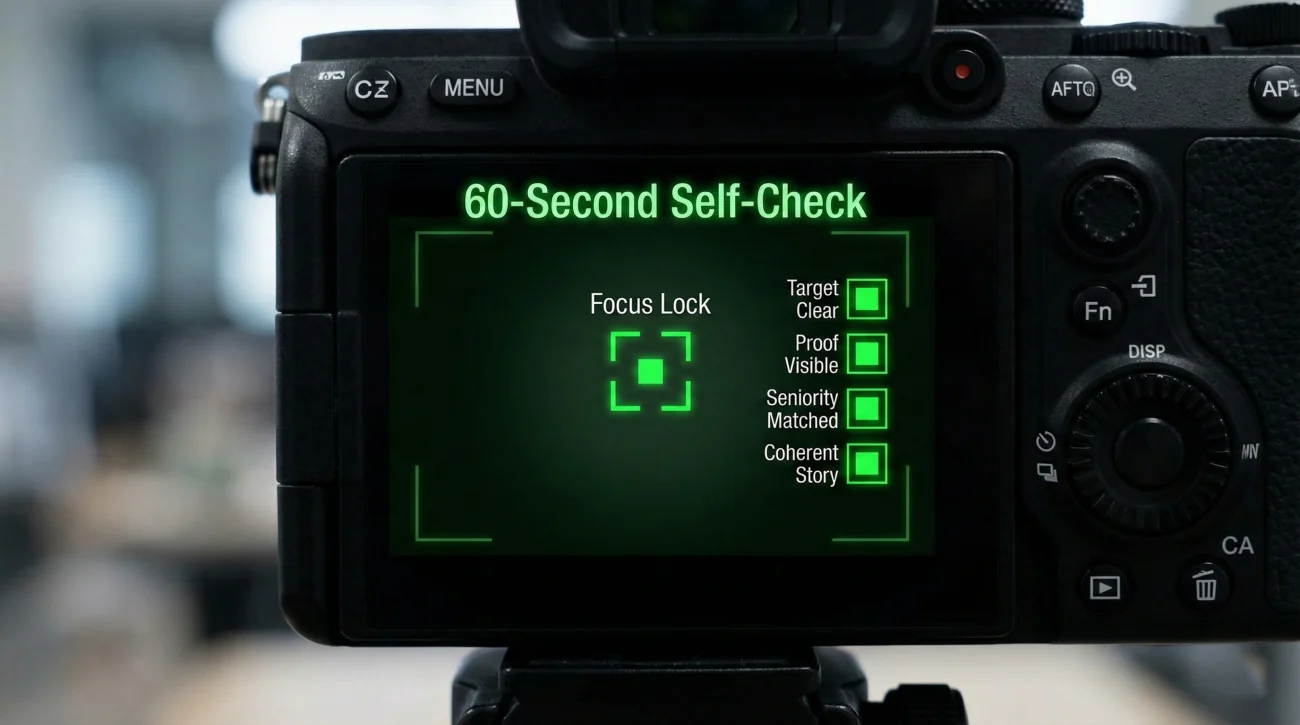
Do this quickly and brutally. If you fail one item, it’s a fix, not a personal flaw.
- ✅ Does the headline name one clear target role?
- ✅ Can I point to proof for the proof hook in under 10 seconds?
- ✅ Does the seniority implied by the headline match my most recent scope?
- ✅ If I delete the headline, would the resume still feel coherent? If yes, the headline is probably generic.
- ✅ If I read headline + first two bullets, do they feel like the same person?
❌ Note: If your headline needs five commas to make sense, it’s probably doing the job of a summary. Let the summary be the summary.
Final: A Headline Is Not Where You Sound Impressive, It’s Where You Sound True
Most candidates don’t lose interviews because they lack talent. They lose them because the top line makes the recruiter unsure what they are looking at. That “unfocused” feeling is often just sloppy signaling, not a capability problem.
If you take one thing from this list of resume headline mistakes, let it be this: remove the empty confidence words, pick one lane, and add one proof hook you can defend. When your headline becomes a promise your resume actually keeps, the whole document reads calmer, sharper, and more credible.
❓ FAQ
🎯 Do I need a resume headline at all?
You don’t “need” it, but a good headline can reduce confusion fast. If your experience already screams the target role, a headline is optional. If your background is mixed, your titles are nonstandard, or you’re pivoting, a headline often helps.
🧭 How long should a resume headline be?
One line is ideal. If you need two lines to stay honest, it’s usually a sign you’re trying to fit a summary into a headline. Keep it tight: Role, specialization, proof hook.
🧨 What are the biggest “bad resume headlines” recruiters dislike?
The most disliked patterns are vague adjectives, self-appointed status words (guru, expert), and headlines that list multiple roles. They create uncertainty or credibility risk.
🧩 What not to put in a resume headline if I’m changing careers?
Don’t jump straight to the new identity with no bridge. Avoid a headline that claims the new role without showing a proof artifact somewhere else. Add a bridge skill and a concrete artifact: Projects, portfolio, or measurable related outcomes.
📌 Should I include keywords for ATS in my headline?
Use keywords naturally, but don’t dump them. Two or three core terms plus one proof hook is usually enough. The point is alignment, not stuffing.
⚠️ Disclaimer: ResumeSolving provides resume, cover letter, job search communication, and career transition guidance for informational purposes only. Hiring practices vary by employer, role, location, industry, and individual circumstances. We do not guarantee interviews, job offers, ATS results, or other outcomes. Verify employer requirements directly and follow applicable laws and workplace policies. For sensitive situations, use only information you are comfortable disclosing and keep all statements accurate.