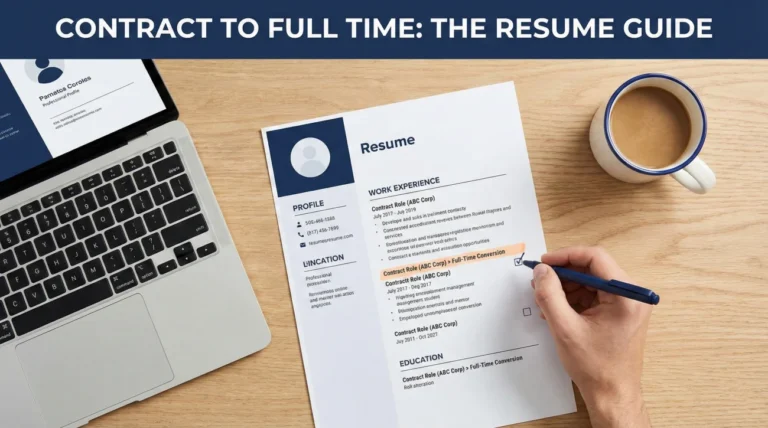
- If your contract history reads like churn, it is usually a formatting problem, not a credibility problem.
- You can fix the scan in three ways: One umbrella role, grouped clients, or a project-based section.
- Use labels and bullet patterns that signal repeatable scope, not “new job every few months.”
Why Contract Work Gets Misread as Job Hopping
I have watched strong contractors lose interviews for a reason that had nothing to do with performance. The resume looked like churn. Four logos. Five dates. Six titles. No obvious thread. The hiring manager did what hiring managers do when they are busy: They assumed the simplest story.
That is where contract work looks like job hopping becomes a screen-out phrase. Not because contract work is “less real”, but because the document forces the reader to do extra interpretation. If your resume needs interpretation, it will often be interpreted against you.
Key Point: The first read is not “Is this person good?” It is “Do I understand this quickly enough to keep reading?”
One of my former colleagues, Yoshie, used to lead intake meetings for a product analytics team. She told me something that stuck: “When I see five short stints, my brain goes to risk before it goes to skill. I can be wrong. I just cannot be slow.” That is the reality you are formatting for.
Warning: If you list each client as a separate employer without context, you are asking the reader to decide whether you were unstable, unlucky, or simply a contractor. Many will not wait for the answer.
The Three Things Recruiters Are Actually Reacting To
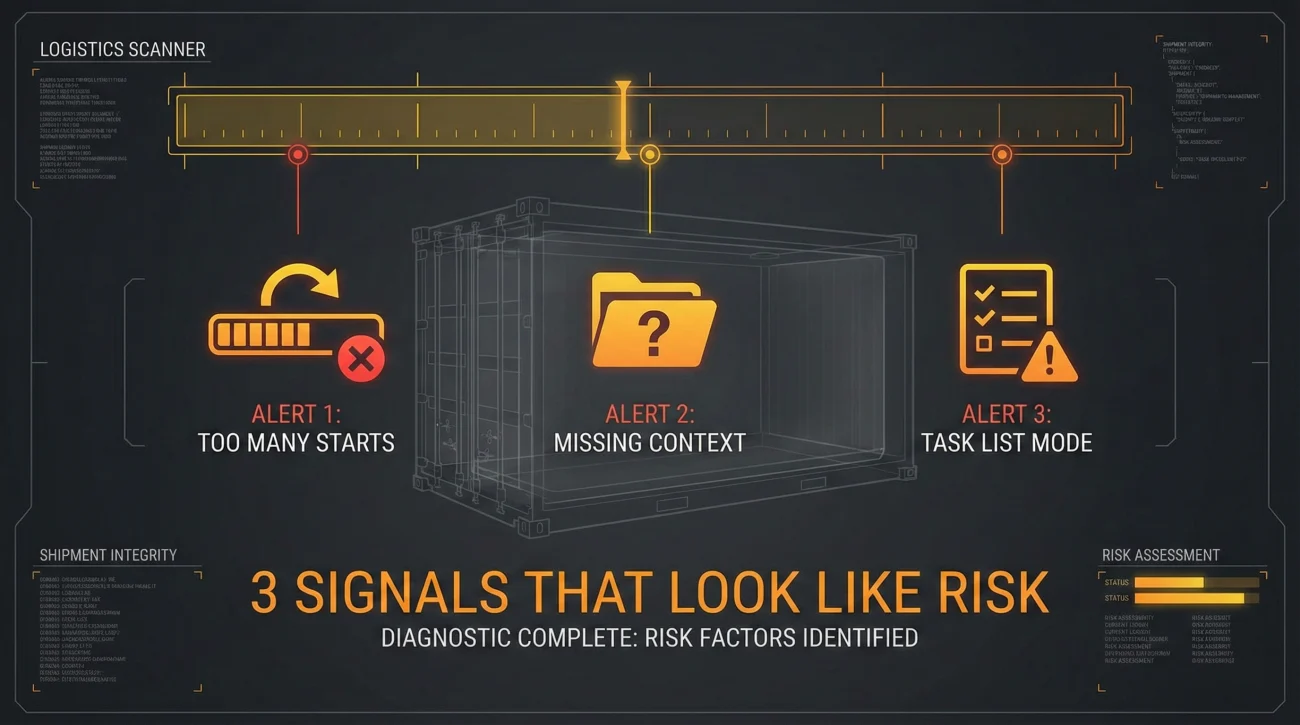
1) Too Many “New Beginnings” in a Row
Short stints are not automatically bad. What triggers the job-hopping read is the repeated pattern of “new company, new title, new dates” with no signal that the work sits under one consistent professional identity.
Contracting often produces exactly that pattern, especially if you worked through staffing firms, rotated across departments, or did overlapping side clients. The resume then looks like you were repeatedly replaced, even when you were repeatedly rehired.
2) Missing the “Why This Kept Happening” Sentence
Most resumes are allergic to context. Contractors suffer from that more than anyone. If the reader cannot tell whether contracts were your choice, your industry norm, or your bridge after a layoff, they fill the silence with suspicion.
This is why many mainstream guides say “Label it clearly as contract.” They are not wrong, but they stop before the real work: You need a structure that makes the label believable at a glance.
3) Bullets That Read Like Task Lists Instead of Repeatable Results
If each client entry has three generic task bullets, the reader sees a sequence of small roles. If each entry shows a similar scope, similar type of outcome, and a consistent level of seniority, the reader sees a specialist who gets brought in for a reason.
This is where the wording pattern matters more than the number of clients.
Three Resume Structures That Make Contracting Read as One Stable Story
You do not need a “perfect” format. You need a format that makes continuity effortless. Below are three structures I have seen work across tech, marketing, operations, and design. Pick based on how your contracts were sourced and how similar your work was across clients.
| Structure | Best When | Risk If Misused |
|---|---|---|
| Umbrella Role (One Employer Line) | You operated as an independent consultant or through one firm repeatedly. | Looks vague if you hide clients and outcomes. |
| Grouped Clients (Sub-Clients Under One Header) | You had multiple clients in the same skill lane and similar seniority. | Looks messy if every client is wildly different. |
| Project-Based Section (Selected Engagements) | You want to highlight only the contracts that match the target role. | Can create timeline confusion if dates are unclear. |
Option A: The Umbrella Role (The “This Is My Real Job” Format)
This option is the cleanest when contract work is not a side note, it is the core of your recent career. You present it as one role with one date range, then you show the variety through client bullets and outcomes.
I used this with a candidate named Omar who did data engineering contracts after a restructure at his previous employer. Listing eight clients separately made him look like a churn machine. The umbrella role made him look like what he actually was: A specialist being pulled into messy pipelines again and again.
Selected engagements: FinTech lending platform, Healthcare analytics vendor, B2B SaaS marketplace
– Standardized ELT patterns across 3 clients using the same core stack, reducing recurring pipeline failures and speeding handoff to internal teams
– Built reusable data quality checks and monitoring dashboards that remained in place after each contract ended
– Partnered with product and analytics leads to translate ambiguous reporting needs into stable, documented models
💡 Pro Tip: The umbrella role works best when your bullets show repeatability. “Reusable”, “standardized”, “documented”, and “handed off” are stability words when used honestly.
Option B: Grouped Clients Under One Header (The “Same Lane, Different Logos” Format)
If freelancing looks like job hopping on your resume, this structure often fixes it without feeling like you are hiding anything. The trick is to group by one consistent role title, then list clients as sub-items.
A contractor in brand design once told me she avoided grouping because she feared it looked “less impressive.” The opposite happened. Once grouped, her work read as a clear niche: Early-stage B2B brand systems, repeated across different companies, with consistent outcomes.
Clients: Series A cybersecurity startup, DTC wellness brand, HR tech platform
– Delivered brand refresh packages with consistent scope: positioning, visual system, launch assets, and handoff guidelines for in-house teams
– Reduced revision cycles by setting a structured kickoff process and decision checkpoints across clients
– Built templates and asset libraries that new hires could reuse, improving continuity after the engagement ended
Option C: Project-Based Section (The “Selected Contracts That Match This Role” Format)
This is the strongest option when your contract history is broad but your target role is specific. You create a “Selected Contract Engagements” section and include only the engagements that prove fit.
The key is transparency. You are not pretending the other work did not exist. You are curating, the same way a portfolio does, and you keep your overall timeline coherent.
Growth Marketing Lead (Contract) | B2B SaaS | 2024
– Rebuilt paid search structure and landing page testing flow, improving qualified demo requests and reducing wasted spend
Lifecycle Marketing Specialist (Contract) | Marketplace | 2023
– Implemented lifecycle segmentation and triggered campaigns that improved activation and retention signals across cohorts
When this works, it works because it reads like a deliberate track record, not a random set of gigs.
Label Options That Reduce “Churn” Anxiety Without Overexplaining
Labels are not decoration. They are interpretation shortcuts. A recruiter scanning fast will often treat the label as the answer to the silent question: “Was this supposed to be short?”
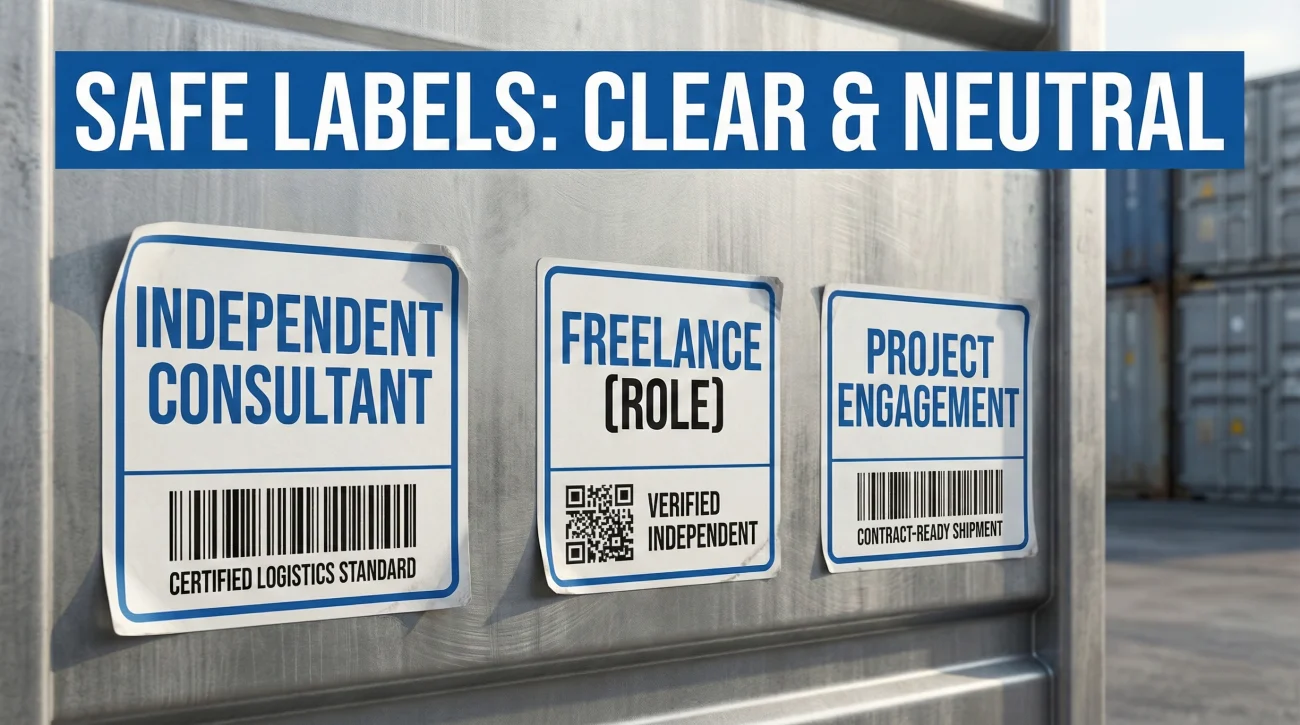
Safe Labels (Clear, Neutral, Widely Understood)
- Independent Consultant (Contract)
- [Role Title] (Contract)
- Freelance [Role Title]
- Consulting Projects
- Contract Engagements
Labels That Often Backfire (Because They Invite the Wrong Questions)
- ⚠️ “Short-Term Roles” (Sounds like you could not stick anywhere.)
- ⚠️ “Various Companies” (Sounds vague and evasive.)
- ⚠️ “Gig Work” (Can shrink senior work into a casual vibe.)
❌ Note: Avoid adding emotional context inside the label. Keep the label factual. If context is needed, add a single calm sentence in the bullet content, not in the title line.
Bullet Patterns That Signal Continuity Across Clients
Your bullets can either reinforce stability or amplify churn. Here are patterns that consistently help contract histories read as one coherent track record.
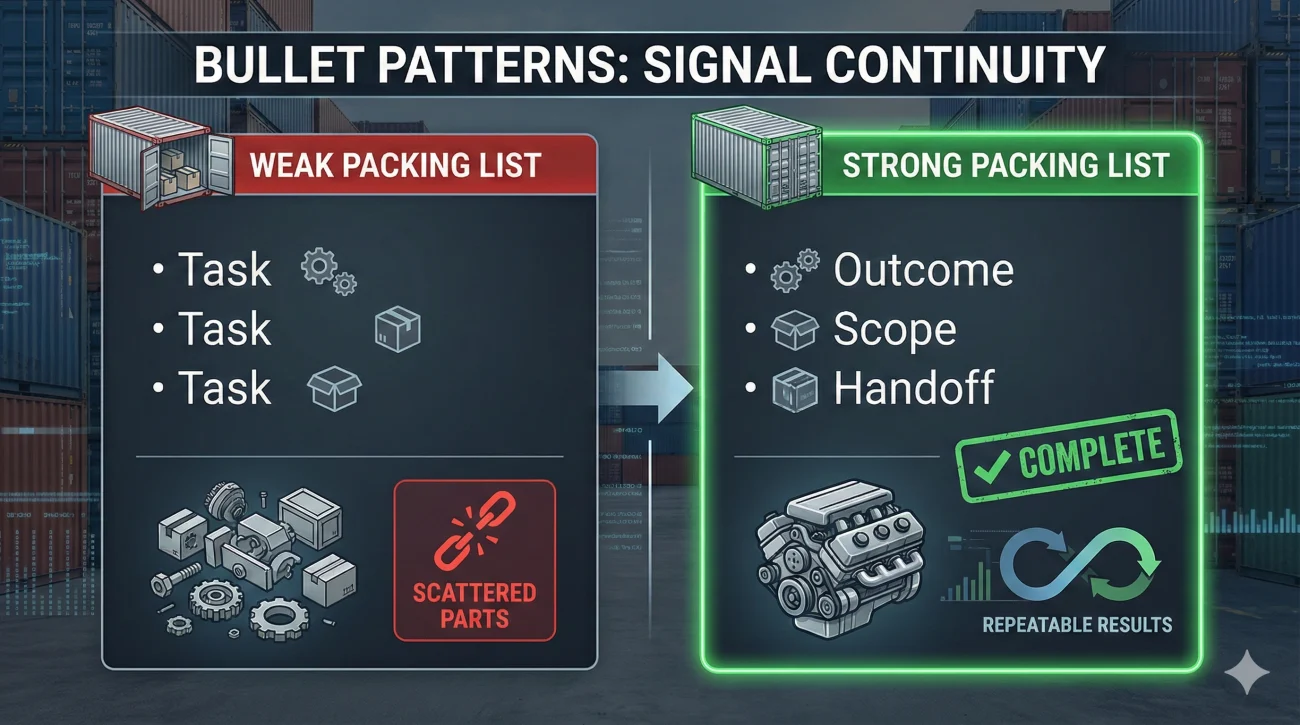
Pattern 1: Same Scope, Different Setting
This pattern makes it obvious you were hired for a repeatable skill, not randomly bouncing.
[Scope] + [Repeatable Method] + [Outcome] + [Handoff/Continuation Signal]
- Example stability words: “standardized”, “documented”, “handoff”, “playbook”, “training”, “reusable”.
- Use them only when they are true. Contractors get punished for sounding inflated.
Pattern 2: The “Rehired” Signal Without Saying “They Loved Me”
One of the strongest stability signals is repeat business. You do not need to brag. You just need to reveal the structure.
– Renewed contract to complete phase two deliverables after initial launch met performance targets
Pattern 3: Make the Timeline Feel Intentional
Short contracts read as churn when they appear accidental. They read as professional when the end point is clearly designed.
– Joined for interim coverage during team transition; completed process documentation and training before exit
Notice what is missing. No drama. No apology. No defensive tone. Just a structured arc.
If you are struggling with a multiple clients resume layout, the biggest win is usually not adding more detail. It is making the detail repeat in a recognizable rhythm.
One Interview Bridge That Matches the Resume Story
Even if your resume is clean, someone may still ask about “movement.” The goal is not to justify your past. It is to align your contracting pattern with the role you want now.
“I chose contract work because I’m strong in defined problem scopes. I tend to get brought in to stabilize reduces, document the process, and hand it back to the team. That’s why you’ll see multiple clients, but the work stays in the same lane. For this role, I’m looking for a longer runway where I can own the system end to end.”
This bridge works because it explains the structure without sounding defensive. It also sets a forward-looking signal: You want stability now, and you can name why.
A Quick Reality Check Before You Publish This Version
Before you lock in your format, do a fast scan test. Open your resume and give yourself eight seconds. If you cannot answer these questions quickly, neither can a stranger.
- ✅ Is it obvious you were contracting, not being repeatedly hired and fired?
- ✅ Does your title line imply one stable professional identity?
- ✅ Do the bullets repeat a similar scope and level, or do they feel like unrelated jobs?
- ✅ Can a hiring manager see what you deliver without reading every line?
I have seen candidates obsess over whether to include every client. The stronger move is usually to include fewer, write them better, and make the structure do the explaining.
Final: Make the Reader Feel One Thread, Not Five Separate Jobs
Contracting is not the problem. The problem is when the resume forces the reader to interpret your history as a string of endings. Your fix is continuity: One professional lane, a structure that supports it, and bullets that show repeatable outcomes.
Once that thread is visible, contract work looks like job hopping stops being the label your reader silently assigns, and becomes a clean, stable story they can explain to someone else in one sentence.
❓FAQ
🧩 Should I list every single client if I had many small contracts?
Not always. List the engagements that prove fit for the target role and that you can describe clearly. Too many tiny entries can create churn perception. A curated “selected engagements” approach is often stronger when your scope was consistent.
🛠️ What if I worked through a staffing agency, not directly with the end client?
Use a structure that keeps the story honest and readable. Many people list the staffing firm as the employer and reference the client in the bullet text or as “Client:” within the entry. The goal is clarity, not hiding the relationship.
📌 Can I use one umbrella role if my contracts were very different?
You can, but only if you can still present a coherent lane. If the work spans unrelated functions, the umbrella can look vague. In that case, a project-based “selected engagements” section usually reads more intentional.
🔍 Will grouping clients look like I’m hiding job hopping?
Grouping is not hiding if the contract nature is labeled clearly and the bullets show concrete outcomes. Most concerns come from confusion, not from the number of clients. Make the contract pattern obvious and the grouping reads like organization.
💬 How do I answer “Why so many short roles?” without sounding defensive?
Match your resume story: Describe contracting as a deliberate structure, name the kind of scope you deliver, and connect it to why you want this role now. Keep it calm and forward-looking.
⚠️ Disclaimer: ResumeSolving provides resume, cover letter, job search communication, and career transition guidance for informational purposes only. Hiring practices vary by employer, role, location, industry, and individual circumstances. We do not guarantee interviews, job offers, ATS results, or other outcomes. Verify employer requirements directly and follow applicable laws and workplace policies. For sensitive situations, use only information you are comfortable disclosing and keep all statements accurate.