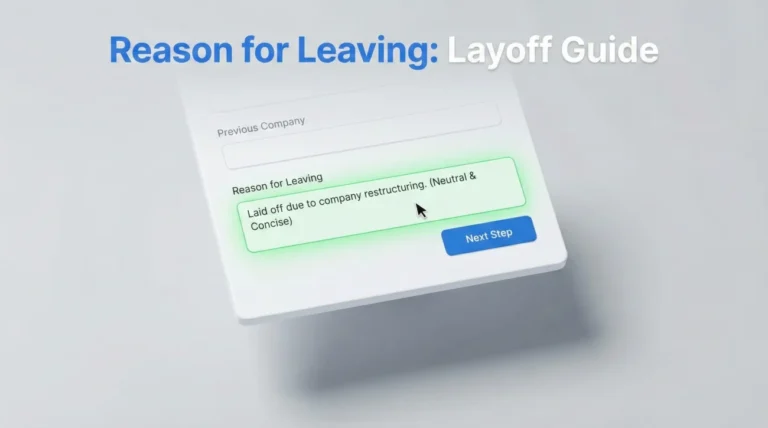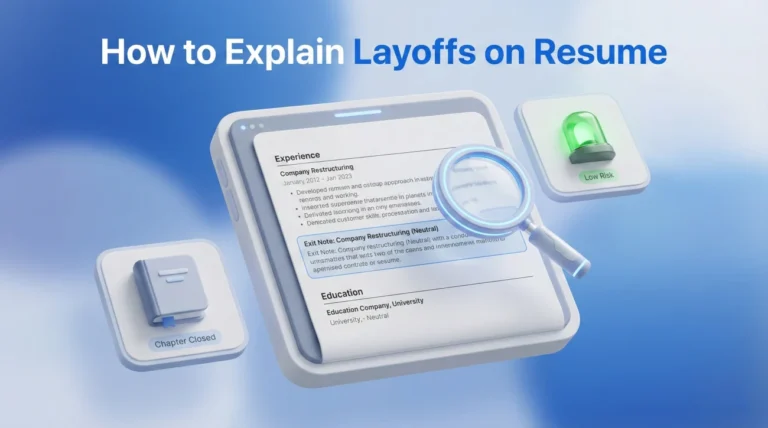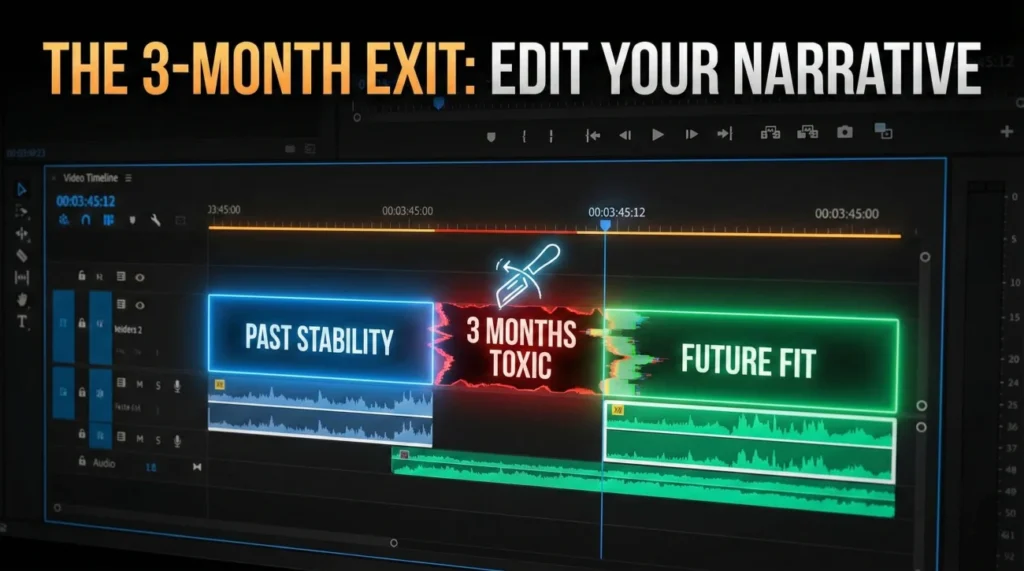
- Use a three-part answer: role reality mismatch, professional response, forward-fit signal.
- Decide first whether the job belongs on your resume. Your interview story should match that decision.
The Problem Is Not “Toxic”. It’s The Story People Think Comes With It.
I have seen strong candidates lose momentum over a three-month job, not because they left, but because the explanation sounded like a live conflict. When hiring teams hear “toxic,” they often fill in blanks: drama, impulsivity, hard-to-manage, or a pattern they have been burned by before.
That is why this article is built around one goal: Make left a toxic workplace after 3 months sound like a closed chapter with a predictable decision, not a running argument.
In practice, you are managing two risks at once. The first is short tenure. The second is how easily “toxic” turns into a messy narrative. We are going to keep it high-level, factual, and consistent across resume, applications, and interviews.
What Interviewers Are Actually Screening For

In screening calls, I rarely hear someone say, “I reject people who leave bad environments.” What I do hear, in different words, is concern about predictability. Hiring managers want to know whether you can make a decision, communicate it cleanly, and move on.
When the tenure is three months, they are quietly testing a few things:
- 🧭 Whether you evaluate roles accurately before joining, or jump fast and regret fast.
- 🧱 Whether you can handle friction without turning it into a personal war.
- 🧾 Whether your departure created a performance or integrity issue that will repeat.
- 🔁 Whether this is a one-off, or the start of a job-hopping pattern.
💡 Pro Tip: Your job is not to prove the workplace was toxic. Your job is to show your decision-making was stable and your next move is intentional.
First Decision: Does The 3-Month Job Belong On Your Resume
This is where most online advice stays vague, and it is why candidates end up improvising in interviews. Decide the resume strategy first. Then the interview explanation becomes a match, not a scramble.
| Scenario | Best Move | Why It Works | What To Avoid |
|---|---|---|---|
| It’s relevant to your target role, and you have a clean exit story. | Include it, with neutral wording. | Short tenure becomes a data point, not a secret. | Long explanations, emotional labels, manager complaints. |
| It adds confusion, but leaving it off creates a bigger gap or conflicts with LinkedIn. | Include it, but de-emphasize it. | You control the narrative with a simple, consistent line. | Over-correcting with too many details. |
| It was truly a mis-hire, irrelevant, and you can explain the time without it. | Omit it from the resume, prepare a short interview answer. | You reduce noise while staying honest when asked. | Talking like you are hiding a scandal. |
Notice what is missing: You do not need to convince anyone the place was bad. You need the story to feel complete and calm.
If your stress is mainly “What do I say in the interview,” you are not alone. I had a candidate, Bernadette, who left a startup after ten weeks because the role shifted into 70% customer support. She kept saying “toxic” because she felt misled. The moment we changed the wording to “role scope changed quickly,” her story stopped sounding personal, and the interviewer stopped digging.
The 12-Second Framework That Keeps You Out of Drama
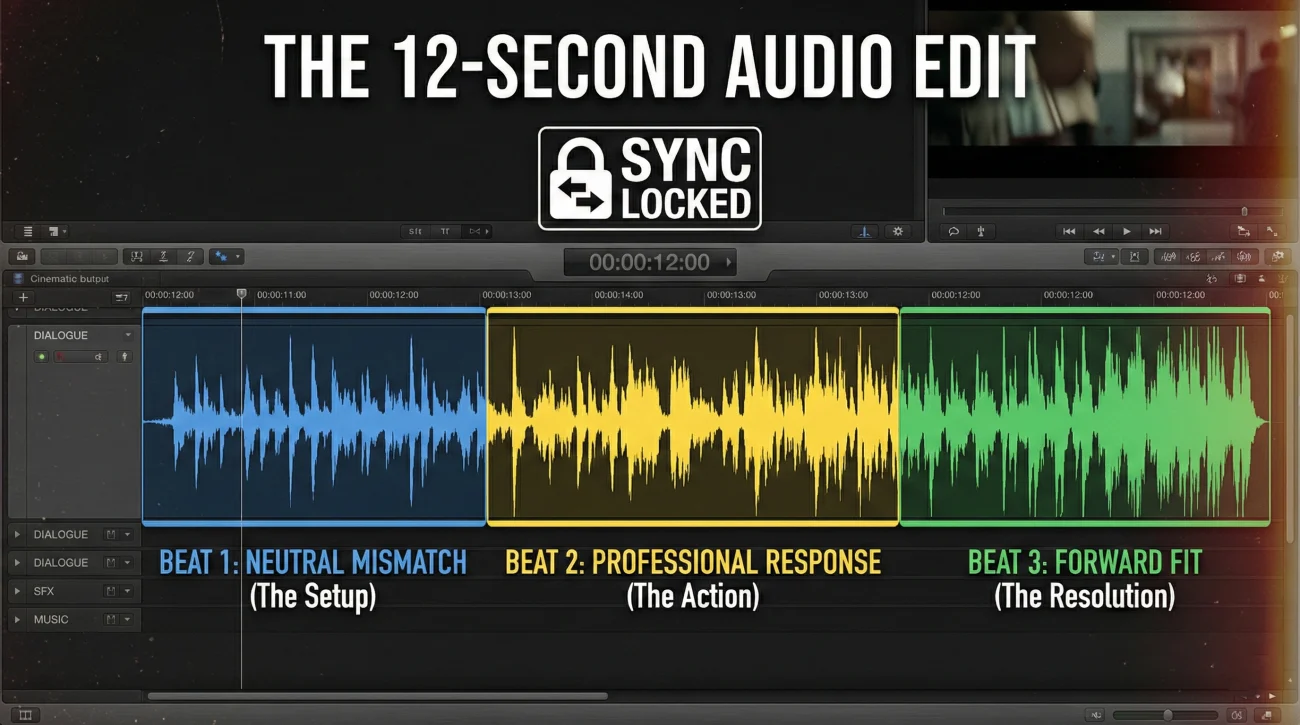
This framework is designed for the exact moment you get the question: “Why did you leave so quickly?” It is also designed to prevent the follow-up spiral.
Step 1: Name A Neutral Mismatch
Examples: scope changed, expectations differed, leadership style was not aligned, role became something else, priorities shifted.
Step 2: Show A Professional Response
One sentence about what you did: asked for clarity, tried to align, documented priorities, requested feedback, attempted a reset. Keep it calm and short.
Step 3: Add A Forward-Fit Signal
Say what you are looking for now, in a concrete way. That is what hiring teams actually care about.
[Neutral mismatch] + [Professional response] + [Forward-fit signal]
⚠️ Warning: If you skip the professional response, you can sound impulsive. If you skip the forward-fit signal, you can sound bitter.
Now we’ll apply the framework in examples, including the common short-tenure anxiety: short tenure toxic workplace interview.
Six Interview Answers You Can Use (And How To Pick The Right One)
These are not copy-paste lines meant to be performed. Use them as patterns. Each one has the same spine, but a different “neutral mismatch” so you can match your truth.

Example 1: Role Bait-And-Switch
“I joined for a role focused on project delivery, but the scope shifted quickly into mainly support work. I asked for clarity and tried to realign priorities, but it became clear the position was not the role I accepted. I’m now focusing on roles where delivery ownership is stable and expectations are defined.”
This is the cleanest version when your core issue is misalignment, not interpersonal conflict. It also protects you if you are asked for specifics, because “scope shifted” is a factual statement.
Example 2: Leadership Style Misfit Without Accusations
“It was an environment with a very high-touch management style, and I realized quickly I do my best work with clear outcomes and autonomy. I tried to adapt and I asked for feedback early, but the fit wasn’t there. I’m looking for a team where goals are measurable and ownership is trusted.”
This is useful when the workplace felt controlling, but you do not want to say “micromanagement” and trigger a debate. It’s a fit statement, not a verdict.
Example 3: Ethics Or Safety Boundary
“A few priorities surfaced that didn’t align with my standards for how work should be done, and I raised questions early. I wasn’t able to get comfortable with the direction, so I decided to step away quickly rather than stay in a situation I couldn’t support. I’m focused on teams where expectations and decision-making are transparent.”
This is the right lane when you left for serious reasons, but you cannot share details. It sounds like integrity, not gossip.
Example 4: Workload Unsustainable, Framed As Stability
“The role ramped into an unsustainable workload very fast, and I had a direct conversation about priorities and resourcing. When it was clear the situation wouldn’t change, I made a decision to leave early and find a role with a healthier operating rhythm. I’m targeting teams that plan capacity realistically.”
This keeps the story in operations and planning, not feelings. It also sets you up to ask smart questions in your next interviews.
Example 5: Performance Concern, Turned Into Growth
“It became clear the role required a different skill mix than what was described, and I wasn’t in a position to deliver at the level I expect. I spoke with my manager early and we tried to adjust, but it wasn’t a strong match. I stepped out quickly and I’m now pursuing roles that align better with my strengths.”
This one is counterintuitive, but it can work when you want to avoid sounding like you are blaming others. It also fits candidates who worry about references.
Example 6: Simple “Not The Right Fit” With Guardrails
“It was not the right fit, and I realized that within the first few months. I addressed it directly, wrapped my responsibilities cleanly, and moved on quickly. Since then, I’ve been careful about targeting roles that match my working style and the scope I’m strongest in.”
This is the shortest option. It is also the riskiest if you cannot answer follow-ups. If you use it, be ready with one neutral mismatch sentence if they ask.
💡 Pro Tip: If you feel tempted to over-explain, pick one mismatch label and stop. That is how you avoid the “leaving job after short time explanation” trap.
How To Handle The Follow-Up Questions Without Digging A Hole
Short tenure makes interviewers curious. The goal is not to shut them down. The goal is to answer in a way that feels complete.
What exactly was toxic?
Keep it high-level. Use a category, not a story. “The role shifted significantly,” “expectations were unclear,” or “the operating style wasn’t aligned with how I deliver.” Then move straight into what you did and what you want next.
Did you try to make it work?
Say yes, briefly. Mention one professional action: A reset conversation, asking for priorities, requesting feedback, or proposing a plan. One sentence is enough.
Were you fired?
Answer directly. “No, I chose to leave.” Then immediately add the closure signal: “I wrapped my work and left on a clean handoff.” If you were terminated, do not label it as “toxic.” Use a neutral label like “role mismatch” and keep your tone steady.
Would your manager rehire you?
If you are unsure, do not guess. Use a safe line: “We parted professionally, and I kept the exit clean.” If you have a reference from a peer or another leader, you can add: “I can share references who worked closely with me on outcomes.”
Why won’t this happen again?
This is where you show learning without sounding dramatic. Mention one concrete change: Better screening questions, clearer role scoping, or being more selective about leadership style and operating rhythm. This is where left after 3 months toxic job becomes a story about improved judgment, not damage.
Resume And Application Placement Rules That Keep You Consistent
Consistency is your credibility. If your resume implies one thing, your LinkedIn implies another, and your interview story implies a third, you trigger suspicion even if you did nothing wrong.
If You Include The Job: Keep The Line Neutral
Role transitioned quickly; stepped out early after scope misalignment and completed a clean handoff.
This is a “minimal” line. It works because it gives a reason category and a closure signal, without inviting a debate.
If You Omit The Job: Explain The Time, Not The Drama
You do not need to invent an elaborate storyline. You only need a truthful umbrella for the period. Examples include job search, short-term contract work, training, or family logistics, depending on what is accurate for you.
⚠️ Warning: If a form asks for complete employment history, answer honestly there even if you omit it from the resume. Your resume is marketing. The form is a record.
Channel Map
| Where | What To Say | How Long |
|---|---|---|
| Resume | Neutral label + closure signal (or omit if justified) | One line |
| Match your resume choice, do not create a new story | Consistent dates | |
| Application form | Accurate employment history, factual reason if required | One sentence |
| Interview | Three-part framework answer | 10 to 15 seconds |
When people ask for a toxic job resume explanation, what they usually need is not a better adjective. They need a tighter structure.
What Not To Say (Even If It’s True)

Some statements can be accurate and still hurt you in hiring. They create an emotional burden for the listener, or they sound like a fight that will continue.
❌ Note: Avoid naming villains, recounting incidents, or implying you are still angry. The goal is to be credible, not to win a moral case.
- 🚫 “My manager was abusive and everyone hated them.”
- 🚫 “HR did nothing so I quit.”
- 🚫 “They were incompetent and I couldn’t stand it.”
- 🚫 “It was toxic, so I walked out.”
- 🚫 “I’m just sensitive to bad vibes.”
Replace those with categories and outcomes: unclear expectations, shifting scope, misalignment in operating style, lack of resources, or ethical discomfort. Then add your professional response and forward-fit signal.
A Quick Prep Script So You Don’t Spiral In The Interview
I learned this from a colleague in HR operations who ran high-volume hiring. She said candidates do best when their answer has a “start, middle, end” and is repeatable under stress.
Write It Once, Then Practice It Out Loud
- 📝 Start: One neutral mismatch label.
- 🧩 Middle: One professional action you took.
- 🎯 End: One forward-fit preference tied to the role you want now.
Then stop. Do not add a fourth sentence unless they ask. This keeps your answer aligned with explain quitting job after 3 months without sounding rehearsed or defensive.
Key Point: If you can say it calmly in 12 seconds, it sounds like a decision. If it takes 90 seconds, it sounds like a conflict.
Final: Make The Exit Sound Closed, Not Contagious
Leaving after three months can be a smart boundary. The mistake is treating the interview like a courtroom. A hiring team does not need every detail. They need a stable explanation they can repeat to themselves later without cringing.
If you keep your wording neutral, mention one professional action, and end with a clear forward-fit signal, your story stops sounding like drama and starts sounding like judgment. That is the difference between being labeled a job hopper and being seen as someone who made a clean call.
When you need the shortest, safest version, build it around left a toxic workplace after 3 months as a closed decision: Calm cause, clean action, confident next target.
❓ FAQ
🎯 Should I say the word “toxic” in an interview?
Usually no. It is not about hiding the truth. It is about avoiding a label that invites a debate. Use a neutral mismatch category and keep the story operational, not emotional.
🧩 Is leaving after 3 months automatically a red flag?
It depends on pattern and presentation. One short role can be fine if you explain it cleanly and show how you are screening better now. Multiple short roles require a stronger narrative and stronger targeting.
🧾 What if the application asks why I left?
Keep it factual and brief. “Role scope changed significantly,” “position was not as described,” or “misalignment in expectations.” Avoid naming people or describing incidents.
🧠 What if I left without another job lined up?
That is common. The key is to show the decision was intentional, not impulsive. Mention that you prioritized a clean exit and then focused on targeted search, training, or contract work that aligns with your next role.
✅ What if they ask whether I tried to resolve it internally?
Say yes, briefly, and name one action. A reset conversation, requesting clarity, or asking for feedback is enough. The goal is to show you do not run at the first inconvenience.
⚠️ Disclaimer: ResumeSolving provides resume, cover letter, job search communication, and career transition guidance for informational purposes only. Hiring practices vary by employer, role, location, industry, and individual circumstances. We do not guarantee interviews, job offers, ATS results, or other outcomes. Verify employer requirements directly and follow applicable laws and workplace policies. For sensitive situations, use only information you are comfortable disclosing and keep all statements accurate.