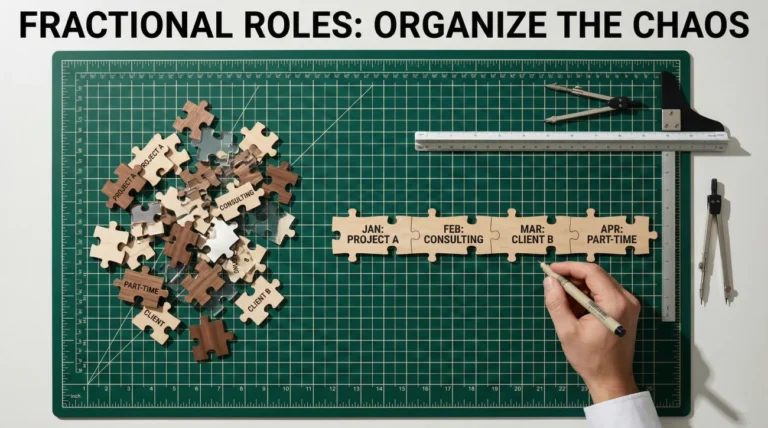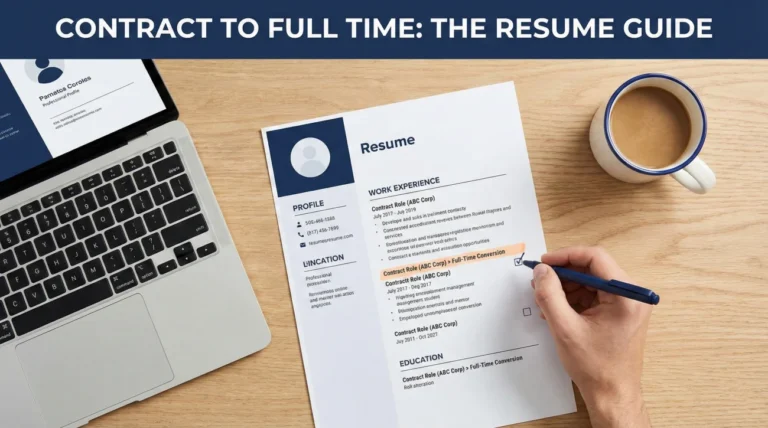
- Short stints do not ruin you. The wrong date format does.
- You have three levers: Date granularity, labeling, and grouping.
- Never “smooth” dates in a way that changes what the stint really was.
Why a 3-Month Date Range Feels Loud on a Resume
I have watched smart candidates lose control of the story because of one tiny line: resume short stints dates. Not the job. Not the skills. The dates.
Recruiters do a quick mental scan. They are not reading like a novel. They are doing math. A three-month role triggers an instant question, even if the reason is completely normal.
A candidate named Leah once told me: “I kept rewriting my bullets, but the callback rate didn’t change.” When I looked at her resume, the issue was not the bullets. It was that the dates made the short stint feel like the headline.
This guide is about showing a short stint without spotlighting it, while staying honest and consistent with what a background check can confirm.
What Your Dates Signal in the First Scan
Dates do more than show time. They signal stability, transparency, and whether you are trying to control perception.
| Date Choice | What Recruiters Often Assume | What You Want Them to Assume Instead |
|---|---|---|
| Month + Year for every job | You are straightforward | “Nothing to hide. I can ask about it later.” |
| Years only, but only on one job | You are masking something | “My formatting is consistent, not selective.” |
| Years only across the whole resume | You are simplifying, or you are vague | “I chose one clean system and stuck to it.” |
| Exact days or “3/12/2024” style | You are defensive or over-explaining | “Keep it professional. Months are enough.” |
A short stint is rarely fatal. The suspicious part is when the formatting becomes selective.
💡 Tip: If you want to reduce attention, reduce drama, not truth. Your job is to make the timeline feel normal, not to make it disappear.
The Three Levers That Make Short Tenure Look Normal

Lever 1: Date Granularity
Granularity means how precise you are. Month + year is the default because it is readable and standard. Years-only can work, but only when it is consistent across the resume and does not distort reality.
Here is the rule I use with candidates: If switching to years-only changes the story, do not do it. A three-month job that spans two calendar years is the classic trap. “2022–2023” reads like a year-plus. If the real stint was closer to weeks or a couple months, that format creates distrust.
Lever 2: Labeling the Stint Without Explaining It
You do not need to justify inside the work history. But you can label the nature of the role so the reader does not invent a negative reason.
Two labels that routinely lower suspicion:
- Contract, Temporary, Interim
- Project-based, Seasonal, Rotation
A colleague of mine in Talent Acquisition calls this “closing the imagination gap.” If you do not label it, the recruiter fills in the blank with the worst plausible explanation.
Lever 3: Grouping When the Company Name Is Not the Real Story
Grouping is when you present multiple short engagements as one coherent bucket, without lying. This is common for contractors, agency folks, and consultants.
If you did two short contracts under one staffing firm, group them under the staffing firm and list the client projects beneath it. It reads like a stable umbrella, not chaos.
| When Grouping Helps | When It Backfires |
|---|---|
| You worked through one agency or staffing firm | You are grouping unrelated W2 jobs to hide exits |
| Multiple short projects in the same function | The grouping creates a gap that did not exist before |
| Your role identity stayed consistent | The grouping makes it harder to verify employment |
Rules for Short Employment Dates That Keep You Safe

This is the part most “resume tips” pages skip. They give a preference. They do not give rules. Here are the rules I trust when the stint is short.
- ✅ Rule 1: Pick one date system and keep it consistent across the resume.
- ✅ Rule 2: Use Month + Year by default when you have multiple roles under one year.
- ✅ Rule 3: Use years-only only if it is used everywhere and it does not distort short stints.
- ✅ Rule 4: If the role was meant to be short, label it as such.
- ✅ Rule 5: Never “round up” a stint to cross an obvious threshold like 3 months to 6 months.
⚠️ Warning: If your resume and LinkedIn show different timelines for the same job, recruiters notice. Consistency beats cleverness.
Do-Not-Do List That Makes a Short Stint Look Worse
These are the moves that create distrust even when the short stint itself is fine.
- Switching one job to years-only while everything else shows months.
- Using “2022–2023” to cover a brief cross-year stint that was closer to weeks than months.
- Adding exact days on a resume to “prove” something.
- Hiding the short stint but leaving an obvious gap in the timeline with no explanation elsewhere.
- Using vague titles like “Consultant” with no client or scope, then expecting trust.
“If you make me feel like you’re hiding the ball, I start reading everything else as a defense.”
Six Date Formats You Can Copy Without Looking Shady

Below are six formats for short employment dates resume situations. They are designed to feel normal in a scan, and still hold up if someone verifies employment later.
Example 1 (Temporary backfill):
May 2024 – Jul 2024
– Backfilled a leave role and stabilized weekly reporting cadence
– Cleaned up vendor invoice workflow and reduced rework loops
Example 2 (Project-based contract through an agency):
Mar 2023 – Jun 2023
Client: B2B SaaS Launch Project
– Built campaign structure and tracking for launch sprint
– Produced landing copy and email flow aligned to product messaging
Example 3 (Internal rotation that explains the short timeline):
Jan 2022 – Mar 2022
– Completed 12-week rotation in data operations and reporting
– Delivered dashboard updates used in weekly leadership review
Example 4 (Startup shutdown, labeled without drama):
Aug 2023 – Oct 2023
– Supported onboarding for first cohort of paid customers
– Built FAQ scripts that reduced repeat tickets in week 3 onward
Example 5 (Multiple short projects under one umbrella, grouped cleanly):
2023
Selected Projects (Month + Year available upon request)
– Mar 2023 – May 2023: Product copy refresh for ecommerce brand
– Jun 2023 – Aug 2023: CRM cleanup and customer segmentation build
Example 6 (Seasonal work that reads normal as seasonal):
Sep 2024 – Nov 2024
– Managed vendor coordination and day-of schedule flow
– Trained new seasonal staff for peak-week execution
❌ Note: If you are tempted to remove months only on the short role, stop. The formatting choice will be louder than the stint.
A Quick Self-Check Before You Hit Send
This is a simple checklist I use when reviewing a resume with short tenure resume dates. It catches the “looks hidden” problem fast.
- Are dates formatted the same way for every job?
- Does the short stint have a neutral label if it was meant to be short?
- Do the dates still match what LinkedIn and verification can confirm?
- Did you avoid calendar-year tricks that inflate the stint?
- Does the role look like a small chapter, not the headline of the page?
One candidate, Matteo, had three short roles in two years. We did not “hide” them. We standardized the dates, labeled the contract work, and grouped two projects under one umbrella. The resume started reading like a coherent early-career path instead of random exits.
Final
A three-month job is not automatically a problem. What creates doubt is when your formatting looks selective, or when your dates quietly change the truth of the timeline.
The cleanest approach is boring on purpose: consistent dates, a simple label when the role was designed to be short, and a structure that helps the reader understand what happened without forcing a story.
If you want a section-by-section approach to fix timelines and formatting across the resume, the Component Strategy pillar is where these rules fit together: resume short stints dates.
❓ FAQ
🧭 Should I hide a 3-month job on my resume?
If removing it creates an obvious gap, hiding often makes things worse. A better move is to show it with consistent dates and a neutral label if the job was temporary or project-based.
📅 Can I use years only to make a short stint less obvious?
Only if years-only is used consistently across the entire resume and it does not distort the true length of the stint. If it turns a brief cross-year job into “2022–2023,” it can look more suspicious than months.
🧩 What is the safest date format for short tenure?
Month + Year is usually the safest for roles under a year, especially if you have multiple short stints. It is readable and reduces the feeling that you are trying to blur specifics.
🧾 Should I add exact days to prove it was really short?
No. Exact days often reads defensive and is not standard on resumes. Keep it professional with months, then be consistent everywhere.
🧠 How do I label a short stint without oversharing?
Use a simple label like Temporary, Contract, Interim, or Rotation Program. The goal is to prevent the recruiter from inventing a negative reason, not to explain the entire backstory.
⚠️ Disclaimer: ResumeSolving provides resume, cover letter, job search communication, and career transition guidance for informational purposes only. Hiring practices vary by employer, role, location, industry, and individual circumstances. We do not guarantee interviews, job offers, ATS results, or other outcomes. Verify employer requirements directly and follow applicable laws and workplace policies. For sensitive situations, use only information you are comfortable disclosing and keep all statements accurate.