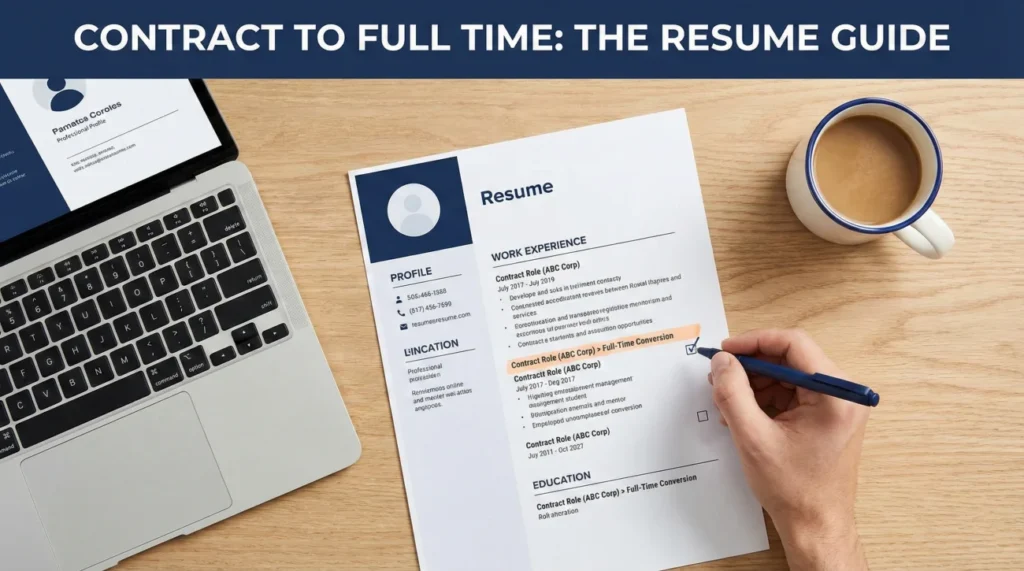
- If your contract became full time, your goal is simple: State the conversion without changing who your legal employer was on paper.
- The safest wording is neutral and verifiable: Dates, entity names, and a short “Converted to FTE” note only when it clarifies the timeline.
- If conversion never happened, avoid “almost hired” language. Frame it as a completed contract with outcomes, not a story about rejection.
Contract to full time on a resume is not a brag, it is a paperwork problem
I can usually tell when someone is trying to be “impressive” about a conversion. The wording starts to sound like a victory speech, and then the recruiter’s brain does what recruiter brains do: It starts testing accuracy.
So this guide is intentionally boring in the best way. It shows how to write contract to full time resume lines that are clear, neutral, and easy to verify.
One quick story: A candidate I coached, Ursula, had a real conversion at a fintech company. Her resume said she worked directly for the company from day one, because that “looked better.” It also did not match her pay stubs. She did not get accused of lying, but she did get stuck in an awkward explanation loop that could have been avoided with one clean line.
What recruiters actually worry about when they see “converted to full time”
Recruiters do not hate contract work. They hate ambiguity that forces them to guess. Conversion language can accidentally create three kinds of doubt:
| Hidden doubt | What triggered it | What to do instead |
|---|---|---|
| “Did you claim the wrong employer?” | You listed the end client as employer even though the agency was employer of record | Keep the employer accurate, then clarify the worksite and conversion as a note |
| “Are you trying to cover a failed contract-to-hire?” | You wrote “contract-to-hire” with emotional framing or excuses | Use a neutral contract label and lead with outcomes, not the hiring storyline |
| “Is the timeline messy?” | Two entries that look like job hopping inside one company | Pick one of the clean formats below so dates read as continuity |
🗝️ Key Point: Conversion is not your achievement. It is a timeline fact. Write it like a timeline fact.
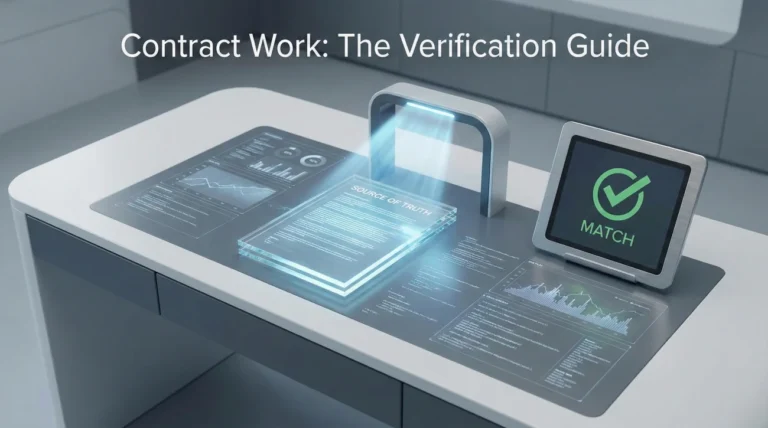
The one rule that keeps you safe: Write what a background check can confirm
If you remember only one thing, make it this: Background checks confirm entities and dates more than they confirm your story.
So before you add “converted,” decide what you are actually claiming:
💡 Pro Tip: If your paychecks came from an agency, list the agency as employer. If your paychecks came from the end client, list the end client. Everything else is just context.
But what if I worked onsite at the end client and everyone treated me like an employee?
That is common. It is also exactly why resumes get messy here. The fix is to separate “legal employer” from “worksite.” You can show the client name without pretending they were your employer.
Data Analyst | May 2023 – Feb 2024
Converted to Full Time (BrightPay Fintech) | Feb 2024
Notice what that does: It keeps the paperwork true, while still letting the reader understand the conversion.
Pick the right format for your situation
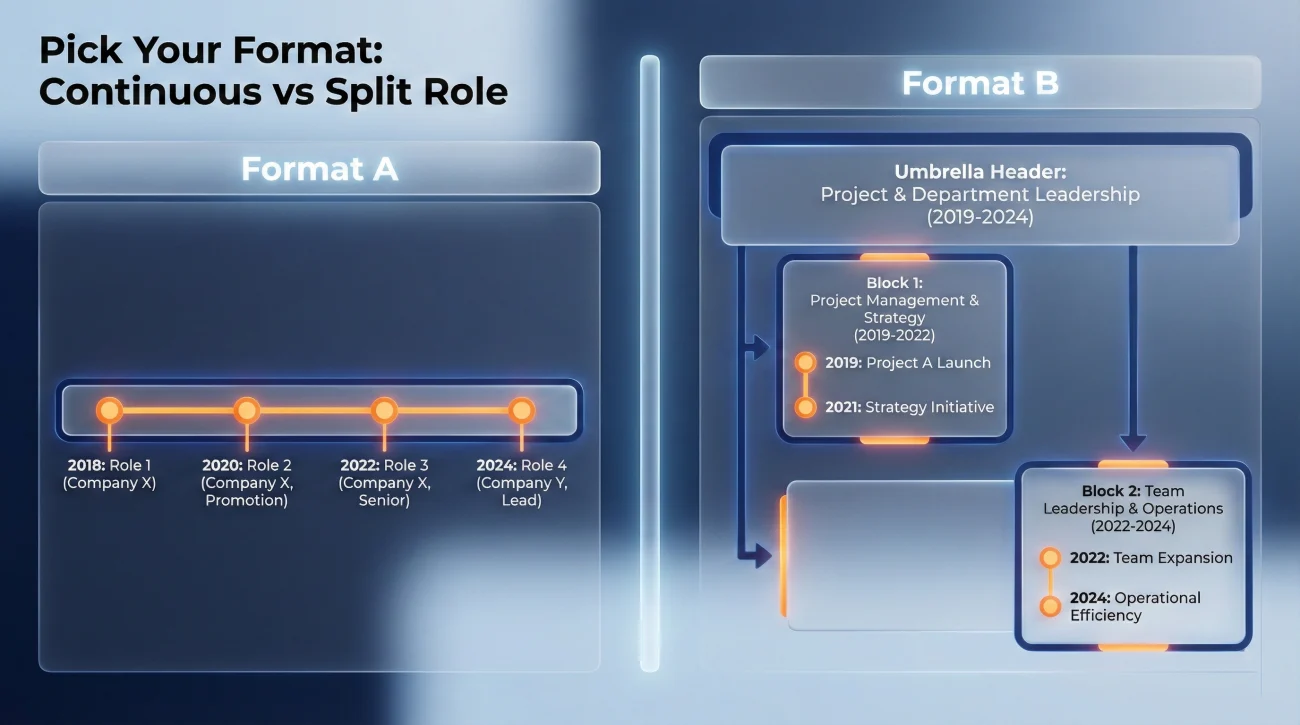
Format A: One role, one continuous date range, with a short conversion note
This works best when your responsibilities stayed basically the same and you want the reader to see continuity. It also works well for ATS parsing because it reads like one stable role.
Contract-to-Full-Time Conversion: Feb 2024
– Built weekly KPI dashboard used by Finance and Growth teams
– Reduced reporting cycle time from 2 days to 4 hours by automating data pulls
Format B: Two titles under the same company, clearly connected
This suits when the conversion came with a meaningful change in title, scope, or level. The key is to keep it visually obvious that it is one continuous relationship.
Full-Time Data Analyst | Feb 2024 – Present
– Owned monthly forecasting model and stakeholder updates
Contract Data Analyst (via Staffing Agency) | May 2023 – Feb 2024
– Delivered ad hoc analysis supporting pricing decisions
⚠️ Warning: If you use two entries, do not let the earlier one look like a separate company switch. Put them under one umbrella company line, like the example.
If conversion did not happen, do not write it like a heartbreak story
I have seen people write: “Contract-to-hire role ended because headcount froze” and then add three sentences defending themselves. That usually backfires. It invites the reader to judge a situation they do not have context for.
Instead, keep it clean:
- State it was a contract.
- State the end date.
- Lead with outcomes and handoff, not emotion.
– Delivered churn analysis that informed retention campaign priorities
– Created documentation and handoff notes for ongoing reporting
If you want to signal you are open to full time roles, do it in your summary, not inside the job entry.
Do-not-say list: Conversion wording that triggers unnecessary questions
These phrases tend to create the wrong vibe. Some sound defensive. Some sound like you are trying to prove worth. Some create verification risk.
| Avoid this | Why it hurts | Use this instead |
|---|---|---|
| “Promoted to permanent because I outperformed everyone” | Sounds like a brag and invites skepticism | “Converted to Full Time (Month Year)” |
| “Hired permanently after proving myself” | Implies you were not trusted before | “Contract-to-Full-Time Conversion” |
| “Contract ended, but they wanted to keep me” | Reads like a story, not a fact | Leave it out, show results instead |
| “Almost converted, but HR blocked it” | Creates drama and blame | “Contract completed” |
8 ready-to-paste examples for a contract-to-full-time resume
Use these as templates. Swap details, keep the tone neutral.
Example 1 (Direct employer, single entry)
Contract-to-Full-Time Conversion: Jan 2023
– Launched onboarding workflow that reduced time-to-activate by 18%
– Owned weekly cross-team updates and decision notes for product rollouts
Example 2 (Agency employer of record, client shown safely)
Data Analyst | May 2023 – Feb 2024
Converted to Full Time (BrightPay Fintech) | Feb 2024
Example 3 (Two roles under one umbrella company)
Full-Time Customer Success Manager | Apr 2022 – Present
– Led retention plan for top accounts, improving renewal rate by 9%
Contract CSM (via Agency) | Sep 2021 – Apr 2022
– Built playbooks and handoff docs used by the CSM team
Example 4 (Conversion with title change)
Converted to Full Time: Sep 2020
– Redesigned scheduling process, reducing overtime costs by 11%
– Partnered with HR and Finance on weekly capacity reviews
Example 5 (Contract completed, no conversion, clean framing)
– Delivered pricing research and competitor mapping for Q3 planning
– Documented requirements and decisions for continuity after contract end
Example 6 (Multiple short contracts, conversion highlighted once)
Contract-to-Full-Time Conversion: Nov 2022
– Coordinated vendor timelines across 3 regions and weekly status reporting
– Reduced missed handoffs by creating a standardized checklist
Example 7 (If you must mention “contract-to-hire,” keep it minimal)
– Automated reporting pipeline and built stakeholder dashboard
Example 8 (Freelance to employee, separate labels, no weird overlap)
– Supported campaign measurement and weekly performance reporting
BrightPay Fintech | Marketing Analyst | Nov 2023 – Present
Final check before you submit
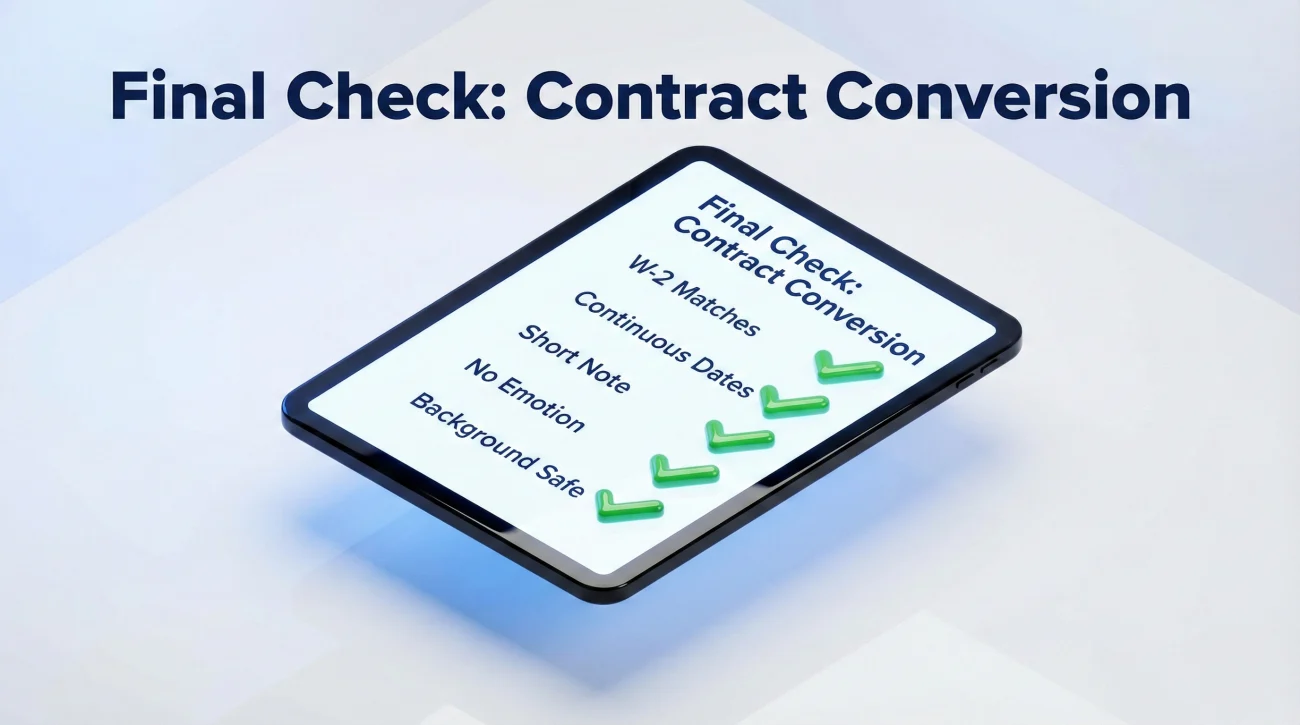
- Does the employer name match who paid you (W-2 or invoices)?
- Are dates continuous and easy to scan in 3 seconds?
- If you mention conversion, is it a short note, not a paragraph?
- Did you avoid emotional explanations inside the job entry?
- Would a background check read your resume and see the same entities?
💡 Pro Tip: If you are unsure, choose the “boring” version. Boring is what passes screening.
Final
A contract that turns into full time is a good signal, but you do not need to sell it. You only need to make it legible and verifiable.
When your wording stays neutral, you stop forcing recruiters to guess. And when they stop guessing, they can finally focus on the part that actually matters: What you delivered.
If you want the cleanest approach, treat the conversion like a timeline fact and keep the employer record accurate. That is the whole game for a contract to full time resume.
❓ FAQ
🧾 Should I write “contract-to-hire” on the resume?
Only if it clarifies the context in one short label. If it makes you want to explain or defend the outcome, skip it and show results instead.
🔍 Will “converted to full time” help me pass ATS?
It rarely helps ATS directly. It helps humans by making your timeline easy to understand. Keep it short so it does not distract from role keywords and achievements.
🏢 I was paid by an agency but worked at the client. Who do I list?
List the agency as employer of record, then show the client as the worksite in a clear, non-misleading way. That protects you if a background check verifies pay records.
📅 Do I split it into two jobs if nothing changed after conversion?
No, not necessarily. A single entry with a short conversion note is usually cleaner when the work and scope stayed similar.
🧠 What is the most “professional” wording for conversion?
“Contract-to-Full-Time Conversion: Month Year” is plain and readable. Avoid phrases that sound emotional, defensive, or like you are trying to prove something.
⚠️ Disclaimer: ResumeSolving provides resume, cover letter, job search communication, and career transition guidance for informational purposes only. Hiring practices vary by employer, role, location, industry, and individual circumstances. We do not guarantee interviews, job offers, ATS results, or other outcomes. Verify employer requirements directly and follow applicable laws and workplace policies. For sensitive situations, use only information you are comfortable disclosing and keep all statements accurate.