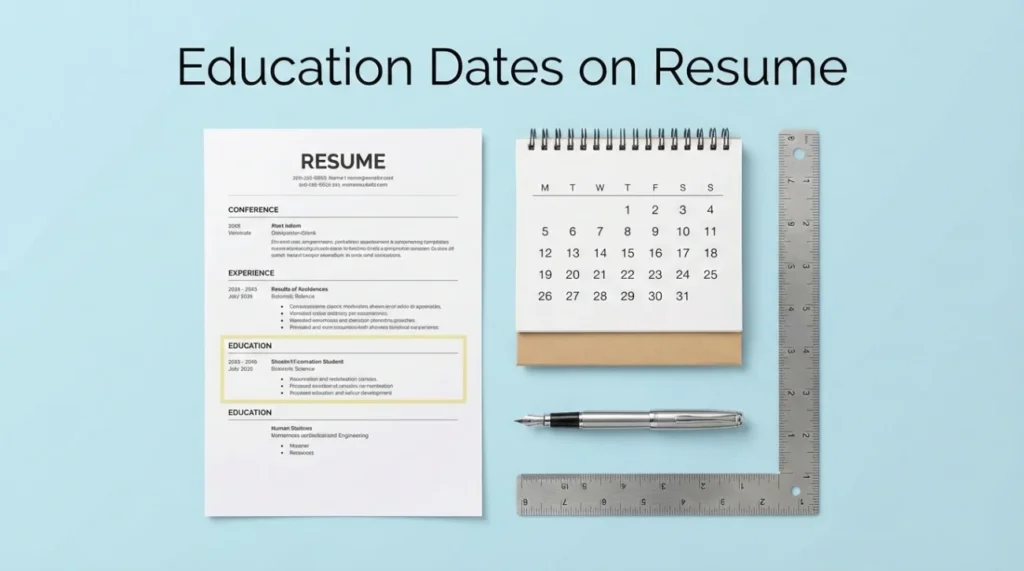
- Education dates are not “required”, but missing or messy dates can quietly trigger timeline questions.
- Pick one clean date style based on seniority and context, then apply it consistently across the whole resume.
- If you omit a graduation year, make it look intentional by tightening the rest of your timeline signals.
Education Dates on a Resume: Why This Tiny Detail Gets Judged
I have watched hiring teams skim a resume for 20 seconds, nod along, then pause at the Education section and frown. Not because the degree was “wrong”, but because the date formatting felt slippery. That moment is exactly what you want to avoid.
Here is the honest truth: education dates on a resume are rarely the reason you get hired. But they can be the reason someone starts asking themselves the wrong question: “Is this candidate hiding something?”
A candidate named Kody once sent me two versions of the same resume. Version A included “2011 – 2015” next to a bachelor’s degree. Version B showed the degree with no dates at all. The hiring manager did not reject either version. But they asked a very different follow up question depending on which one they saw.
“Quick question: Are you available full time, and is your education completed? The dates were a little unclear.”
That is what this article fixes. You will leave with clean formats, clear rules, and examples you can copy without sending weird signals.
What Education Dates Actually Signal to Recruiters
Most advice online treats education dates as a moral debate: Include them for transparency, remove them to reduce bias. In real screening, it is simpler. Education dates signal only three things.
| What the recruiter sees | What they infer in 2 seconds | What you want them to infer instead |
|---|---|---|
| Clear graduation date | Timeline is straightforward | Nothing to question, move on |
| No dates at all | Could be intentional, could be hiding age or gaps | Intentional choice, supported by a clean overall timeline |
| Date ranges or inconsistent formats | Messy details, possible unfinished degree | Accurate, simple, and consistent formatting |
💡 Pro Tip: Education dates are a “trust detail.” You do not need to over explain, you just need to avoid ambiguity.
One of my colleagues in HR used to say: If a candidate makes the easy parts confusing, we assume the hard parts will be worse. That is harsh, but it is how fast screening works.
The 4 Rules That Keep Education Dates Clean
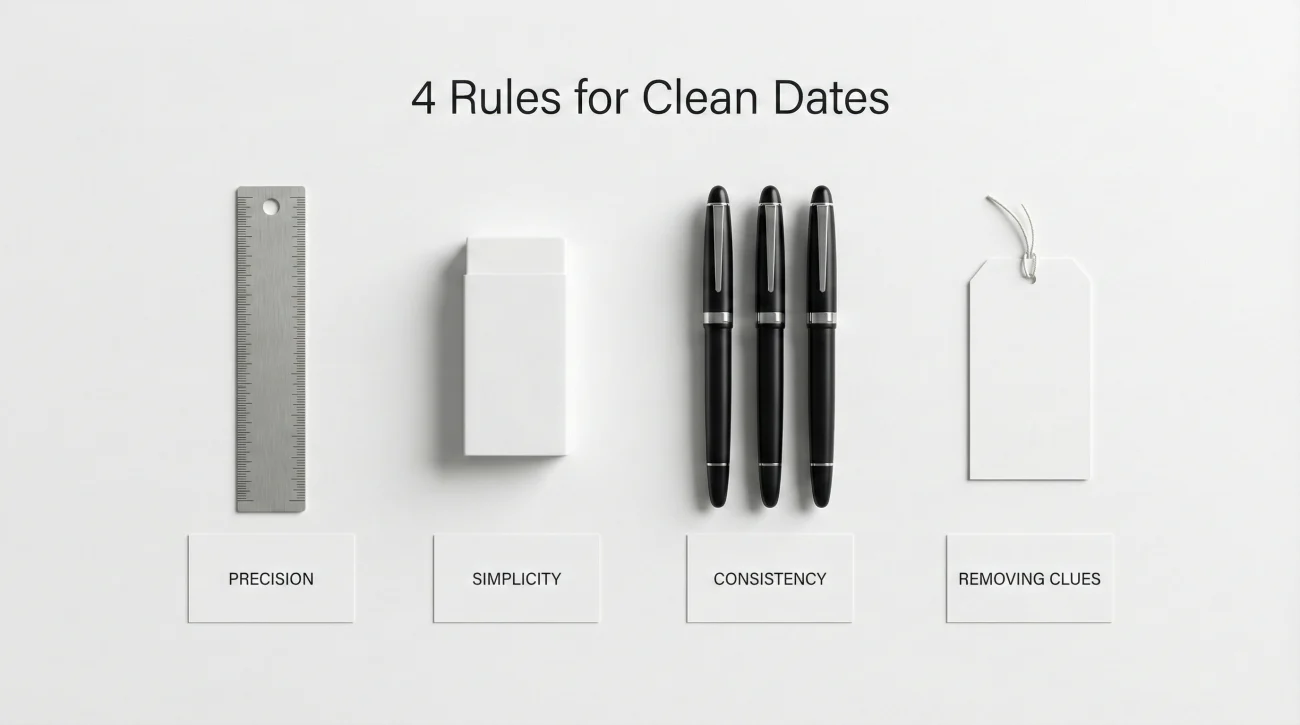
Rule 1: Pick the simplest date style your situation allows
If you are a recent grad or still in school, month and year often helps. If you are mid career, year only is usually enough. If you are senior, dates can be optional if the rest of your timeline is strong.
The mistake is trying to look “detailed” by adding ranges, start dates, or extra labels. That detail rarely helps, and it often raises questions.
Rule 2: Never use attendance ranges for a completed degree
“2012 – 2016” next to a completed degree sounds like you are describing time attended, not the credential earned. It invites “Did you finish?” even when you did.
Use a conferral date (year, or month year) for completed education. If you did not finish, label it clearly and keep it brief.
Rule 3: Match the “precision level” across your resume
If your Experience section uses month and year for jobs, your Education section can still use year only. That is not automatically a problem. It becomes a problem when your Education is more detailed than Experience, or when each degree uses a different style.
Consistency is what reads as intentional. Inconsistency reads as copy paste.
Rule 4: If you omit dates, remove the “half clues” too
I have seen resumes where the person removed graduation years but left “Dean’s List 2009” or “Scholarship 2010” sitting right there. That defeats the purpose and looks sloppy.
If you omit dates, omit them cleanly and avoid stray year fragments that make the reader do math anyway.
The Cleanest Education Date Formats
Below are the formats that rarely trigger follow ups. Pick one based on your context and keep it consistent.
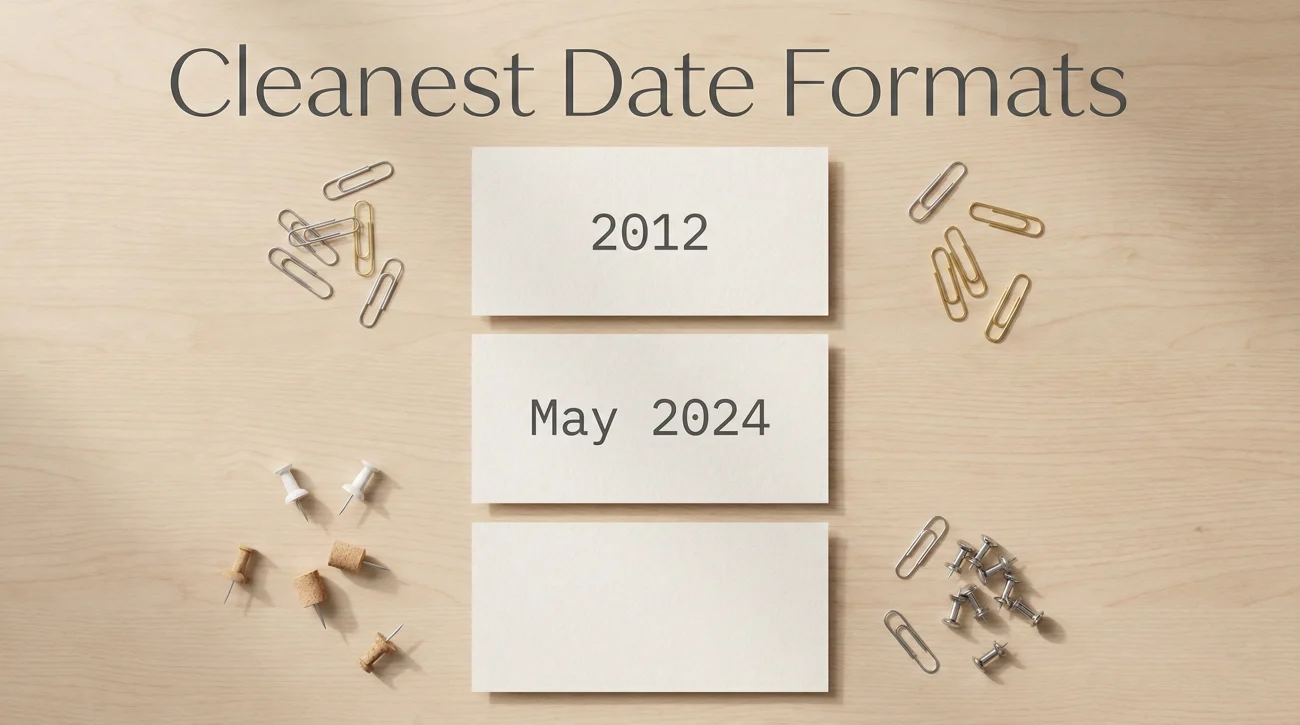
Format A: Year only
This is the most stable option for mid career candidates. It is also the easiest way to reduce age signaling without looking evasive.
Example 1 (Mid career, completed degree):
B.S. in Computer Science, 2012
Format B: Month and year
Use this when timing matters: Recent grad roles, internships, licensing windows, or when you are currently enrolled and availability depends on graduation.
Example 2 (Recent grad):
B.A. in Economics, May 2024
Format C: No date shown
This works best when you have a strong experience timeline and your education is not the primary selling point. If you choose this, the rest of your resume has to look tight, because the reader will look for other clues.
Example 3 (Experienced candidate, education not the lead):
B.S. in Supply Chain Management
⚠️ Warning: Date omission looks most suspicious when your Experience section already has visible gaps. If your work timeline is bumpy, education dates are not the place to get “minimal.”
Expected Graduation Date: How to Show You Are Still Enrolled Without Confusing Anyone
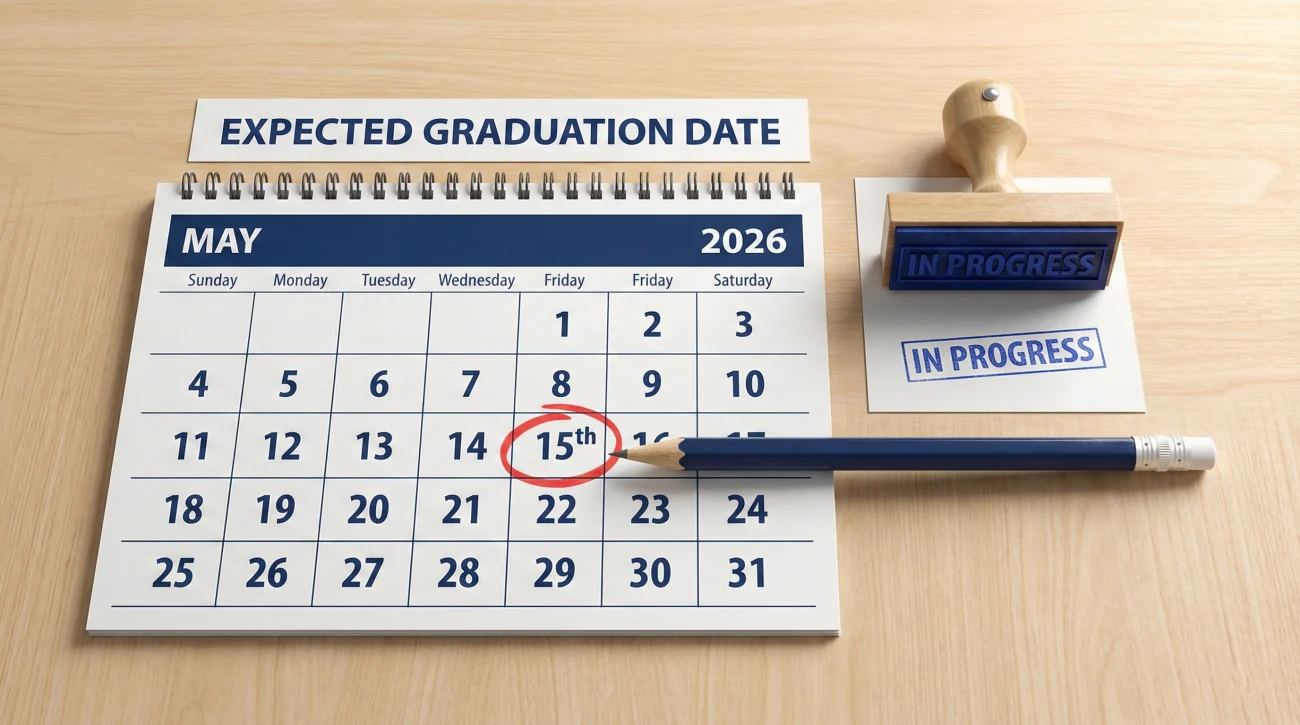
This is where online advice gets messy. Some people show a full range, others show a single expected date, and many do not label it clearly.
In practice, I recommend a single expected month and year, with an obvious label. Ranges create more questions than they solve, especially if your start date is not relevant to the job.
Example 4 (In progress degree):
M.S. in Analytics, Expected May 2026
One candidate I worked with, Phillipa, used “2023 – 2026” on her resume. The recruiter assumed she was unavailable until 2026, even though she was already working full time and doing the degree part time. We changed it to a single expected date with “part time” in a small line under the degree. The confusion disappeared.
If you need one extra clarifier line, keep it boring and factual:
🗝️ Key Point: Expected dates are about availability and credibility. Make it clear you are not pretending the degree is completed.
Also, be ready for a practical reality: Many ATS forms force you to enter a date even if your resume does not show one. That is fine. Your resume and your form do not have to be identical, they just cannot contradict each other.
Edge Cases That Break Most Templates
Multiple degrees: How to keep dates from looking chaotic
If you have multiple degrees, the fastest way to look unorganized is to format each one differently. Pick one style and apply it to all entries, even if one is much older.
Example 5 (Multiple degrees, consistent style):
M.B.A., 2016University of Illinois, Urbana Champaign, IL
B.S. in Finance, 2010
If one degree is in progress, keep it consistent too. That means the same alignment, same punctuation, and the same placement of the date, with only the label changing to “Expected”.
Bootcamps and certificates: Dates matter more than you think
Bootcamps and certificates are often used as a “signal of currency.” In that case, leaving off the date removes the point of listing it.
For short programs, month year is usually best because it communicates recency without taking space.
Incomplete education: Make it honest and small
There is a clean way to show incomplete education without inviting a debate. State the program, state the institution, then give a short status line. Avoid long explanations or emotional wording.
Example 6 (Incomplete degree, clear status):
B.S. in Biology, Completed 90 credits (No degree conferred)
If you include dates for incomplete education, use years only and avoid ranges that imply you were continuously enrolled if you were not.
Common Education Date Mistakes That Raise Questions
These are the patterns that make recruiters pause. Fixing them is usually a one minute edit.
| Before | After | Why it works |
|---|---|---|
| 2012 – 2016 | 2016 | Conferral date reads as completed, range reads as attendance. |
| Graduated: 05 2024 | May 2024 | Readable date format looks polished and consistent. |
| Expected Graduation: 2026 – 2027 | Expected May 2027 | Single expected date reduces ambiguity and availability assumptions. |
| B.A. Psychology (2010) Dean’s List 2009 | B.A. Psychology, 2010 | Removes stray year clues that force the reader to do math. |
One more mistake I see constantly: Mixing date positions. If you put dates on the right for one education entry, do not put dates on the next line for another. The reader will assume you copied two templates together.
❌ Note: If your resume is otherwise strong, messy education dates are still enough to trigger an “inconsistency” vibe. That vibe is what kills callbacks, not the date itself.
A Quick Checklist Before You Hit Submit
- ✅ I used one date style across all education entries.
- ✅ Completed degrees show a conferral date, not an attendance range.
- ✅ In progress degrees show a single expected date with a clear label.
- ✅ If I omitted dates, I removed stray year clues like scholarships or awards with years.
- ✅ My Education date precision does not look “messier” than my Experience dates.
If you want a simple mental model, use this: Education dates should never create new questions. Their job is to close a loop, not open one.
Final
When your resume is being scanned fast, tiny formatting choices become trust signals. Clean dates do not make you look younger or older. They make you look deliberate.
If you are unsure, choose year only for completed degrees, use month year only when timing matters, and avoid ranges unless you are explicitly describing a program that is still in progress.
Most importantly, make the Education section feel like it belongs to the same resume as your Experience section. That consistency is what stops the reader from doing detective work. And that is the whole point of education dates on a resume done well.
❓ FAQ
🎓 Should I include my graduation year on my resume?
If you are early career, the year can help establish timeline clarity. If you are mid career, year only is usually fine. If you are senior, you can omit it, but only if the rest of your timeline is clean and you remove stray year clues.
🗓️ Is it okay to list education with no dates at all?
Yes, it can be okay. It works best when your experience timeline is steady and education is not the main selling point. If your work history has visible gaps, no dates in education can look evasive.
📌 How do I format an expected graduation date?
Use a single expected month and year with a clear label, like “Expected May 2027.” Avoid ranges unless you have a specific reason, because ranges tend to trigger availability confusion.
🧩 Should I include the start date for my degree?
Usually no. Start dates rarely help hiring decisions. They are most useful only when you are currently enrolled and the timing affects availability, and even then a single expected graduation date is cleaner.
🧠 Will removing graduation dates prevent age discrimination?
It can reduce one obvious age signal, but it does not erase it entirely because recruiters can infer timelines from work history. The bigger win is making your resume look intentional instead of edited.
✅ What is the safest education section date format?
For most mid career candidates, year only is the safest and cleanest. Use month and year when recency or availability is part of the story.
⚠️ Disclaimer: ResumeSolving provides resume, cover letter, job search communication, and career transition guidance for informational purposes only. Hiring practices vary by employer, role, location, industry, and individual circumstances. We do not guarantee interviews, job offers, ATS results, or other outcomes. Verify employer requirements directly and follow applicable laws and workplace policies. For sensitive situations, use only information you are comfortable disclosing and keep all statements accurate.