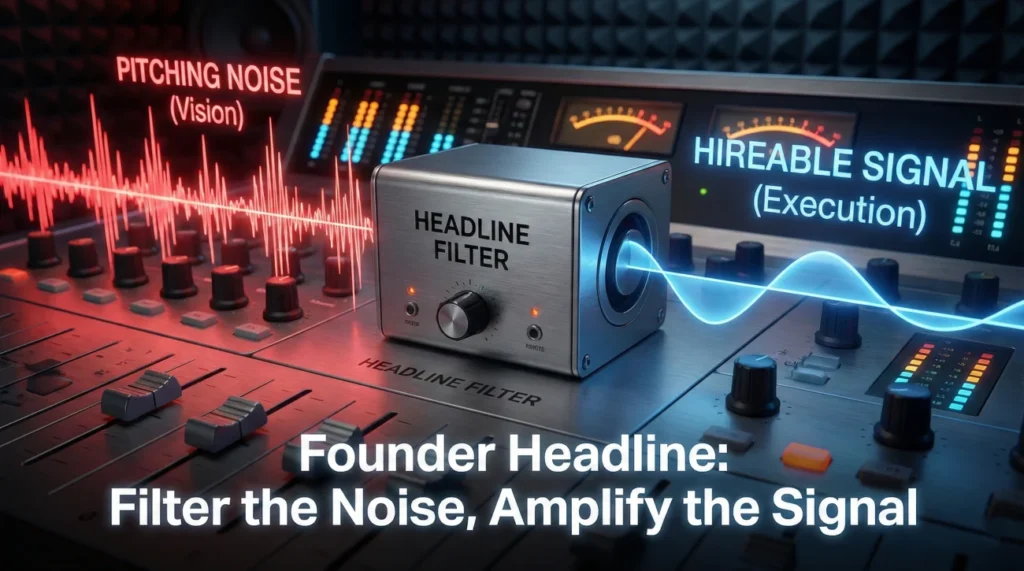
- Your headline is not a pitch. It’s a one-line role decision plus one proof cue.
- Founders get rejected when “Founder | CEO” triggers doubts about fit, reporting, and focus.
- Use 3 founder-specific patterns and steal 10 examples that read like an employee, not a brand.
Why Founder Headlines Get Skimmed Too Fast
Reese ran a small SaaS for four years. She wasn’t failing, she wasn’t “between things.” She simply wanted a product role inside a larger team because she missed shipping with a real cross-functional machine. Her resume was strong, but her first line was: “Founder | CEO | Building B2B tools.” She told me she could almost feel the reader drifting.
The fix wasn’t dramatic. We rewrote her first line around the job she wanted, not the job she had. That is the core tension founders face: You have real experience, but your headline can accidentally read like a pitch deck cover.
In this guide, I’m focusing on one thing only: The resume headline for founder that signals you are hireable inside someone else’s system, without sounding smaller than you are.
💡 Pro Tip: If your headline makes the reader wonder “So are they applying, or fundraising?”, you already lost the first six seconds.
The Three Silent Doubts Hiring Managers Attach to “Founder”
I’m not saying these doubts are fair. I am saying they are common. When a recruiter scans a resume and sees “Founder | CEO” as the first thing, the brain often jumps to a quick risk assessment.
Doubt 1: Will this person actually take direction?
Marcus, a friend of mine in HR, calls it the “reporting line fear.” It’s not about ego. It’s about whether you can be effective when priorities are set by a VP you did not choose.
Doubt 2: Can they work inside constraints and cadence?
Founders are used to making decisions fast. Big companies move slower for reasons: Compliance, security, coordination, and scale. A founder headline that screams “move fast and break things” can read like a mismatch.
Doubt 3: Are they truly committed to this role?
A surprising number of hiring teams worry you will leave when your next idea comes. If your headline feels like personal branding, it feeds that worry.
🗝️ Key Point: A founder headline works when it answers “What role are you ready to do here?” before the reader asks “What are you building now?”
What Your Founder Headline Must Do in One Line
Most headline advice online is generic: job title, years, skills. Useful, but incomplete for founders. Your line has to do two jobs at once.
| What Hiring Teams Want | What Founders Often Write |
|---|---|
| Target role clarity | Identity-first: Founder, CEO, Entrepreneur |
| Evidence you can operate in a team | Vague ambition: Building, disrupting, innovating |
| One proof cue tied to business outcomes | Big claims with no anchor: Visionary leader, game-changer |
| A calm, hireable tone | Pitch tone: Mission, passion, scaling, revolution |
The “founder” label is not banned. It’s just rarely the best first word when you want to be evaluated as a Product Manager, Operations Lead, or Growth Manager.
Three Founder Headline Patterns That Sound Hireable
These are the patterns I’ve seen work best when founders want to transition into an employed role. The goal is not to hide your founder background. The goal is to lead with the job you want and use founder experience as proof, not identity.
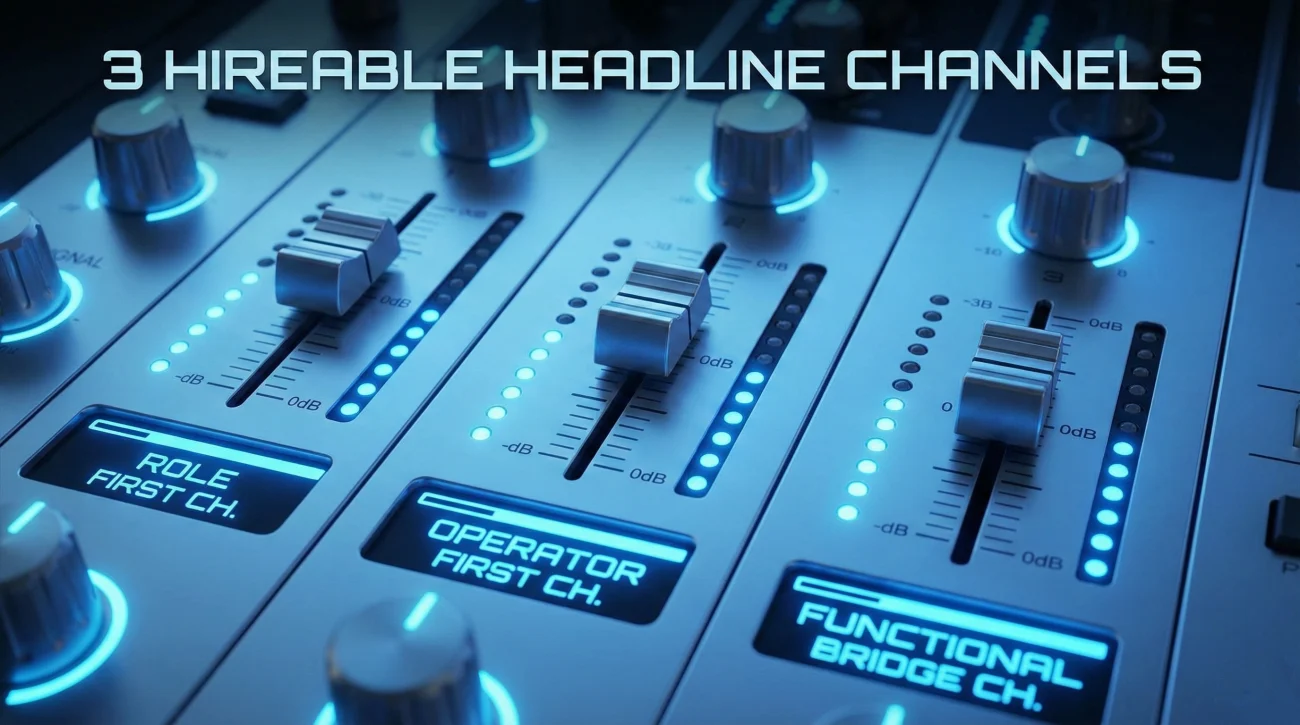
Pattern 1: Role First, Founder Second
This is the cleanest option for ATS and human readers. You state the target role as the headline’s spine, then attach a founder credential as a credibility cue.
[Target Role] + [Specialization] + [Founder Proof Cue]
Why it works: It answers the “What job is this person applying for?” question instantly, then reframes founder work as relevant experience instead of a separate universe.
Pattern 2: Operator First, Outcome First
If your biggest strength is execution, use an operator identity, not a founder identity. You can still be truthful while pulling attention toward outcomes.
[Operator Role] + [System You Built] + [Outcome Metric]
Why it works: It reduces the “will they fit inside a system?” doubt by showing you already build and run systems.
Pattern 3: Functional Bridge Title
This is for founders whose day-to-day was basically a functional role already. You choose the functional title that matches your actual work, then add scope.
[Functional Title] + [Scope Cue] + [Market/Customer Cue]
Why it works: It prevents the “title inflation” vibe while still letting the reader understand your level.
⚠️ Warning: Functional bridge titles only work if your bullet points back them up. If your resume reads like generic leadership, the headline will look suspicious.
Do-Not-Do List for Founder Headlines
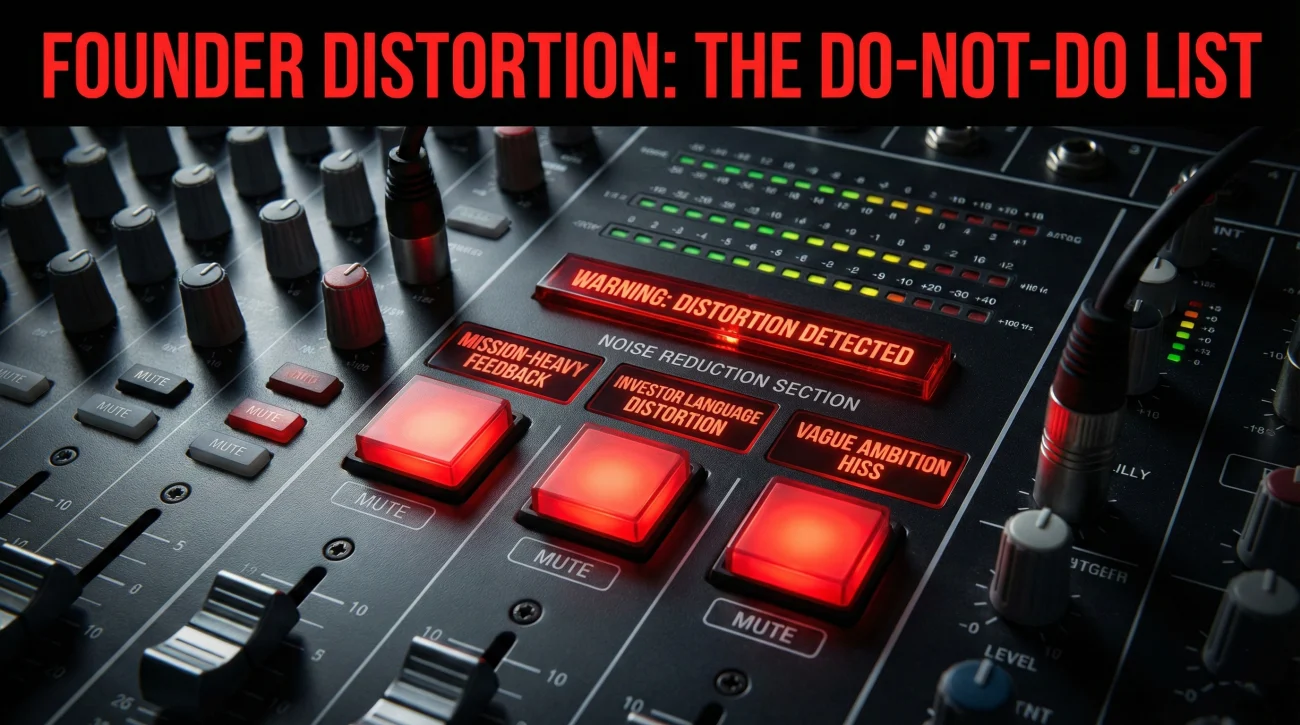
If you want your resume to feel like a job application, not a public profile, avoid these patterns.
- ❌ “Founder | CEO | Building…” as the entire line.
- ❌ Investor language: Traction, runway, fundraising, stealth, unicorn.
- ❌ Mission-heavy adjectives with no proof: Visionary, passionate, disruptor.
- ❌ Too many roles in one breath: Founder, PM, engineer, marketer, salesperson.
- ❌ Claims that imply you are still running it full-time: Currently building, actively scaling.
“Your resume headline reads like a bio. I can’t tell what job you want me to interview you for.”
That quote is from a hiring manager friend who reviews a lot of founder resumes. It’s blunt, but it’s the common failure mode. Your headline should not make them guess your target role.
10 Resume Headline Examples for Founders
Use these as templates, not copy-paste tattoos. Swap the role, the scope, and one proof cue so the line matches your real resume bullets.
| Target Direction | Headline Example |
|---|---|
| Product | Product Manager Focused on B2B Workflow Tools, Former SaaS Founder |
| Product | 0 to 1 Product Builder with GTM Ownership, Founder Background in SMB SaaS |
| Operations | Operations Manager Who Built Hiring and Delivery Systems, Ex-Agency Founder |
| Growth | Growth Marketer with Paid and Lifecycle Experience, Built Demand as a Founder |
| Customer Success | Customer Success Leader Who Reduced Churn Through Onboarding Systems, Former Founder |
| Partnerships | Partnerships Manager with Vendor and Channel Deals Experience, Founder-Led Growth |
| Engineering | Engineering Manager with Product Sense, Led Small Teams as a Startup Founder |
| Data | Analytics Lead Turning Product Data into Retention Wins, Built Metrics as a Founder |
| Sales | B2B Sales Lead with Full-Cycle Experience, Founder Who Sold to SMB Buyers |
| General Management | General Manager with P and L Ownership, Founder Experience Scaling a Lean Team |
Notice what these lines do not do: They do not claim “vision” as a feature. They do not mention fundraising. They do not sound like a slogan. They sound like a person who can show up on Monday and run a function.
A Quick Swap List to De-Pitch Your Words
If your headline still feels pitchy, the problem is often a small set of words that belong on a landing page, not a resume.
Hireable: Leading / Improving / Owning / Operating / Delivering / Reducing churn / Increasing conversion
The 6-Second Test: Does It Read Like a Job Application?
Here’s a simple test I use with founder candidates. Read your headline out loud, then answer one question: “If I remove the word founder, does the line still make sense?”
If the answer is no, fix one of these three things
- Add the target role as the first words.
- Replace identity language with function language.
- Attach one grounded proof cue: A system, a scope, or an outcome.
Davina, a founder who wanted an ops role, originally led with “Entrepreneur and builder.” We changed it to “Operations Manager who built delivery and hiring systems.” Same reality, different reader experience. Suddenly the resume read like it belonged in an applicant pile, not a conference badge line.
❌ Note: If your only proof cue is “Founder,” it is not proof. It is context. Proof is what you built, improved, shipped, or grew.
Final
Founders don’t get rejected because they are founders. They get rejected when the resume opens like a pitch instead of an application. Hiring teams need role clarity, proof cues, and a tone that suggests you can thrive in their cadence.
If you do nothing else, do this: Put the job you want in the first three words, then use founder experience as a credibility note, not the headline’s identity. That one shift removes most of the silent doubts before they form.
When your first line reads like “I can do this job,” the rest of your resume finally gets a fair look. That is what a resume headline for founder is supposed to accomplish.
❓ FAQ
🎯 Should I put “Founder” in my resume headline?
You can, but it should rarely be the first word. Lead with the target role, then add founder as context if it strengthens credibility. If “Founder” becomes the whole identity of the line, you force the reader to guess your job target.
🧩 What if I did multiple functions as a founder?
Pick the function you want to be hired for and write the headline for that. Your bullets can show range, but the headline must choose a lane. Hiring teams reward clarity more than they reward “I did everything.”
🧠 Is it dishonest to use a functional title instead of “Founder”?
Not if the title matches what you actually did and your experience section supports it. Think of it as a bridge title. If your bullets prove product ownership, an honest Product Manager headline is clearer than a vague entrepreneur headline.
📌 How long should a resume headline be?
Aim for one line that scans fast. Many strong headlines land around 8 to 12 words, but clarity matters more than a perfect word count. If it wraps into two lines, remove filler words and keep the role plus one proof cue.
🛠️ What is the safest “proof cue” to add as a founder?
Use operational proof, not hype. Systems you built, scope you owned, and outcomes you can defend are safer than big claims. Avoid investor language because it shifts the reader into pitch-evaluation mode.
🌿 What if I’m applying to large companies with strict ATS filters?
Make the target role the first words of the headline and match the job title wording from the posting. That helps both ATS and humans. Founder context can come later in the line or in your summary.
⚠️ Disclaimer: ResumeSolving provides resume, cover letter, job search communication, and career transition guidance for informational purposes only. Hiring practices vary by employer, role, location, industry, and individual circumstances. We do not guarantee interviews, job offers, ATS results, or other outcomes. Verify employer requirements directly and follow applicable laws and workplace policies. For sensitive situations, use only information you are comfortable disclosing and keep all statements accurate.