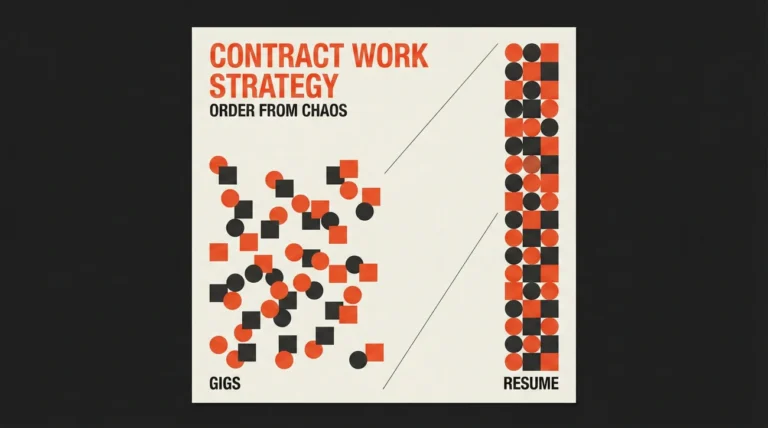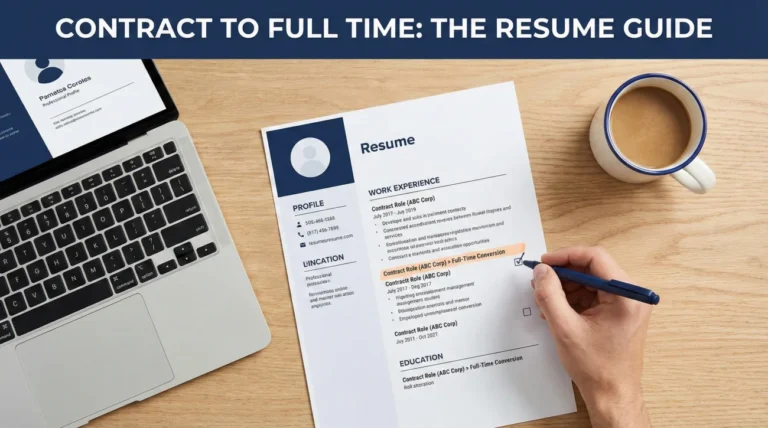
- Fractional work looks “messy” on paper when the timeline overlaps. Your job is to make the pattern obvious in one glance.
- Pick a structure first (umbrella role vs separate roles). Then apply consistent date rules so it reads stable, not scattered.
- Add one quiet proof of commitment: Retainers, renewals, long-running scope, or a clear weekly cadence.
Why Fractional Roles Trigger Questions (Even When You Did Nothing Wrong)
The first time I saw a resume packed with overlapping part-time roles, my HR brain did the annoying thing it always does: It tried to protect the hiring manager from surprises.
Not because fractional work is suspicious. It is not. But because an overlapping timeline can look like one of three risky stories when it is formatted poorly: You were distracted, you were unavailable, or you were padding your work history.
That is why the formatting matters. If you present it like a random stack of short jobs, a recruiter has to guess. And when people guess, they usually guess the safest explanation for them.
In this guide, I will show you how to present a fractional role on resume in a way that makes the pattern obvious: You were running a structured, intentional model of work, not bouncing around.
💡 Pro Tip: Think of this as timeline design, not “resume tricks”. Your goal is to remove the need for follow-up questions.
What Recruiters Actually See When the Timeline Overlaps
A fractional timeline can be totally normal in real life and still look strange in a six-second scan. The scan usually happens like this: Company names blur, dates pop, and the brain tries to find a simple narrative.
If there are four roles that overlap the same year, the brain asks: “How is this possible?” That question is not judgment. It is uncertainty. Uncertainty is what slows your resume down.
One candidate I worked with, Dalia, had three part-time marketing leadership roles running at once. She was doing exactly what you would expect: Two retainers and one short project. On her resume, it looked like she had three full-time jobs in the same months. The formatting created the confusion, not the work.
We did not add more words. We changed the structure, added a small scope cue, and suddenly the timeline read like a coherent operating model.
Key Point: A fractional timeline should read like a system: One primary identity, clear scope cues, and consistent dates.
Step 1: Pick the Structure Before You Touch the Bullets
Most people start by rewriting bullets. That is backwards. When fractional roles look confusing, it is rarely the bullet content. It is the container.
Use one of the three structures below. The “right” choice depends on what you are applying for and how many clients you had.
| Structure | Best when | What it signals |
|---|---|---|
| Umbrella role (one headline, selected clients underneath) | You had multiple overlapping clients or rotating projects | Stability, clear identity, intentional model |
| Separate roles (each company listed independently) | You had 1 to 2 roles at a time and each is highly relevant | Traditional work history, easy ATS parsing |
| Single company part-time (one employer, part-time label) | You were part-time inside one organization, not multi-client | Commitment to one team, simple timeline |
If you are worried about looking “uncommitted,” the umbrella role is often the cleanest because it makes your identity stable even if the clients change.
The Umbrella Format That Makes Fractional Work Look Stable
This is the format I use most often when someone has several fractional clients. It is not hiding anything. It is organizing it the way a recruiter’s brain wants to see it: One professional identity, then evidence.
Instead of listing five companies as five “jobs,” you list your consulting identity once, then show representative engagements underneath. This reduces the “job hopping” vibe because the timeline is anchored by one ongoing role.
Selected engagements (10-25 hrs/week)
Client: B2B SaaS (Series B) | Aug 2024 – Present
– Built weekly planning cadence across Product and CS, reducing missed handoffs by 30%
– Implemented KPI dashboard for exec review, cutting ad-hoc reporting time by 6 hrs/week
Client: Healthcare Services Group | Jan 2023 – Jul 2024
– Standardized vendor onboarding workflow, improving cycle time from 12 days to 7 days
– Trained 8 team leads on SOP ownership, reducing repeat escalations by 25%
Notice what this does. It makes the overlap normal because it is framed as engagements under one fractional umbrella, not “three employers at once.”
⚠️ Warning: Do not list ten clients. Choose two or three that match the job you want. Over-detail makes it look chaotic.
When Separate Roles Are Better (And How to Stop the Timeline From Looking Like a Puzzle)
If you had one major part-time role that looks close to a normal job, listing it separately can be simpler. This is especially true if the company brand matters, or if you were effectively embedded in their team.
The risk is that separate roles can look like you were bouncing. Your fix is not more explanation. Your fix is consistent labels and a tiny scope cue that removes the “full-time” assumption.
– Repositioned core offering for mid-market buyers, lifting demo-to-pipeline by 18%
– Built launch narrative and sales enablement kit used across 12 repsFractional GTM Consultant | BrightForm Analytics | Jun 2023 – Jan 2024 (10 hrs/week)
– Ran pricing research and packaged tiers, improving win rate in the SMB segment
– Set up weekly feedback loop between Sales and Product, cutting cycle time by 2 weeks
That parenthetical is doing real work. It quietly tells the truth: This was not two full-time jobs. It was a part-time operating model.
If you are applying into a strict corporate environment, this simple cue can prevent the wrong assumption before it forms.
Date and Label Rules That Keep ATS and Humans Happy
Fractional resumes fail in predictable ways. The biggest is inconsistent date logic. If one role uses years, another uses months, and another uses “Present” with no month, the timeline starts to look like you are hiding something.
Use these rules to keep it clean.
Rule set: Make the timeline readable in a single scan
Rule 1: Pick one date format and use it everywhere (for example: “Mon YYYY – Mon YYYY”).
Rule 2: If roles overlap, add one scope cue on the same line as dates: “(10 hrs/week)” or “(Project-based)”.
Rule 3: If you use an umbrella role, keep the umbrella dates broad and engagement dates specific.
Rule 4: Do not stack multiple labels in the same title line. Choose one: “Fractional”, “Part-Time”, or “Contract”.
Scope cues that look professional (Not defensive)
Scope cues are not excuses. They are context. Keep them short and consistent. Here are the ones that tend to read well:
- (10 hrs/week) or (20 hrs/week)
- (Retainer) or (Renewed quarterly)
- (Interim, project-based)
- (Advisory, monthly cadence)
💡 Pro Tip: If hours feel too personal for your industry, use cadence instead: “Weekly advisory” or “Monthly operating review”.
How to Show Commitment Without Sounding Like You Are Defending Yourself
“Uncommitted” is usually a proxy fear. What hiring teams actually fear is lack of reliability: They do not want someone who disappears, delays decisions, or treats the role as optional.
You can solve that fear with one quiet signal of stability. Not a speech. One signal.
My colleague Jenna hires for operations roles. She told me she gets nervous when a resume lists three consulting gigs with no proof they were real commitments. What calmed her down was seeing retainers, renewals, or a long-running engagement that clearly required consistency.
“If you show me one client who renewed you twice, I stop worrying that you vanish after the first invoice.”
That is the mindset. Add one of these signals where it naturally fits:
- Retainer language (without money details)
- Renewal language (quarterly renewal, annual extension)
- Ongoing cadence (weekly leadership sync, monthly reporting cycle)
- Ownership artifacts (SOPs, dashboards, playbooks you maintained)
If You Cannot Name Clients, You Can Still Look Legit
NDA constraints are real. And “Confidential client” repeated five times can look like filler. The workaround is to give enough identity to make the work believable without exposing names.
Here are three safe ways to do it:
Option 1: Describe the client by type and stage
Example: “B2B SaaS (Series A, 70 employees)” or “Regional healthcare provider (multi-site)”. This gives reality without names.
Option 2: Use “Selected engagements” and cap it at three
This avoids the vibe of hiding a long list. You are showing representative work, not trying to document every invoice.
Option 3: Anchor the identity to your own entity
If you operated through an LLC or consulting brand, you can list that as the “employer” line while presenting engagements as sub-items. This also reduces background check confusion because there is a stable entity to reference.
⚠️ Warning: Do not write “Various clients” with no outcomes. That is the fastest way to trigger the “padding” suspicion.
Common Pitfalls That Make Fractional Work Look Like Job Hopping
Most “fractional” resumes are rejected for presentation issues, not capability. Here are the patterns that create unnecessary doubt, plus what to do instead.
Pitfall list: What raises eyebrows in a scan
- Too many micro-roles: Seven roles in two years with identical bullets. Fix: Use an umbrella role and show only 2-3 representative engagements.
- No scope cues: Overlapping roles with no hours, cadence, or project label. Fix: Add one consistent cue per role.
- Inconsistent dates: Some roles show years only, others show months. Fix: One format everywhere.
- Vague titles: “Consultant” with no function. Fix: Use a functional title that matches the target job (Ops, GTM, Finance, Product).
- Client secrecy without context: “Confidential client” repeated. Fix: Use industry + size or stage descriptors.
- Bullets that describe tasks, not outcomes: Fractional work needs proof fast. Fix: One measurable outcome per engagement.
One candidate, Marco, had four “consultant” roles that all said basically the same thing: “Advised leadership, supported strategy.” He was good, but the resume looked like smoke. We rewrote each engagement to include one specific artifact and one result. Suddenly the work looked real.
A Quick Self-Check: Does Your Fractional Section Read Like a Story?
This is a quick test I use before I send a resume to a hiring manager. Read only the company lines, titles, and dates. Do you understand the model of work without reading the bullets?
If the answer is “not really,” the fix is almost always structure and labels.
- Can a reader tell in two seconds that the overlap is intentional?
- Is there one stable identity line anchoring the work (either your entity or a consistent function)?
- Do you show one commitment signal (retainer, renewal, cadence, or long-running scope)?
- Are the dates consistent across every entry?
💡 Pro Tip: If you feel tempted to write a long explanation paragraph, pause. A better label usually solves it with fewer words.
Final: Make the Pattern Obvious, Not the Timeline Perfect
Fractional and part-time work is becoming normal, but resumes still punish ambiguity. The goal is not to make your path look traditional. The goal is to make it legible.
When the structure is right, the overlap stops looking like chaos and starts looking like capacity: You can manage scope, deliver outcomes, and keep commitments clear across moving parts.
If you want one simple north star, it is this: Your fractional role on resume should read like a deliberate operating model, not a pile of disconnected gigs.
❓ FAQ
🎯 Should I write “fractional” or “part-time” on my resume?
Use the label that matches how the work functioned. If you served multiple clients under one identity, “fractional” is often clearer. If you were embedded in one company on reduced hours, “part-time” reads more traditional.
🧩 Do I need to include hours per week?
Not always. Hours help most when roles overlap and could be misread as full-time. If hours feel too personal for your industry, use cadence language like “weekly advisory” or “monthly operating review”.
🧠 Will overlapping roles make recruiters assume I was overemployed?
They might if the formatting implies full-time commitments. A scope cue (hours, cadence, retainer) plus an umbrella structure usually prevents that assumption before it forms.
🔒 What if I cannot name clients due to NDA?
Use anonymized descriptors that still feel real: Industry, company stage, rough size, or business model. Limit “selected engagements” to a few examples and make sure each has a concrete result.
📌 How many fractional engagements should I show?
Usually two or three is enough. More than that can look like clutter unless you are applying to a role where portfolio depth is the point. If you had many clients, curate the ones closest to your target role.
✅ What is the cleanest way to explain a long-running fractional relationship?
Use a simple stability signal: “Retainer”, “Renewed quarterly”, or “Ongoing cadence” alongside dates. It communicates reliability without sounding defensive.
⚠️ Disclaimer: ResumeSolving provides resume, cover letter, job search communication, and career transition guidance for informational purposes only. Hiring practices vary by employer, role, location, industry, and individual circumstances. We do not guarantee interviews, job offers, ATS results, or other outcomes. Verify employer requirements directly and follow applicable laws and workplace policies. For sensitive situations, use only information you are comfortable disclosing and keep all statements accurate.