- If your bullet could fit any job, it will be read as filler. Add proof nouns: artifacts, constraints, decisions, and handoffs.
- Use one of 6 collaboration patterns to make teamwork visible: alignment, feedback loops, conflict resolution, handoffs, execution, or client consensus.
- Steal structure, not sentences: Swap in your tools, stakeholders, and “what changed” so it sounds like you, not a template.
When “Team Player” Sounds Like a Red Flag
I’ve read thousands of resumes where collaboration is described, but not proven. The difference is subtle: A generic bullet tries to persuade. A strong bullet quietly documents.
If you’re here, you probably want resume bullet points for teamwork that don’t sound like corporate wallpaper. You want something that signals: “I’ve actually shipped work with other people, under real constraints.”
One of my favorite examples came from a candidate named Doris. She wrote: “Collaborated with cross-functional teams to launch features.” That line was technically true, but it didn’t separate her from anyone else. When we rewrote it to include the decisions she navigated, the proof artifact she owned, and the bottleneck she cleared, the bullet finally sounded like a person with scar tissue, in the best way.
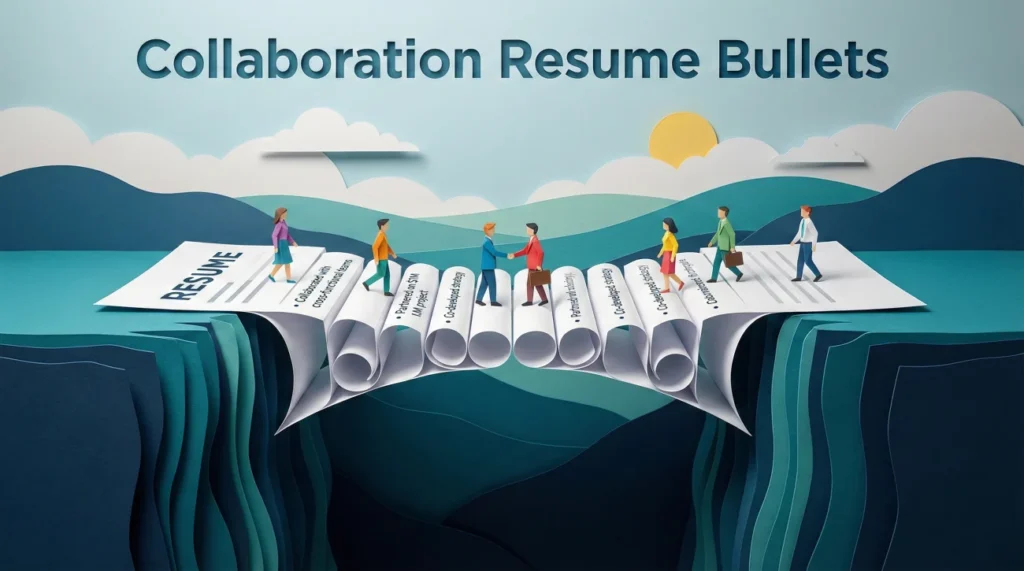
Collaboration is not a personality trait. On a resume, it is evidence that you can align people, move decisions forward, and reduce friction across handoffs.
Why Recruiters Don’t Trust Generic Collaboration Bullets
Most collaboration bullets fail for one simple reason: They don’t contain anything that would be inconvenient to make up. “Worked with,” “partnered with,” and “collaborated with” are easy to type and impossible to verify.
Recruiters are not hunting for perfect metrics. They’re scanning for signals that you understand how work moves through a team: What got aligned, what got negotiated, what got documented, what got handed off, and what changed because of it.
Another candidate, Mateo, was a mid-level analyst who genuinely made teams work better. His original bullets were polite and vague. In our review, I asked him one question: “What did you create so other people could move faster?” His answer was gold: a weekly decision log and a shared definition-of-done checklist. That was the proof he needed.
| Generic Bullet (Sounds Like Anyone) | Credible Bullet (Sounds Like Someone Who Was There) |
|---|---|
| Collaborated with cross-functional teams to deliver projects. | Aligned Product, Support, and Engineering on acceptance criteria, then maintained a weekly decision log that prevented scope drift during delivery. |
| Worked with stakeholders to gather requirements. | Ran requirement triage with 6 stakeholders, captured trade-offs in a one-page spec, and secured sign-off before development started. |
| Partnered with sales to improve customer experience. | Built a feedback loop between Sales and CS using tagged call notes, turning recurring objections into updated onboarding scripts. |
💡 Pro Tip: If you cannot point to an artifact (doc, system, process, meeting output, checklist) you probably wrote a teamwork claim, not a teamwork proof.
The “Proof Nouns” That Make Teamwork Real
When people say “add metrics,” they’re trying to fix a credibility problem with numbers. Sometimes you have numbers. Often you don’t. Proof nouns are a quieter way to earn trust.
These are the nouns that show you understand cross-team work at the level where things break: approvals, handoffs, escalations, definitions, constraints, and decisions.
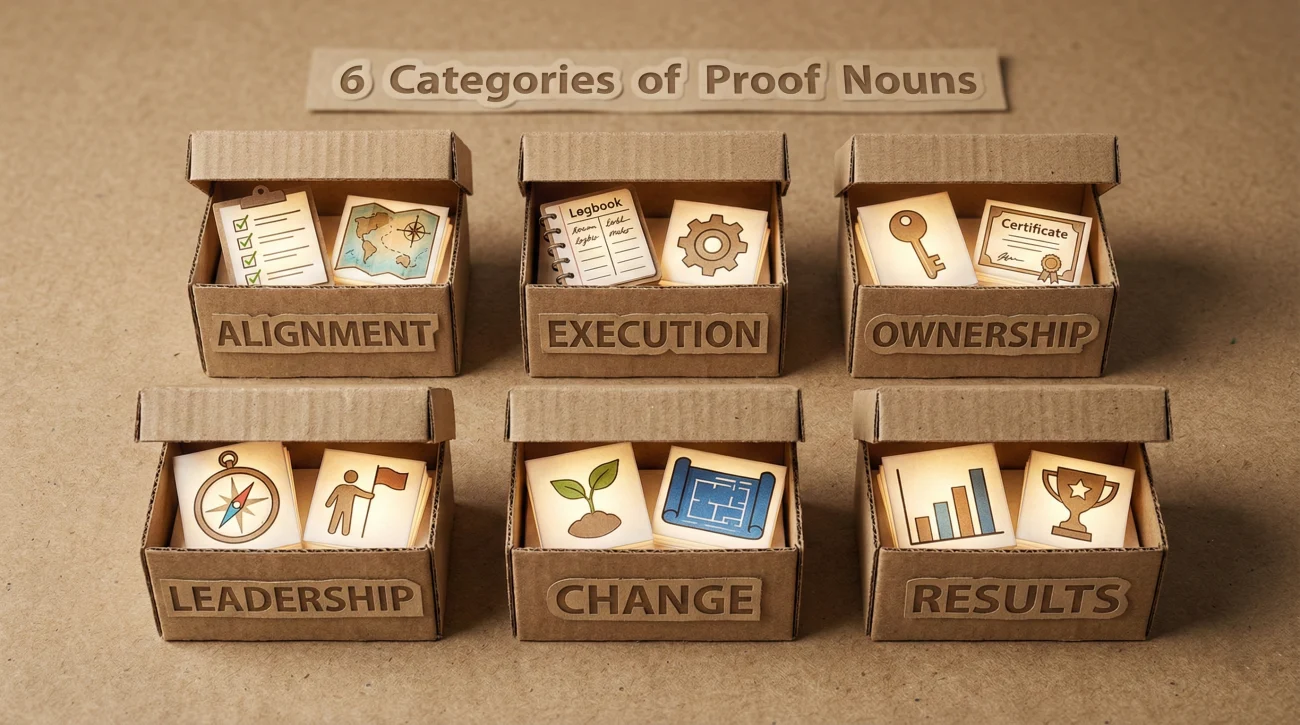
Proof nouns by category
- Alignment artifacts: stakeholder map, RACI, decision log, meeting notes with owners, sign-off thread, priority matrix
- Execution artifacts: acceptance criteria, definition of done, sprint plan, release notes, runbook, rollout checklist
- Feedback loop artifacts: bug triage notes, customer insights summary, escalation tracker, QA checklist, retro action list
- Handoff artifacts: handoff checklist, onboarding guide, integration spec, SOP, internal FAQ, demo recording
- Conflict and trade-off artifacts: risk register, mitigation plan, trade-off notes, impact assessment, exception process
- Stakeholder language nouns: blockers, dependencies, constraints, edge cases, compliance requirements, escalation path
One more quick story: Jenna worked in operations and thought her job was “not measurable.” What she actually did was reduce friction between warehouse, customer support, and finance by creating a single escalation path and a shared refund checklist. She didn’t need a dramatic metric to sound credible. She needed the nouns that proved she solved a coordination problem.
6 Collaboration Patterns You Can Reuse in Any Role
Instead of memorizing 200 bullets, learn a small set of patterns. Each pattern is a collaboration story type. Your job is to fill in the stakeholders, the artifact, and what changed.
| Pattern | What it proves | Reusable template |
|---|---|---|
| Stakeholder alignment | You can get people to agree before work starts | Aligned [Teams] on [definition/priority] by creating [artifact], preventing [failure mode]. |
| Feedback loop | You turn messy input into clear next steps | Built a feedback loop between [Teams] using [system/artifact], translating [input] into [changes]. |
| Handoff clarity | You reduce drop-offs between teams | Standardized handoffs from [Team A] to [Team B] with [checklist/SOP], reducing [confusion/rework]. |
| Conflict resolution | You can handle trade-offs without drama | Resolved competing priorities between [Stakeholders] by documenting trade-offs and securing sign-off on [decision]. |
| Cross-team delivery | You keep execution moving across dependencies | Coordinated [initiative] across [Teams], managing dependencies via [tool/artifact] and unblocking [constraint]. |
| Client or partner consensus | You can align external stakeholders too | Partnered with [client/vendor] to define [scope/SLAs], capturing requirements in [doc] and guiding [rollout]. |
A fast self-check before you finalize a bullet
Before you keep a collaboration bullet, ask yourself:
- Did I name who I worked with in a specific way (teams, stakeholders, roles), not just “cross-functional”?
- Did I include at least one proof noun (artifact, decision, checklist, log, criteria)?
- Did I state what changed (reduced friction, prevented rework, clarified scope, sped up handoffs)?
20 Collaboration Resume Bullets That Actually Sound True
These are written to be adapted. Keep the structure. Swap in your tools, stakeholders, and proof nouns. If you copy them word-for-word, they will stop sounding true.
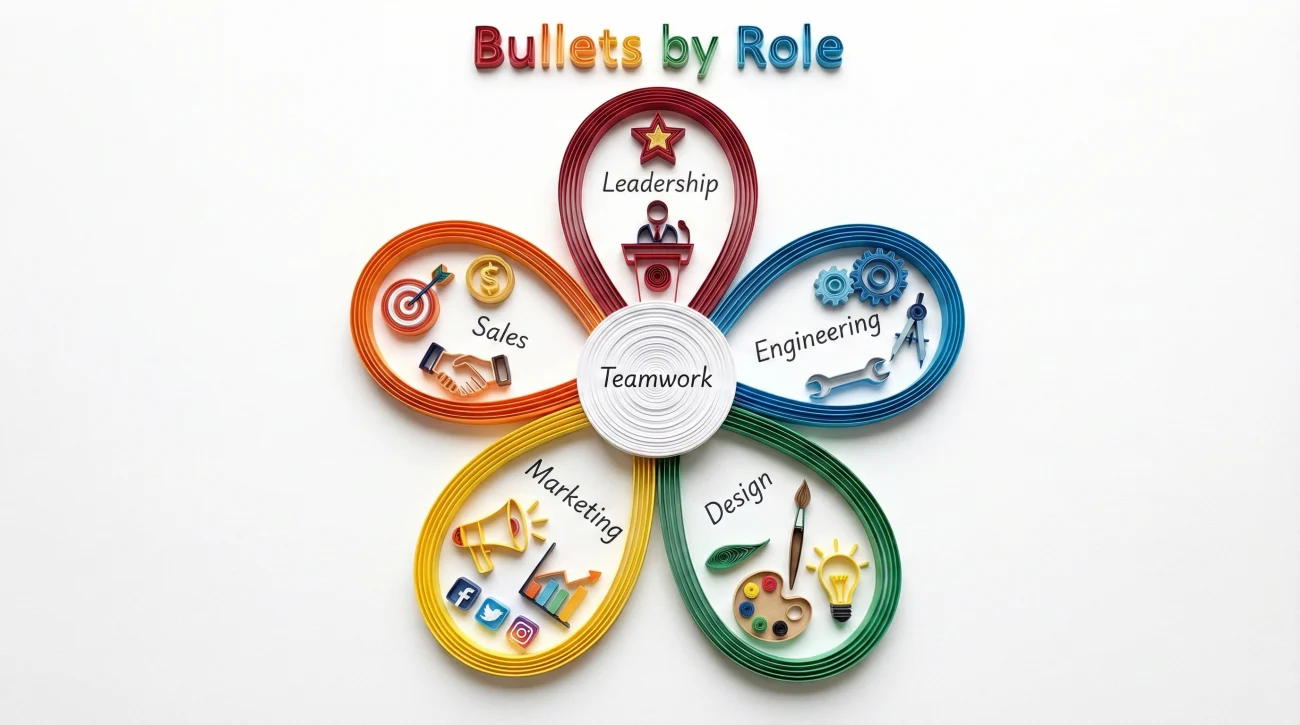
Product, Program, and Project roles
- Aligned Design and Engineering on acceptance criteria by maintaining a decision log, preventing last-minute scope changes during sprint execution.
- Ran stakeholder triage with Sales, CS, and Product to prioritize backlog items, documenting trade-offs in a one-page brief before roadmap sign-off.
- Coordinated a cross-team release by building a rollout checklist and escalation path, ensuring dependencies were resolved before launch week.
- Translated customer feedback into weekly requirements updates, closing the loop with Support through tagged themes and a shared “what changed” doc.
Engineering, Data, and Technical roles
- Partnered with QA to convert recurring bug patterns into a checklist and acceptance tests, reducing rework caused by unclear edge cases.
- Worked with Security and Engineering to document compliance requirements in an integration spec, preventing delays during audit review.
- Coordinated dependencies across 3 teams using a shared runbook and weekly sync notes, unblocking delivery when priorities conflicted.
- Built a feedback loop between Data and Marketing by standardizing event definitions and a tracking QA process, improving reporting consistency.
Marketing, Growth, and Sales enablement roles
- Partnered with Sales to convert top objections into updated messaging, using call-note tagging and a monthly insights summary shared across teams.
- Aligned Brand and Performance teams on campaign guardrails by creating a creative brief template and approval workflow, reducing review churn.
- Coordinated campaign handoffs from Content to Demand Gen with a checklist and timeline, ensuring assets shipped on schedule without last-minute edits.
- Collaborated with Product on feature launches by translating release notes into customer-facing narratives and internal enablement docs.
Operations, Customer Success, and Support roles
- Standardized handoffs between Support and Engineering by introducing an escalation template, improving bug reports with reproducible steps and priority context.
- Worked with Finance and CS to document refund exceptions and approval paths, reducing customer wait time caused by unclear ownership.
- Partnered with Training and Ops to turn process updates into onboarding guides and internal FAQs, keeping teams aligned during a transition period.
- Coordinated cross-team incident response using a runbook and retro action list, clarifying roles and next steps after service disruptions.
Team lead and manager-style bullets
- Led weekly cross-functional alignment sessions, capturing owners and deadlines in shared notes that reduced stalled decisions and duplicate work.
- Resolved conflict between two stakeholder groups by documenting trade-offs and securing written sign-off on a phased rollout approach.
- Created a dependency tracker across teams, proactively escalating blockers and protecting delivery timelines during competing priorities.
- Improved collaboration norms by setting a definition-of-done and handoff checklist, reducing rework caused by unclear completion criteria.
How to Customize a Teamwork Bullet Without Keyword Stuffing
Customization is not adding more adjectives. It’s adding the specific detail that only someone in your seat would naturally mention.
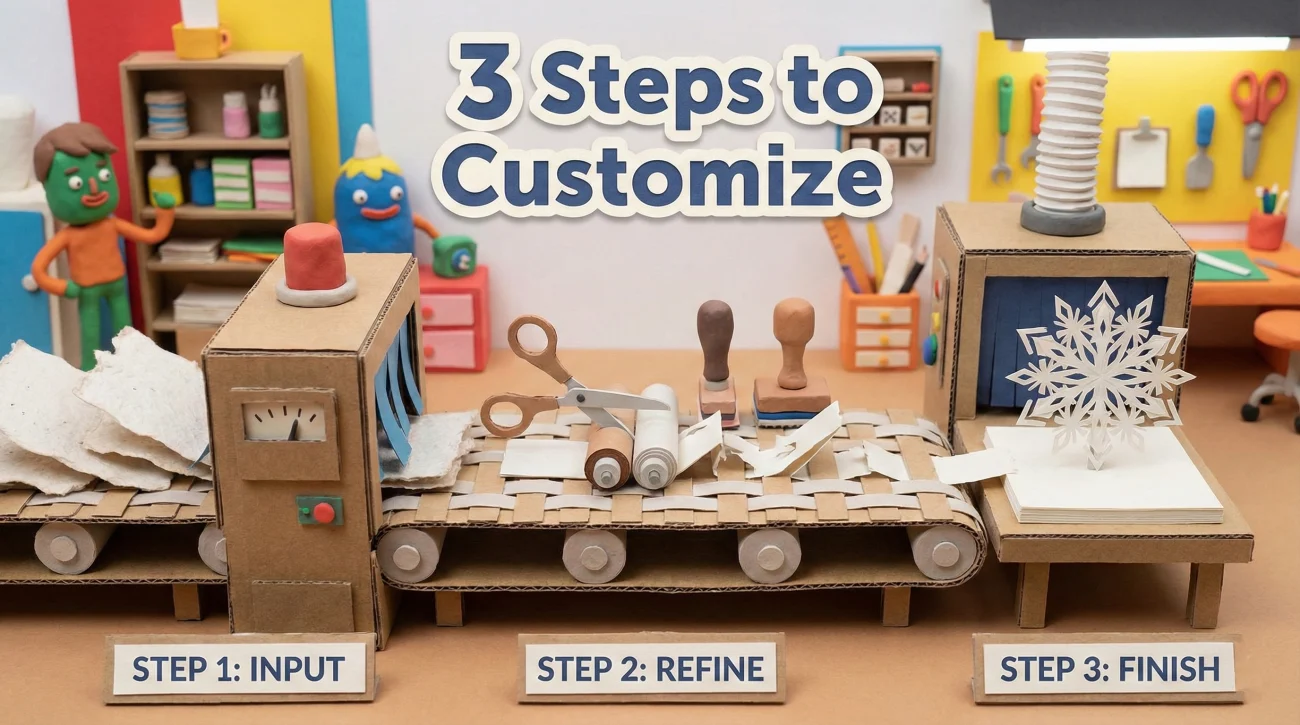
Three swaps that change everything
- Swap “cross-functional” for the real stakeholders: Product, QA, Support, Finance, Compliance, Vendor, Client, Leadership.
- Swap the vague activity for a proof noun: decision log, acceptance criteria, runbook, escalation path, triage notes, handoff checklist.
- Swap “improved collaboration” for what changed: prevented scope drift, reduced rework, clarified ownership, sped up approvals, reduced drop-offs.
⚠️ Warning: Avoid listing collaboration as a skill without showing it in your experience bullets. A “Teamwork” skill line rarely helps if your bullets are generic.
Common Mistakes That Make Collaboration Sound Fake
Mistake patterns I see over and over:
- The “with” problem: “Collaborated with…” but no clue what you did together, what you owned, or what changed.
- The invisible artifact: You coordinated everything, but you never name the doc, checklist, or system you used to coordinate it.
- The credit grab: Claiming the full result as if it was solo work, when the role was actually alignment or unblocking.
- The metrics cosplay: Adding a random percentage that does not match what the bullet describes.
- The “nice person” framing: “Strong team player” language that signals personality instead of contribution.
If you’re in a role where results are shared, you can still be specific without pretending you were the entire team. Name your contribution: you aligned priorities, translated feedback, removed a blocker, or standardized a handoff. Those are real outcomes.
Final
The best collaboration bullets don’t try to convince anyone you’re “good with people.” They document how you made work move through other people with less friction.
Pick one pattern, add one proof noun, and state what changed. That’s it. When your resume reads like a record of decisions, handoffs, and trade-offs, it becomes hard to dismiss as filler. That’s what strong resume bullet points for teamwork should do: Make your teamwork visible without begging for credit.
❓ FAQ
🎯 How many teamwork bullets should I include on a resume?
Usually 2 to 4 across your most recent roles is enough, as long as they are specific. If every bullet mentions teamwork, it starts to read like you’re compensating for missing impact.
🧩 What if I collaborated a lot but don’t have hard metrics?
Use proof nouns instead of forced numbers. Name the artifact you created, the decision you drove, or the handoff you standardized. Recruiters trust details that are inconvenient to invent.
✅ Is “collaborated with cross-functional teams” always bad?
It’s not “bad,” it’s just empty by itself. Keep it only if you add the missing pieces: who those teams were, what you aligned, what artifact you used, and what changed because of it.
🛠️ Should I replace “collaborated” with stronger verbs?
You can, but verbs are not the main problem. A stronger verb helps only after the bullet contains proof nouns and a clear outcome. Otherwise it’s just a louder version of the same generic line.
📌 What’s the easiest proof noun to add if I’m stuck?
Decision log, acceptance criteria, handoff checklist, or escalation path. Pick the one that matches what you actually did, then write the bullet around it.
⚠️ Disclaimer: ResumeSolving provides resume, cover letter, job search communication, and career transition guidance for informational purposes only. Hiring practices vary by employer, role, location, industry, and individual circumstances. We do not guarantee interviews, job offers, ATS results, or other outcomes. Verify employer requirements directly and follow applicable laws and workplace policies. For sensitive situations, use only information you are comfortable disclosing and keep all statements accurate.