- A cover letter is not a tradition. It is a risk tool: You use it when your resume alone might be misunderstood.
- If the application says “optional”, treat it like a decision: Only write one when you have a real signal to add, or a real doubt to remove.
- When you do write one, keep it short: A tight paragraph beats a full page that creates new questions.
The Question Behind the Question
I hear this every week from smart candidates who are tired: do i need a cover letter or is it just busywork that no one reads?
Here is the honest answer from an HR perspective: Sometimes a cover letter is ignored. Sometimes it is the reason a hiring manager pauses and says, “Okay, this person makes sense.” The difference is not luck. It is whether your letter solves a specific problem that your resume cannot solve cleanly.
This guide is built for 2026 reality: Fast screening, high applicant volume, and a lot of “Cover letter (optional)” fields that feel like a trap. I will show you how to decide, quickly, without turning every application into a writing project.
💡 Pro Tip: If you cannot name the exact question your cover letter will answer, do not write one yet. That is how people end up with vague, generic letters that hurt more than they help.
Why People Disagree So Hard About Cover Letters
You will find wildly different opinions online because cover letters are not equally useful in every hiring context. Some teams never open them. Some teams use them as a writing sample. Some managers only read them when something looks “off” on the resume timeline or when the role requires strong judgment and communication.
In the last year alone, I have seen three patterns that explain most of the confusion:
- Hiring speed: When a recruiter is triaging hundreds of applicants, the resume wins. The cover letter often loses by default.
- Role type: For roles where writing and stakeholder management matter, the cover letter can function as evidence, not decoration.
- Risk signals: When your resume raises a question (gap, pivot, down-level move, relocation), a short letter can remove doubt before it becomes a silent rejection.
“If your CV is straightforward, I probably will not read your letter. But when something doesn’t fit neatly in the CV format, a good letter can stop me from guessing the wrong story.”
The goal is not to “always include” or “never include”. The goal is to choose the option with the highest upside and the lowest chance of creating a new problem.
A Simple Decision Tree That Works in Real Hiring
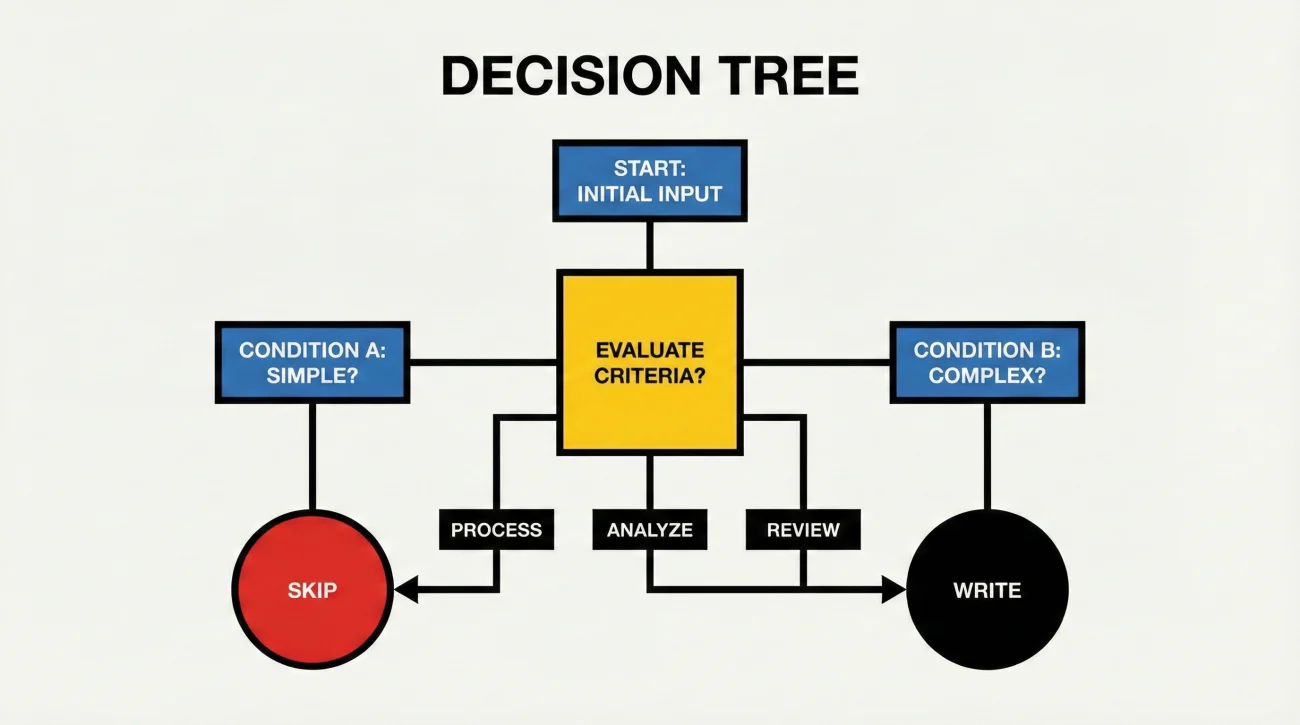
Forget the old advice that every application needs a full page. The better approach is a decision guide built on three questions:
- Will the resume alone be misunderstood? This is where gaps, pivots, layoffs, or down-level moves live.
- Does the role reward writing or narrative clarity? Think policy, comms, customer success, fundraising, leadership, partnership-heavy roles.
- Is the submission channel high-trust or low-trust? A referral or direct email is high-trust. A job board mass-apply pipeline is low-trust.
| Situation | Decision | What “Good” Looks Like |
|---|---|---|
| Cover letter required | Write it | Specific fit + proof, not a biography |
| cover letter optional, resume is straightforward, low-trust channel | Usually skip | Spend energy on better targeting and faster iteration |
| Optional, but there is a “resume question” (gap, pivot, down-level) | Write a short letter | One tight explanation + immediate return to value |
| Optional, role values writing and judgment | Write it | Two proof points that match the job’s real problems |
| Optional, you cannot add anything specific | Skip | Do not invent a story just to fill space |
⚠️ Warning: A weak cover letter is not neutral. It can actively lower your perceived quality by adding fluff, contradictions, or “template energy”.
The Minimum Viable Cover Letter for 2026
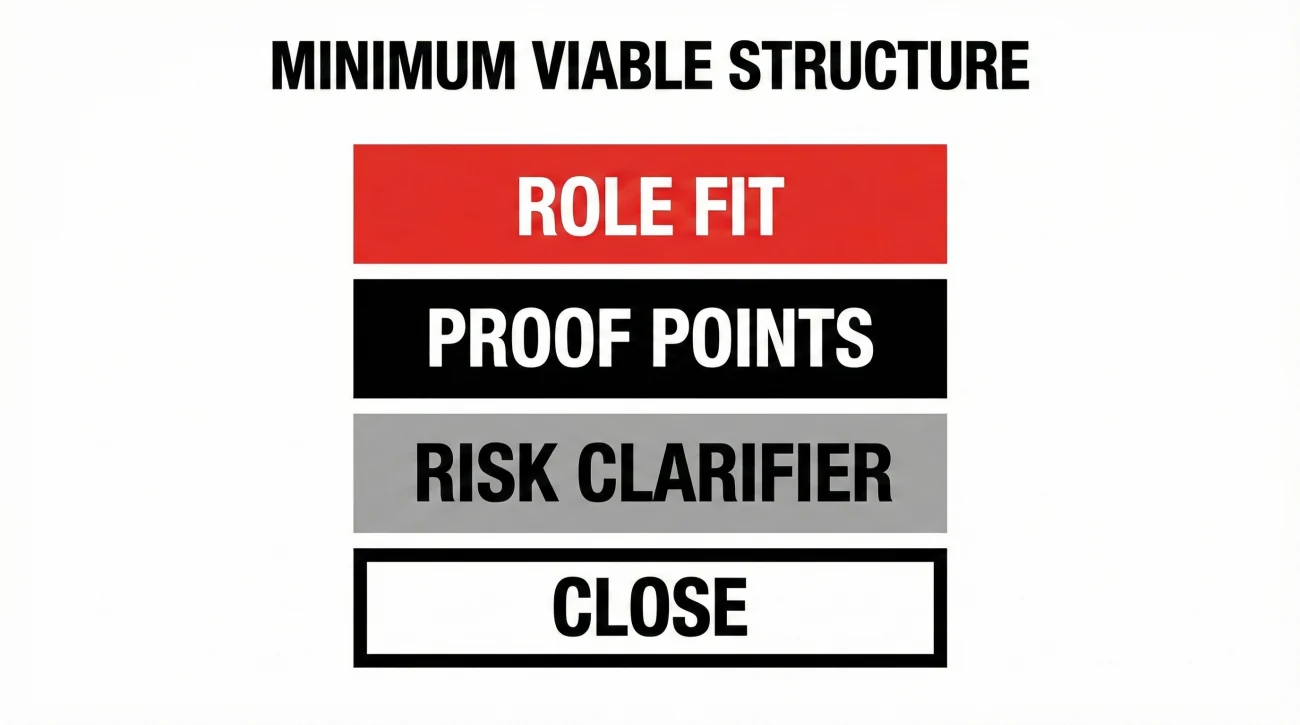
If you decide to include a cover letter, your best friend is restraint. Most people lose the reader in the first five lines by explaining obvious things. Instead, use a compact structure that is easy to scan.
[Role Fit] + [Proof Point 1] + [Proof Point 2] + [Risk Clarifier (if needed)] + [Close]
Here is what that looks like as a short, paste-ready version for an application text box. This is especially useful when you are asking yourself should i submit a cover letter but you do not have time for a full-page letter.
Hello [Hiring Manager],
I’m applying for the Customer Success Manager role because I’ve led onboarding and retention work in a high-churn environment.
In my last role, I reduced time-to-first-value by 22% by rebuilding onboarding flows and training materials.
I also owned renewals for a 60-account portfolio and improved expansion revenue by partnering with Product on feature adoption.
If helpful context: I’m moving from agency work to in-house because I want long-term ownership of outcomes, not project cycles.
Thank you for your time, I’d love to share how I’d approach your first-90-days priorities.
💡 Pro Tip: You do not need the company’s entire history in your letter. You need one believable line that shows you understand what the role actually involves.
Eight Real Scenarios and What I Recommend
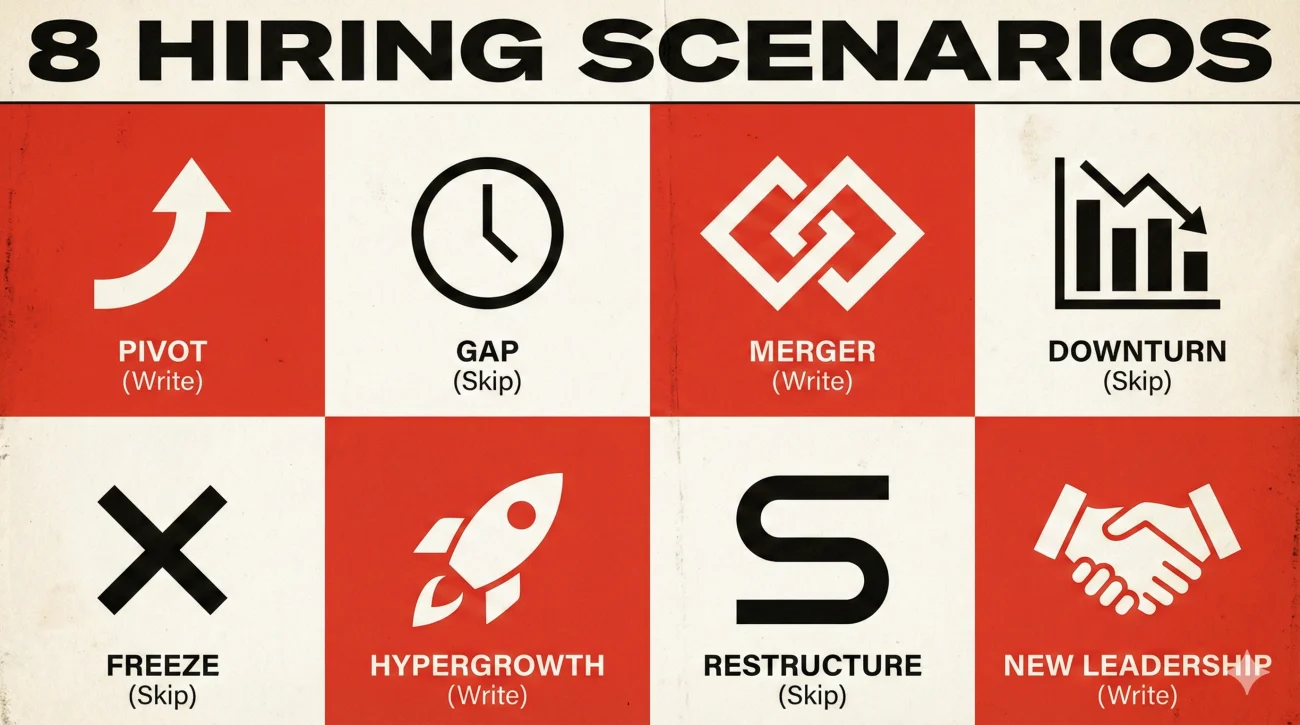
This is where most internet advice fails. People want rules, but hiring is situational. So here are eight scenarios I see constantly, with decisions you can apply quickly.
Scenario 1: The posting requires a cover letter
Write it. Not because the letter itself is magical, but because compliance is a basic filter in many processes. A surprising number of early rejections happen because the candidate did not follow instructions.
Scenario 2: It is optional, and your resume is clean and obvious
Skip it more often than not, especially in low-trust channels like job boards. If your experience aligns clearly, your resume should do the heavy lifting. Your time is usually better spent improving targeting, tailoring bullets, and applying earlier.
Scenario 3: You are switching industries or functions
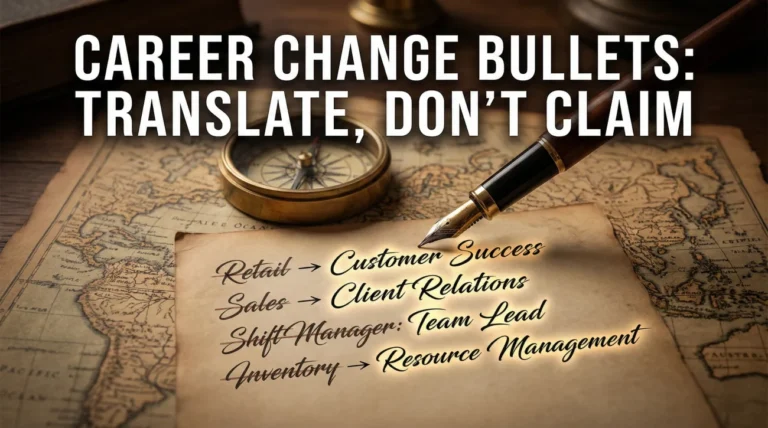
Write a short letter. Career pivots often fail because the reader cannot connect the dots fast enough. Your cover letter is the bridge, but only if it is specific: Translate your past work into the new role’s outcomes.
Scenario 4: You are applying “down-level” on purpose
Write a short letter. Otherwise, the hiring manager may assume you will leave quickly or you failed upward. Explain the choice in one calm sentence, then return to how you will perform in the role.
Scenario 5: You have a timeline question (gap, short stint, relocation)
Write one paragraph that closes the loop. Do not confess. Do not over-explain. A clean explanation reduces guesswork. This is exactly why people ask is a cover letter necessary when their resume has a visible “story gap”. In these cases, a letter can prevent the wrong assumption.
Scenario 6: The role is writing-heavy or judgment-heavy
Write it, but treat it like a work sample. A hiring manager for policy, comms, strategy, or senior stakeholder roles is often looking for clarity and structure. Your cover letter is an easy way to demonstrate those skills without being asked.
Scenario 7: You have a referral or direct contact
You can often skip the traditional letter and instead send a sharp message to the person who referred you or to the hiring manager. The goal is to make the referral feel “safe” and easy to support: Clear fit, clear proof, no drama.
Scenario 8: The application only gives you a text box, not an upload
Paste the minimum viable version. Many candidates overthink formatting here. Keep it human, short, and factual. If you write well, this can help. If you write vaguely, it becomes a liability.
When a Cover Letter Hurts More Than It Helps
Most “bad cover letter” advice is too soft. Let me be blunt: A cover letter can downgrade you because it creates additional surface area for mistakes. In 2026, the most common failure is not spelling. It is inconsistency and artificial tone.
🗝️ Key Point: If your letter is generic, it signals you did not invest in understanding the role. If your letter is too specific but wrong, it signals poor judgment.
Here is a do-not-do list I wish every applicant followed:
- Do not repeat your resume line-by-line. The reader already has the resume.
- Do not write “I am passionate” without proof. Replace emotion with outcomes.
- Do not name-drop company values unless you can tie them to work you have done.
- Do not add new facts that are not on your resume if they change the story (dates, titles, scope).
- Do not submit a letter that feels auto-generated, especially if it contradicts your bullet points.
If you cannot improve the reader’s confidence in you with a letter, the safest move is to skip it.
Three Hiring Desk Stories That Explain the Rule
I do not believe in pretending one person has seen everything. But I have seen enough patterns to trust a simple principle: A cover letter works when it removes uncertainty, not when it adds performance.
Sienna, the career pivot that looked “random” on paper
Sienna was moving from teaching into Customer Success. Her resume was solid, but the pivot looked abrupt. She wrote a short cover letter that did one thing well: It translated her classroom outcomes into onboarding outcomes. She used two proof points, and she named the specific customer segment she wanted to work with.
That letter did not win her the job by itself. But it got her into the “worth a call” pile because it prevented the common assumption: “She just wants out, she does not know what this role is.”
Gordon, the down-level move that triggered suspicion
Gordon applied for a role one level below his last title. The resume alone made him look overqualified. His cover letter included one calm sentence: He wanted a narrower scope so he could go deeper in the craft, after a year of leading too many initiatives at once.
That sentence mattered because it made the move feel intentional. Without it, hiring managers often worry about flight risk. With it, the conversation became about fit and performance, not speculation.
Grace, the gap that needed a clean ending
Grace had an 8-month gap. Her resume was honest, but the timeline invited questions about availability. Her cover letter used one tight line that clearly framed the gap as closed and then returned to what she could do immediately.
This is the hidden value of a short letter: It prevents the hiring team from filling silence with their own story.
Final
If you are asking do i need a cover letter, the best mindset is this: A cover letter is not a requirement of adulthood. It is a tool for clarity.
When your resume is straightforward and the channel is low-trust, skipping can be the smarter move. When your resume could be misread, or the role rewards writing, a short letter can save you from silent assumptions. Keep it tight, factual, and aligned with your resume, and you will get the upside without creating new risk.
❓ FAQ
🤔 If a cover letter is optional, will skipping it hurt me?
Sometimes it is neutral, sometimes it is not. If you have no extra signal to add, skipping is often fine. If your resume raises a question or the role values writing, skipping can remove your chance to clarify.
🧩 What should I do if there is only a cover letter text box?
Use the minimum viable format: 5 to 7 lines, two proof points, and one line of context if needed. Keep it readable and avoid filler.
📌 Is it okay to reuse the same cover letter for multiple jobs?
Reuse the structure, not the content. If the letter looks like a template with swapped company names, it can backfire. Aim for one specific line that proves you understand this role.
🧠 Should I mention a gap or layoff in a cover letter?
Only if the resume invites doubt. Keep it to one sentence that frames the event as closed, then pivot back to value. Long explanations create new questions.
✍️ Do cover letters matter more for entry-level roles?
They can, especially when the resume is thin and you need to show motivation and clarity. But the letter must add information the resume cannot show, not generic enthusiasm.
🧯 What is the biggest cover letter mistake you see?
Mismatch. A letter that contradicts the resume, exaggerates scope, or feels unnatural can damage trust fast. Consistency beats creativity.
⚠️ Disclaimer: ResumeSolving provides resume, cover letter, job search communication, and career transition guidance for informational purposes only. Hiring practices vary by employer, role, location, industry, and individual circumstances. We do not guarantee interviews, job offers, ATS results, or other outcomes. Verify employer requirements directly and follow applicable laws and workplace policies. For sensitive situations, use only information you are comfortable disclosing and keep all statements accurate.