- These resume bullet points examples are designed to sound “done by a real person”, not copied from a template.
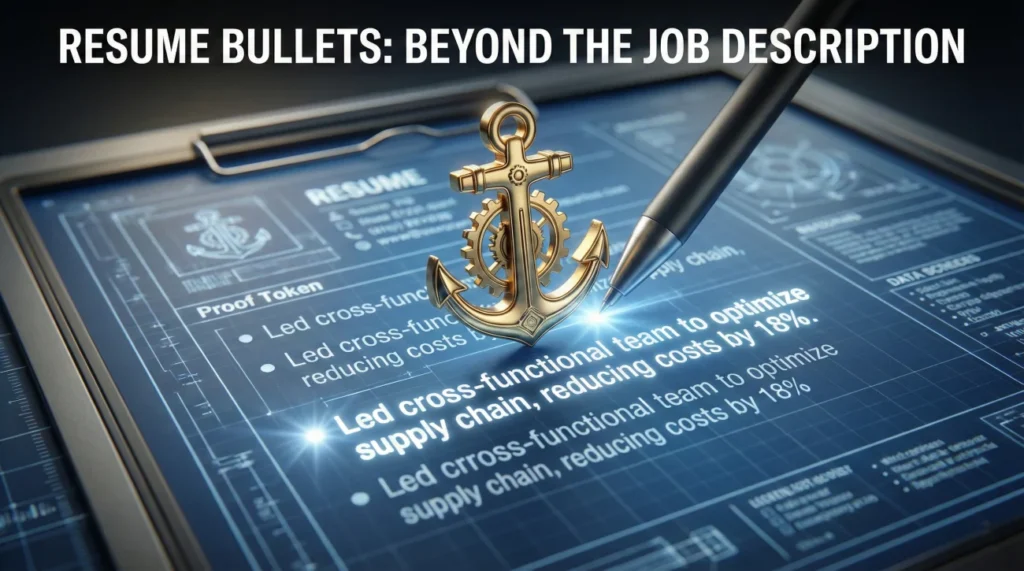
- You will learn “Proof Tokens”: Small details that create credibility even when you do not have perfect metrics.
- Use the swap list to remove vague verbs and replace them with ownership, scope, and outcome signals.
Why Most Resume Bullets Sound Fake Even When They Are True
I have reviewed enough resumes to spot the pattern in the first ten seconds: The candidate did real work, but their bullets read like a job description.
And the frustrating part is this: It is not because they are unqualified. It is because the bullet has no “anchor”. No scope. No constraint. No artifact. No proof signal that says: This happened in a real team, in a real system, with real tradeoffs.
I once worked with someone named Viviana who had been the quiet backbone of a small operations team. Her first draft said: “Improved processes and supported stakeholders.” That line was technically true. It was also completely ignorable. We rewrote it with two proof tokens (a time window and a messy input condition), and suddenly the story sounded like her.
This page is an example bank, but it is not a copy-paste dump. The goal is for you to steal the structure, then swap in your nouns so the bullet sounds like your work.
🗝️ Key Point: A good bullet is not “strong verbs plus confidence”. A good bullet is “ownership plus proof”.
The Proof Token Menu That Makes Bullets Believable
When people ask me: “What if I do not have numbers?”, my answer is: You still have evidence. You just need to name it.
Proof tokens are small details that create credibility without oversharing. You do not need all of them. One or two per bullet is usually enough.
| Proof Token Type | Examples You Can Borrow |
|---|---|
| Scope | Across 3 teams, For 12 locations, Serving 4 product lines |
| Time Window | In a 6-week sprint, During a peak season, Within the first 30 days |
| Constraint | With limited headcount, Under audit deadlines, With messy historical data |
| Artifact | Built a dashboard, Wrote a playbook, Created a QA checklist, Launched a template |
| Stakeholder | Partnered with Finance, Aligned with Legal, Supported frontline managers |
| Tool or System | Salesforce, SQL, Jira, Zendesk, GA4, Workday, Excel models |
| Before and After | Moved from manual to automated, Reduced rework loops, Standardized handoffs |
| Decision Moment | Resolved escalations, Unblocked a launch, Prioritized tradeoffs, Closed risk gaps |
| Quality Signal | Zero high-severity defects, Passed review, Improved SLA consistency |
💡 Pro Tip: If you do have numbers, great. If you do not, use two tokens from the table and your bullet will still read real.
A Simple Rule So You Do Not Overwrite
Most bullets break because the writer tries to cram everything into one line. Proof tokens help you stay concise because they replace filler.
Instead of writing “Responsible for improving reporting processes”, you write “Rebuilt weekly reporting into a single dashboard for sales and finance, reducing manual consolidation and version confusion.”
You did not add length. You replaced vagueness with specific nouns and a before-after signal.
Resume Bullet Point Examples With Built-In Proof
Each group below is organized by intent. Pick the intent that matches what the role needs, then swap the nouns so it fits your world.
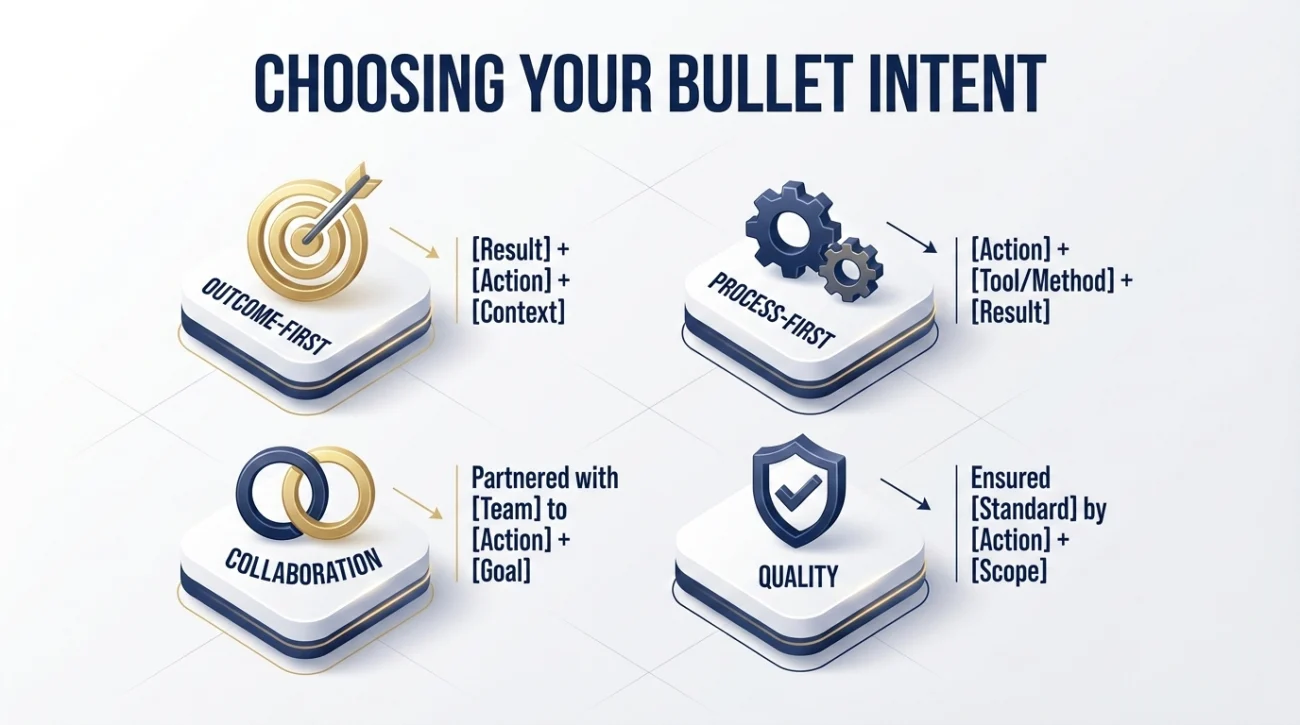
Outcome First Bullets That Do Not Sound Like Bragging
These work best when you want the recruiter to see impact immediately, even if the number is imperfect.
• Reduced repeat support tickets by publishing a troubleshooting guide and updating macros inside the ticketing tool.
• Improved on-time delivery by rebuilding the weekly plan around capacity limits and the actual bottleneck stage.
The proof is not the verb. The proof is the “how” plus the scope marker that makes the story feel lived-in.
Process First Bullets That Still Show Impact
Sometimes your best work is building the system that makes results possible. These bullets highlight the mechanism, then signal why it mattered.
• Built a weekly dashboard to replace fragmented spreadsheets, giving leadership one shared view of priorities.
• Created a handoff checklist between teams to prevent late-cycle surprises and rework loops.
⚠️ Warning: If you use “streamlined” or “optimized”, always name what changed. Otherwise it reads like filler.
Collaboration First Bullets That Prove You Actually Worked Cross-Functionally
Recruiters see “collaborated with cross-functional teams” all day. The difference is naming the decision and the tension you resolved.
• Aligned Product, Support, and Engineering on escalation rules, clarifying ownership during high-severity incidents.
• Worked with Legal to update onboarding language, preventing repeated customer confusion in regulated regions.
Notice how each bullet implies a real meeting people can picture: Disagreement, decision, and a new rule everyone follows.
Quality First Bullets That Show You Prevented Problems
Not every win is “growth”. Sometimes your best win is a risk that did not happen because you were careful.
• Prevented recurring launch issues by implementing a QA checklist and a clear sign-off owner per release.
• Improved SLA consistency by clarifying priority rules and updating response macros for the top ticket categories.
These bullets work well for operations, analytics, customer support, compliance, and any role where reliability is the product.
Ops and Systems Bullets That Show You Built Something Repeatable
If your job involved “keeping the machine running”, show the machine. Name the artifact.
• Consolidated scattered documentation into a single knowledge base, improving findability for frontline teams.
• Reworked the request queue into categories and SLAs, making workload visible and prioritization fair.
Even without metrics, the reader can see what you produced, and that is evidence.
Project Delivery Bullets That Feel Concrete
Project bullets fail when they say “led a project” with no sign of what “led” meant. These show ownership signals.
• Managed dependencies across teams by documenting handoffs and surfacing blockers early in the sprint cycle.
• Delivered a migration plan with clear cutover steps and rollback notes, reducing anxiety during the change window.
If you were not the formal PM, you can still use this structure. Just be honest about the ownership level you had.
People and Coaching Bullets That Do Not Sound Like Corporate Fluff
Leadership bullets often sound fake because they only say “mentored” or “coached”. These name the method.
• Built a feedback loop with clear examples and next steps, helping new hires ramp without guesswork.
• Introduced a lightweight retrospective ritual after launches, turning mistakes into repeatable fixes.
I remember a manager named Leo who insisted his leadership “was not measurable”. But he had templates, routines, and review notes. That is measurable in a recruiter’s mind.
Customer Impact Bullets That Stay Specific
If you are in a customer-facing role, your proof is often in “what changed for the customer”, not only in revenue.
• Reduced escalations by clarifying expectations in kickoff notes and setting a simple communication rhythm.
• Strengthened renewals by tracking recurring pain points and feeding themes back into product prioritization.
These bullets imply a customer journey you can picture. That is what makes them believable.
Speed, Volume, and Throughput Bullets Without Looking Like Spam
Volume bullets can backfire if they sound like you are just busy. Pair volume with a quality or structure token.
• Managed peak-season workload by clarifying priority tiers and reducing context switching across competing tasks.
• Delivered weekly reporting under tight deadlines by building a repeatable checklist and a single source of truth.
💡 Pro Tip: If you mention speed, add one token that signals accuracy, consistency, or a system that scales.
Tools and Automation Bullets That Do Not Oversell Your Skills
You can show technical strength without claiming you are an engineer. The trick is naming what you built and why it mattered.
• Built a simple dashboard to track status and blockers, improving visibility for non-technical stakeholders.
• Cleaned and standardized messy data fields before analysis, improving confidence in leadership updates.
If you are early-career, this is where you can shine. One clean automation often reads stronger than five vague “assisted” lines.
Swap List: Replace Vague Bullets With Credible Ones
This is the part I wish more websites included. Because most candidates do not need “more inspiration”. They need a quick fix for the phrases that instantly sound generic.
| Vague Phrase | Swap That Adds Proof |
|---|---|
| Responsible for reporting | Owned weekly reporting by consolidating inputs into one dashboard and resolving version conflicts |
| Helped with projects | Supported delivery by documenting handoffs, surfacing blockers, and keeping dependencies visible |
| Worked cross-functionally | Aligned stakeholders on one decision (priority, owner, rule) and documented the new workflow |
| Improved processes | Rebuilt the process step that caused rework (intake, QA, approvals) and standardized the handoff |
| Assisted customers | Resolved recurring customer issues by updating templates, docs, and escalation rules |
| Managed tasks | Prioritized requests using clear tiers and a visible queue to reduce churn and missed work |
The Five-Minute Rewrite Routine I Use With Candidates
When a candidate is stuck, I do not ask them to “write better”. I ask them three questions, then we rewrite one bullet at a time.
- What was the messy thing you walked into?
- What did you change that people still use today?
- How did you know it worked, even if you did not track perfect metrics?
A colleague of mine, Jenna, used this routine for her own resume after a layoff. She did not suddenly invent achievements. She simply named the artifacts she had created: A playbook, a dashboard, and a weekly rhythm. Her bullets stopped sounding like “duties”, and she started getting interviews again.
Final: How To Use These Examples Without Copying Yourself Into a Corner
The safest way to use an example bank is this: Keep the structure, replace the nouns, and include one proof token that only someone in your environment would naturally mention.
If you do that, your bullets will not read like a template. They will read like you.
Most importantly, do not aim for “impressive”. Aim for “credible”. Credible is what gets the second read.
That is why I built these resume bullet points examples around built-in proof, not buzzwords.
❓ FAQ
🧩 How many bullets should I include per job?
For most roles, 3 to 6 strong bullets is a practical range. Use more for your most recent and most relevant job, and fewer for older roles.
📌 Do I need metrics in every bullet?
No. Metrics help, but they are not required in every line. Use proof tokens like scope, constraints, artifacts, and before-after signals when numbers are not available.
🧠 Why do “strong action verbs” still feel weak sometimes?
Because verbs do not create credibility by themselves. Credibility usually comes from ownership plus a specific noun: A dashboard, a checklist, a playbook, a rule, a handoff.
🧪 Should I include responsibilities at all?
A small amount of context is fine, especially if the role is unfamiliar. Just avoid bullets that only list duties without showing change, outcome, or evidence.
🛠️ What if my work was “support” and not ownership?
You can still write strong bullets by naming your contribution clearly: What you built, what you documented, what you improved, and what decisions you helped unblock.
🧯 What is the fastest way to fix weak bullets?
Remove vague phrases like “responsible for” and “helped with”, then add one proof token: Scope, time window, constraint, artifact, or stakeholder.
⚠️ Disclaimer: ResumeSolving provides resume, cover letter, job search communication, and career transition guidance for informational purposes only. Hiring practices vary by employer, role, location, industry, and individual circumstances. We do not guarantee interviews, job offers, ATS results, or other outcomes. Verify employer requirements directly and follow applicable laws and workplace policies. For sensitive situations, use only information you are comfortable disclosing and keep all statements accurate.