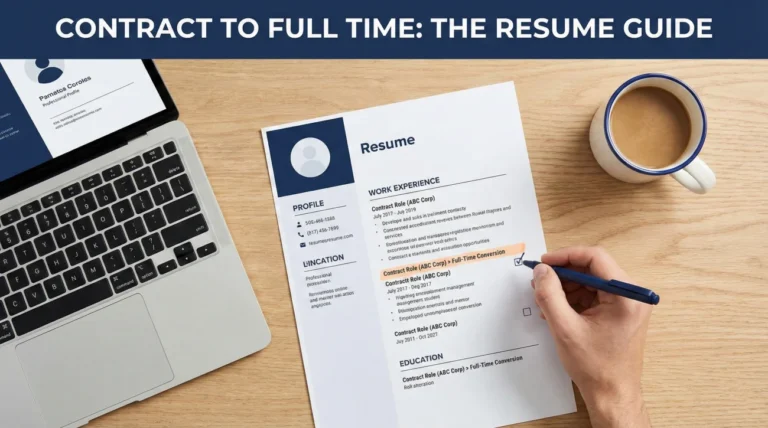
- If your timeline has a blank space, a calm label can close it without turning your resume into a confession.
- Pick the smallest truthful label that ends the story: Career Break, Family Leave, Personal Leave, Sabbatical, Non-compete.
- Use one line of context at most, then pivot back to proof: Skills, projects, training, or a clean return-to-work signal.
The Problem Is Not The Break: It Is The Silence Around It
I have seen this pattern a lot in resume screens: A strong run of roles, solid titles, decent growth, then a date that just stops. No explanation. No bridge. Just a cliff.
Most candidates assume silence is safer. In practice, silence often creates the worst kind of story: A story the reader writes for you.
One candidate, Virginia, took nine months off after a startup burnout. She did not want to “make it a thing,” so she left the timeline blank. Her resume was good, but every recruiter call started in the same place: “So what have you been doing since last year?” By the time she answered, she already sounded defensive.
That is why this guide is about labels. Not essays. Not oversharing. Just a clean, minimal way to show a career break on resume so the reader stops guessing and returns to your qualifications.
Key Point: Your label is not there to justify your life. It is there to prevent doubt from taking the wheel.
What A Career Break Label Actually Does
When hiring teams scan a resume, they are not doing a moral evaluation of time off. They are doing risk math. They want to know whether you are current, available, and stable enough to complete the first six months without drama.
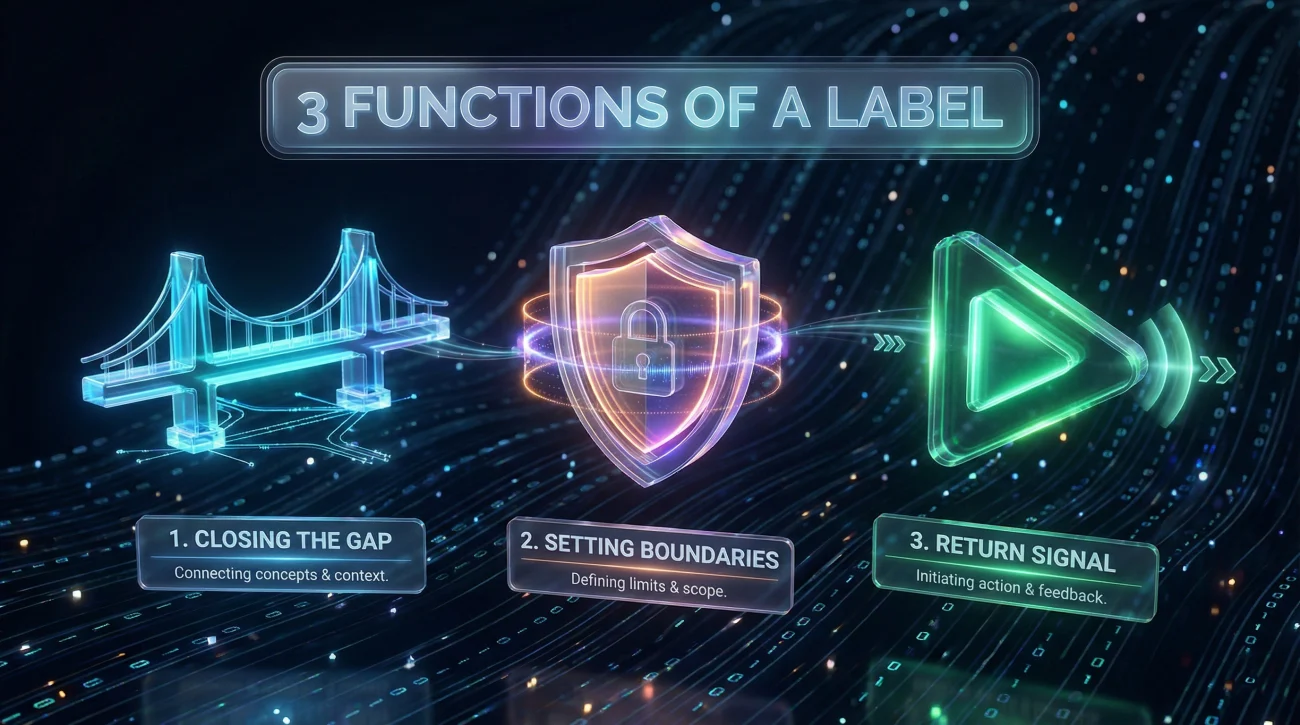
A label helps in three ways:
- It closes the timeline gap so your dates look intentional, not “missing.”
- It sets boundaries so the reader does not feel invited to pry.
- It gives a return-to-work signal so your candidacy feels active, not paused.
So how much detail should you include?
Less than you think. The sweet spot is: A neutral label, dates, and one calm line that confirms you are available now. If you have relevant projects or training, you can add one or two bullets. If you do not, you still do not need to invent “achievements.” The goal is clarity, not performance.
💡 Pro Tip: The more sensitive the reason, the more your label should stay generic. Recruiters do not need your private chapter. They need a stable present tense.
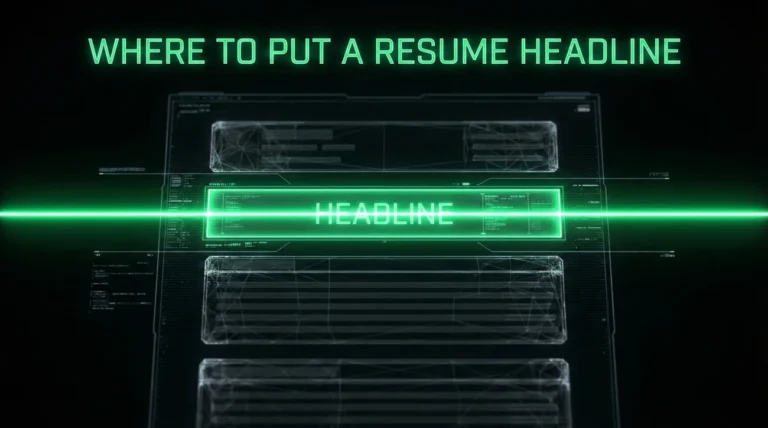
Where To Put It So ATS And Humans Read It The Same
There are two clean placements. The right one depends on how your resume is structured and how strict the role is about continuous timeline.
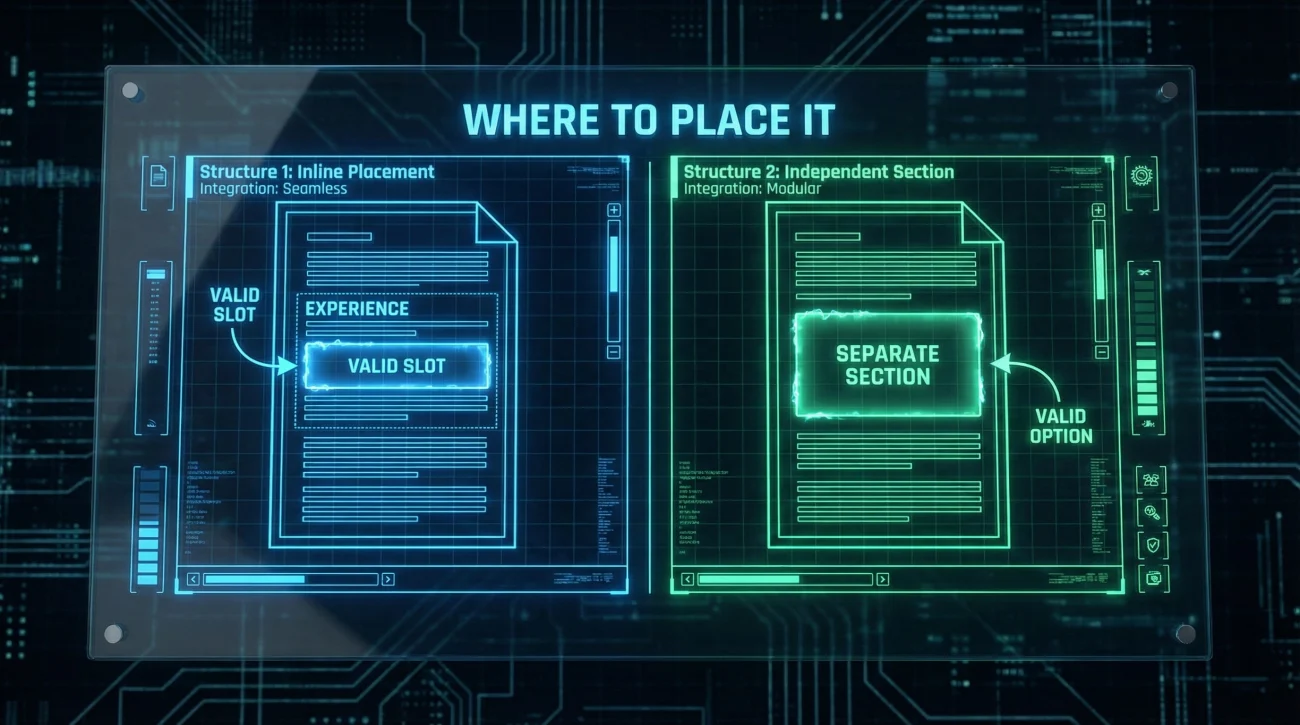
Option 1: Put It In Experience As A Single Entry
This is the most straightforward for ATS because it keeps chronology intact. It also reduces the chance the recruiter misses it while scanning dates.
Use a “title” that is the label, not a fake job title. Do not add a company. If the template forces a company field, you can use a simple placeholder like “N/A” in a builder, but on a normal resume you can omit the company line entirely.
Option 2: Add A Separate Section Right Under Experience
This works when your Experience section is dense and you do not want a break entry to look like another role. A short section titled “Career Break” or “Professional Development” can be easier on the eye.
If you choose this, keep it close to the timeline. Do not bury it at the bottom. The goal is that the reader sees it at the same moment they notice dates.
- ✅ If the break is recent or long: Put it near Experience.
- ✅ If the break included relevant training: Add one proof bullet.
- ✅ If the break was private: Use a generic label, one line, and stop.
Career Break Resume Wording: 8 Examples You Can Copy
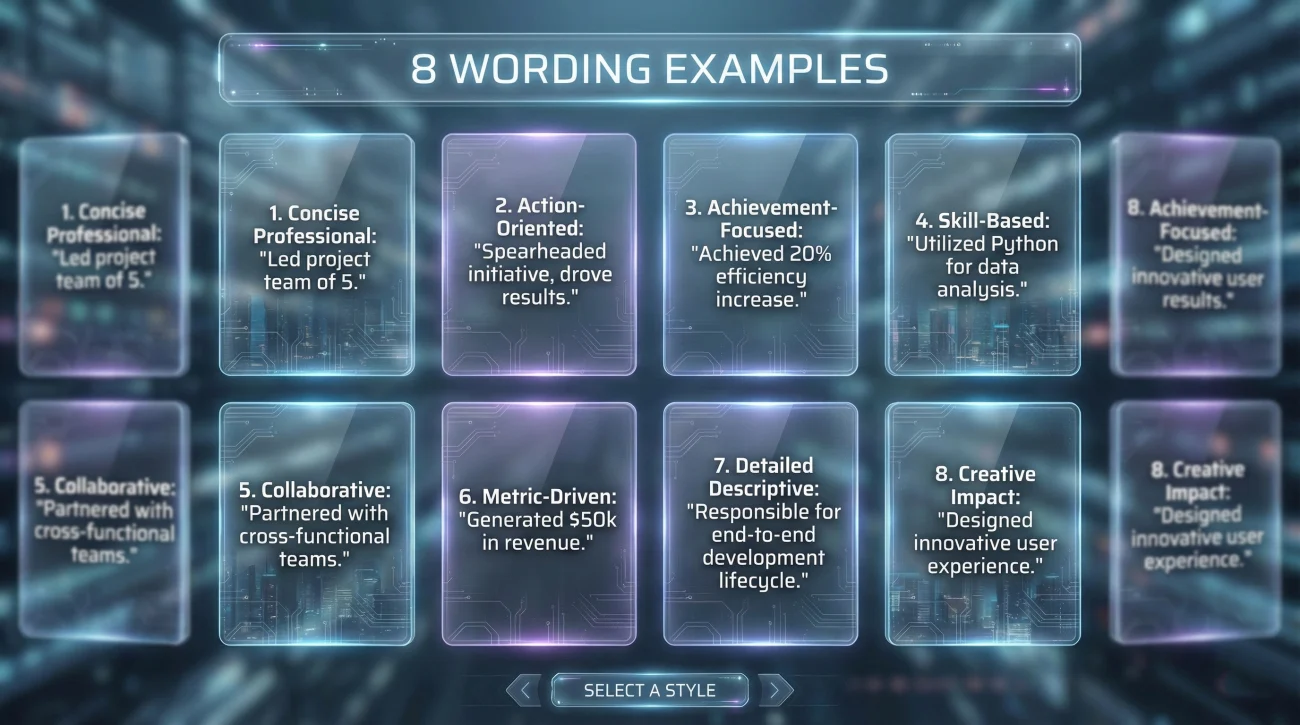
These examples are intentionally small. You can expand if you have relevant work, but you do not have to. The goal is to remove the “blank space anxiety,” not to audition your personal life.
Each example includes a label, dates, and an optional proof line. If a bullet does not apply, delete it. Do not replace it with fluff.
Example 1 (Generic and private):
Planned personal leave. Fully available for full time roles as of Feb 2025.
Example 2 (Family leave, chapter closed):
Family responsibilities concluded. Returning to work and interviewing now.
Example 3 (Planned sabbatical with skills refresh):
Focused on skills refresh and role targeting before returning to full time work.
Example 4 (Non-compete, clean and factual):
Restriction completed. Cleared to rejoin the market and start immediately.
Example 5 (Relocation and re-entry signal):
Relocation completed. Actively interviewing for roles in Chicago.
Example 6 (Full time study, aligned to target):
Completed data analytics coursework and built 3 portfolio projects aligned with analyst roles.
Example 7 (Light freelance, only if relevant):
Delivered two short term content audits and reporting dashboards for small business clients.
Example 8 (Ongoing break, present tense, no ambiguity):
Currently on a planned break. Actively interviewing and available to start within 3 weeks.
The One Sentence That Makes A Break Feel “Over”
If you only take one thing from this article, take this: Add a return-to-work signal. Even a single clause can change the reader’s posture from suspicion to normal scanning.
Try this pattern: [Neutral Label] + [Dates] + [Closure Or Availability]
That is enough for most roles. If someone wants the full story, that is what interviews are for.
Do Not Do This: The Wording That Makes Recruiters Nervous
I am not claiming every recruiter thinks the same way. But I can tell you the phrases that repeatedly trigger follow-up questions, especially in competitive roles.
1) Apology Words That Make You Sound Unstable
A break is not a sin. When your wording sounds like you are asking forgiveness, the reader starts looking for what you are hiding.
| Avoid | Use Instead |
|---|---|
| Unemployed, struggling, needed time to heal | Career Break, Personal Leave, Planned Sabbatical |
| Had to deal with personal issues | Planned personal leave. Returning to work now. |
| Still figuring things out | Role targeting and active interviewing. |
2) Details That Invite The Wrong Conversation
I have sat in debriefs where a hiring manager became uncomfortable because a resume gave them personal information they did not want to touch. Not because they were cruel, but because it created a legal and ethical mess.
One colleague told me about a candidate who wrote three lines about medical recovery. The manager’s reaction was not “good for them,” it was: “If I ask anything, I risk saying the wrong thing.” The candidate did not get rejected for being human. They got rejected because the resume forced a high risk conversation too early.
Note: This is why we keep the label neutral. You can be honest without being specific:
“I want to explain it properly, but I also do not want them to think I am still dealing with it.”
3) Fake Achievements That Read Like Covering
If you have real projects, list them. If you do not, do not force “achievements” just to fill space. Recruiters can smell invented productivity. A simple label plus an availability line beats a suspicious bullet list.
That is the difference between how to explain career break on resume and how to perform it.
Final: Clarity Beats Storytelling On A Resume
A career break can be normal, strategic, or necessary. The resume does not need the whole narrative. It needs a clean label that prevents the reader from inventing a worse one.
If your break is over, use closure language. If it is ongoing, use present tense plus a start-ready signal. Either way, your goal is the same: Close the gap, return the spotlight to your value, and move on.
When you do it right, a career break on resume becomes just another well-managed component of your timeline, not the headline of your application.
❓ FAQ
🎯 Should I write “Career Break” or “Sabbatical”?
Use “Sabbatical” when the break was clearly planned and feels intentional. Use “Career Break” or “Personal Leave” when you want privacy or the reason is mixed. The best label is the smallest true one that ends the story.
🧩 Do I need to list projects during my career break?
No. List projects only if they are real and relevant. A simple label with dates and an availability line is enough in many cases. Forced bullets can look like covering.
🕒 What if my career break is still happening right now?
Then state it in present tense and add a return-to-work signal: “Currently on planned break. Actively interviewing. Available to start within X weeks.” That removes ambiguity without oversharing.
🧠 Is it better to hide months and only show years?
Sometimes. Year-only dates can soften short gaps, but they can also create confusion if your roles were short or if the employer expects precise timelines. If your gap is noticeable anyway, labeling it cleanly is often more effective than trying to blur it.
🛡️ Should I mention medical reasons for a career break on my resume?
Usually no. A neutral label like “Personal Leave” keeps your privacy intact and avoids pulling the reader into sensitive territory. Save details for later only if you choose to share them.
⚠️ Disclaimer: ResumeSolving provides resume, cover letter, job search communication, and career transition guidance for informational purposes only. Hiring practices vary by employer, role, location, industry, and individual circumstances. We do not guarantee interviews, job offers, ATS results, or other outcomes. Verify employer requirements directly and follow applicable laws and workplace policies. For sensitive situations, use only information you are comfortable disclosing and keep all statements accurate.