- If you quit without another offer, they are testing judgment and stability, not your ability to “stay positive.”
- Use a two sentence spine: One neutral reason, one closure signal, one forward fit, then add one credibility cue that proves you will not repeat the same exit pattern.
The Question Behind The Question
I have interviewed candidates who did everything right on paper and still got stuck on one sentence: “I quit.” When there is no next job attached to that decision, the room changes. The interviewer may not say it directly, but they are thinking about judgment, predictability, and whether you will do the same thing again under pressure.
This guide is built for that hard moment. If you need a quit a toxic job without another job interview answer that sounds calm, credible, and closed, the goal is not to win sympathy. The goal is to show you made a controlled decision and you are now choosing your next role with intent.
⚠️ Warning: “Toxic” is a loaded word. You can have a real reason and still lose the room if you tell the story like a courtroom scene. The safest path is: High level reason, short timeline, clean boundary, then forward.
What Interviewers Are Actually Testing When You Quit Without An Offer
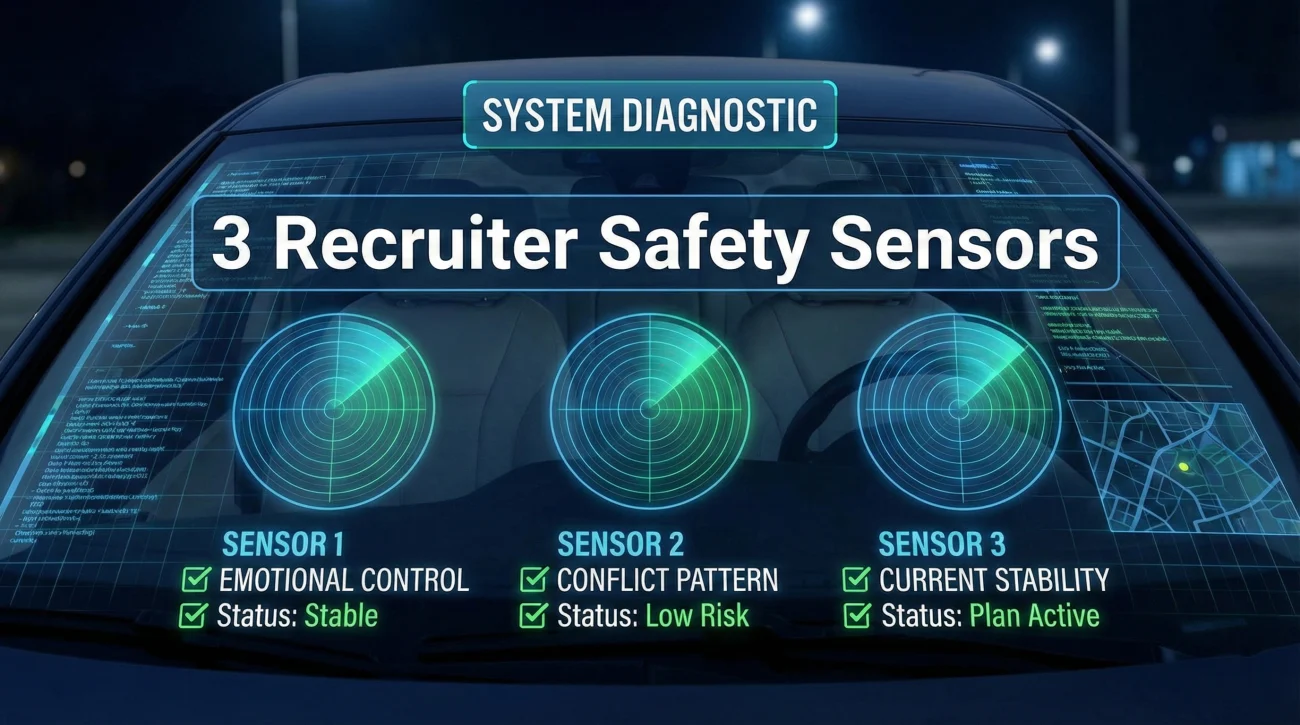
Test 1: Was it a considered decision or an emotional exit?
Most interviewers have seen both types. The emotional exit sounds like a vent session. The considered decision sounds like a boundary. You are not required to describe every incident. You are required to show you tried reasonable steps and then chose a clean exit.
Test 2: Will you recreate the same conflict here?
They are listening for blame language, revenge energy, or a pattern of “everyone was the problem.” Even if your last manager truly was the issue, the way you describe it tells them whether you can handle friction without escalating it.
Test 3: Are you stable right now?
When you leave without another offer, they wonder if you are in crisis. Stability does not mean “nothing happened.” It means you have a plan, a runway, and you are interviewing because you want a specific fit, not because you are desperate.
Key Point: A strong answer does not prove your old company was bad. It proves you are safe to hire.
The Two Sentence Spine That Keeps You Out Of Trouble
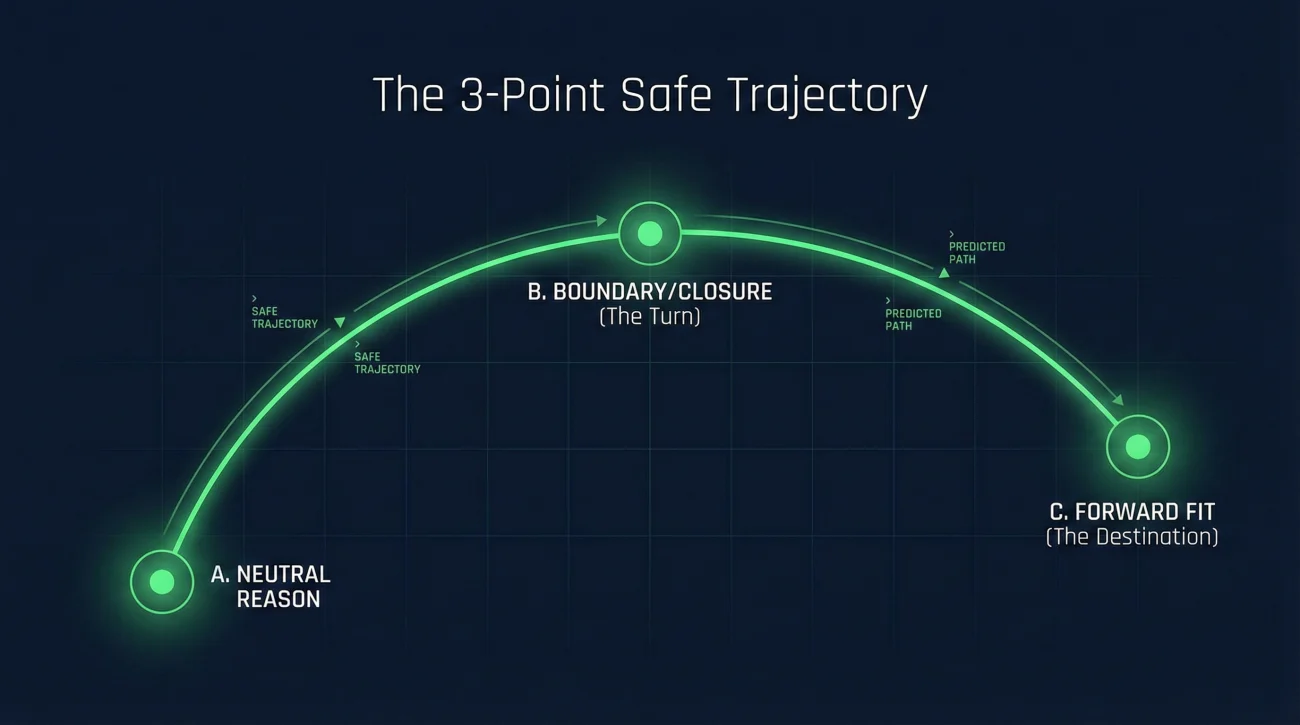
If you freeze when they ask why you quit, it is usually because you are trying to solve too many goals at once: Explain the toxicity, protect your reputation, justify the gap, and still sound excited about the new role. You do not need a long story. You need a spine that carries the weight.
[Neutral Reason] + [Boundary/Closure Signal] + [Forward Fit]
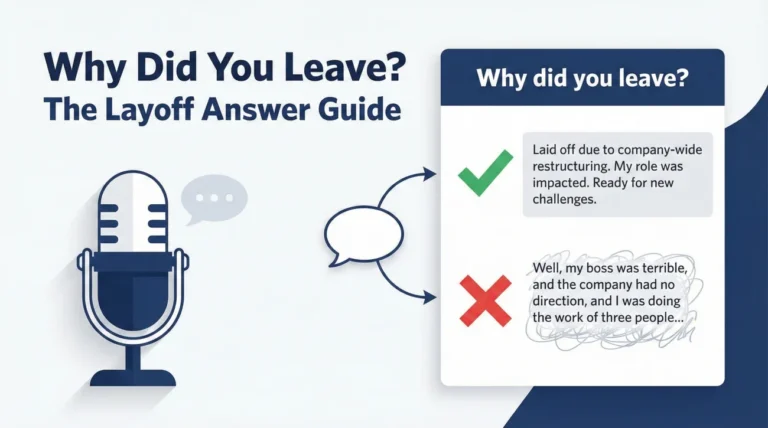
I left because the working environment stopped being sustainable for consistent, high quality work. I tried to address it through normal channels, but the pattern continued, so I made a clean exit and refocused on roles with clearer expectations and healthier team practices.
I’m now looking for a role where I can deliver predictable results, and from what I’ve learned about this team, the way you run work aligns with that.
Notice what is missing: No insults, no diagnosis, no dramatic detail. Notice what is present: A signal that you attempted a reasonable fix, then closed the chapter, then moved forward with intent.
💡 Pro Tip: If you can say the spine in under 18 seconds, you are far less likely to ramble into risky detail.
A Realistic Interview Moment And How To Hold The Line
One of my HR colleagues told me about a candidate named Sheree, a product operations lead. Sheree quit a chaotic team without another offer. Her first attempt at an explanation sounded like a breakup text. She was right about the environment, but she sounded unstable.
We rewrote her answer using a boundary-first structure. Here is the type of exchange that happens in real interviews.
I noticed you left your last role without another job lined up. What happened?
The environment became unsustainable for consistent delivery. I tried the normal routes to reset expectations, but it didn’t change, so I chose a clean exit. I took a short window to reset and focus on finding the right team rather than jumping into the first option.
What makes you confident it won’t happen again?
Two things. First, I’m being selective about team practices and management expectations, which is why I’m asking detailed questions about process and decision making. Second, I’m very clear on how I escalate issues early, so small problems don’t turn into chronic ones.
The reason this works is simple: She never argues about the past. She proves she learned how to prevent a repeat.
Eight Credibility Cues You Can Add To Reduce Judgment And Stability Risk

Your spine answer is the base. Then you add one credibility cue. Not five. Not a long list. Just one that fits your real situation and signals stability.
- Structure: “I built a weekly search plan and stuck to it, instead of panic applying.”
- Runway: “I had a financial runway, so I was not forced into a rushed decision.”
- Performance proof: “My results were consistent and documented, even in that environment.”
- Attempted fix: “I raised expectations early and tried to reset scope before I left.”
- External validation: “I got feedback from mentors to calibrate what was reasonable.”
- Short reset window: “I took a short break, then returned to a structured search.”
- Skill continuity: “I stayed current through a course, certification, or project.”
- Selective targeting: “I chose roles based on management style and operating rhythm, not title alone.”
If you want a clean way to say it, choose one cue and attach it as the last sentence of your answer. This is especially useful if you left without job lined up toxic workplace and you worry the gap will look like chaos.
Six Things Not To Say, And What To Say Instead
Most candidates lose credibility here. Not because they left. Because they describe the exit in a way that makes the interviewer imagine future drama.
| Risky Phrase | Safer Replacement |
|---|---|
| “My boss was toxic and insane.” | “The working environment became unsustainable for consistent delivery.” |
| “HR did nothing, so I quit.” | “I tried the normal channels to reset expectations, but it didn’t improve.” |
| “I couldn’t take it anymore.” | “I hit a point where the role no longer matched healthy operating standards.” |
| “Everyone there is incompetent.” | “There was misalignment on priorities and accountability that blocked execution.” |
| “I just walked out.” | “I made a clean exit and focused on finding the right fit.” |
| “I’m done with that industry forever.” | “I’m being more selective about team practices and role expectations.” |
❌ Note: If you sound like you want the interviewer to validate your anger, you will trigger flight risk, even if your story is true.
Answer Variations By Scenario
Not all toxic situations are the same. Below are variations you can adapt without turning your interview into a complaint session.
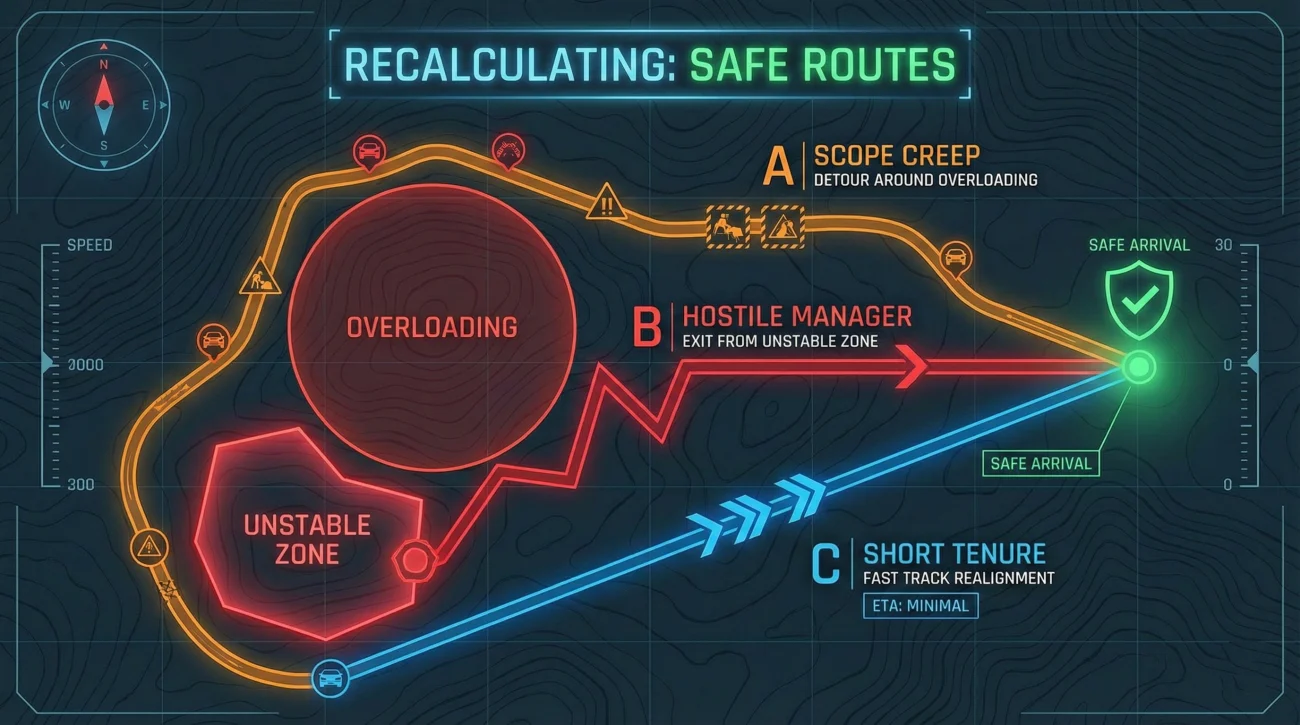
If the problem was constant scope creep and impossible workload
Use this when your work became endless, expectations were unclear, and your performance was judged unfairly because the goalposts moved.
I left because the workload and expectations became unmanageable in a way that made consistent delivery impossible. I tried to reset scope and priorities, but the pattern continued. I chose to exit cleanly and focus on teams that plan work realistically and measure performance against clear goals.
If the problem was a hostile manager relationship
This version avoids blame while still explaining why staying was not a healthy option.
The role shifted into a management dynamic that wasn’t workable for sustained performance. I addressed it directly and tried to align on expectations, but it didn’t improve. I decided to move on and I’m now prioritizing environments with clear feedback loops and stable leadership practices.
If you stayed only a short time and quit without an offer
Short tenure creates a second risk: “Why did you misjudge the role?” Your answer must show fast learning, not impulsiveness.
It became clear early that the role’s operating norms didn’t match what was described. I gave it a fair attempt, but the gap between expectations and reality stayed wide. I made a quick, clean decision rather than letting it become a longer mismatch, and I’m now being more rigorous about fit during the interview process.
How To Prove You Are Not Bringing Drama Into Their Team
Here is the part most advice skips. Saying the “right words” helps, but proof is what closes the loop. You can prove stability with one concrete behavior.
- ✅ Mention a specific operating preference: Weekly priorities, clear escalation path, documented decisions.
- ✅ Ask one calm question that signals maturity: “How do you handle conflicting priorities across stakeholders?”
- ✅ Show you can name your own early warning signs: “If expectations drift, I escalate early and propose options.”
My friend Mateo, a warehouse supervisor, once told me he stopped saying “toxic” altogether. He switched to “unclear accountability and unstable priorities.” His interview callbacks improved because he sounded like someone who could run a floor, not someone who wanted to relive a fight.
Key Point: The most persuasive move is to talk like a builder. Builders describe systems, not villains.
Should You Say It Was Toxic
You can, but you rarely need to. The word “toxic” is a conclusion. Interviews go better when you describe the condition instead of the verdict. That keeps the conversation professional.
If you feel tempted to say it, replace it with one neutral descriptor that matches your reality:
- “Unclear expectations and shifting priorities.”
- “Unstable management practices.”
- “Low trust communication norms.”
- “Chronic misalignment on workload and staffing.”
One candidate I worked with, Lien, had left a team that constantly publicly criticized people. She did not describe the incidents. She said: “The feedback culture was not constructive.” Then she immediately described what she was looking for instead. The interviewer moved on, and she kept control.
Final: Make It Sound Like A Closed Chapter, Not An Ongoing War
The cleanest way to answer is to keep your story boring in the best way. One neutral reason. One closure signal. One forward fit. Then add one credibility cue that shows you are steady now.
When you need a quit a toxic job without another job interview answer, you are not trying to convince them your last company was wrong. You are showing them your decision making is safe, your standards are clear, and your next move is intentional.
❓ FAQ
🎯 Should I admit I quit with no offer if they do not ask?
No. Answer the question they asked. If they only ask “Why did you leave?”, you can explain the reason and keep it short. If they explicitly ask whether you had another role lined up, be truthful, then immediately add a stability cue.
🧩 What if they ask, “Why didn’t you just job search while employed?”
Keep it practical. Say the environment was consuming enough time or focus that a responsible search was not realistic, and you chose a clean exit to protect quality and make a thoughtful next move. Then add one proof of structure in your search.
🛡️ Can I say “toxic” if the interviewer uses that word first?
You can mirror it once, then translate it into neutral language. For example: “Yes, it was unhealthy. Specifically, expectations and accountability were unstable, so I left and focused on healthier operating norms.”
🧠 How long should my answer be?
Aim for 15 to 25 seconds. If they want detail, they will ask. Your job is to stay calm and give them a reason to trust your decision making.
✅ What is the fastest way to sound stable after quitting?
Add one credibility cue: A structured search plan, documented performance results, a short reset window, or a clear description of what you are targeting and why. One cue is enough.
⚠️ Disclaimer: ResumeSolving provides resume, cover letter, job search communication, and career transition guidance for informational purposes only. Hiring practices vary by employer, role, location, industry, and individual circumstances. We do not guarantee interviews, job offers, ATS results, or other outcomes. Verify employer requirements directly and follow applicable laws and workplace policies. For sensitive situations, use only information you are comfortable disclosing and keep all statements accurate.