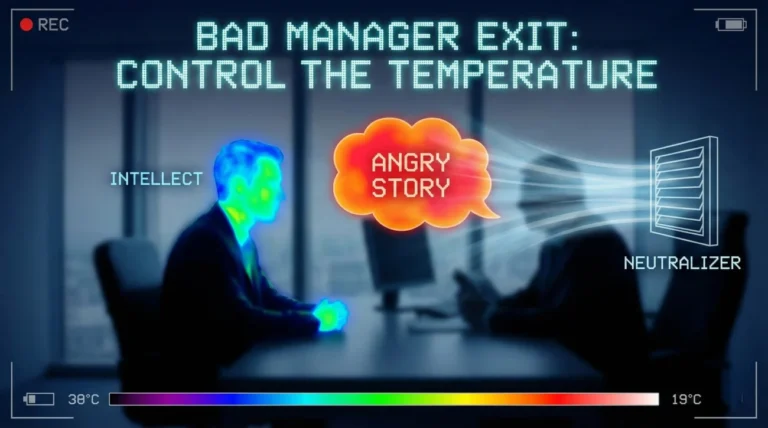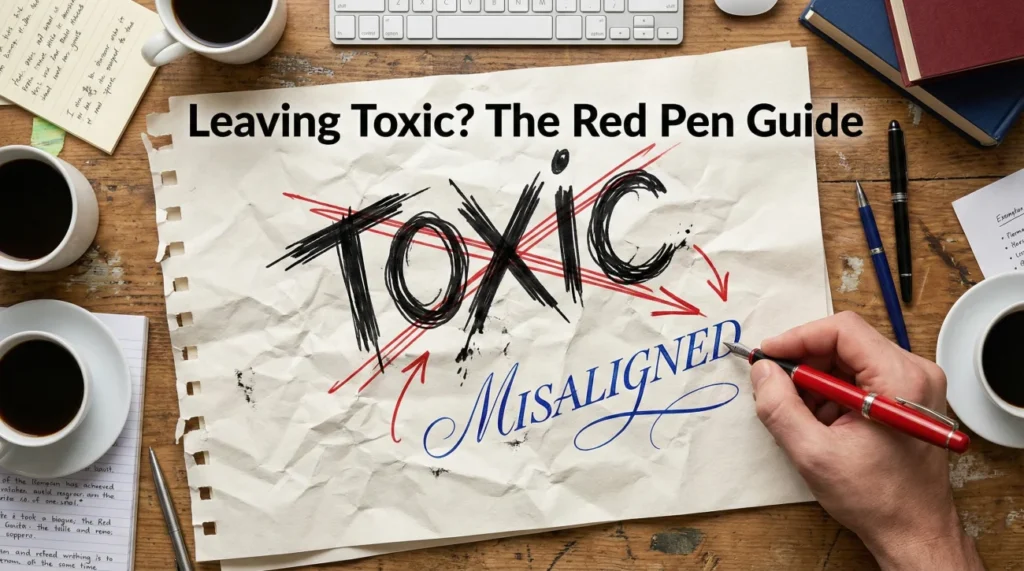
- If you call a place “toxic,” you sound emotional. If you name a neutral pattern, you sound credible.
- Your goal is not to “tell the story.” Your goal is to show judgment: What was misaligned, what you did, and why it is closed.
- Prepare one calm follow-up line for “What happened exactly?” so you do not get pulled into detail.
Why “Toxic” Is True but Still a Weak Interview Answer
I have heard the word “toxic” used for everything from real harassment to “my manager did not like remote work.” In an interview, that word collapses too many realities into one emotional label. Even when you are right, it can make you sound reactive or hard to work with.
The alternative is not pretending it was fine. The alternative is describing the pattern in a neutral way, then showing you handled it like an adult. That is what interviewers actually screen for: Judgment, stability, and how you talk about conflict when you are not getting your way.
In this guide, I’ll show you a framing method I’ve used with candidates who left genuinely rough environments. It helps you explain what happened without sounding bitter, and it reduces the chance you get trapped in a messy follow-up.
💡 Pro Tip: In interviews, “honest” and “detailed” are not the same thing. You can be honest with fewer facts if your frame is clean.
To keep it grounded, I’ll use three composite stories based on real people I have worked with and people my HR peers have coached. Names and details are changed, but the dynamics are not.
What Most Advice Gets Wrong About Leaving a Toxic Workplace
A lot of mainstream advice boils down to: “Don’t be negative. Say you want growth.” That is not wrong, but it is incomplete. When you rely on a generic line, you create a new problem: You sound like you are hiding something.
On forums, you see people swing to the other extreme: They want to warn the interviewer, name the bad behavior, and prove they were justified. That impulse makes sense, but it often backfires. In most interview rooms, the first person who sounds like they are “bringing drama” loses, even if they were the one harmed.
Key Point: Your interviewer is not a jury. Your answer is not a case file. It is a signal of how you think and how you choose environments.
| Common advice | Why it fails in real interviews | What to do instead |
|---|---|---|
| “Stay positive, don’t mention it.” | You sound evasive if your exit was abrupt or your tenure was short. | Name a neutral category, then close the chapter fast. |
| “Just say you want growth.” | Overused. Interviewers have heard it 1,000 times. | Add one concrete “fit” factor tied to the new role. |
| “Be honest and tell them what happened.” | Oversharing makes you look emotional or difficult to manage. | Offer a short summary and keep specifics private. |
| “Call it toxic and move on.” | “Toxic” is subjective. It invites skepticism and follow-ups. | Replace the label with a neutral description of the pattern. |
Now let’s build the frame that covers all the hard cases: When you left quickly, when the manager relationship was the core issue, or when the culture crossed your personal boundaries.
The 4-Part Frame That Keeps You Honest Without Sounding Negative
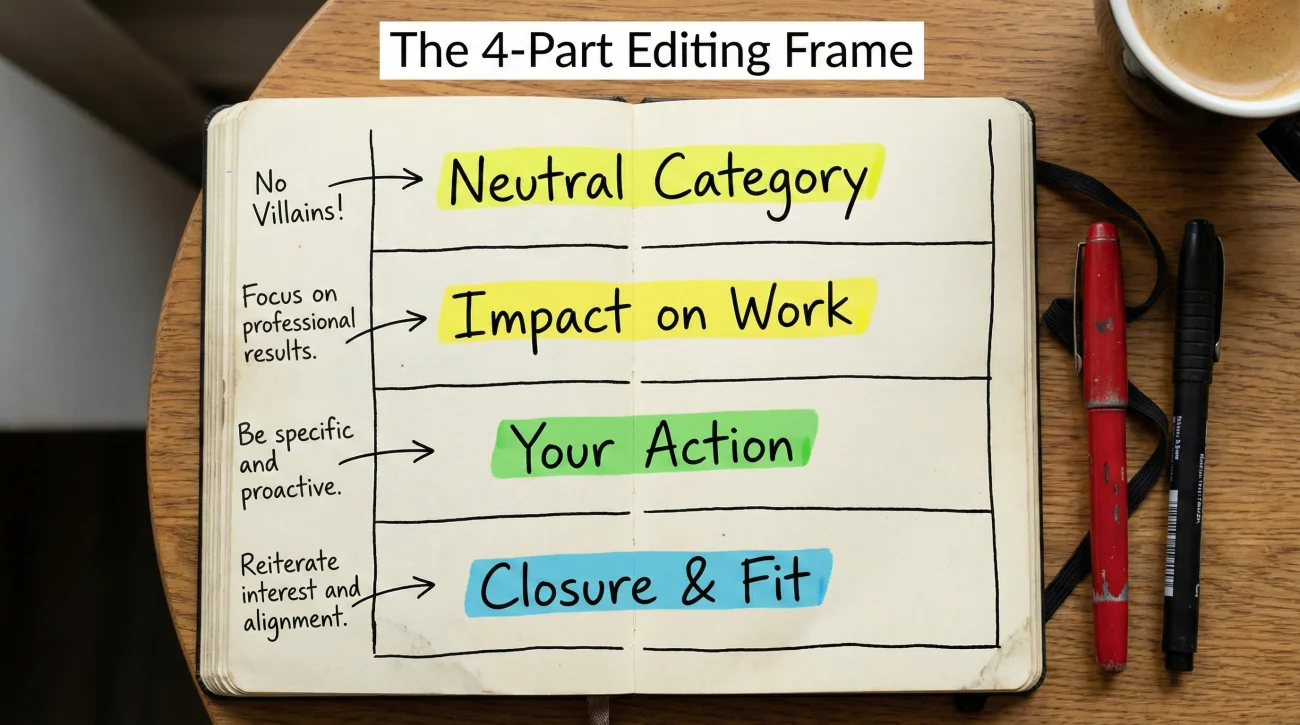
This is the core structure I coach people to memorize. It is short enough to deliver calmly, but it still carries credibility.
[Neutral Category] + [Impact on Work] + [What You Did] + [Closure and Fit]
Part 1: Neutral Category (Replace the Label, Keep the Truth)
Instead of “toxic,” pick one neutral category that a stranger can understand. Think “pattern,” not “villain.” Here are categories that usually land well:
- Misaligned expectations about role scope or priorities.
- Unstable leadership and shifting direction.
- Limited support structure for doing quality work.
- Communication breakdown across teams.
- Values mismatch around boundaries or ethics.
You are not excusing anything. You are simply choosing language that does not sound like a personal rant.
Part 2: Impact on Work (Talk About Output, Not Feelings)
This is where most people accidentally become negative. They describe how it felt. Interviewers care more about how it affected results.
Examples of “impact” that stay professional:
- “It made it difficult to plan and deliver consistent outcomes.”
- “Decision-making changed week to week, which created rework.”
- “The role had limited access to stakeholders needed to succeed.”
Part 3: What You Did (Proves You Are Not Reactive)
One sentence is enough. Your goal is to show you tried to handle it before leaving.
⚠️ Warning: Do not say “I tried everything.” Say one concrete action: Clarified expectations, asked for priorities, proposed a process, escalated appropriately, or looked for internal transfer.
Part 4: Closure and Fit (The Future-Facing Bridge)
End with what you want going forward and why this role matches it. This is where you can safely talk about growth, but it is anchored in context, not fluff.
Done correctly, your answer sounds like good judgment, not gossip.
Three Real-World Examples (And Why They Worked)
Case 1: Jill Left Because the Role Was Chaos, Not Because She “Couldn’t Handle It”
Jill was a mid-level project lead. She joined a company that was growing fast. Within two months, the priorities changed so often that her team kept restarting the same work. Her first instinct was to call it “toxic.” Her second instinct was to vent. We did neither.
Here is what she said instead, using the frame:
I left because the role had unstable priorities and unclear ownership across teams, which made it hard to deliver consistent outcomes.
I tried to reset expectations by clarifying success metrics and proposing a weekly decision cadence, but the structure did not stabilize.
I’m looking for a team with clear prioritization and accountable stakeholders, and this role stood out because it owns delivery end-to-end.
This worked because it described a pattern, described impact on work, showed a mature attempt to fix it, and then closed the chapter.
Case 2: Jerry Had a Bad Manager, But He Refused to Sound Like a Victim
Jerry’s manager was unpredictable and frequently undermined him in meetings. That is real. But “My manager was awful” is a trap line. It invites the interviewer to imagine you as the common denominator.
We changed the language from blame to operating conditions:
The role required tighter alignment on communication and decision-making than we were able to build with the leadership structure at the time.
I asked for clearer feedback loops and documented decisions to reduce rework, but it remained inconsistent.
I’m at my best in environments where expectations and escalation paths are clear, and I’m intentionally targeting teams with that operating rhythm.
Notice what is missing: No insults, no diagnosis, no dramatic adjectives. It still tells the truth.
Case 3: Elise Left Because of Values and Boundaries (The Hardest One)
Elise worked in a sales-adjacent role where pressure tactics were normalized. She did not want to accuse anyone of wrongdoing in an interview. She also did not want to pretend it was a “fit issue” like she just disliked the vibe.
We used a values mismatch line that stayed calm:
I realized the team’s approach to customer commitments did not match my standards for accuracy and long-term trust.
I raised concerns and suggested a tighter approval process, but the approach did not change.
I’m looking for a company that prioritizes sustainable customer relationships, which is why I’m interested in this role and how you measure retention.
This is how you talk about something serious without turning the interview into a courtroom.
Eight Safe Phrases You Can Use (And Why They Don’t Sound Negative)

If you want the simplest shortcut: Choose one phrase that names the pattern, then add one phrase that bridges to the future. That is enough.
- “The role had misaligned expectations about scope and priorities.”
- “Decision-making changed frequently, which created rework.”
- “The environment did not have the support structure needed for quality execution.”
- “Communication and ownership across teams were inconsistent.”
- “I was looking for clearer feedback loops and more stable priorities.”
- “I tried to address it through alignment and process, but it did not stabilize.”
- “I’m intentionally targeting teams with clear ownership and decision cadence.”
- “This role appeals to me because success metrics and stakeholders are clearly defined.”
💡 Pro Tip: If you want to talk about toxic workplace professionally, replace emotional adjectives with operational nouns: “priorities,” “ownership,” “feedback loops,” “support structure,” “decision cadence.”
Eight Phrases to Avoid Because They Trigger Doubt
These phrases either sound like blame, sound like drama, or invite a follow-up you cannot safely answer in detail.
| Avoid | Why it backfires | Swap with |
|---|---|---|
| “It was toxic.” | Subjective label, invites skepticism. | “The priorities and ownership were unstable.” |
| “My boss was a nightmare.” | Sounds personal and emotional. | “The leadership structure lacked consistent feedback loops.” |
| “Everyone was incompetent.” | Signals arrogance. | “The operating process did not support consistent execution.” |
| “I couldn’t take it anymore.” | Signals low resilience. | “I made a deliberate decision to move toward a more stable environment.” |
| “They were abusive.” | Serious claim that invites details and proof. | “The environment crossed my professional boundaries.” |
| “HR did nothing.” | Invites gossip and legal territory. | “I followed the right channels, but the structure did not change.” |
| “I hate politics.” | Every workplace has politics. | “I work best with clear decision-making and accountability.” |
| “It was trauma.” | Overly personal for most interviews. | “It wasn’t the right environment for sustainable performance.” |
If you are trying to explain toxic workplace interview context without sounding negative, the safest move is to keep the language structural and work-focused.
The Follow-Up Question You Must Prepare For
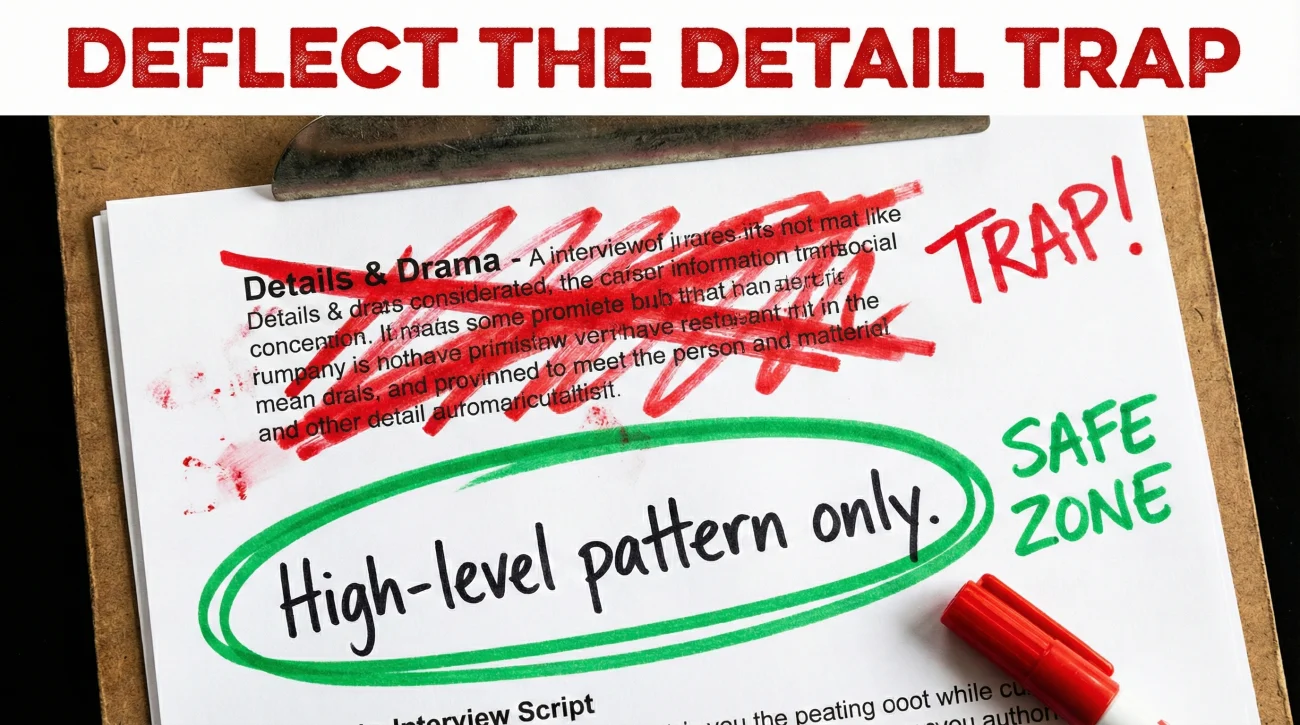
Even if your first answer is clean, many interviewers will ask a follow-up like: “What happened exactly?” Sometimes they are curious. Sometimes they are testing whether you spiral.
Your job is to respond without getting pulled into details. Here are three follow-up lines that protect you.
Option A:
I can share the high-level pattern, but I prefer to keep specifics private and focus on how I work and what I’m looking for next.
Option B:
It wasn’t a single incident. It was an ongoing mismatch in how priorities and feedback were handled, and I made a deliberate decision to move on.
Option C:
I learned what I need to do my best work. I’m happy to talk about what I’m looking for in a team and how I contribute in that environment.
“So what happened exactly?”
“I can share the high-level pattern, but I’d prefer to keep specifics private and focus on how I work and what I’m looking for next.”
⚠️ Warning: If you start listing incidents, you cannot stop gracefully. Your answer gets longer, your emotion rises, and the interviewer’s mental model shifts from “good judgment” to “possible drama.”
Three Polished Answer Templates (Pick One Based on Your Situation)
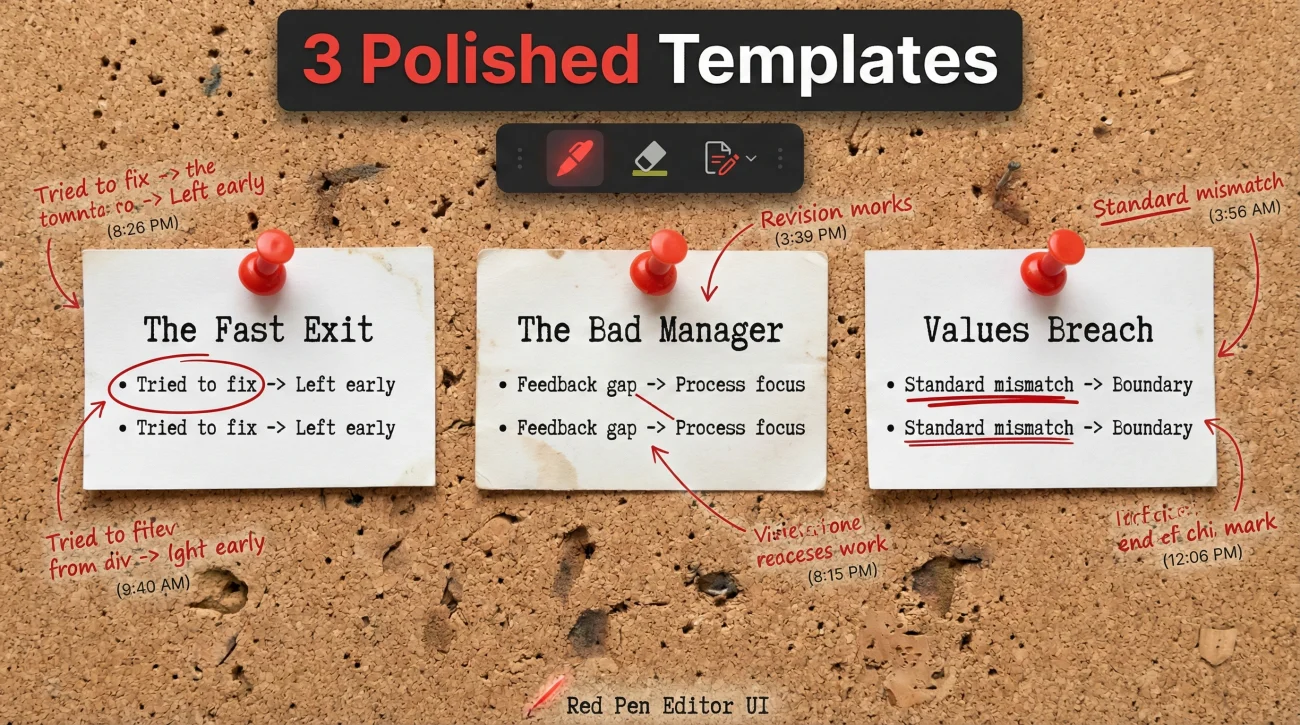
Template 1: You Left Quickly (Short Tenure, High Suspicion)
This is the hardest version because interviewers worry you are impulsive. Your goal is to show you tested solutions before leaving, even in a short window.
I left early because the role’s expectations and priorities were shifting in ways that made success metrics unclear.
I tried to align on scope and propose a simple cadence for decisions, but it remained unstable.
I’m looking for a role with clearer ownership and defined outcomes, and that’s what attracted me to this position.
Template 2: The Manager Relationship Was the Core Issue
Do not diagnose the manager. Do not label them. Talk about process: Feedback, escalation paths, decision ownership.
The role required tighter alignment on feedback and decision-making than the team was able to establish at the time.
I asked for clearer feedback loops and documented decisions to reduce rework, but it stayed inconsistent.
I’m targeting teams where accountability and communication are clear, because that is where I consistently deliver strong results.
Template 3: Values, Ethics, or Boundaries Were Crossed
This is where people overshare. Keep it calm. Keep it short. Focus on what standard you hold, not what they did.
I realized the team’s approach to commitments and boundaries didn’t match my standards for sustainable performance and long-term trust.
I raised concerns and suggested a tighter process, but the approach didn’t change.
I’m looking for a company where expectations and boundaries are clear, which is why I’m interested in how your team measures quality and retention.
💡 Pro Tip: If your goal is an interview answer toxic environment that does not sound negative, do not fight for validation. You are showing decision-making, not seeking sympathy.
How to Quietly Screen the New Company So You Don’t Repeat the Pattern
One reason candidates get stuck is they focus only on escaping. Then they accidentally join the same type of environment again. After you give your answer, you can ask one question that signals maturity and helps you screen.
- 🧭 “How are priorities set when multiple teams want different outcomes?”
- 🧩 “What does success look like in the first 60 to 90 days, and who owns those metrics?”
- 🧱 “When there’s a disagreement, what’s the escalation path and how are decisions documented?”
- 🔁 “How do you handle feedback and course correction when a project is at risk?”
These are not “toxic workplace” questions. They are operating-rhythm questions. Good teams answer them easily. Messy teams get vague.
Final: Say What Happened, Show Judgment, Then Close the Chapter
The fastest way to sound negative is to fight for the word “toxic.” The fastest way to sound credible is to name a neutral pattern, show how it affected work, and explain the decision like a professional.
If you keep one thing from this: Your answer should make the exit feel closed and thoughtful, not ongoing and emotional. That is what protects you when the interviewer probes.
When you practice your wording, practice the calm stop line too. It is the difference between a clean explanation and a spiral.
In practice, the same credibility-first approach shows up across how to explain toxic workplace in interview without sounding negative situations, where the goal stays simple: Sound stable, stay factual, and keep the chapter closed.
❓ FAQ
🎯 Should I ever use the word “toxic” in an interview?
Usually no. The word is emotionally loaded and subjective. If you need to indicate seriousness, name the pattern in neutral terms and keep specifics private.
🧩 What if the interviewer keeps pushing for details?
Repeat a calm boundary line and pivot back to fit. You can say you’re happy to share the high-level pattern, but you prefer to keep specifics confidential and focus on how you work.
🛡️ Will this answer hurt me if they do reference checks?
It is safer than a dramatic story because it is consistent and non-accusatory. Keep your story aligned with what a former employer might confirm: Dates, scope, and the fact you moved on.
🧠 How do I explain it without sounding like I’m “too sensitive”?
Focus on execution conditions, not feelings. Talk about priorities, ownership, feedback loops, and decision-making. Those are professional concerns, not personal fragility.
🚦What if I left without another offer?
Keep it simple. Say you made a deliberate decision to move toward a more stable environment and you used the time to search intentionally. Do not over-explain the exit.
⚠️ Disclaimer: ResumeSolving provides resume, cover letter, job search communication, and career transition guidance for informational purposes only. Hiring practices vary by employer, role, location, industry, and individual circumstances. We do not guarantee interviews, job offers, ATS results, or other outcomes. Verify employer requirements directly and follow applicable laws and workplace policies. For sensitive situations, use only information you are comfortable disclosing and keep all statements accurate.