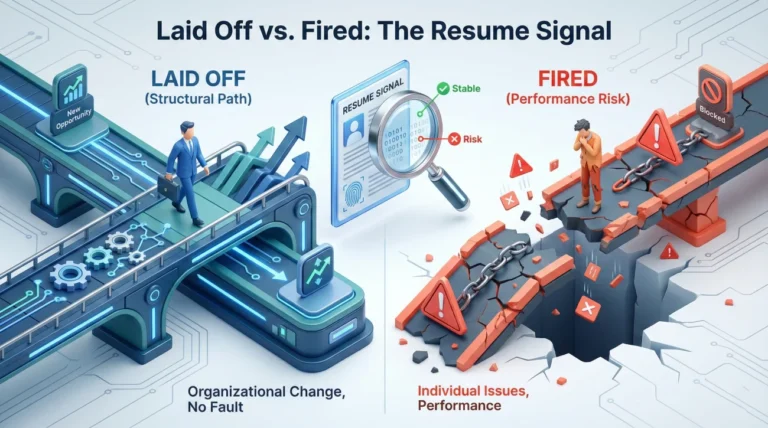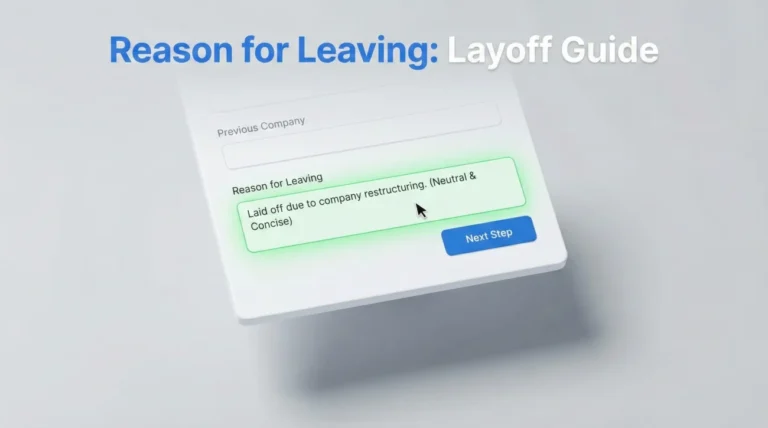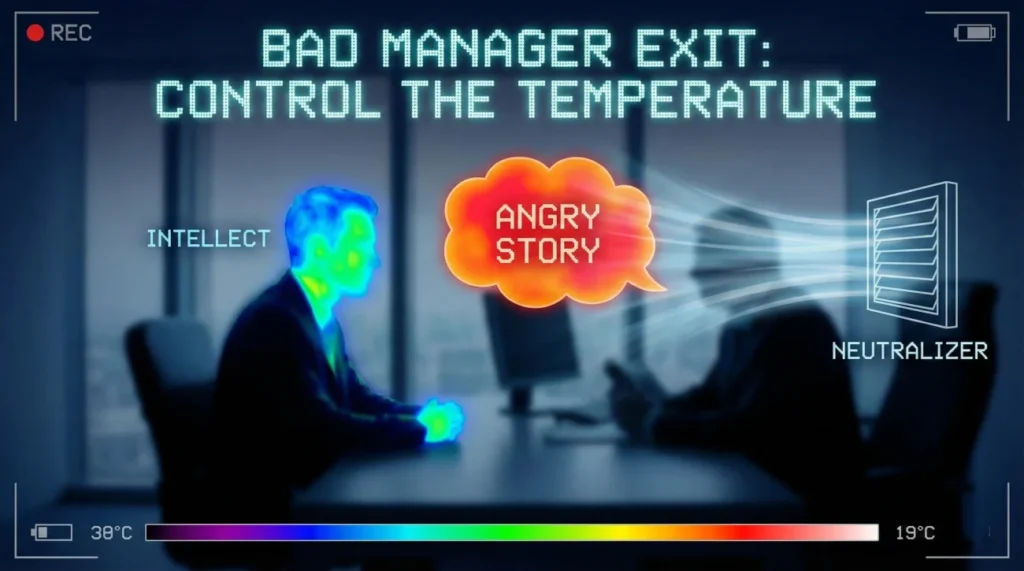
- If you left because of a difficult manager, your goal is not to “prove you were right.” Your goal is to sound stable, coachable, and selective.
- Use a neutral truth framework: A factual signal, one impact on the work, and a clean closure that explains why leaving was the responsible choice.
- Bring scripts and pivots. Most candidates lose this question in the follow ups, not the first sentence.
Why This Question Feels Like A Trap
Most people do not quit a job because they “love change.” They quit because something became unsustainable. And yes, sometimes that something is a manager.
But interviews have an unspoken rule: The moment you sound like you are still fighting the last war, the interviewer starts wondering what war you will start here. That is why a left because of a bad manager interview answer has to do two jobs at once. It has to be honest enough to feel real, and neutral enough to feel safe.
I have watched strong candidates lose offers after giving a technically true story with the wrong emotional temperature. Not because the interviewer thought the manager was perfect. Because the candidate sounded unpredictable.
So we are going to treat this like crisis management. You are not writing a confession. You are controlling risk. You are choosing language that closes the chapter instead of reopening the argument.
What Interviewers Are Actually Testing When You Mention A Bad Manager
When someone asks why you left, they are rarely scoring your former boss. They are scoring you. Even “nice” interviewers do a quick mental check for these signals:
- Conflict style: Do you escalate, gossip, or stay focused on the work?
- Self awareness: Can you describe misalignment without turning it into a character attack?
- Accountability: Did you try to solve what you could solve, or do you frame yourself as a passenger?
- Judgment: Do you leave responsibly, or do you burn bridges impulsively?
There is also a second layer that people miss. If you say “my manager was terrible,” the interviewer immediately wonders: Why did the company keep that manager? Why did you stay as long as you did? Why did it become a crisis only now?
⚠️ Warning: If your answer sounds emotional, the interviewer will keep asking questions until they find the “real reason.” That is how candidates talk themselves into a corner.
The Neutral Truth Framework That Keeps You Out Of Trouble
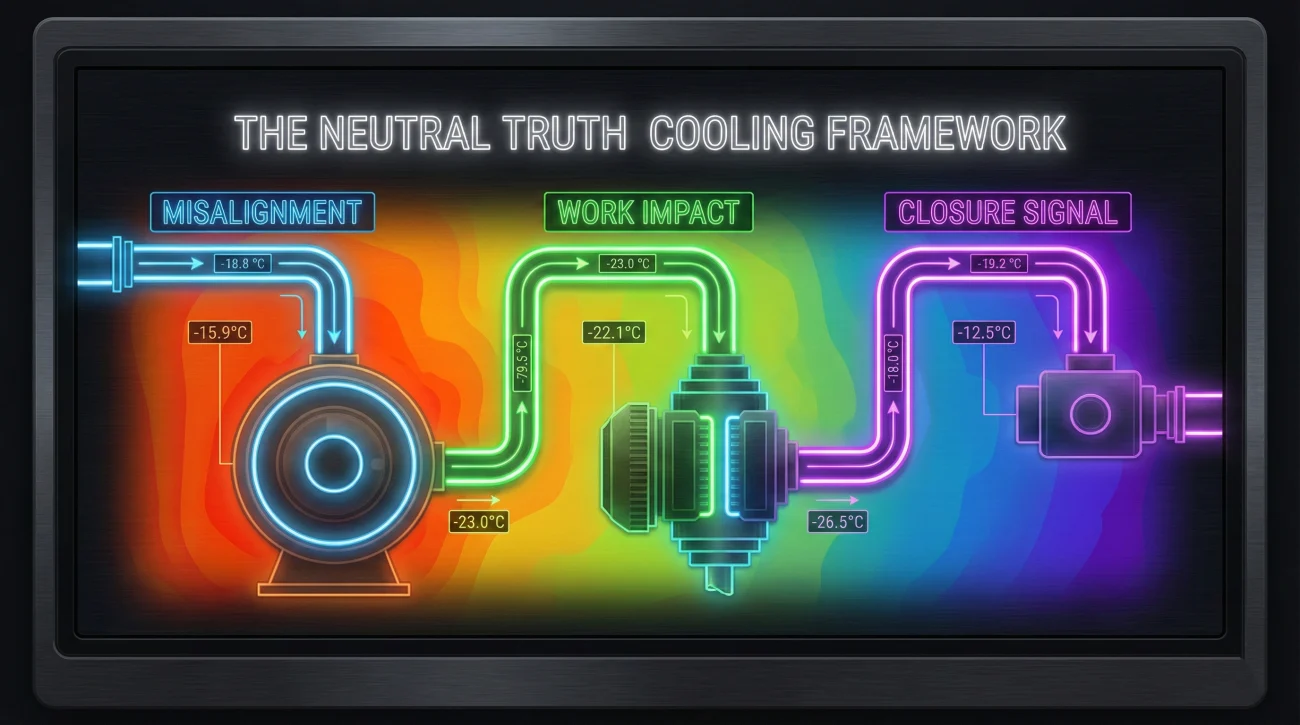
This is the structure I teach when someone wants to be truthful without sounding bitter. It works because it is concrete, short, and hard to misinterpret.
[Neutral misalignment] + [Work impact] + [Closure signal]
Notice what is missing: Labels like toxic, narcissist, bully, incompetent, or abusive. Even if those words feel accurate, they drag the interviewer into a courtroom vibe where you look like the witness who cannot stop testifying.
Key Point: Your answer should describe the environment, not diagnose the person.
Here is how each part should sound:
- Neutral misalignment: A difference in working style, priorities, or decision making.
- Work impact: A real impact on delivery, quality, or role scope.
- Closure signal: A responsible decision to move on, plus what you are seeking now.
When you do it right, the interviewer hears: “This person is calm, realistic, and knows what they need to do good work.”
Eight Neutral Phrases That Replace “Bad Manager” Without Lying

These are not corporate fluff. They are practical swaps that keep your story true while lowering the temperature. Use the one that matches your situation.
“There was a mismatch in management style and how work was prioritized.”
“The role shifted toward urgent tasks, with less clarity on longer term goals.”
“I work best with direct feedback and clear decision ownership, and that was inconsistent.”
“The expectations changed frequently, which made it hard to deliver stable outcomes.”
“I was looking for a more structured coaching environment as I grew in the role.”
“The communication cadence did not match the pace the team needed.”
“I needed a setting where quality and timelines were balanced more consistently.”
“I realized I perform best where priorities are documented and tradeoffs are explicit.”
Pick one phrase and stick with it. The biggest mistake I see is candidates stacking five different complaints. That makes the interviewer think the problem is your temperament, not the environment.
What You Meant vs What They Heard
This translation table is the part most articles skip. But it is where the risk lives.
| What You Say | What They Might Hear | Safer Version |
|---|---|---|
| “My boss was toxic.” | You carry drama, and you might call our manager toxic too. | “The management style was not a fit for how I do my best work.” |
| “They never listened to me.” | You struggled with influence and collaboration. | “Decision ownership and escalation paths were unclear, which slowed delivery.” |
| “I was bullied.” | Serious claim, unclear proof, potential legal risk. | “The feedback style became unproductive, and I needed a healthier coaching environment.” |
| “My manager was incompetent.” | You blame people instead of building solutions. | “Priorities and standards changed often, making outcomes inconsistent.” |
| “It was a mess.” | You are vague, and your story may be exaggerated. | “The team operated in a high churn mode, with frequent rework and shifting scope.” |
If your current wording could fit inside a rant text message, it probably does not belong in an interview answer.
Six Complete Interview Scripts You Can Use
Each script is built to survive follow up questions. That is the real test.

Script 1: Management Style Mismatch (The Most Universal Option)
Use this when the job was not a disaster, but the day to day management approach made you less effective.
“I left because I realized the management style was not the best fit for how I do my strongest work. I do well with clear priorities and direct feedback, and in that role the expectations shifted often. I delivered what I could, but I wanted to move into an environment where goals and decision ownership are more consistent.”
Pivot line if they ask what you want next: “That is why I am interested in this team, because the role description and your process sound more structured.”
Script 2: Unclear Priorities (You Sound Like A Builder, Not A Complainer)
Use this when the manager created churn, rework, or constant whiplash.
“The main issue was priority stability. Work would be redirected late in the cycle, and it created rework that made it hard to deliver reliable outcomes. I tried to improve it by documenting tradeoffs and confirming scope early, but the pattern continued. I decided it was the right time to find a team where planning discipline is stronger.”
This script quietly shows you attempted a solution. That protects you from the “Did you try to fix it?” trap.
Script 3: Coaching And Feedback Were Missing (Great For Early Career Or New Role)
Use this if you were in a growth phase and the manager was hands off or inconsistent in support.
“I left because I was looking for a more consistent coaching environment as I grew into the role. I asked for clearer feedback and success metrics, and sometimes I would get them, but it was not reliable. I want to be in a place where expectations are defined and feedback is regular, because that is where I improve fastest.”
Note the tone. You are not accusing anyone. You are describing what you need to perform.
Script 4: Values And Standards Misalignment (Careful, But Powerful)
Use this only if you can describe it in neutral, work based terms. Do not turn it into a moral speech.
“I left because there was a misalignment around standards and how decisions were documented. Over time I became uncomfortable with how loosely certain commitments were handled, and it affected how confidently I could represent the work. I prefer environments where expectations, approvals, and accountability are clearer, so I decided to move on.”
💡 Pro Tip: If you cannot explain this without sounding heated, do not use it. Pick the planning or feedback version instead.
Script 5: Role Scope Changed Into Something You Did Not Sign Up For
Use this when the manager changed your job into something else, and staying would have been a career detour.
“I left because the role shifted significantly. What started as a position focused on X evolved into mostly Y, and the change was ongoing. I did my best to support the new needs, but I want my next role to align with the strengths and direction I am building, so I made a thoughtful move.”
Interviewers usually accept this because it is common and not personal.
Script 6: You Left A Short Tenure Because It Was Not Sustainable
Short stints are where candidates panic and overshare. Keep this simple and mature.
“It became clear early that the management approach and expectations were not sustainable for delivering good work. I tried to adapt and clarify priorities, but the misalignment remained. Rather than drag it out and underdeliver, I made a clean decision to step away and focus on finding a better fit.”
This script signals judgment and protects you from sounding impulsive.
How To Handle Follow Up Questions Without Getting Pulled Into Gossip
Most people prepare the first answer and forget the follow ups. Here are the most common follow ups I hear, plus safe responses that do not throw anyone under the bus.
“Did you talk to your manager about it?”
“Yes. I raised it in a professional way, focused on priorities and feedback. Some things improved briefly, but the overall pattern stayed the same, so I chose to move on thoughtfully.”
“What exactly was wrong with your manager?”
“I try not to reduce it to a personal critique. For me, it was about clarity and consistency in expectations. I am looking for a team where those are stronger.”
“Would your manager say the same thing about you?”
“They would likely say I care about quality, I ask clarifying questions, and I push for alignment before execution. That worked well in some contexts and less well in others, which is why fit matters.”
“Why did you stay as long as you did?”
“I wanted to make sure I was not reacting emotionally. I tried to adapt, communicate, and improve what I could. After enough time, it was clear the environment was not changing in the way needed.”
“What would you do differently next time?”
“I would ask more questions earlier about decision making, feedback cadence, and how priorities are set. That is part of what I am doing now in this process.”
Notice the pattern: you acknowledge, you stay calm, and you return to what you are selecting for. That is the safest frame.
Six Pivot Lines That Move The Conversation Back To Your Value

These are simple, but they work because they change the interviewer’s mental job from “risk assessment” to “fit assessment.”
“What I learned is the environment I do best in, and that is why this role stands out.”
“The important part is what I am moving toward: Clear priorities, measurable goals, and a team that values quality.”
“I am proud of what I delivered there, and I am looking to build on that in a more stable operating rhythm.”
“That experience made me more intentional about communication and alignment, which I apply in how I run projects.”
“I am happiest when expectations are clear and feedback is direct, and that is what I am targeting now.”
“If it helps, I can share a quick example of how I handle misalignment early so projects do not drift.”
If you memorize anything from this article, memorize pivots. They are how you end the topic without looking evasive.
Three Real Situations I Have Seen, And What Worked
I am going to keep these stories anonymous, but specific, because that is how you learn what actually lands.
Beth: The Candidate Who Sounded “Right” But Lost Trust
Beth was a senior analyst with sharp skills and strong references from peers. In her first interview, she said her manager was “toxic” and “threatening,” then spent five minutes listing examples. Every example sounded plausible, and I do not doubt her experience. But the interviewer’s face changed. Not because they loved the manager. Because Ava sounded like she could not control the emotional spill.
We rewrote her answer using the neutral truth framework. She kept the truth, but shifted the language to clarity, feedback cadence, and priority stability. The next week, she got a second round. Same company. Different interviewer. Same story, safer packaging.
Tony: The Short Tenure That Could Have Looked Like A Red Flag
Tony left after four months. He was terrified that saying anything about management would make him look difficult. His first instinct was to say “career growth,” which sounded fake because the timeline was so short.
We used the short tenure script: unsustainable expectations, attempted alignment, clean decision. The interviewer did not grill him. They asked one follow up, and Tony pivoted into what he learned about selecting environments. He later told me that answer felt like the first time he could be honest without feeling exposed.
Samantha: When It Was Actually A Values Misalignment
Samantha worked in a role where accountability was fuzzy. She was asked to present numbers she did not fully trust. She wanted to say the manager pressured her, but that would have turned the interview into a heavy story.
Instead, she framed it as standards and documentation. She emphasized that she prefers environments where approvals and definitions are explicit. That language kept her credible and calm, and it attracted the type of manager she wanted next. She did not need to “win” the argument. She needed to signal what she will and will not do.
Final: A Calm Answer Can Be Honest And Still Protective
Saying you left because of a difficult manager is not automatically a red flag. The red flag is sounding like you are still living inside the conflict.
If you keep your answer grounded in neutral misalignment, a real work impact, and a clean closure, you will come across as stable and intentional. That is what interviewers need to feel before they can focus on your skills.
When you build your left because of a bad manager interview answer this way, you are not hiding your story. You are telling it like someone who has already moved forward.
❓ FAQ
🎯 Should I ever say “bad manager” directly in an interview?
Almost never. The phrase is emotionally loaded and invites the interviewer to judge your temperament. Describe the misalignment in work terms instead, like priorities, feedback cadence, or decision clarity.
🧩 What if the manager truly behaved terribly and I feel angry about it?
Your feelings can be valid, but the interview is not the place to process them. Use a neutral structure that keeps your credibility intact, and save the detailed story for people who have earned that level of trust.
🛡️ Won’t a neutral answer make it sound like I am hiding something?
Neutral does not mean vague. It means specific without being personal. A clear work impact plus a clean closure usually reads as mature, not evasive.
🔍 What if they push me to give details about the manager?
Repeat the boundary once and return to the work. For example: “I try not to turn it into a personal critique. For me it was about expectation clarity and consistency.” Then pivot to what you want next.
🧭 How do I answer if my tenure was very short?
Focus on sustainability and responsibility. You tried to align, you realized it was not workable, and you chose a clean exit rather than underdeliver or create ongoing friction.
⚠️ Disclaimer: ResumeSolving provides resume, cover letter, job search communication, and career transition guidance for informational purposes only. Hiring practices vary by employer, role, location, industry, and individual circumstances. We do not guarantee interviews, job offers, ATS results, or other outcomes. Verify employer requirements directly and follow applicable laws and workplace policies. For sensitive situations, use only information you are comfortable disclosing and keep all statements accurate.