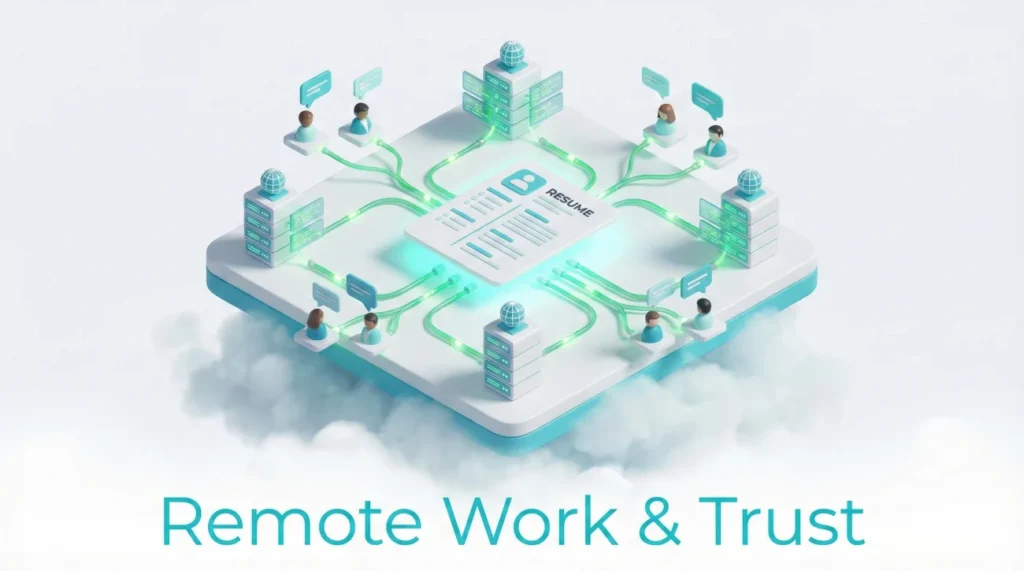
- Remote is not just a label. Recruiters look for proof that you can deliver without supervision, confusion, or time zone chaos.
- Place “Remote” where it clarifies context, then use bullet signals that show written updates, handoffs, and measurable outcomes.
- Avoid remote wording that triggers doubts: “always available”, “work anytime”, or vague “managed remotely” lines with no proof.
Remote Experience Is a Trust Problem, Not a Formatting Problem
I have seen candidates obsess over one question: how to show remote work experience on resume. They expect a single “best” format. But in real screening, the format is only step one.
When a recruiter sees a remote role, they subconsciously ask: “Will this person stay visible, stay reliable, and stay aligned when nobody is watching?” That is the remote fear. Not everyone says it out loud, but it shapes decisions.
A candidate named Debbie taught me this the hard way. Her portfolio was strong. Her metrics were solid. But her bullets felt like she did work in a bubble. No handoffs, no written updates, no cross functional rhythm. We rewrote her bullets with remote proof signals. Two weeks later, she stopped getting “interesting, but…” replies and started getting interviews.
This guide gives you placement rules, proof signals, and examples you can copy. No fluffy “communication matters” advice. Just practical ways to make remote read as stable, structured, and low risk.
What Recruiters Actually Check When They See a Remote Role
Remote work has been normalized, but the screening logic is still conservative. Recruiters do not “penalize remote” by default. They penalize uncertainty. Remote can create uncertainty faster than office roles because visibility is lower.
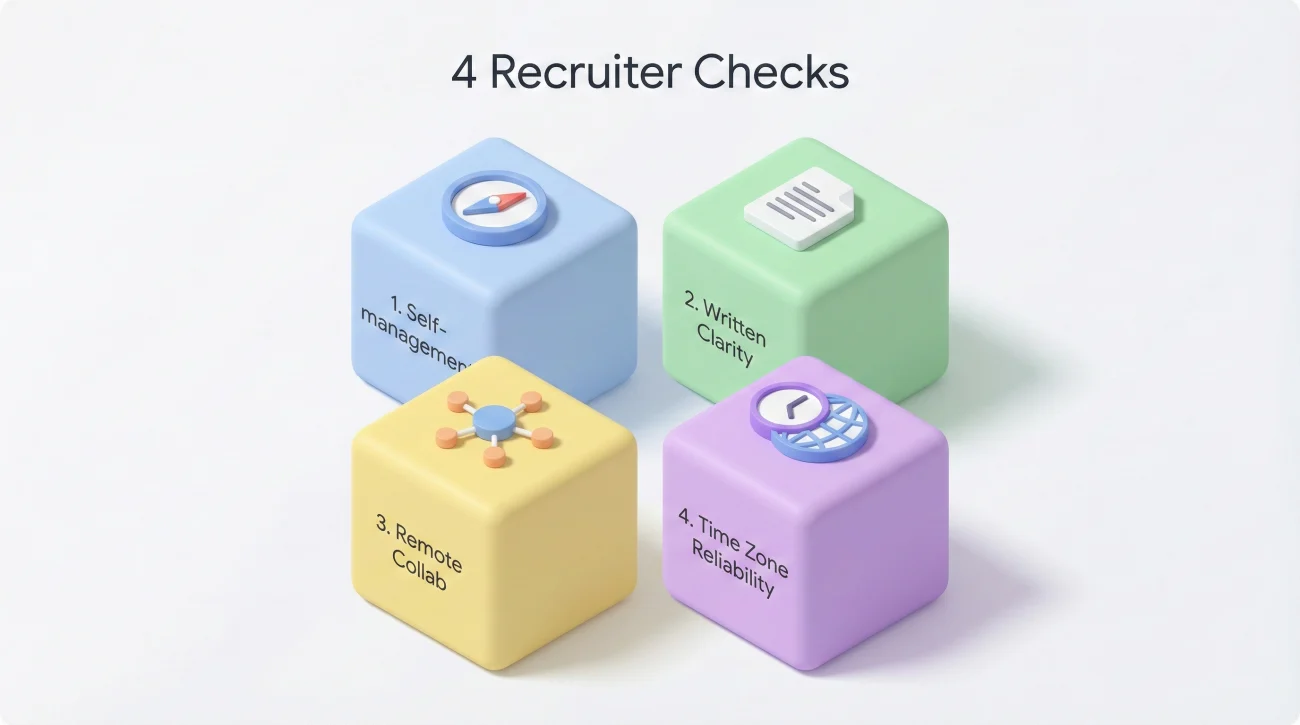
The Four Things Your Resume Must Quietly Prove
- Self management: You plan work, unblock yourself, and ship without constant nudges.
- Written clarity: You can write updates, decisions, and handoffs that other people can actually use.
- Remote collaboration: You coordinate across functions without meetings becoming the only tool.
- Time zone and reliability: You can work within overlap windows and keep commitments predictable.
Key Point: A remote label without remote proof reads like “I did the job somewhere else.” A remote label with proof reads like “I can operate with structure and trust.”
A Quick Story From the Hiring Side
A colleague of mine hired for a remote customer success team. Two candidates had similar revenue retention metrics. One wrote bullets like a normal on site resume. The other showed how she handled async escalations, created decision logs, and reduced “handoff gaps” between regions. Guess who got the offer.
It was not because she sounded more “remote passionate.” It was because she sounded operationally safer.
Where to Put “Remote” So It Clarifies Instead of Confuses
The goal is simple: The reader should understand the work context in one glance. After that, your bullets do the heavy lifting.
The Three Safe Placement Options
| Situation | Clean Header Format | Why It Works |
|---|---|---|
| Company HQ is in one city, you worked remotely | Company Name | City, ST (Remote) | Preserves company location while making your work mode explicit. |
| Team is distributed, no meaningful office | Company Name | Remote | Simple, no geographic bait and switch. |
| Hybrid role with clear split | Company Name | City, ST (Hybrid) | Signals you can operate in both environments without overselling it. |
What Not to Do If You Want Fewer Filters
⚠️ Warning: Do not turn “Remote” into a dramatic headline unless the role demands it. If your summary screams “REMOTE ONLY”, some readers will assume time zone inflexibility or location conflict.
Also avoid messy location stacking like: “Remote, New York, San Francisco, Global”. That reads like you are unsure what is true. Pick one clear context line and move on.
If You Are Worried About ATS Parsing
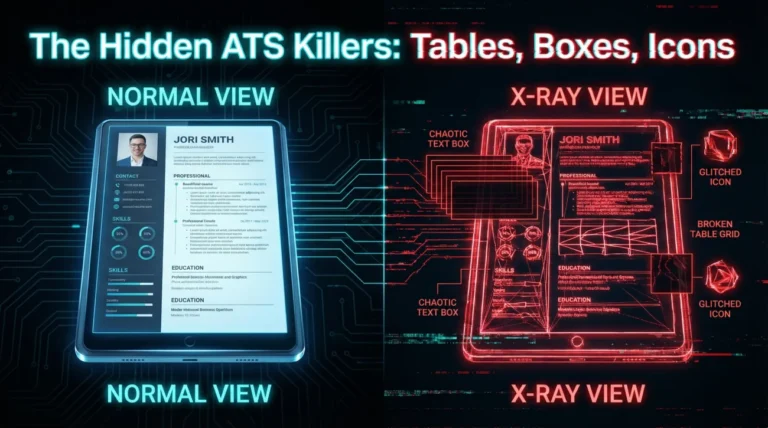
Keep it boring. Use plain text. Parentheses are fine. Pipes are fine. Avoid decorative symbols. “Remote” should look like a normal part of the line, not an art project.
And yes, it is completely normal to list the company’s location even if you were remote, as long as you add the remote tag clearly.
Remote Proof Signals That Make Your Bullets Stronger
Here is the missing piece most articles skip. Your reader does not care that you “worked from home.” They care how you delivered work through distance.
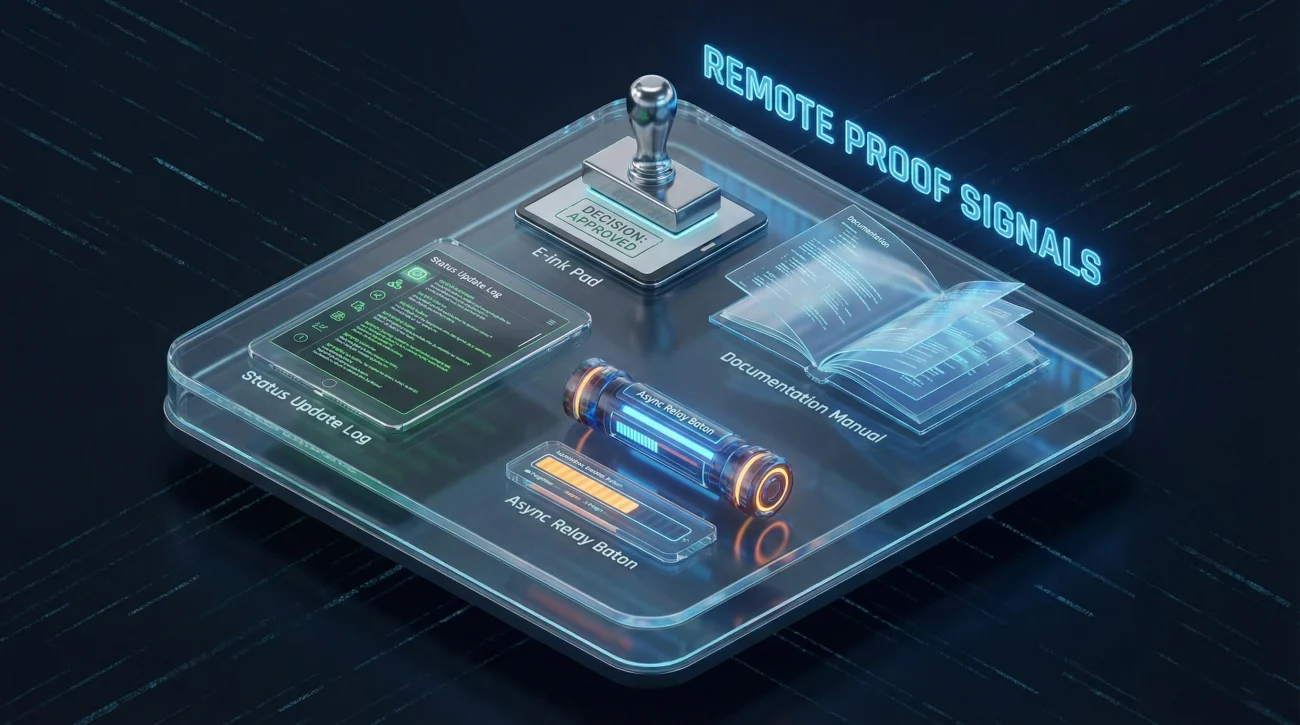
Ten Proof Signals You Can Add Without Sounding Try Hard
- Weekly written updates: Status notes, risk flags, and next steps.
- Decision logs: Why a decision was made, not just what happened.
- Async handoffs: Clear ownership changes between teams or time zones.
- Documentation: Playbooks, runbooks, internal guides, onboarding docs.
- Cross functional alignment: Product, design, sales, ops, finance.
- Operating rhythm: Cadence that prevents “silent drift”.
- Outcome tracking: Dashboards, metrics, or SLA style accountability.
- Time zone overlap: Defined collaboration windows, not “anytime”.
- Remote incident handling: Escalation paths and response clarity.
- Autonomy: You unblock yourself and ship, not “wait for meetings”.
Before and After: Same Work, Different Signal
Before: Managed stakeholders remotely and communicated project updates.
After: Sent weekly written status updates to 12 stakeholders, flagged risks early, and maintained a decision log that reduced rework by 18%.
Notice what changed. The second bullet proves structure. It quietly tells the recruiter: “You will not lose visibility with me.”
Copyable Bullet Examples That Fit Real Remote Roles
Use these as templates, not as scripts. Swap in your metrics and your tools only when they add meaning. The goal is to make your remote experience on resume read like a system, not a vibe.
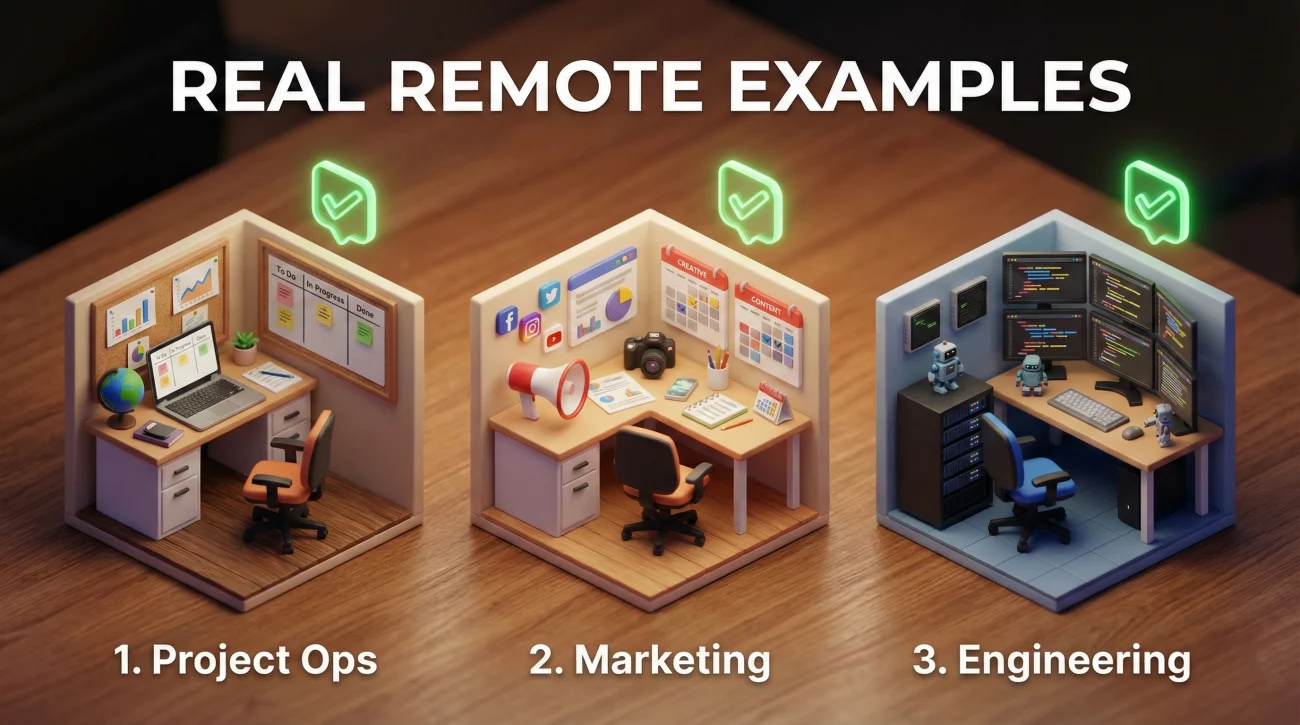
For Project and Operations Roles
- Built an async handoff process across three regions, cutting “waiting for context” delays by 25%.
- Maintained a decision log and weekly status updates, reducing last minute scope surprises during launches.
- Created a remote onboarding playbook that shortened ramp time from 30 days to 18 days.
For Marketing and Content Roles
- Led campaigns across a distributed team, using written briefs and weekly priority updates to keep execution aligned.
- Built a content production workflow with clear async approvals, improving publishing consistency without extra meetings.
- Partnered with sales and product remotely, translating feedback into a monthly content roadmap and measurable lift.
For Engineering and Data Roles
- Wrote runbooks and incident response steps so on call handoffs stayed clean across time zones.
- Documented architecture decisions and tradeoffs, reducing repeat debates and speeding reviews.
- Set up a lightweight async update rhythm that kept stakeholders informed without blocking build time.
For Customer Success and Support Roles
- Handled escalations asynchronously with clear timelines and ownership notes, improving response consistency.
- Created an internal knowledge base and handoff template that reduced repeat customer questions.
- Established overlap windows for urgent cases, improving reliability without pretending to be “always online”.
💡 Pro Tip: If you want to signal you are remote ready, focus on process and outcomes. Do not turn your resume into a “remote lifestyle” story.
How to Show Remote in the Header Without Overexplaining
If you want a simple, ATS clean header, here is a format you can adapt. This is especially useful when you want your remote job on resume to be obvious but not loud.
Jan 2022 – Present
– Sent weekly account health updates and created a renewal risk log that improved retention by 9%
– Built async escalation workflows across regions, reducing response delays during peak periods
– Documented playbooks for onboarding and handoffs, shortening ramp time for new hires
That is enough. The bullets do the proof work. The “Remote” tag simply prevents the reader from guessing.
Common Mistakes That Make Remote Sound Risky
Mistake: Using Vague Remote Verbs
Lines like “managed remotely” or “communicated with remote team” are empty. They sound like you are filling space. Instead, prove how you communicated, and what changed because of it.
Mistake: Sounding Like You Need Unlimited Flexibility
Recruiters do not hate flexibility. They hate uncertainty. Avoid wording like “work anytime”, “always available”, or “can adjust to any time zone”. It reads unrealistic.
Mistake: Turning Tools Into a Trophy Shelf
Tools can help, but only when they support a story. A long tools list with no outcomes can look like you are compensating. Save tools for bullets where the tool explains the workflow result.
Mistake: Forgetting Outcome Structure
Remote hiring often means bigger applicant pools. Your bullets must be sharp. If you write generic tasks, you blend in. Use the kind of structure that creates remote work bullets with measurable weight.
Edge Cases: When “Remote” Needs Extra Precision
Remote, But Location Restricted
If your role was remote but required a specific state or country, you can still tag it as remote. Just avoid implying global flexibility. Your resume does not need tax policy details, but it should not suggest “work from anywhere” if that was never true.
Remote Across Countries or Multiple Time Zones
I once helped Omar, a data engineer, who worked with teams across three time zones. His first resume tried to prove it by listing time zones in the header. It looked messy. We moved that proof into bullets: overlap windows, async handoffs, and incident response clarity. That made it believable.
Hybrid to Remote Transition
If you started on site and moved remote, you do not need a novel explaining it. A simple “(Hybrid)” or “(Remote)” tag aligned with the dates is enough. The deeper story belongs in an interview, not your header.
❌ Note: Do not write “Remote due to COVID” as your main explanation unless it is truly necessary. It can unintentionally age your story and distract from results.
A Quick Checklist Before You Hit Send
This is the fast pass I use when scanning a resume remote work story in under a minute.
- ✅ Remote is clearly tagged once in the role line.
- ✅ At least two bullets show written clarity: Updates, docs, decision logs.
- ✅ At least one bullet proves collaboration: Handoffs, cross functional rhythm, alignment.
- ✅ At least one bullet proves autonomy: You shipped outcomes without constant supervision.
- ✅ No “always available” wording, no vague “communicated remotely” filler.
Final
Remote work is normal now, but trust is still the currency. If your resume only says “Remote”, you force the reader to guess whether you are structured or chaotic. If your bullets prove operating rhythm, written clarity, and clean handoffs, remote becomes a strength.
The simplest rule I can give you is this: When you are thinking about how to show remote work experience on resume, treat it like proof design. One clear label, then bullets that demonstrate how you delivered through distance. That is how you look reliable, not risky.
And if you are framing a true work from home period, keep it grounded. The more your work from home experience resume reads like real operations, the less it reads like a preference statement.
❓ FAQ
🎯 Should I list “Remote” for every remote job?
Yes, if it prevents confusion. The key is to tag it once in the role line, then move on. Your bullets should carry the proof, not the label.
🧭 What location should I put if the company is in one city but I worked elsewhere?
Use the company location, then add “(Remote)”. It is clean, honest, and avoids location ambiguity. Your personal address is not required on the resume.
🧩 Is it bad to say “work from home” instead of “remote”?
It is not “bad”, but “remote” reads more professional and less lifestyle coded. If you use “work from home”, make sure the rest of the bullet shows outcomes and structure.
🛠️ Should I add a tools list to prove I can work remotely?
Only if the tools explain a workflow result. A trophy shelf of tools rarely helps. Proof beats tooling: Decision logs, handoffs, written updates, and measurable outcomes.
⏳ How do I show time zone collaboration without looking inflexible?
Avoid dramatic claims. Use one bullet that proves overlap windows, async handoffs, or documented processes that reduced delays. That signals reliability without sounding unrealistic.
⚠️ Disclaimer: ResumeSolving provides resume, cover letter, job search communication, and career transition guidance for informational purposes only. Hiring practices vary by employer, role, location, industry, and individual circumstances. We do not guarantee interviews, job offers, ATS results, or other outcomes. Verify employer requirements directly and follow applicable laws and workplace policies. For sensitive situations, use only information you are comfortable disclosing and keep all statements accurate.