- If your freelance bullets read like tasks, recruiters assume low ownership and shaky reliability.
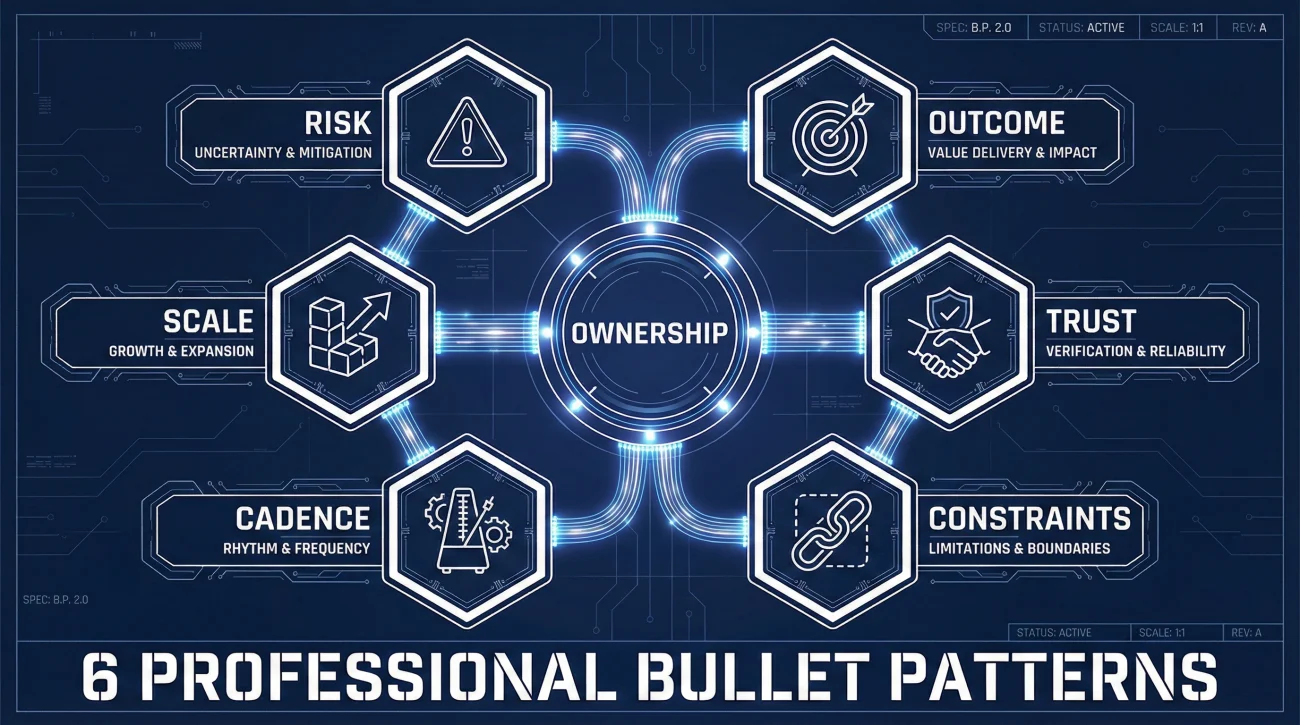
- Use 6 repeatable bullet patterns that signal continuity, stakeholder trust, and measurable outcomes.
- Add small proof hints (cadence, scope, repeat clients) so freelance experience reads like real employment.
Freelance Bullets Fail for a Different Reason
I once reviewed a resume for a freelancer named Rita. Smart, booked out, great client feedback. But her bullets looked like a checklist of gigs: “Designed logos,” “Wrote copy,” “Ran ads.” Nothing was technically wrong, yet the impression was: Busy, but not accountable.
That is the core problem with resume bullet points for freelancers. A hiring manager is not only scanning for skill. They are scanning for reliability: Do you own outcomes, can you work inside constraints, and will you still be here in six months?
This guide stays inside one lane: Bullet points. No portfolio talk, no website advice. Just the exact wording patterns that make freelance read like stable, high trust work.
Key Point: Freelance experience becomes “credible” on a resume when your bullets show ownership, repeat trust, and a clear operating rhythm.
What Recruiters Quietly Worry About When They See Freelance
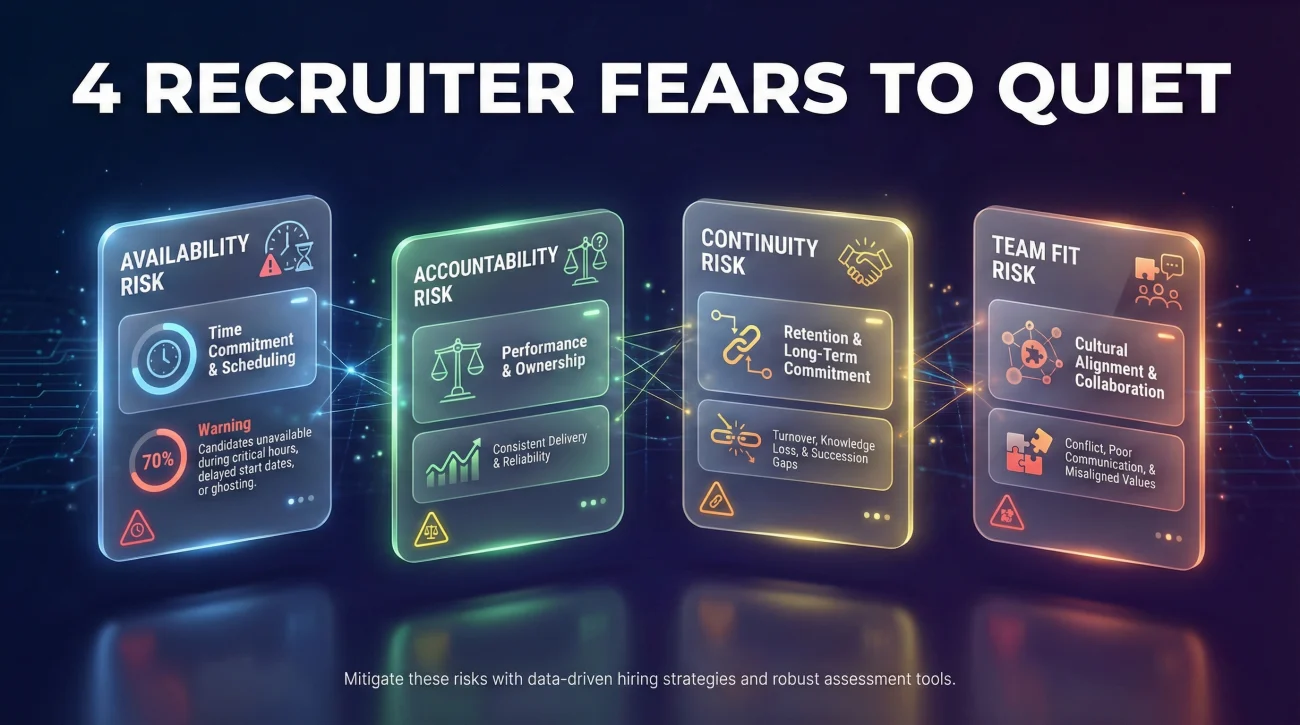
Recruiters rarely say it directly, but the doubts show up in how they screen:
- Availability risk: “Will this person disappear when a client calls?”
- Accountability risk: “Were they responsible for results or just delivering pieces?”
- Continuity risk: “Is this a real career arc or a string of short projects?”
- Team fit risk: “Can they follow process, take feedback, and work cross function?”
My colleague Xavier (in house recruiter, startup scale ups) told me something that stuck: He does not reject freelancers because of freelance. He rejects them when the bullets read like “I did stuff” instead of “I ran outcomes.”
“I don’t mind freelance at all. I mind when the resume sounds like they were a helper, not an owner.”
So the goal is not to hide freelance. The goal is to make it feel structured, repeatable, and trusted.
6 Bullet Patterns That Make Freelance Read Like Employment
Below are six patterns I use when rewriting freelance sections. Each pattern includes what it signals and a few bullets you can adapt.
Pattern 1: Outcome Ownership
This pattern answers: “Did you own a business result, or did you just deliver outputs?”
- Owned end to end email funnel rebuild for a B2B SaaS client, lifting trial to paid conversion from 3.1% to 4.6% in 8 weeks
- Led discovery, messaging, and landing page iteration, reducing bounce rate by 18% while maintaining lead volume
- Built reporting cadence for weekly KPI review with CEO and Head of Sales, aligning changes to pipeline targets
Pattern 2: Repeat Trust Signal
This pattern proves you were rehired, expanded, or retained. It quietly kills the “one off gig” vibe.
- Retained by 6 clients across 12 to 24 month engagements by delivering predictable monthly performance reporting and iteration plans
- Expanded scope from content to full growth operations for 2 clients after initial pilot outperformed targets by 22%
- Maintained 90% client renewal rate by standardizing onboarding, delivery milestones, and weekly stakeholder updates
Pattern 3: Stakeholder and Constraint Navigation
Full time work is constraint heavy. Show that you can operate in other people’s systems, not only your own.
- Partnered with product, legal, and brand teams to ship compliant launch assets across 3 markets without delaying release timelines
- Translated ambiguous stakeholder feedback into a decision log and weekly priority list, reducing revision cycles from 4 rounds to 2
- Balanced brand guidelines with performance needs, improving paid CTR by 27% while keeping creative approvals on schedule
Pattern 4: Process and Cadence
Freelance bullets get stronger when they include a working rhythm. Not busy. Predictable.
💡 Pro Tip: Mention cadence once or twice. Weekly review, monthly roadmap, bi weekly sprint. It signals you are easy to manage.
- Ran weekly performance reviews and monthly roadmap planning for 4 client accounts, keeping deliverables stable during leadership changes
- Implemented sprint based delivery for website revamp projects, shipping scoped improvements every two weeks instead of one big reveal
- Built reusable briefing templates and QA checklists, cutting turnaround time by 30% across recurring deliverables
Pattern 5: Scale Without Chaos
This is for people with many clients. The trick is to frame scale as a system, not as frantic multitasking.
- Managed a portfolio of 10 to 14 active clients by standardizing intake, prioritization, and handoff, sustaining on time delivery above 95%
- Created a single source of truth dashboard for deadlines, approvals, and metrics, reducing last minute escalations by 40%
- Coordinated 3 subcontractors using clear scopes and QA steps, maintaining consistent quality across parallel projects
Pattern 6: Risk Reduction and Recovery
Nothing screams “hireable” like saving a project that was sliding. This pattern turns freelance into leadership.
- Stabilized a failing paid acquisition account by rebuilding targeting and creative testing, cutting CAC by 19% over 6 weeks
- Took over an inherited content system with no documentation, created workflows and editorial standards, and shipped 30 articles in 60 days
- Recovered stakeholder confidence after missed deadlines by resetting scope, building milestones, and delivering weekly progress updatesNotice what is missing from all of these: Random tasks. The bullets read like you operated inside a real business.
Proof Hints List: Small Details That Add Credibility Fast
If you only change one thing, change this: Add proof hints that show your freelance work had structure.
| Proof Hint | What It Signals | How to Mention It in a Bullet |
|---|---|---|
| Engagement length | Continuity, not one offs | “Retained for 18 months,” “Extended through 3 product cycles” |
| Cadence | Predictable operating rhythm | “Weekly KPI review,” “Monthly roadmap planning” |
| Decision process | Maturity, stakeholder handling | “Maintained decision log,” “Aligned priorities across teams” |
| Scope ownership | Accountability | “Owned end to end,” “Led discovery to launch” |
| Repeat trust | Rehire, expansion | “Expanded scope,” “Renewed retainer,” “Referral led pipeline” |
One more thing I see people skip: Naming your freelance work like a real function. “Independent Marketing Consultant” reads different than “Freelance Marketer.” Same truth, different signal.
20 Bullet Examples You Can Adapt Today
These examples are grouped by the type of trust you want to signal. They are not meant to be copied word for word. Keep the shape, swap the details.

Group A: Ownership and Outcomes
• Led multi channel launch plan for a new service line, generating 320 qualified leads in the first 30 days
• Built measurement plan and reporting for leadership, replacing “vanity metrics” with pipeline aligned KPIs
• Repositioned product messaging after customer interviews, improving demo request rate by 21%
• Managed end to end content refresh for a legacy site, lifting organic clicks by 35% in 4 months
Group B: Repeat Trust and Continuity
• Expanded from one business unit to three after initial engagement beat target revenue by 18%
• Delivered quarterly planning support for leadership across 4 consecutive quarters, aligning roadmap to business goals
• Managed recurring reporting and optimization for 8 accounts, keeping performance stable during budget cuts
• Built standardized onboarding materials that reduced ramp time for new clients by 25%
Group C: Stakeholders, Process, and Team Fit
• Turned stakeholder feedback into a prioritized backlog, reducing revision churn and last minute scope changes
• Partnered with engineers to ship tracking fixes, restoring data accuracy and improving decision making confidence
• Documented workflows and QA steps so internal teams could maintain work after handoff
• Led cross functional retrospectives to improve delivery speed without sacrificing quality
Group D: Scale Without Chaos
• Built templates for briefs, reporting, and handoffs, cutting turnaround time across recurring deliverables
• Coordinated subcontractors with clear scopes and QA, maintaining consistent output across parallel projects
• Reduced context switching by batching reviews and creating weekly planning blocks, improving throughput by 20%
• Created a dashboard for deadlines, approvals, and KPIs, giving stakeholders real time visibility
To align with your keyword set, here is how to think about the three variants without stuffing them:
- freelance resume bullets should sound like you owned outcomes, not like you completed errands.
- consultant resume bullets should show diagnosis, decision making, and measurable change.
- contractor bullet points resume should emphasize delivery inside someone else’s process and constraints.
Before and After: Fix the “Gig Worker” Tone in Seconds
If your bullets currently sound like tasks, use this table as a rewrite map.
| Before | After | What Changed |
|---|---|---|
| Worked on social media posts for clients | Owned weekly content cadence for 4 client accounts, aligning posts to campaign goals and reporting engagement trends | Cadence + ownership + reporting |
| Helped with website updates | Led scoped website improvements every two weeks, coordinating approvals and reducing rework through QA checklists | Delivery rhythm + coordination |
| Did SEO for multiple businesses | Managed SEO roadmap for 6 businesses, prioritizing fixes by impact and lifting organic clicks by 35% over 4 months | Roadmap + prioritization + outcome |
| Created marketing materials | Produced launch assets under brand constraints, partnering with stakeholders to ship on schedule across 3 markets | Constraints + stakeholder work |
| Wrote blog content | Built a repeatable editorial system and shipped 30 articles in 60 days, improving consistency and reducing bottlenecks | System thinking + throughput |
How to Pick 8 Bullets When You Have 40 Projects
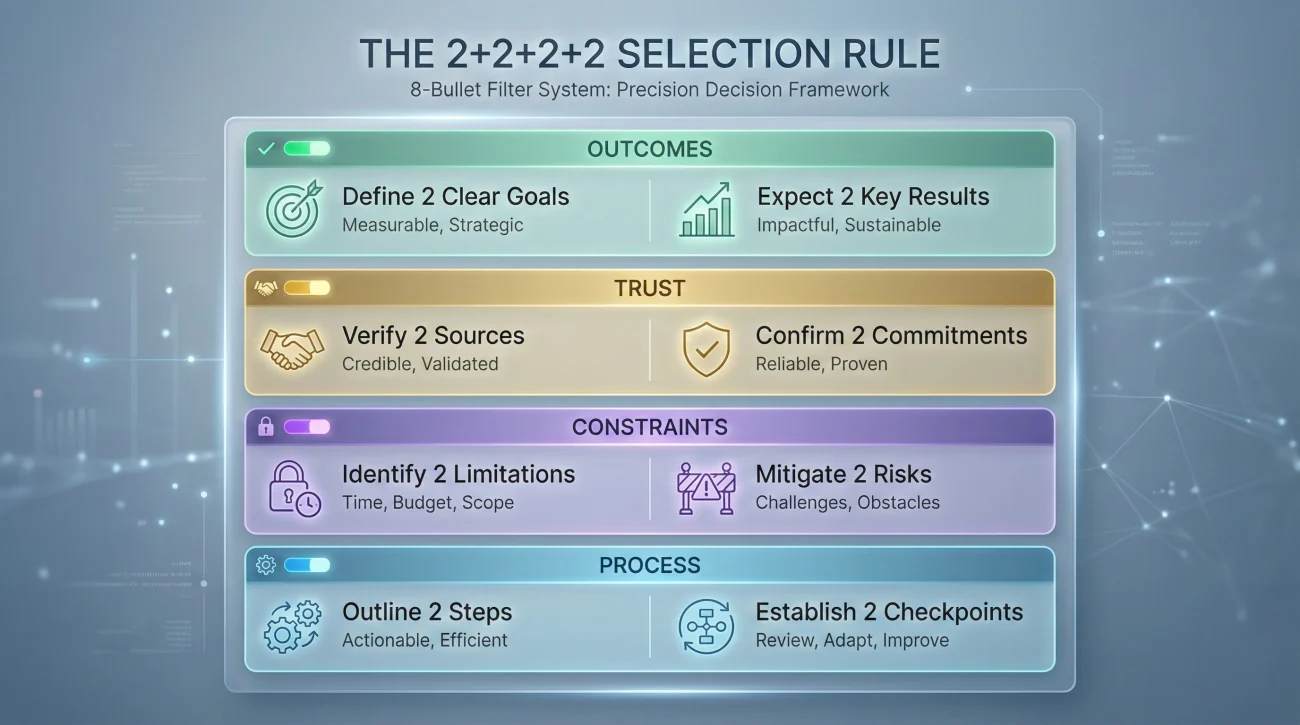
Freelancers usually fail by trying to represent everything. Your resume is not your archive. It is a credibility document.
Here is the selection rule I use with candidates:
- Pick 2 bullets that show outcome ownership.
- Pick 2 bullets that show repeat trust or longer engagements.
- Pick 2 bullets that show stakeholder work and constraints.
- Pick 2 bullets that show process, cadence, or scale.
⚠️ Warning: If every bullet starts with “Created” or “Helped,” you are accidentally describing support work. Mix in ownership verbs like “Owned,” “Led,” “Managed,” “Built,” “Stabilized.”
A candidate named Christopher once insisted on listing every client. We didn’t. We rewrote eight bullets to show a system: Repeatable delivery, stable cadence, measurable outcomes. He later told me interviews became easier because he was no longer defending the word “freelance.” He was explaining results.
Final
If you want your freelance experience to land, stop writing bullets like a to do list. Write them like you were hired to run a slice of the business: Outcomes, cadence, stakeholder trust, and proof hints that show continuity.
When you apply this consistently, resume bullet points for freelancers stop sounding like gigs and start sounding like a reliable operating track record.
❓ FAQ
🎯 Should I write one “Freelance” role or list each client separately?
Most of the time, one consolidated freelance role is cleaner. It prevents your resume from looking fragmented and lets your bullets carry the proof. List specific clients only when a recognizable name is essential and you have permission to do so.
🧩 How many bullet points should a freelance role have?
Aim for 6 to 10 strong bullets total, not 20. The best set covers ownership, repeat trust, stakeholder handling, and a clear delivery rhythm.
🧠 What if my freelance work was short projects with no long retainers?
Then lean harder on process and outcomes. Show you could diagnose quickly, deliver under constraints, and produce measurable change. You can still signal reliability through cadence, decision making, and clean handoffs.
🔍 Do I need metrics in every bullet?
No. Use metrics where they clarify impact. For the rest, use proof hints like cadence, scope ownership, stakeholder alignment, and risk reduction. Those signals can be as persuasive as numbers.
✅ How do I avoid sounding like a gig worker without hiding that I freelanced?
Name your role professionally, show repeatable delivery, and write bullets that sound like responsibility. Avoid “helped,” “assisted,” and vague task lists. Replace them with ownership and operating rhythm.
⚠️ Disclaimer: ResumeSolving provides resume, cover letter, job search communication, and career transition guidance for informational purposes only. Hiring practices vary by employer, role, location, industry, and individual circumstances. We do not guarantee interviews, job offers, ATS results, or other outcomes. Verify employer requirements directly and follow applicable laws and workplace policies. For sensitive situations, use only information you are comfortable disclosing and keep all statements accurate.