- Most “resume summary examples” online fail because they do not show what your Experience bullets must support.
- Use a summary that passes three checks: Target role clarity, Evidence you can point to, And scope fit.
- Steal one of the 20 summaries below, then use the swap list to remove clichés fast without sounding robotic.
Why Most Resume Summaries Sound Fine but Still Get Skipped
I have watched this happen in real time: A resume opens, the recruiter’s eyes hit the top third, and the decision is made before they scroll. Not because the candidate is bad, but because the opening lines feel like a “generic person applying to a generic job”. That is exactly where resume summary examples can help, or quietly hurt.
A candidate named Odessa once told me: “I used a popular summary template and made it mine.” It looked polished. But when I asked her one question, the whole thing fell apart: “Which line in your Experience section backs up sentence two?” She went silent for a second, then said: “I thought the summary was just a vibe.” It is not. The summary is a promise. Your bullets have to match it.
💡 Pro Tip: If your summary is strong, it makes the rest of the resume easier to believe. If your summary is fluffy, it makes the rest of the resume feel like it is trying too hard.
The Three Checks Every Summary Must Pass

Before we jump into examples, I want you to see how I judge a summary in under 10 seconds. Not because I love rules, but because rules are faster than anxiety when you are rewriting the top of your resume at midnight.
Check 1: Target Role Clarity
Your first line should answer: “What role is this person aiming for?” If the reader has to guess, they will guess wrong. Then everything you say after that feels off.
Check 2: Evidence You Can Point To
This is simple: Could you point to something specific below that supports what you just claimed? If the top sounds bigger than the body, the reader feels tricked, and they stop trusting the resume.
Check 3: Scope Fit
Scope fit is the quiet killer. I have seen candidates pitch themselves as “strategic leaders” while applying for hands-on roles. It reads like they will be bored, or like they are downleveling unwillingly.
Key Point: A summary is not a biography. It is a positioning statement that should match the role’s level and the evidence inside your resume.
How to Use These 20 Examples Without Sounding Copied
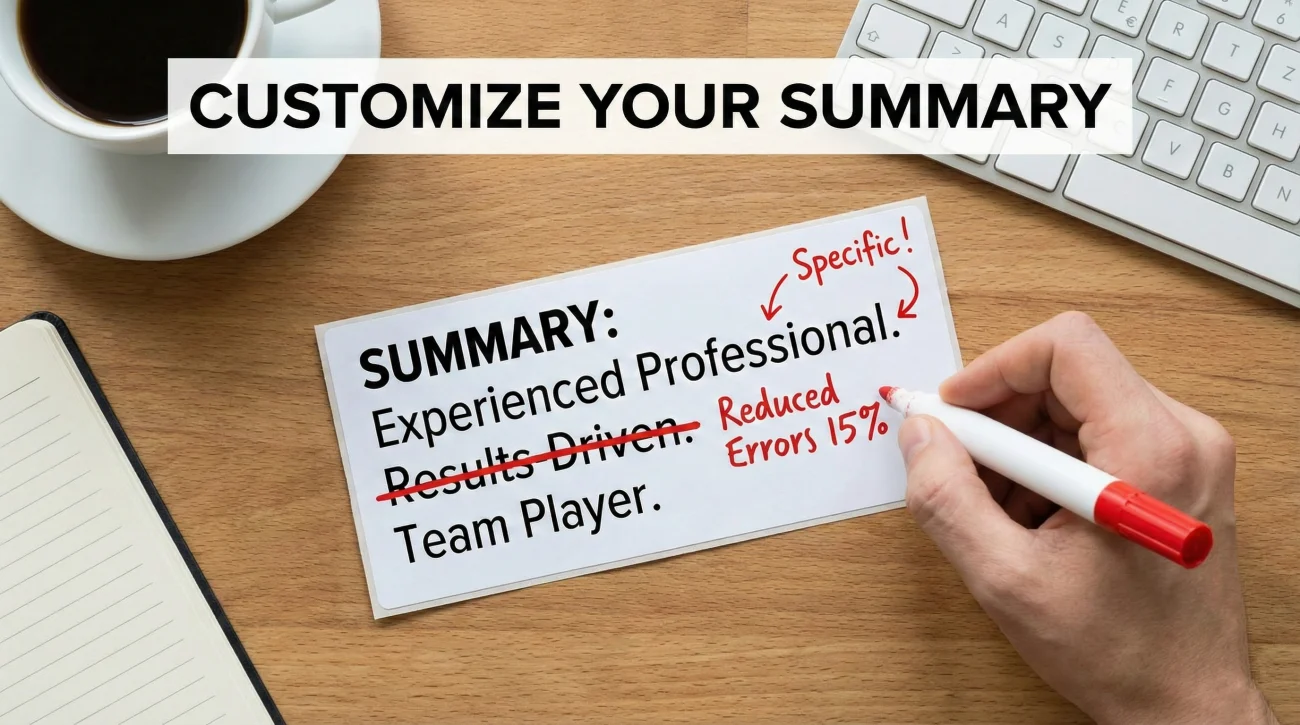
Pick the example that matches your situation, then do two edits:
- Swap the “scope” phrase to match your real level: Manager, Senior IC, Lead, Head-of, Or early-career.
- Replace one generic claim with one concrete detail: A metric, a system, a domain, or a type of stakeholder.
⚠️ Warning: Do not force metrics if you do not have them. A clean, specific non-metric detail (tools, volume, complexity, audience) beats a fake number every time.
Resume Summary Examples by Intent
These are designed to be short. Most are 2 to 4 lines. Each one includes a quick note so you know what to reinforce in the bullets underneath.
| Intent | What the summary must signal | Common failure |
|---|---|---|
| Role clarity | Exact target role, not a vague identity | “Professional with experience in…” |
| Credibility | Concrete details that match bullets | Big claims with thin support |
| Scope fit | Right level for the role | Over-senior language for hands-on jobs |
| Pivot bridge | Transferable pattern, not a wish | “Seeking a new challenge” energy |
Group 1: Role Clarity for Experienced Candidates
If you already have years behind you, your summary should not read like an introduction at a networking event. It should read like a label on a folder: Clear, accurate, and easy to route.
Known for building simple KPI rhythms, fixing handoffs, and reducing escalation volume without adding headcount.
Quick anchor: In Experience, show what the KPI rhythm looked like week to week, and name one handoff you actually changed.
Strong at tightening controls, spotting variance patterns, and making reports usable for non-finance leaders.
Small detail that helps: Add your typical close timeline and one example of a variance you caught early.
Group 2: Credibility First, Metrics Included but Not Forced
These work when you have at least one real metric. One is enough. The rest can be specificity: Tools, scale, complexity, or stakeholders.
Improved pipeline contribution by tightening keyword intent, creative testing, and reporting discipline.
Keep it believable: Mention the direction of CPA (down, steady, stabilized) and one testing habit you repeated consistently.
Reduced churn by rebuilding onboarding handoffs and creating a simple risk playbook for at-risk customers.
What to highlight below: Briefly describe the portfolio (industry or size band) and the risk signal your playbook watched for.
Group 3: Technical Identity Without Buzzwords
Technical summaries fail when they list tools like a shopping receipt. These examples name a stack, but they lead with the kind of problem you solve.
Strong at translating messy inputs into stable metrics definitions and consistent reporting habits.
Ground it in one thing: Call out one dashboard people actually used, and what decision it supported.
Comfortable collaborating with design and backend teams to reduce rework and keep releases predictable.
Make it concrete: Pick one performance improvement or one reusable pattern and describe it in plain English.
Group 4: Leadership Scope That Does Not Overpromise
If the role is hands-on, keep the leadership language grounded. If the role is leadership-heavy, make it clear you have led outcomes, not just meetings.
Known for making scope tradeoffs explicit and turning vague requests into shippable milestones.
Best supporting line: Add team size and one tradeoff story where you protected a deadline or quality bar.
Strong at prioritization, customer narrative, and shipping iteratively without losing the long-term arc.
Helpful context: Name the customer pain you focused on and one shipped change that reduced friction.
Group 5: Career Pivot Summaries That Sound Intentional
Career change summaries die when they sound like: “Please take a chance on me.” A better approach is: “Here is the pattern I have already been doing, and here is the role it maps to.”
Strength is turning scattered work into a clean plan, clear owners, and steady follow-through.
One clean support: Reference a process doc you built and how it changed follow-through for the team.
Strong at simplifying complex topics and building training that actually changes behavior on the job.
What makes it convincing: Mention one training artifact and one way you tracked progress that a hiring manager will recognize.
💡 Pro Tip: If you are searching for good resume summary examples for a pivot, pick one that names a transferable pattern, not one that lists “transferable skills” as a phrase.
Group 6: Return-to-Work or Gap-Friendly Summaries Without Oversharing
When someone is returning after a gap, the summary should not apologize. It should re-establish a professional identity and point the reader to current readiness.
Recently refreshed tools and workflows, and ready to step into a steady support role immediately.
Keep it tight: Mention the tools you refreshed and one recent task that shows you are back in rhythm.
Known for clear documentation, calm communication, and keeping managers aligned on simple people processes.
Support it naturally: Include one onboarding or documentation improvement, plus one manager-facing situation you handled calmly.
Group 7: Downleveling or Overqualified Without Looking Bitter
I have seen this scenario a lot lately. A candidate wants a smaller scope role for stability, or for life reasons, and they worry the resume screams: “I will leave fast.” These summaries lower the temperature while keeping dignity.
I work best in roles where I can own the details, support the team, and keep outcomes steady week to week.
Make the intent obvious: Use hands-on bullets, show one quality check, and keep leadership references light and practical.
Known for clear work, fast turnaround, and making complex information usable for decision makers.
What seals it: Add one report or analysis example and a short line about who used it and why.
⚠️ Warning: Do not write: “Looking for a lower role.” Write what you will deliver in the role you are applying for.
Group 8: Freelance or Contract Background, Now Targeting Full-Time
Freelance candidates often undersell themselves by sounding like they did “random gigs.” The fix is to frame patterns: Repeated outcomes, consistent domains, and collaboration style.
Strong at translating rough ideas into structured design systems that others can maintain.
Easy win: Mention the types of assets you delivered most often and how you handled feedback loops.
Known for structured documentation, consistent voice, and quick alignment with subject matter experts.
Keep it specific: Name one content type, and describe how you worked with SMEs without creating friction.
Group 9: Early Career Without Sounding Like a Student Bio
Entry-level summaries should not pretend you have ten years of experience. The best ones show direction, relevant exposure, and a work style that is easy to manage.
Strength is structured work, careful QA, and turning requests into a clear next step.
What helps here: Reference one internship project and one QA habit you actually follow, not a vague “attention to detail”.
Comfortable working from a brief, iterating quickly, and learning tools without needing heavy supervision.
Best support: Mention one campaign task you owned and one metric you tracked regularly, even if it was basic.
Group 10: Process, Operations, and “Making Work Run” Roles
These roles often get described with vague lines like “organized and detail-oriented.” That is exactly what everyone says. Better is to name the friction you remove and the rhythm you enforce.
Known for catching issues early, documenting repeatable steps, and keeping small teams unblocked.
Nice and simple: Add one vendor workflow you owned and one example of a problem you prevented before it became urgent.
Strong at follow-up discipline, clean tracking, and preventing last-minute surprises through simple controls.
Make it easy to picture: Mention your tracking method and one control that reduced “surprise” issues.
💡 Tip: If you are building resume summary examples for experienced profiles, your fastest win is to name a scope signal: Team size, portfolio size, system complexity, or stakeholder level.
The Swap List: Replace Fluff Without Making It Awkward
When someone tells me: “My summary sounds generic,” this is usually why. The wording is not wrong, it is just cheap. These swaps keep your tone professional while making your meaning easier to back up below.
| Instead of | Use | It signals |
|---|---|---|
| Results-driven professional | Known for reducing errors and making delivery predictable | Outcome pattern, not a slogan |
| Team player | Works well with sales, ops, and finance to align priorities | Specific collaboration |
| Detail-oriented | Builds QA checks and catches issues before escalation | Behavior the reader can picture |
| Excellent communicator | Writes clear handoffs and keeps stakeholders aligned | Communication with a purpose |
| Hardworking | Fast turnaround with consistent quality standards | Reliability, not martyr energy |
| Strategic leader | Makes scope tradeoffs explicit and delivers milestones | Strategy connected to execution |
| Passionate about learning | Quickly ramps on tools and applies feedback without drama | Learning as performance |
| Dynamic | Comfortable switching priorities while keeping deadlines intact | Adaptability with control |
❌ Note: If you use three or more clichés in a two-line summary, the reader will assume the rest of the resume is also copy-pasted.
A Two-Minute Self-Check Before You Submit
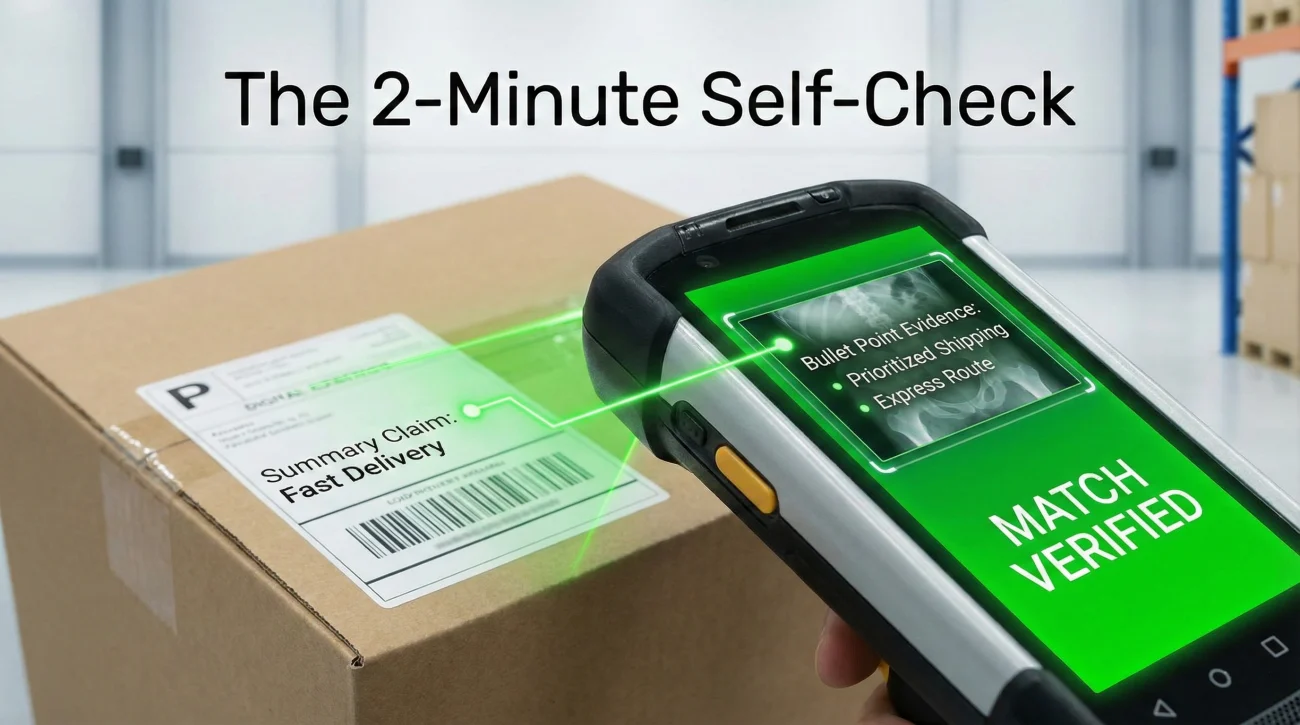
I share this because it has saved candidates from “It looks fine” resumes that still get silence. A former colleague of mine, Donna, used to do this check with a pen while skimming. If she could not underline something concrete, she would move on.
- Underline every claim in your summary.
- For each underline, point to one bullet that supports it.
- If you cannot, either remove the claim or rewrite it as a concrete detail.
Key Point: Your summary should make the reader curious to scroll, not suspicious that the rest will not back it up.
Final
The best summaries I have seen are not the fanciest. They are the ones that feel quietly inevitable: The role is clear, the scope matches, and the rest of the resume supports the opening without strain. If you want a simple way to think about it, treat the top of your resume like the label on a folder. It should tell the reader what is inside, without needing a speech.
If you are collecting resume summary examples because you feel stuck, steal one from above and make one honest edit: Add one concrete detail you can stand behind. That single change often shifts the whole resume from “sounds fine” to “feels real”.
❓ FAQ
🎯 How long should a resume summary be?
Most strong summaries land at 2 to 4 lines. If you need 6 lines to explain yourself, it is usually a clarity problem, not a space problem.
🧩 Should I write a summary if I am early career?
Yes, if it clarifies direction. Keep it specific: Target role, relevant exposure, and one work-style signal that matches the job.
🧠 Can I use first person in a resume summary?
It is usually better to avoid it. First person can feel informal and takes space. If you want warmth, use precise wording and concrete details instead.
📌 What if I do not have metrics?
Use specificity as your anchor: Tools, scale, complexity, audience, cycle time, volume, or stakeholder level. One clean detail beats a forced number.
🧯 What is the biggest red flag in a summary?
Overpromising scope. If the summary sounds senior but the bullets do not show senior outcomes, it creates distrust fast.
✅ How do I tailor my summary quickly for each job?
Change two things only: The target role label in line one, and one concrete detail that mirrors the job’s top requirement. Do not rewrite everything.
⚠️ Disclaimer: ResumeSolving provides resume, cover letter, job search communication, and career transition guidance for informational purposes only. Hiring practices vary by employer, role, location, industry, and individual circumstances. We do not guarantee interviews, job offers, ATS results, or other outcomes. Verify employer requirements directly and follow applicable laws and workplace policies. For sensitive situations, use only information you are comfortable disclosing and keep all statements accurate.