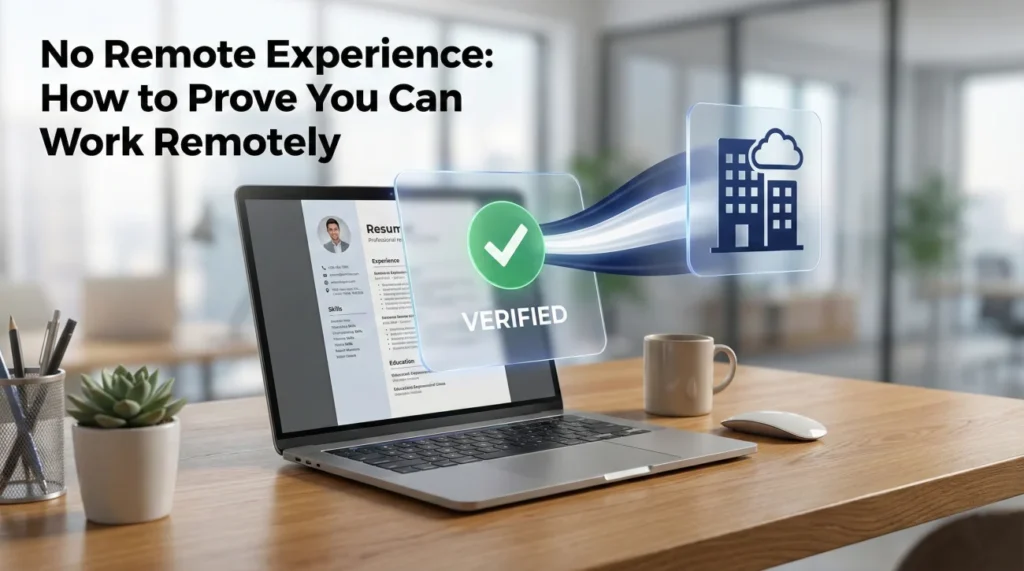
- If you have remote work without experience, your resume still needs proof signals, not promises.
- Recruiters look for independence, written clarity, handoffs, and self-managed delivery more than a “Remote” title.
- Use a proof map: show documentation habits, async-style updates, and measurable outcomes that translate to remote work.
Why “No Remote Experience” Is Not the Real Problem
I have screened thousands of resumes across roles that later became remote-friendly, and the pattern is boringly consistent: the hiring team is not obsessed with where you sat. They’re obsessed with whether they can trust you when nobody is watching.
That’s why remote work without experience can still win interviews, and also why vague lines like “self-starter” quietly lose. The goal of this page is simple: give you proof you can paste into a resume without pretending you already worked remotely.
So what are they actually trying to verify?
They want evidence that you can deliver work with minimal supervision, communicate clearly in writing, and keep projects moving even when questions are not answered instantly.
What Recruiters Doubt When You’ve Never Been Remote

They’re not judging your talent. They’re judging your risk.
When a candidate has no remote job title, the worry is usually practical: Will this person freeze without constant feedback? Will they disappear for hours? Will they create chaos because they don’t document decisions?
One hiring manager once summarized it to me in a way that stuck because it sounded harsh and honest:
“I don’t need you to be perfect. I need you to be predictable. Remote work breaks down when someone needs hand-holding but doesn’t say it.”
That is the subtext you’re answering. Not with a motivational sentence, but with receipts.
The hidden checklist: independence, clarity, and continuity
In practice, remote hiring teams look for three categories of signals:
- Independence: You can scope work, move it forward, and unblock yourself.
- Clarity: You write updates that reduce confusion instead of creating more questions.
- Continuity: Your work can be handed off cleanly, and the team is not stuck if you’re offline.
💡 Pro Tip: If you can show these three, you can apply for a remote job without remote experience without sounding like you’re guessing.
The Proof Map: 10 Sources That Count as Remote Evidence
Think of this like a “remote translation layer.” You take things you already did in an office, hybrid, or field setting, and you describe them in a way that proves you can operate asynchronously.
Here are proof sources that are stronger than listing random apps. This is the core of remote skills proof recruiters actually trust.
| Proof source | What it signals | How to reference it in a bullet |
|---|---|---|
| Decision logs or meeting notes | Clarity, accountability | “Captured decisions and owners in a shared log, reducing repeat questions.” |
| SOPs, playbooks, internal docs | Continuity, repeatable process | “Built SOPs that enabled consistent execution across shifts.” |
| Ticketing or request systems | Async coordination | “Managed intake through tickets, prioritizing and closing requests within SLAs.” |
| Status updates that unblock others | Independence, communication | “Sent weekly written updates with risks, next steps, and clear asks.” |
| Cross-team handoffs | Continuity, reduced dependency | “Created handoff notes so work continued without live walkthroughs.” |
| Self-managed project timelines | Time management | “Planned milestones and delivered outcomes without daily supervision.” |
| Client-facing written communication | Tone control, clarity | “Handled client updates in writing, maintaining trust during delays.” |
| Training materials (guides, videos, FAQs) | Scale, clarity | “Built training resources that reduced onboarding time.” |
| Metrics dashboards or reports | Visibility, outcomes | “Published weekly performance reports for leadership visibility.” |
| Portfolio artifacts (case studies, writeups) | Proof beyond titles | “Documented outcomes in short case studies to show ownership.” |
Notice what is missing: fancy claims. The map is built out of boring operational behavior, which is exactly why it works.
Where to Put the Proof on Your Resume (Without Overexplaining)
Use a “remote-ready” line only if you can back it up
A short line in your summary can help, but only when it points to real evidence. Otherwise it reads like marketing copy.
Good summaries don’t beg to be believed. They hint at proof you will show in bullets.
Known for clear written updates and building SOPs that keep work moving across shifts
⚠️ Warning: If you claim “remote-ready” but your bullets look like a standard office resume, you create a trust gap. That’s worse than saying nothing.
Let your bullets do the heavy lifting
The cleanest path is to keep your titles honest and build remote evidence into the accomplishment bullets. This is how you prove you can work remotely without inventing a “Remote” label.
One candidate I worked with, Sebastian, was a retail floor supervisor. He assumed remote roles were impossible. We didn’t change his history. We changed the signals: the documentation he wrote, the scheduling coordination, the reporting cadence, and the way he handled handoffs between shifts.
Two weeks later, he got a first-round interview for a remote operations support role. The recruiter’s comment was telling: “Your resume reads like you’ll be easy to manage remotely.” That is the win condition.
10 Bullet Examples You Can Adapt Today
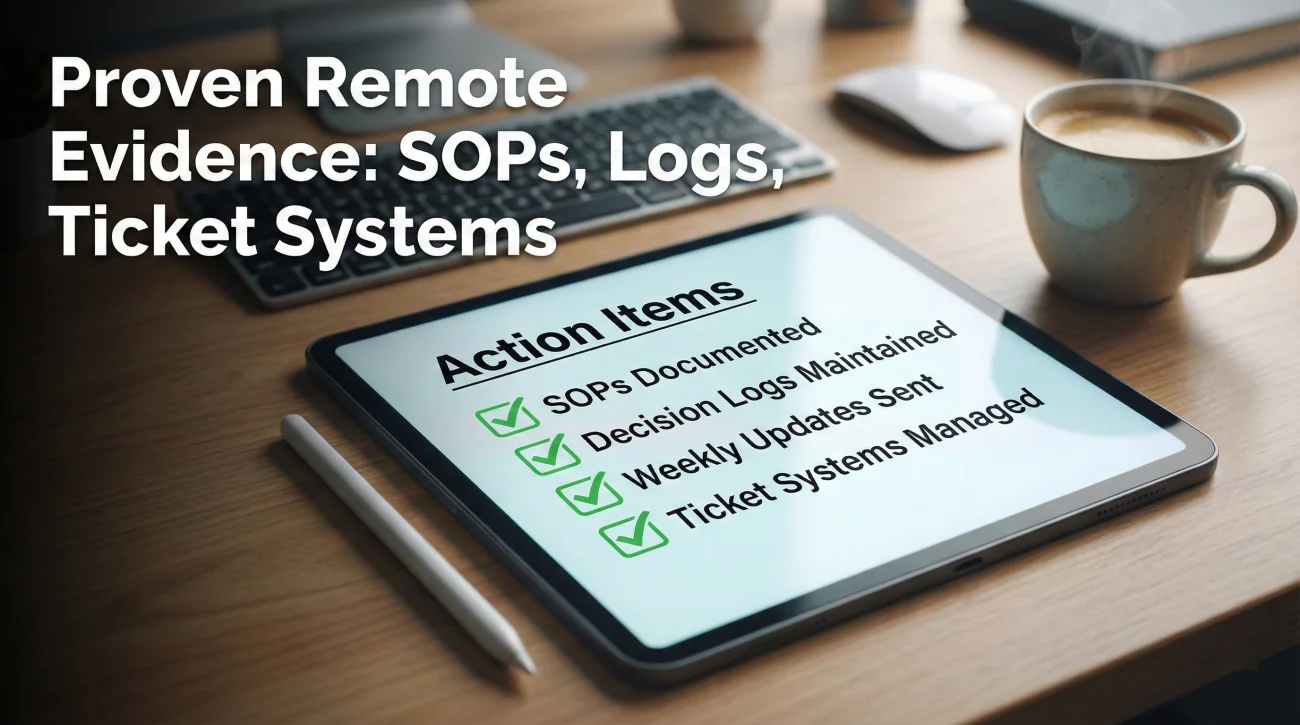
Below are examples that work across industries. They are written to sound normal, not like a remote-work manifesto. Use them as templates, then replace the nouns with your reality.
• Built SOPs and checklists that enabled consistent execution across teams without live walkthroughs
• Managed requests through a ticketed intake process, prioritizing work and closing items within agreed timelines
• Created handoff notes for ongoing work so projects continued smoothly across shifts and time constraints
Here are six more, aimed at showing ownership and visibility:
• Produced weekly performance reports for leadership, highlighting trends and corrective actions
• Coordinated cross-team dependencies using clear written briefs, preventing last-minute surprises
• Turned ad-hoc knowledge into a lightweight playbook that improved onboarding consistency
• Documented client updates and expectations in writing, reducing misalignment during deliverables
• Planned milestones and delivered outcomes independently, escalating blockers early with clear options
If you want to go one level stronger, attach a small proof artifact in your portfolio or project link. That’s often the difference between “nice wording” and a remote-ready resume that feels credible.
Common Mistakes That Make Recruiters Distrust You
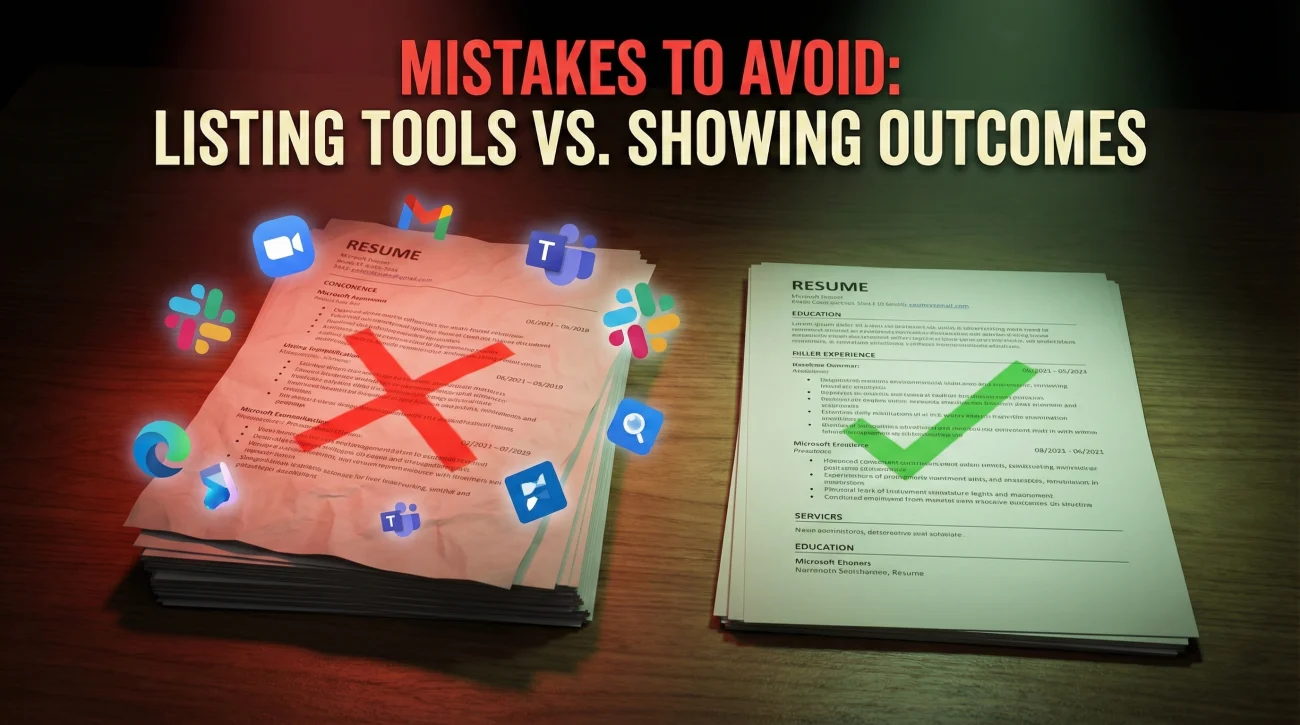
Listing tools like a shopping cart
Tools are not proof. They are only meaningful when tied to outcomes. If you list ten apps but never show how you used them to deliver results, it reads like you copied a remote checklist.
Overclaiming availability or flexibility
Some candidates try to compensate with extreme promises: “available 24/7” or “can work any time zone.” That creates a different risk: burnout, boundaries, and unrealistic expectations.
What works better is calm reliability: consistent updates, clear handoffs, and predictable delivery.
Trying to “rename” your experience
I have seen candidates label an onsite job as remote because they took a few calls from home. Don’t do that. If your goal is trust, the resume must feel clean.
❌ Note: The fastest way to lose a remote interview is to make the hiring team wonder what else you’re stretching.
Final Thoughts
Remote hiring is less romantic than people think. Most teams are not searching for a magical “remote personality.” They’re searching for someone who communicates clearly, documents decisions, and delivers work without drama.
If you build your resume around proof signals, the missing remote title stops being the headline. It becomes a footnote.
And if this is the season where you’re trying to position yourself for modern screening expectations, you’re already in the right category: remote work without experience.
❓ FAQ
🧭 Should I write “Open to Remote” if I’ve never been remote?
Yes, if the job is remote and you can back it up with proof signals in bullets. Keep it simple and let your evidence do the convincing.
🧩 What if my job was fully onsite and had no documentation culture?
Create proof from what you did control: handoff notes, checklists, written updates, simple reporting. Even small documentation habits show remote readiness.
🛠️ Do I need to list Slack, Notion, or Zoom to look credible?
No. Tools help only when tied to outcomes. If you used a tool to reduce delays, improve clarity, or increase throughput, mention it inside a bullet. Otherwise skip it.
📌 Can a portfolio help for non-creative roles?
Yes. A portfolio does not need to be design work. It can be a short case study, a process writeup, or a “how I improved X” one-pager that shows ownership and clear thinking.
🔍 What’s the fastest proof signal to add if my resume feels generic?
Add one bullet that shows a written cadence: weekly status updates, decision logs, or handoff notes. Remote teams love predictability, and writing is how you show it.
⚠️ Disclaimer: ResumeSolving provides resume, cover letter, job search communication, and career transition guidance for informational purposes only. Hiring practices vary by employer, role, location, industry, and individual circumstances. We do not guarantee interviews, job offers, ATS results, or other outcomes. Verify employer requirements directly and follow applicable laws and workplace policies. For sensitive situations, use only information you are comfortable disclosing and keep all statements accurate.