Left a Toxic Workplace After 3 Months: Explain It Without Sounding Dramatic
Left A Toxic Workplace After 3 Months

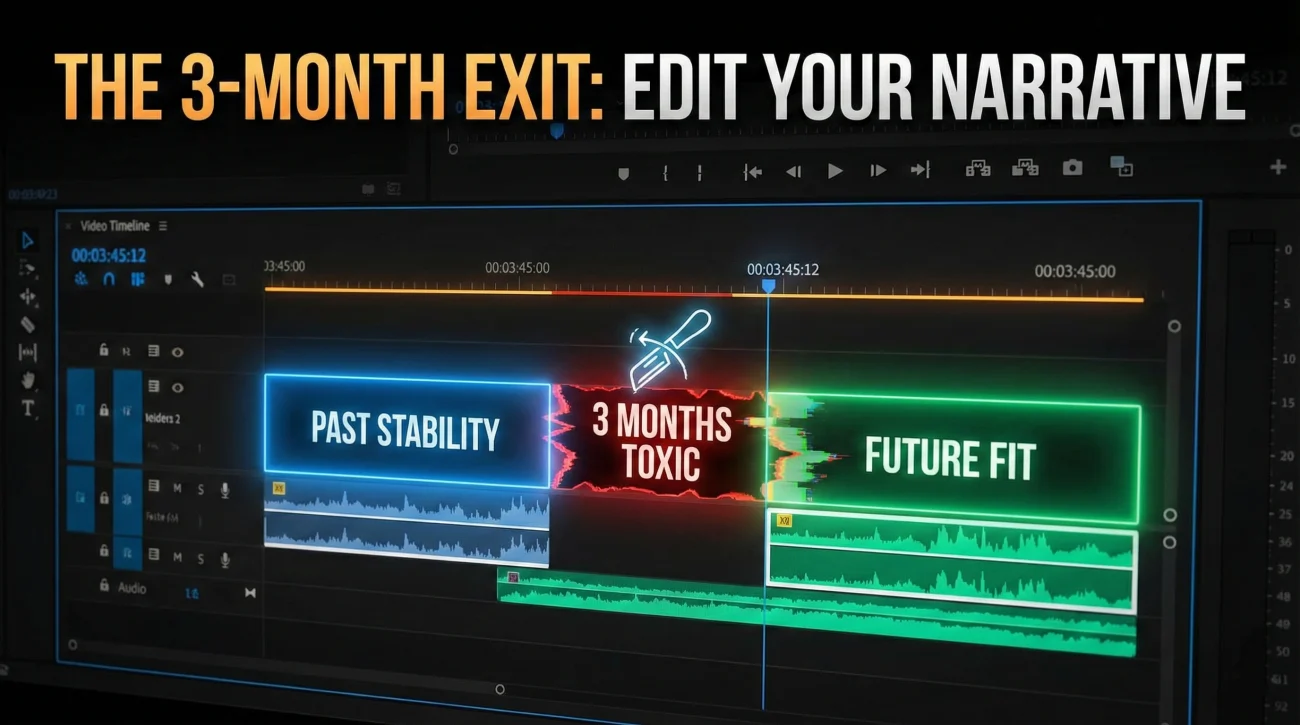
Use a three-part answer: role reality mismatch, professional response, forward-fit signal. Decide first whether the job belongs on your resume. Your interview story should match that decision. The Problem Is Not “Toxic”. It’s The Story People Think Comes With It. I have seen strong candidates lose momentum over a three-month job, not because they left, … Read more

Short Stints Caused by Layoffs: How to Frame the Pattern Without Looking Like Job Hopping

Job Hopping Because Of Layoffs

If your timeline looks messy because companies kept cutting roles, your goal is to label the pattern as structural, not personal. You only need one calm “closure signal” plus one “stability signal” to stop the job-hopper assumption fast. Add a proof marker when you can: Performance snapshot, rehire signal, retained scope, or a clean reference … Read more

Contract Work That Looks Like Job Hopping: How to Show Continuity

Contract Work Looks Like Job Hopping

If your contract history reads like churn, it is usually a formatting problem, not a credibility problem. You can fix the scan in three ways: One umbrella role, grouped clients, or a project-based section. Use labels and bullet patterns that signal repeatable scope, not “new job every few months.” Why Contract Work Gets Misread as … Read more

Recruiter Asked About the Termination: 3 Replies That Keep Momentum

Recruiter Message About Being Fired

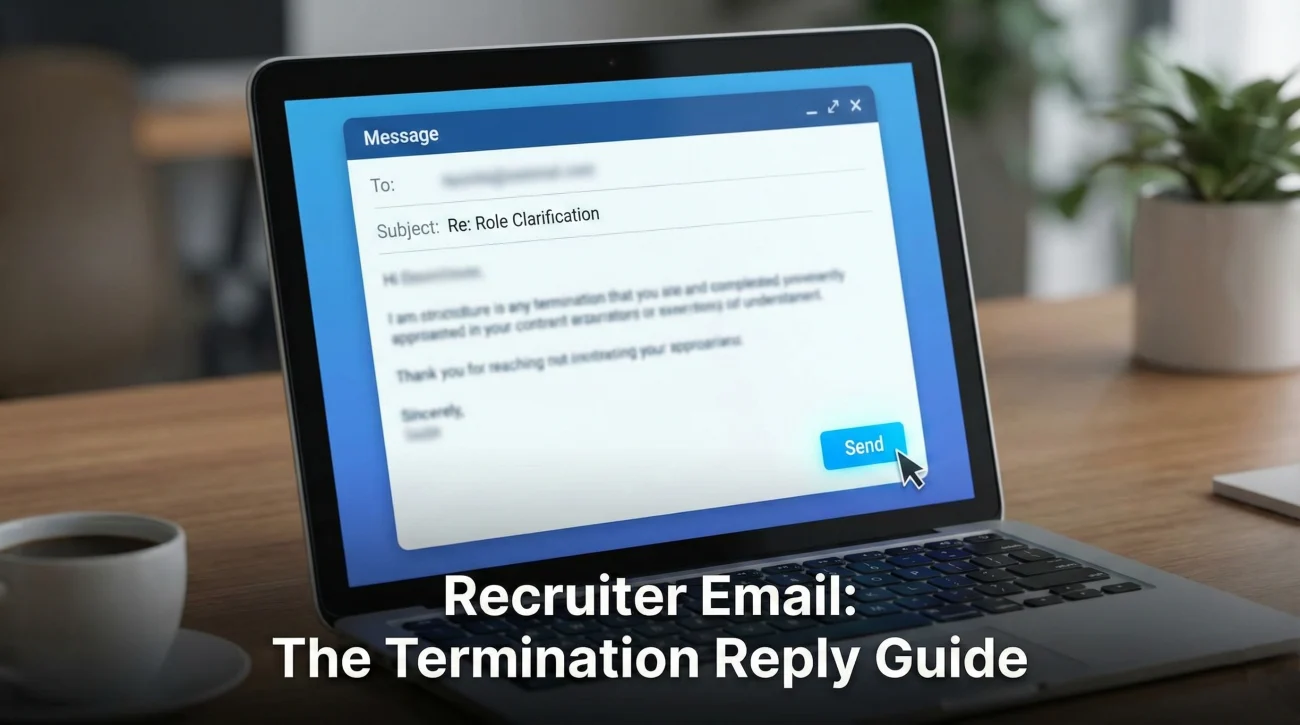
A recruiter email about termination is a risk check, not a cross examination. Your job is to keep the process moving. Use a simple structure: Neutral category, accountability line, closure signal, forward step. Do not overshare. Do not blame. Do not sound evasive. Write like you are closing a file and returning to work. When … Read more

What Did You Do Wrong: Answer Without Self-Sabotage (With 5 Accountability Patterns)

How To Answer What Did You Do Wrong Interview

This question is not about perfection. It is a test of ownership, judgment, and whether you build repeatable fixes. Pick a mistake that is real but containable, then anchor it to a change in process, not a dramatic personality confession. Answer once, cleanly. Then be ready for follow-up questions that try to push you into … Read more

Laid Off But Top Performer: How to Explain It Without Sounding Defensive

Laid Off But Top Performer

If you were laid off while performing well, the risk is not the layoff. The risk is sounding defensive or unfinished. Use a short script that includes scope, a calm closure signal, and one proof cue that is verifiable. Keep your “top performer” evidence factual, then pivot with humility so the interviewer feels steadiness, not … Read more

How to Explain a Layoff in a Cover Letter: One Paragraph That Removes Doubt

How To Explain Being Laid Off In A Cover Letter

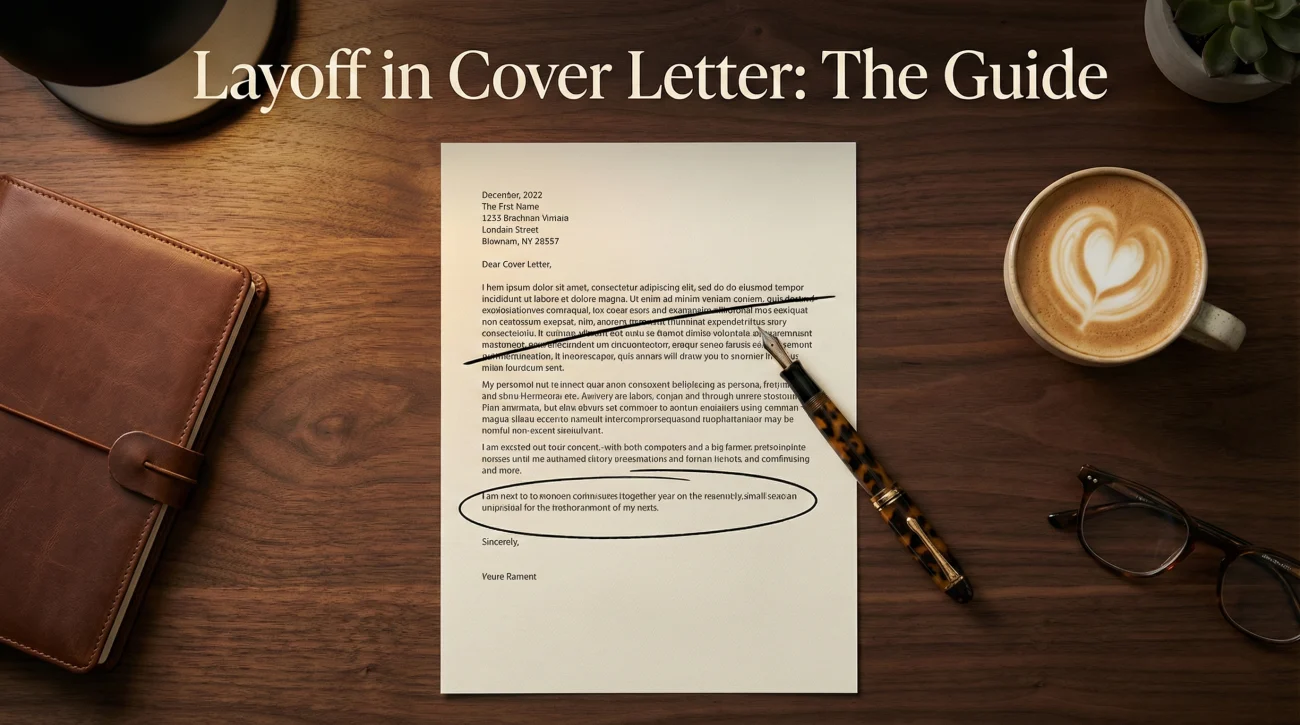
If you mention a layoff in a cover letter, do it in one small paragraph, not as the theme of the letter. Use a neutral label (RIF, restructuring, position eliminated), then add one stability signal that closes the story. Skip the layoff paragraph entirely unless the timeline creates an obvious question (recent end date, current … Read more

Recruiter Asked About the Layoff: 3 Replies That Keep Momentum

Recruiter Asked Why I Was Laid Off

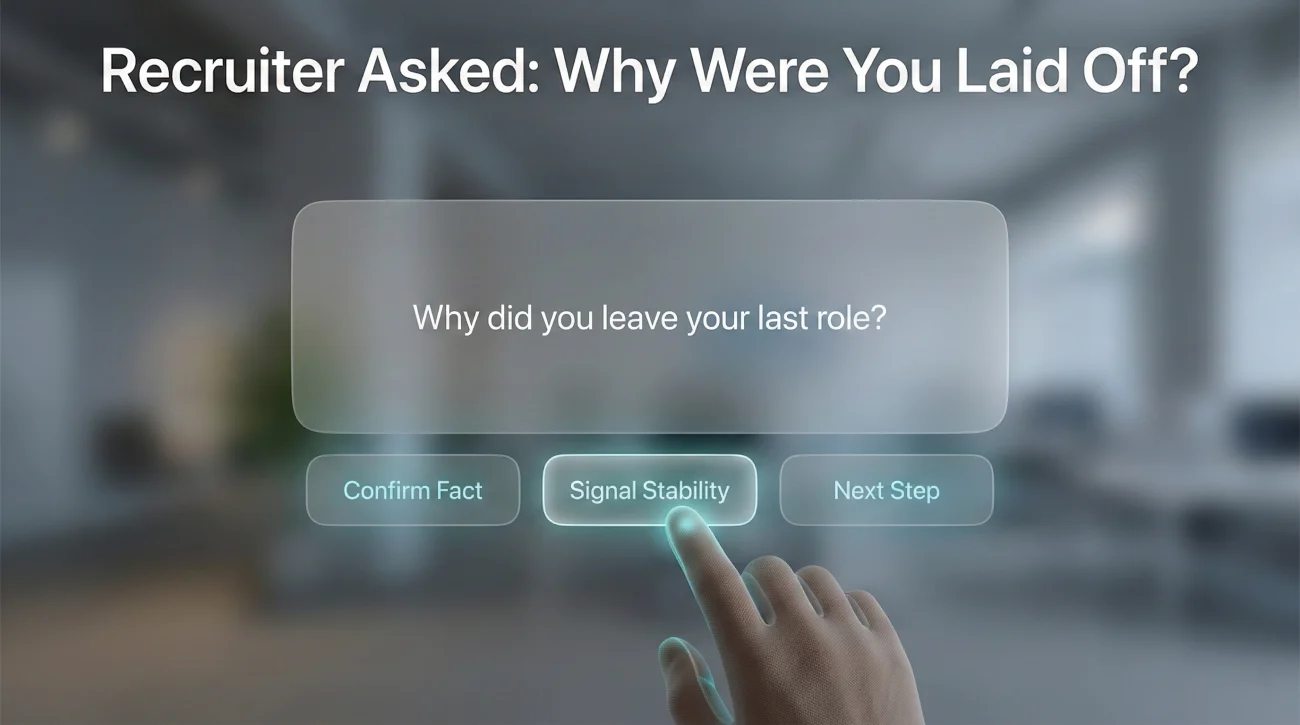
If a recruiter asks about a layoff, your job is to confirm the fact and protect momentum. Use a short structure that signals: It was business-driven, you are available, and you are already moving forward. Pick one of the three replies below based on how much detail you can safely share and how “cold” the … Read more

Why Did You Leave Your Last Job When You Were Laid Off

Why Did You Leave Your Last Job Laid Off

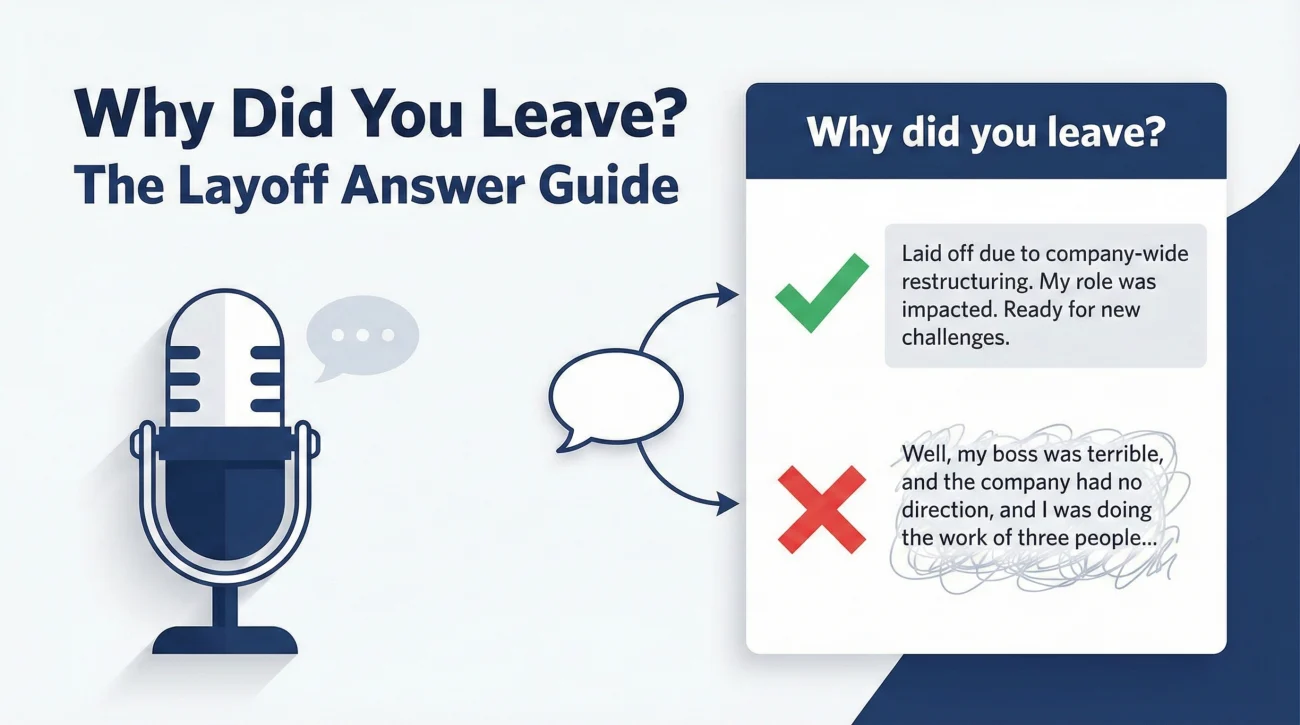
If you were laid off, your answer should sound factual, closed, and forward. Not emotional, not defensive. Use a 12-second structure. What happened, how big it was, what you delivered, what you are targeting next. Prepare two versions. A short answer for the first screen, and a longer answer only if they ask follow-ups. Why … Read more

Reason for Leaving Laid Off: Short Answers for Applications

Reason For Leaving Laid Off

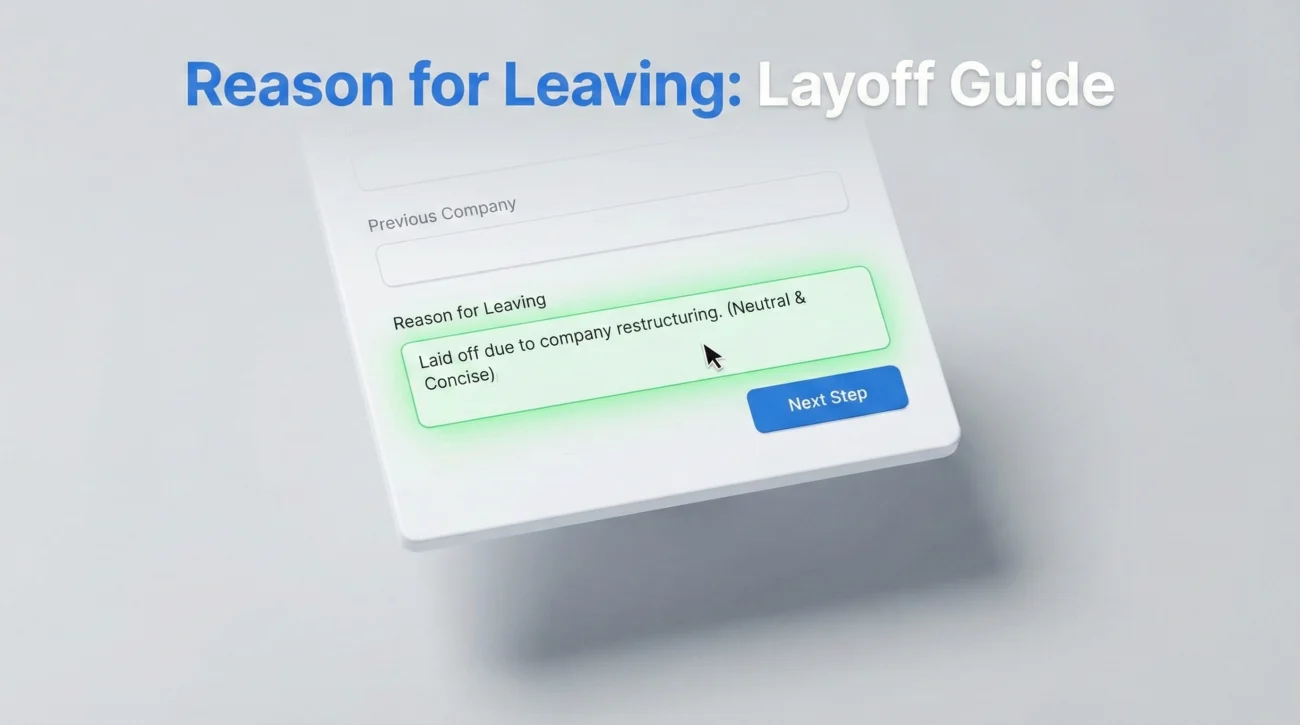
Your “Reason for leaving” field is a classifier, not your life story. Use one layoff label that matches what your company would confirm, then stop. Add one optional signal only when it reduces doubt, not to “sell” the layoff. The Quiet Problem With “Reason for Leaving” on Applications Most candidates treat the “Reason for leaving” … Read more