- If you have multiple short jobs, recruiters are not counting months. They are testing whether you are a flight risk.
- You do not need to prove the workplaces were toxic. You need a clean pattern narrative plus one stability signal.
- Use neutral wording, consistent dates, and one credibility anchor so the story closes fast.
When “Multiple Short Jobs” Becomes a Story Recruiters Invent For You
One short stint is a shrug. Two short stints is a question. Three short stints can start to feel like a personality test, even when the real story is simpler: You walked into bad environments, you exited early, and you are trying to stop that pattern from following you.
I have coached candidates through this exact situation many times, and the mistake is almost always the same. They try to win the argument about whether the workplaces were “really toxic.” That argument is unwinnable in an interview. The hiring team was not there. They cannot verify your lived experience. What they can verify is your pattern.
So this is not a “talk about toxicity” guide. It is a pattern-framing guide for multiple short jobs due to toxic workplaces that keeps you credible, calm, and employable.
To make it real, I will reference three people I have seen navigate this well. Names are changed, details are blended, and the outcomes are true to life.
What Hiring Teams Actually Fear: It Is Not Your Feelings, It Is Your Predictability
When recruiters see repeated short tenures, they run a quick mental math problem: “How likely is this person to leave again, and how expensive will it be if they do?” Your job is to reduce uncertainty, not to deliver a courtroom closing statement.
| What They See | What They Worry It Means | What Calms The Worry |
|---|---|---|
| 3 roles under 12 months | Flight risk, conflict pattern | One pattern narrative plus a stability signal |
| Vague exits (“personal reasons”) | Hidden performance issue | Neutral label that is specific without being dramatic |
| Strong titles but no outcomes | Hype, low follow-through | Measurable proof: metrics, portfolio, or scope |
| Heated tone about past managers | Hard to manage, low discretion | Calm language and clean boundaries |
| References unavailable | Something went wrong | Alternative reference plan and transparent timing |
Key Point: Your goal is to sound like someone who learned to screen better and exit faster, not someone who is still processing the injustice.
One candidate, “Ivett,” had three roles in 14 months. Every job had the same pattern: unclear scope, chaotic leadership, blame culture. She came into coaching wanting a sentence that said, “They were toxic.” We did the opposite. We wrote a sentence that said, “I have clear criteria now, and I am selecting for it.” She stopped losing interviews at the first screen.
⚠️ Warning: If your story sounds like “Everywhere I go is a mess,” the listener only has one consistent variable. You do not want to make yourself the variable.
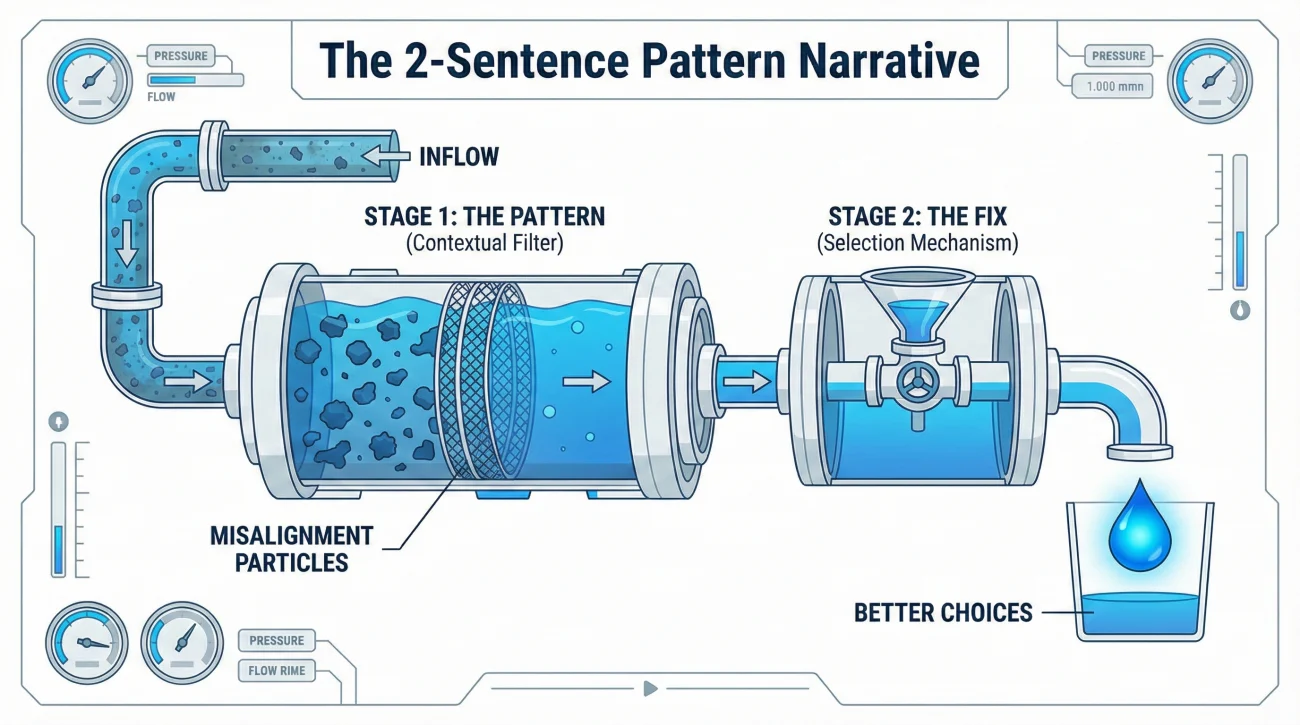
The Pattern Narrative: One Sentence For The Pattern, One Sentence For The Fix
When you have repeated short stints, explaining each job separately creates a long, emotional trail. That is exactly what the interviewer fears: a never-ending story. The alternative is a pattern narrative, where you name the pattern once, then prove you changed something.
The Three-Part Structure That Sounds Adult, Not Defensive
Here is the structure I use with candidates who have short stints because workplace was toxic but do not want to say that phrase out loud:
[Pattern Label] + [Your Decision Rule] + [Stability Signal]
It works because it does three things quickly: it acknowledges the pattern, it shows personal agency, and it shows you are less likely to repeat it.
Pattern Labels That Are Neutral But Real
You do not need harsh words. You need words that a hiring team recognizes as normal business reality. These are examples of neutral labels that do not turn into gossip:
- Mis-scoped role after joining
- Leadership transition and shifting priorities
- High ambiguity environment that was not the right match
- Team structure changed shortly after onboarding
- Role expectations differed from the hiring scope
Notice what is missing. No villain. No diagnosis. No emotional adjectives.
The Fix Must Be Specific, Or It Sounds Like Vibes
“I learned a lot” is not a fix. A fix is a decision rule you now follow. For example:
- I ask for success metrics for the first 90 days before I accept.
- I verify who owns the roadmap and budget before I join.
- I do reference checks in both directions, including cross-functional partners.
- I prioritize stable reporting lines and documented scope.
“Chris,” a colleague of mine in HR, once put it this way after leaving two chaotic startups back-to-back: “I stopped interviewing for charisma and started interviewing for operating rhythm.” That one line became his anchor, and it made his story feel closed.
💡 Pro Tip: The fix should sound like behavior, not personality. “I am more resilient now” is not measurable. “I clarify scope and stakeholders before signing” is measurable.
How To Handle This On The Resume Without Creating A Drama Footnote
Resumes are not therapy journals. If you add emotional context, it becomes the loudest thing on the page. Your resume needs two outcomes: keep the timeline honest, and keep the pattern from looking like instability.

Decide What The Resume Needs To Explain, And What It Does Not
If your short roles are recent and relevant, you usually keep them. If a short role was brief and adds no skill signal, you can sometimes omit it, but be careful. Applications, background checks, and references are separate systems. You do not want inconsistencies that look like hiding.
Instead of writing a reason-for-leaving line under each job, keep the resume focused on work, scope, and outcomes. Then prepare your pattern narrative for interviews.
Two Resume Moves That Reduce Job Hopper Energy
- Outcome density: Add outcomes per role so each short stint looks like a completed project, not an unfinished story.
- Scope clarity: Add one scope marker (team size, region, budget, volume) to show seriousness.
– Owned 42 mid-market accounts and improved renewal forecast accuracy from 68% to 83%
– Built a churn risk dashboard used weekly by Sales and Support leadership
– Led onboarding improvements that reduced time-to-value by 18%
That example does not mention the exit. It does something better. It proves you delivered.
When A Single Neutral Line Helps
There are rare cases where a tiny, neutral line can reduce confusion, especially if multiple short roles happened in the same year. If you use it, keep it boring and consistent, and do it once, not under every job.
Interview Scripts That Answer The Question Without Handing Over The Microphone
Interviewers will usually ask some version of: “Why were those roles so short?” The trap is to answer job-by-job. The win is to answer pattern-first, then fix, then future.
The 30-Second Answer
Use this when the interviewer is screening for risk and you want to keep momentum.
“A couple of my recent roles were shorter than planned because the scope shifted after I joined and the environment was higher ambiguity than I was told. I made the decision to move quickly rather than stay misaligned. Since then, I have tightened my process: I confirm success metrics, stakeholders, and operating cadence before accepting. That is why I am being intentional about roles like this one, where the scope and ownership are clear.”
The 60-Second Answer With One Concrete Proof
This version adds a stability signal. The stability signal can be performance proof, reference support, or a project outcome.
“You’re right to ask. If you look at the last year, you’ll see a pattern of short tenures. The common thread was not performance, it was roles being mis-scoped and leadership changing early. I exited faster once it was clear the expectations were not stable. The stability signal is in my outcomes: even in short timeframes, I shipped work that stuck, like onboarding changes that reduced time-to-value and improved forecast accuracy. I have also changed how I evaluate teams, so I am not repeating that situation again.”
Follow-Up Questions You Should Expect, And How To Handle Them
When someone is worried about repeated short tenures, they will probe for the same thing from different angles. Here are safe, calm responses that do not invite a debate.
Did you leave because you had conflict with your manager?
I would not frame it as conflict. The role definition and operating expectations changed early, and I learned that I do best when scope and ownership are clear. I screen for that now.
Were you asked to leave?
No. The decisions were mine, and my performance feedback was strong. The issue was role structure, not capability.
Why should we believe you will stay here?
Because I am selecting for a stable operating model and a clear success definition. That is why I ask detailed questions about priorities, decision-making, and how performance is measured in the first 90 days.
⚠️ Warning: If you mention “toxic,” be prepared to define it. If you define it, you risk sounding subjective. Keep your language anchored to observable structure: scope, leadership changes, ambiguity, operating cadence.
Credibility Signals That Replace A Toxic Story
When the story is sensitive, proof matters. Proof does not mean oversharing. It means giving the hiring team something they can trust that is not your emotions.

Five Credibility Anchors That Work In Real Hiring
- Metrics: Outcomes per role that show you delivered quickly.
- Portfolio artifacts: A sanitized deck, process doc, or before-and-after workflow that shows competence.
- Reference plan: One reference who can speak to performance and professionalism, even if it is not the last manager.
- Consistency: Same neutral pattern language across resume, applications, recruiter calls, and interviews.
- Decision rule: A clear explanation of what you do differently now.
How To Use References Without Making It Weird
In practice, you want your reference to reinforce two points: you performed well, and you were professional under stress. You do not want them to litigate your former workplace.
💡 Pro Tip: If your last manager is not a safe reference, use a skip-level leader, a cross-functional partner, or a longer-term previous manager who can speak to your reliability.
Eight Neutral Lines You Can Use Across Resume, Recruiter Calls, And Applications
These lines are intentionally boring. Boring is the goal. You can adapt them to your situation without turning your job search into a confession.
- A couple of roles were shorter than planned because the scope changed early, and I made a quick alignment decision.
- Those moves were driven by role structure, not performance. My outcomes in each role were strong.
- I am focused on teams with clear ownership and measurable success definitions.
- I validate stakeholders, priorities, and operating cadence before accepting an offer.
- The common theme was high ambiguity. I learned I do best when scope is stable and decisions are transparent.
- I moved quickly once it was clear the role was not what was hired. I prefer to correct course early.
- I am being intentional now, which is why I am asking detailed questions about how this team operates.
- I can share examples of work delivered in short timelines to show how I execute.
Guardrails: How To Talk About The Pattern Without Getting Pulled Into Details
If you spiral into specifics, the interviewer stops evaluating your skill and starts evaluating your judgment. Your job is to stay grounded in structure, not emotion.

What You Can Say Safely
- Scope changed after joining.
- Leadership transition impacted priorities.
- Operating model was higher ambiguity than expected.
- I am selecting for clearer success definitions now.
What You Should Avoid Saying, Even If It Is True
- Diagnosing people (narcissist, abusive, unstable).
- Sharing stories that sound like revenge or gossip.
- Listing a long set of complaints that make you sound stuck in it.
- Anything that sounds like: “I had no agency and I was powerless.”
⚠️ Warning: If your wording becomes moral judgment, you invite a debate. If your wording stays structural, you invite a solution.
A Tiny Mindset Shift That Changes Your Tone
Say this to yourself before the interview: “I am not proving they were wrong. I am proving I am stable.” That one sentence makes your answer shorter, calmer, and more believable.
Final: Make The Pattern Sound Finished, Then Let Your Work Speak
Multiple short stints can look messy, but the fix is not a better excuse. The fix is a clean narrative that names the pattern once, shows the decision rule you use now, and adds one credibility anchor that is easy to trust.
If you do that, multiple short jobs due to toxic workplaces stops sounding like instability and starts sounding like discernment: you learned how to choose, you learned how to exit early, and you learned how to deliver even in imperfect conditions.
❓ FAQ
🧭 Should I say “toxic workplace” directly in interviews?
Usually no. “Toxic” forces the listener to ask for details, and details pull you into emotion. Use structural language instead: scope, leadership changes, ambiguity, and misalignment.
🧩 What if the recruiter keeps pushing for specifics?
Repeat the same neutral pattern label, then redirect to what you do differently now. Keep it short and consistent across recruiter calls and interviews.
📌 Can I omit one of the short jobs from my resume?
Sometimes, but only if it does not create inconsistencies elsewhere. If the role is likely to appear in checks or forms, omission can create a bigger trust issue than the short stint itself.
🛡️ What is the best stability signal if I cannot use my last manager as a reference?
Use a skip-level leader, a cross-functional partner, or a longer-term previous manager. Pair that with proof of outcomes and a clear decision rule so your story stays boring and believable.
🎯 How many short stints is too many?
There is no magic number, but patterns trigger scrutiny. If you have three roles under a year, assume it will be asked and prepare one pattern narrative you can repeat calmly.
⚠️ Disclaimer: ResumeSolving provides resume, cover letter, job search communication, and career transition guidance for informational purposes only. Hiring practices vary by employer, role, location, industry, and individual circumstances. We do not guarantee interviews, job offers, ATS results, or other outcomes. Verify employer requirements directly and follow applicable laws and workplace policies. For sensitive situations, use only information you are comfortable disclosing and keep all statements accurate.