- Your startup is not “self-explanatory” to a recruiter: A one-line description is the fastest way to make it feel real.
- The best one-liners include one credibility cue: Customer type, product category, stage, or scale, without sounding like hype.
- Stealth is fine: Vagueness is not. You can protect details while still being specific about the problem, market, and role scope.
- Use the templates: Pick one pattern, add one cue, then stop. Two extra adjectives can turn “credible” into “placeholder.”
How to Describe Your Startup in One Line (So It Sounds Real, Not Like a Placeholder)
I have a weird little HR habit: When I see an unfamiliar company name, I look for the micro-signals that tell me it is a real operating business, not a side project dressed up as employment. That is exactly why how to describe your startup on a resume matters more than people think.
A recruiter is scanning fast. If the company is unknown and your bullets are strong, you still might lose them because they cannot place the context. They do not know if you were employee #12 at a funded B2B SaaS, or one of three friends building an app that never shipped. A one-line startup description removes that confusion before it starts.
💡 Pro Tip: Your goal is not to “sell the startup.” Your goal is to make your experience legible in five seconds.
In this guide, I will give you ten copy-ready one-liners, six credibility cues that make unknown companies feel real, and a short do-not-do list that prevents the “this sounds fake” reaction.
Why Recruiters Get Suspicious About Startup Names
Most candidates assume the recruiter is judging the company. In reality, the recruiter is judging the risk created by missing context. When the context is unclear, they fill the gap with worst-case stories they have seen before.
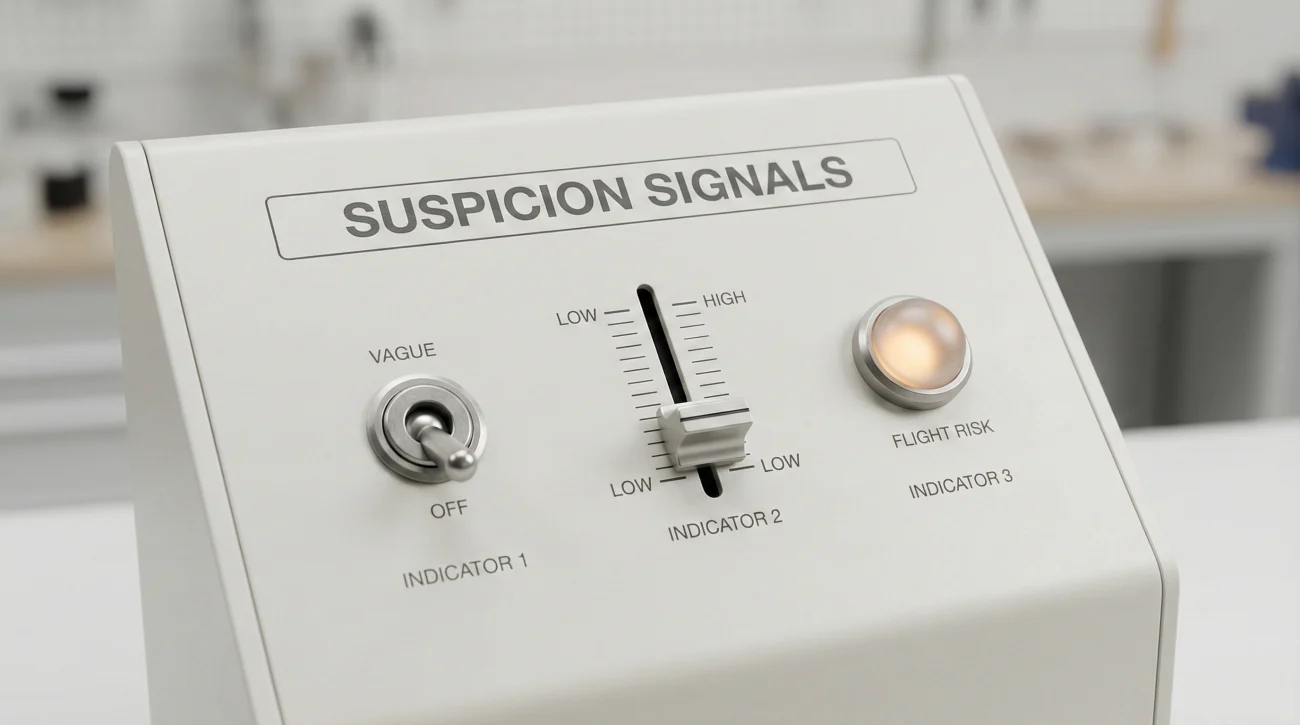
Suspicion bucket 1: Is this real work or a placeholder?
I once screened a candidate named Jameson who listed “Stealth AI Venture” with no industry, no customer, no deliverable, and no location. He had solid skills, but the entry read like a fog machine. My colleague summarized it bluntly:
“Stealth is normal. Vague is not. Vague reads like a shell company.”
The issue was not stealth. The issue was that the resume gave us nothing we could verify or understand.
Suspicion bucket 2: What is the scale of your decisions and impact?
“Startup” can mean 2 founders and a prototype, or 200 employees and real revenue. Recruiters need a quick mental model of the environment you worked in, because it changes how they interpret your scope, your autonomy, and your results.
Suspicion bucket 3: Are you going to leave in six months?
This is the quiet fear behind many founder and startup profiles. Some hiring managers assume you will jump as soon as your next idea shows up. A clean one-liner that frames the business as an operating context, not a personal identity, reduces that “flight risk” feeling without you having to defend yourself.
The One-Line Formula That Works in Real Screens
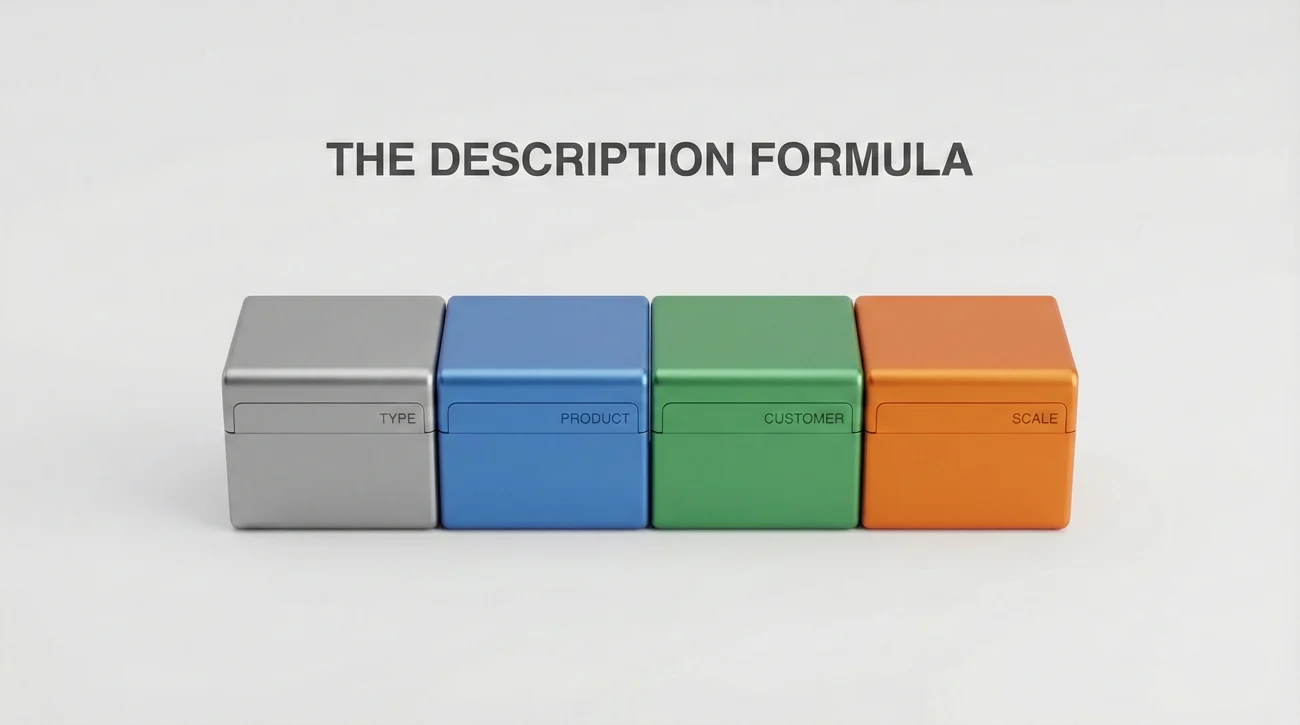
When people ask me what to write about startup on resume, they usually want a clever sentence. What actually works is a boring sentence that answers two questions fast: What does it do, and what makes it credible?
[Company type] + [What it builds or delivers] + [Who it serves] + (Optional: [Stage or scale cue])
That is it. If you do it right, it reads like a factual label, not a pitch deck headline.
| Credibility cue | What it signals | Examples you can use (pick one) |
|---|---|---|
| Customer type | Real market context | B2B mid-market teams, enterprise IT, local clinics, DTC subscribers |
| Product category | Legibility without name-dropping | billing platform, workflow automation, marketplace, mobile fintech app |
| Stage | Expectations of speed and ambiguity | pre-seed, seed-stage, Series A, post-acquisition integration |
| Scale | Scope of work environment | team of 8, 40 employees, multi-country launch, 200k users |
| External signal | “This is real” without hype | VC-backed, bootstrapped revenue-funded, partnered with X type of org |
⚠️ Warning: Use one cue, not four. Too many signals reads like compensation for weak substance.
If you only remember one rule: Your one-liner should feel like a label on a file folder. No suspense, no drama, no adjectives trying to impress.
10 One-Liners You Can Copy and Adapt
Below are ten patterns I have seen survive real recruiter screens. Treat them like scaffolding. Swap in your product category, customer type, and one credibility cue. Then stop editing.
Template set: Neutral, factual, easy to verify
- “Seed-stage [product category] startup serving [customer type], focused on [simple outcome].”
- “Bootstrapped [industry] company building [product] for [customer type] teams.”
- “Early-stage [B2B/B2C] platform helping [customer type] [verb] through [method].”
- “Venture-backed startup developing [product category] used by [customer type] in [industry].”
- “Small product team (under [number]) building [product] for [market], launched in [region].”
These work because they sound like a fact, not a slogan. If your company is not VC-backed, do not borrow that word. Recruiters can smell borrowed credibility fast.
Template set: When the startup is unknown and you need instant context
- “[Industry] startup building [product] for [customer type], with [one scale cue] at the time.”
- “New venture inside the [industry] space, shipping [product category] to [customer type].”
- “Revenue-funded [product category] company supporting [customer type] across [region].”
- “Acquired startup in [year], where the product was integrated into [bigger category].”
- “Stealth-mode venture in [industry], building [product category] for [customer type].”
❌ Note: If you write “stealth-mode” and then nothing else, it looks like a placeholder. “Stealth” should be paired with industry and product category so it stays legible.
Here are three finished examples, formatted the way I like to see them on a resume. Notice how each one includes only one credibility cue.
Seed-stage payments startup building a subscription billing platform for SMB SaaS teams.NorthBridge Health (Healthcare) | Operations Lead
Bootstrapped clinic software company supporting multi-location practices across two states.Stealth Venture (Cybersecurity) | Full Stack Engineer
Stealth-mode B2B security startup building automated access auditing for mid-market IT teams.
Do I have to mention stage or funding?
No. You only need one credibility cue. If stage or funding helps the reader understand your environment, include it. If it creates new questions you cannot answer cleanly, skip it and use customer type or product category instead.
To keep your startup description resume line clean, read it out loud. If it sounds like you are pitching me, rewrite it until it sounds like you are labeling a folder.
6 Credibility Cues That Make a Startup Feel Real

Recruiters do not need your pitch deck. They need one anchor that tells them this was a functioning environment with real constraints. These six cues do that without turning your resume into a biography.
Cue 1: Customer clarity
“Serving dentists” is more believable than “disrupting healthcare.” If you want to describe startup on resume in a way that feels grounded, customer type is usually the safest cue.
Cue 2: Product category, not product poetry
Use categories a stranger understands: scheduling platform, marketplace, analytics dashboard, identity management tool. Save creative language for interviews.
Cue 3: Scale in plain numbers
Team size, user count, or geography can work. Keep it modest and defensible. “Team of 9” is a credibility cue. “Global unicorn” is a headline that invites skepticism.
Cue 4: Stage phrased like a context, not a flex
Pre-seed, seed-stage, post-acquisition integration. Stage helps hiring managers interpret why you wore multiple hats. It also explains imperfect process without you having to apologize.
Cue 5: External signal, used carefully
“VC-backed” can help if it is true and not overused. “Revenue-funded” often reads even cleaner, because it implies customers exist.
Cue 6: Stealth done the professional way
Stealth is common, especially in security, AI, and regulated spaces. The professional approach is: Name the industry, name the product category, name the customer type. Do not name clients, do not reveal proprietary details, and do not write like a thriller.
💡 Pro Tip: If you are worried about confidentiality, you can replace company name with “Stealth Venture” and then use a strong one-liner. It reads more honest than a made-up brand name.
The Do-Not-Do List That Triggers “This Feels Fake”
I have seen strong candidates lose screens because the startup line made the whole entry feel like smoke. Here are the patterns that create that reaction.
- Buzzword soup: “Revolutionizing AI-driven synergy for the future of work.”
- Stealth plus mystery: “Stealth startup” with no industry, no category, no customer.
- Adjectives instead of facts: “World-class,” “elite,” “game-changing,” “cutting-edge.”
- Unverifiable scale flex: “Massive growth” without a single number anywhere else on the page.
- Over-explaining the company: A three-line mission statement that crowds out your own work.
⚠️ Warning: If your one-liner needs three adjectives to sound impressive, it is not a one-liner. Strip it down until it reads like a fact.
The resume is not a brand brochure. It is a proof-of-work document. Let your bullets do the heavy lifting.
Three Real Situations Where a One-Liner Saved the Candidate
I am not going to pretend every resume needs the same treatment. It depends on what the recruiter can instantly recognize. But when the company name is unfamiliar, a one-liner often decides whether your bullets even get read.
Sophia: Strong achievements, but the company sounded like a hobby
Sophia spent two years at a tiny e-commerce tool startup. Her metrics were excellent, but her resume listed the company name with no context. A hiring manager assumed it was a side project and moved on. We changed one line to: “Revenue-funded e-commerce automation startup serving Shopify merchants.” Nothing else changed. Her response rate improved within a month because the experience finally sounded like a real operating environment.
Sean: Stealth mode that looked like secrecy
Sean worked in a stealth security venture and was legitimately constrained by confidentiality. His first draft said “Stealth Startup (NDA).” That line created suspicion, not respect. We rewrote it to: “Stealth-mode B2B cybersecurity startup building automated access auditing for mid-market IT teams.” Same secrecy, more clarity. Recruiters stopped guessing and started asking normal questions.
Suzy: Acquisition story that sounded like a failure
Suzy’s startup was acquired, and she feared the word “acquired” would sound like an ending. In practice, it sounded like stability. Her one-liner became: “Acquired healthcare scheduling startup, product integrated into a larger patient engagement suite.” That single sentence helped hiring managers place her work inside a real business narrative.
None of these candidates needed hype. They needed clarity. The one-liner did the quiet work of making the experience interpretable.
A Quick Checklist Before You Hit Apply
If you are unsure whether your one-liner is doing the right job, run it through this quick screen. This is the same logic many recruiters apply subconsciously.
- ✅ Does it say what the company does in plain words?
- ✅ Does it include one credibility cue: Customer, product category, stage, or scale?
- ✅ Would a stranger understand it without Googling?
- ✅ Does it avoid pitch language?
- ✅ Does it stay under one line in normal resume formatting?
💡 Pro Tip: If you are applying outside tech, replace jargon with category language. “Access auditing” might become “security compliance automation.” Same meaning, more legible.
Final: The Calm Way to Make a Startup Sound Real
A startup does not need a famous name to belong on your resume. It needs a single sentence that gives the reader a fair way to interpret your work. If you can describe what it builds, who it serves, and one grounded cue of credibility, the entry reads like employment, not a placeholder.
Keep the line factual. Let your bullets carry the proof. And if you are still tweaking words at midnight, that is usually a sign you added one adjective too many.
If you want the simplest framing to reuse across applications, treat how to describe your startup on a resume like a labeling exercise: One category, one customer, one cue, then move on.
❓ FAQ
🎯 Where should the one-line startup description go on my resume?
Put it right after the company name or directly under your title, in smaller text if your format allows. The point is to remove confusion before the reader hits your bullets.
🧩 Can I write “Stealth Startup” as the company name?
Yes, if confidentiality is real. Pair it with industry, product category, and customer type so it stays legible and does not read like a placeholder.
💼 Should I include funding amounts in the one-liner?
Usually no. “Seed-stage” or “VC-backed” is enough if it helps context. Specific amounts can invite skepticism unless they are widely public or directly relevant to your role.
🧠 What if my startup never launched?
Focus on the work that shipped internally: MVP built, pilots run, user research completed, systems implemented. Your one-liner can still describe the product category and target customer without claiming market success.
📌 Do I have to mention that I was a founder?
No. If “Founder” helps the story and matches the job you want, use it. If it triggers unnecessary concerns, you can frame the role as your function, especially when your deliverables were clearly functional.
🔍 How short is “one line” in practice?
Aim for 12 to 18 words in typical resume formatting. If it wraps to two lines, remove one phrase, usually an adjective or an extra clause.
⚠️ Disclaimer: ResumeSolving provides resume, cover letter, job search communication, and career transition guidance for informational purposes only. Hiring practices vary by employer, role, location, industry, and individual circumstances. We do not guarantee interviews, job offers, ATS results, or other outcomes. Verify employer requirements directly and follow applicable laws and workplace policies. For sensitive situations, use only information you are comfortable disclosing and keep all statements accurate.