- If you want a lower role, the goal is not to erase seniority. The goal is to reduce senior signals that create the wrong questions.
- Use scope control: Narrow what you claim to own, keep outcomes, and cut the “executive perimeter” language.
- Do not “downgrade” titles or hide facts. Reframe with honest role labels, smaller operating context, and job-matching keywords.
- Fix the three trigger zones first: Summary, first two experience bullets, and leadership signals.
- Use the red-flag checklist at the end to spot why recruiters keep saying “overqualified.”
Why “Toning Down” A Resume Is Really About Questions
I have watched smart candidates sabotage themselves with one well-meant move: They try to tone down resume content by deleting half their life. Then the resume reads thinner, stranger, and somehow more suspicious.
A few months ago, a candidate named Claude told me she was applying for a coordinator role after years in operations leadership. Her first draft removed every leadership bullet. It looked “less senior,” sure, but it also looked like she had nothing solid to show. The hiring manager’s reaction was predictable: “So what exactly did she do for the last five years?”
Here is the pivot that makes this work: You are not trying to look smaller as a person. You are trying to make your story feel stable at the level you want, so the reader stops asking side-questions and starts evaluating fit.
💡 Pro Tip: A down-leveled resume wins when it answers “Why this role?” before the recruiter has to ask it out loud.
The Four Questions Your Resume Is Triggering Right Now
When recruiters say “overqualified,” they are usually not arguing about your competence. They are reacting to unanswered questions that your resume accidentally broadcasts.
| Unspoken question | What triggers it on a resume | What you want them to believe instead |
|---|---|---|
| Will you leave as soon as something better shows up? | Executive language, huge scope, fast promotions, “transformations” everywhere | You want steady work at this level, with clear expectations and a defined lane |
| Will you be bored or resentful? | Bullets that scream strategy while the job is execution-heavy | You enjoy hands-on delivery and you are choosing it on purpose |
| Will you disrupt the team dynamic? | “Owned,” “drove,” “executive stakeholder management,” “advised C-suite” for a junior role | You can collaborate without needing to run the room |
| Will you be too expensive? | Big budgets, headcount numbers, global scope, multiple functions under you | You are aligned with the role’s level and constraints |
I once heard a hiring manager describe it bluntly in a debrief. This is the exact tone you are trying to prevent.
“Their resume is impressive, but this role is small. I’m worried they’ll get annoyed and leave after three months.”
So the strategy is simple: Reduce the triggers, keep the credibility, and write in a way that fits the job’s operating scale.
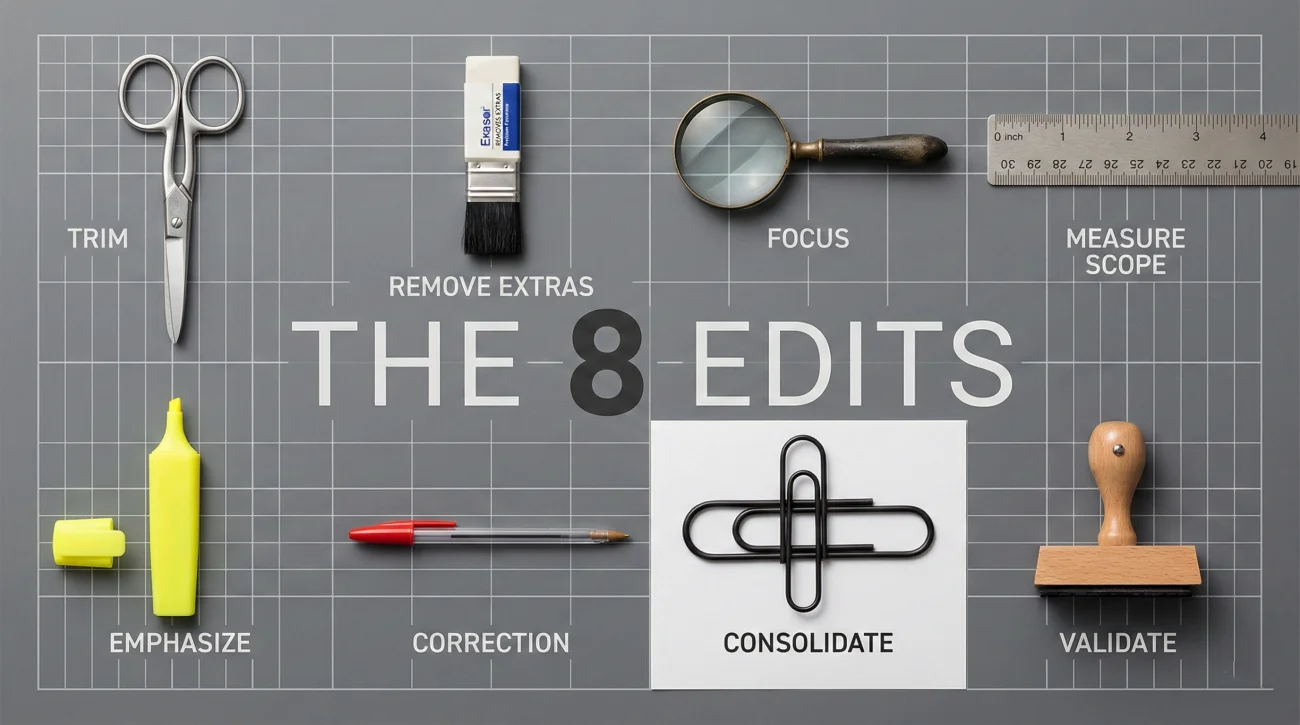
The 8 Edits That Make You Look Right-Sized Without Lying
These rules work best when you apply them in order. Do not skip to formatting tricks. Start with meaning, then move to presentation.
Rules 1 And 2: Shrink Scope Language, Not Your Value
Rule 1: Replace “enterprise ownership” verbs with “team delivery” verbs when the target role is execution-heavy. You can still show results, but the posture changes.
Rule 2: Stop claiming the whole system. Claim the lane you want to be hired into.
Same person. Same competence. Different hiring signal. The second version still shows impact, but it sounds like someone who will happily execute inside a defined scope.
Rules 3 And 4: Rebuild The Summary So It Reads Like Intent, Not Retreat
Rule 3: Your summary must match the level of the job. If you sound like a department head applying for an individual contributor role, the reader assumes something is off.
Rule 4: Use “hands-on” proof and tools, not status markers. The fastest way to look senior is to write abstractly.
Here is a pattern that works because it feels grounded.
[Role you want] + [What you actually do weekly] + [Tools or systems] + [Outcome]
Comfortable with Excel dashboards, ticketing systems, and process documentation
Known for keeping workstreams on track and closing loops without drama
⚠️ Warning: Avoid “strategic leader” language unless the job posting asks for it explicitly.
Rules 5 And 6: Rewrite Bullets To Sound Like The Job You Want
Rule 5: Move big-scope bullets lower, and let job-matching bullets sit at the top of each role. Recruiters often scan the first two bullets and decide the level in seconds.
Rule 6: Keep one credibility bullet per role, then spend the rest on relevance. Your resume is not a biography. It is a fit document.
One of my colleagues, Daniel, used to manage a team of 18. When he applied for a senior specialist role, he kept one leadership bullet, then shifted everything else to hands-on delivery. He did not hide leadership. He just stopped leading with it.
Notice what changed: The second bullet sounds like the daily operating reality of many lower-level roles. That lowers the “Will you be bored?” reaction.
Rules 7 And 8: Remove The Senior “Extras” That Inflate Your Profile
Rule 7: Trim leadership signals that are not required for the role. This includes board committees, executive advisory language, and repeated “stakeholder management” phrasing when the job is not stakeholder-heavy.
Rule 8: Reduce “scale flexing” unless the job needs it. Big budgets, headcount, and global ownership can backfire when the employer is hiring for a smaller context.
That does not mean deleting achievements. It means right-sizing the frame. A $20M budget line can be replaced with an operational detail the job actually cares about, like cycle time, accuracy, or throughput.
Red Flags That Make Your Resume Look “Too Senior” In 10 Seconds
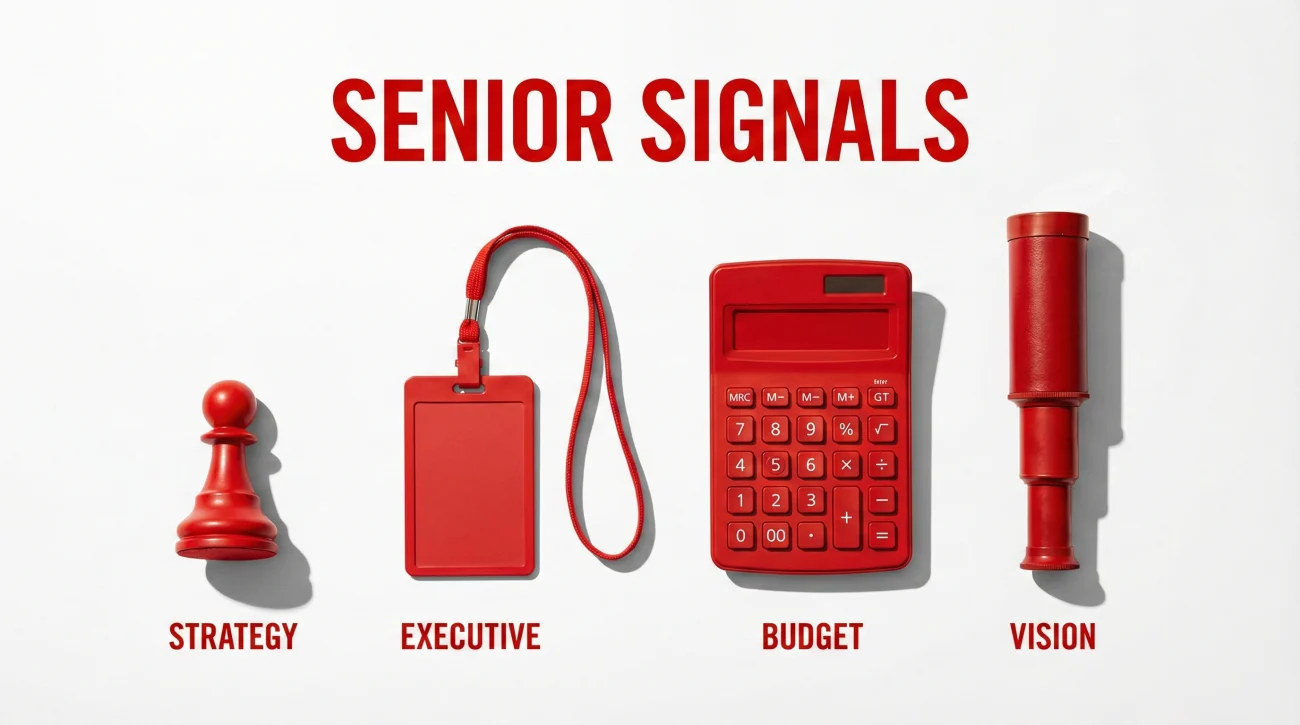
If you keep getting rejected for lower roles, use this list like a quick diagnostic. You do not need to fix everything. You usually need to fix the top three triggers.
- 🚩 Your summary mentions “strategy,” “vision,” or “executive leadership,” but the job is execution-focused.
- 🚩 Your first bullets start with “Owned,” “Directed,” “Spearheaded,” repeated across roles.
- 🚩 Every role includes team size, budgets, and cross-functional governance details.
- 🚩 Your skills list reads like a director toolkit, not the tools used in the target job.
- 🚩 You show every promotion and title escalation, then apply for an entry-level role with no explanation.
- 🚩 You removed so much history that your timeline looks confusing or incomplete.
❌ Note: If your “fix” involves changing titles to something you never held, stop. That is not toning down. That is creating a future verification problem.
A 20-Minute Workflow To Downlevel Cleanly

Pass 1: Align The Top Third Of The Resume
Start with the top third because it sets the level. Rewrite the summary using the formula, then adjust the headline or target title to match the role you want.
One candidate I worked with, Lina, kept getting “overqualified” for an admin role after years in project coordination. Her resume opened with “Program Management Leader.” We changed it to “Operations Support and Scheduling,” kept her outcomes, and she started getting callbacks within two weeks.
Pass 2: Fix The First Two Bullets In Each Role
Recruiters form a level impression quickly. Put the most job-matching, hands-on bullets first. Move the bigger scope bullets down, or compress them into one line.
Keep outcomes, but show the operating motion: tracked, coordinated, maintained, resolved, documented, improved, supported. These are not “weak” verbs when they match the job.
Pass 3: Trim The Senior Extras
Finally, remove or shorten elements that inflate you. If the role does not require certifications, board work, keynote talks, or published thought leadership, you can keep one line or remove it entirely.
The goal is a resume that feels calm and specific, not a resume that feels like a negotiation.
Should I delete entire roles to look less senior?
Sometimes, yes, but only when the role adds noise and raises new questions. A safer default is to compress older or irrelevant roles into a short “Additional Experience” block, so your timeline stays coherent while your story stays focused.
Final The Resume That Wins A Lower Role Still Feels Confident
The cleanest way to approach this is to treat it like signal design. You keep your credibility, you keep your truth, and you stop broadcasting a bigger level than the job can hold.
If you apply the eight edits, your resume starts answering the real objections before they form. It reads like someone who knows what the role is, understands the daily reality, and is choosing it deliberately.
When you tone down resume content this way, the story stays intact. It just becomes right-sized for the next step.
❓ FAQ
🎯 Is it okay to remove leadership experience for a lower role?
It is okay to reduce how much leadership you highlight, especially in the top third of the resume. Keep one credibility signal, then prioritize hands-on bullets that match the job.
🧩 Should I change my job titles to sound more junior?
Do not change titles to something you never held. Instead, use a target title at the top, adjust your summary, and rewrite bullets so the operating scope matches the role.
🛠️ How do I make my resume less senior without losing impact?
Keep outcomes, but shift the frame. Reduce enterprise ownership language, show the lane you worked in, and lead with the tasks and tools the target job uses.
💬 What if the recruiter asks why I am applying for a lower role?
Answer with intent and stability. Explain what you want more of in the day-to-day work, and connect it to the role’s scope instead of talking about what you are running away from.
📄 How far back should I go if I am downleveling?
Use relevance as the filter. Keep enough history to avoid timeline confusion, and compress older or off-target roles so they do not dominate the story.
✅ What is the fastest fix if my resume keeps getting “overqualified”?
Rewrite the summary and the first two bullets of your most recent role. Those areas set the level signal. Then trim the senior extras that inflate your profile.
⚠️ Disclaimer: ResumeSolving provides resume, cover letter, job search communication, and career transition guidance for informational purposes only. Hiring practices vary by employer, role, location, industry, and individual circumstances. We do not guarantee interviews, job offers, ATS results, or other outcomes. Verify employer requirements directly and follow applicable laws and workplace policies. For sensitive situations, use only information you are comfortable disclosing and keep all statements accurate.