- Your goal is not to prove anything. Your goal is to sound stable, employable, and done with the story.
- Avoid legal labels. Describe work conditions and fit, then close the loop with one clean next-step sentence.
- Use one core script, then pick an alternative based on how sensitive the interviewer seems and how much you need to explain.
The Interview Trap Behind “Hostile Work Environment”
I have interviewed enough candidates to know this pattern by heart. A candidate is trying to be honest, they say too much too fast, and the room changes. The interviewer stops hearing “good worker who wants a healthier fit” and starts hearing “potential legal conflict, unpredictable situation, messy story.”
This article is about writing and saying one sentence that keeps you safe. If you only remember one thing, remember this: a hostile work environment interview answer is not a courtroom statement. It is a professional explanation that stays closed.
One of my former colleagues, Yoshie, used to call this “the label problem.” The moment you label the environment, you accidentally invite the interviewer to ask for evidence, timelines, and names. Even if they do not ask, they are now thinking about risk, not your skills.
⚠️ Warning: This is not legal advice. It is communication strategy for interviews. If you need legal guidance, talk to a qualified professional in your area.
What Hiring Managers Hear When You Use Legal-Sounding Labels
Most candidates use “hostile” because they are trying to compress a long, painful experience into one word. I get it. But in an interview, labels create ambiguity. The interviewer cannot verify your story, so they default to what they can control: risk reduction.
| What you say | What it can signal (even if you did not mean it) |
|---|---|
| “It was a hostile work environment.” | Potential legal dispute, unresolved conflict, unpredictable reference checks |
| “My manager was abusive.” | Highly emotional story, accusation without context, interviewer probes for details |
| “Toxic culture and bad leadership.” | Subjective judgment, may sound like blame, may raise “difficult to manage” fears |
| “The role changed and the expectations became unstable.” | Work-conditions framing, easier to understand, lower drama, less probing |
| “I’m looking for a team with clearer operating rhythm and feedback.” | Future-facing fit, maturity, self-awareness, easy to move on |
When I screen candidates, I do not need the full story. I need to know whether you can work well with others, whether you can keep things professional under stress, and whether you will repeat the same conflict here.
💡 Pro Tip: Replace labels with conditions. Conditions are neutral, specific enough to be believable, and boring enough that the interviewer moves on.
The “Conditions + Fit + Closure” Framework

Here is the framework I coach candidates to use when they are coming out of rough workplaces. It works because it does not ask the interviewer to judge who was right. It simply states what was true for you and what you are choosing now.
[Neutral Conditions] + [What You Do Best] + [What You’re Looking For] + [Closure Signal]
Closure signal matters more than people think. Without it, your answer feels like an open door. With it, your answer feels complete.
My friend and fellow HR lead, Marcus, told me he listens for one phrase that shows closure: “I realized I do my best work in…” That line signals you are not stuck in resentment. You are making a decision.
What counts as “neutral conditions” without sounding vague?
Think in operational terms: changing priorities, unclear escalation paths, inconsistent workload planning, unstable resourcing, communication breakdowns, or a mismatch in how performance feedback is delivered. These are conditions, not accusations.
One Safe Script You Can Use Verbatim

This is the core script. It is short on purpose. The more you add, the more you invite probing.
I left because the role shifted into an environment with unpredictable expectations and limited alignment on how work was prioritized. I do my best work with clear goals, direct feedback, and a steady operating rhythm. That’s what I’m looking for now, and it’s why this role stood out to me.
Notice what is missing: no labels, no names, no timeline of incidents, no moral verdict. It still feels honest because it explains a real reason: conditions and fit.
Key Point: If your answer makes the interviewer curious about conflict details, it is too open. If your answer makes them curious about your standards and strengths, it is safe.
One candidate I worked with, Hannah, kept wanting to say “harassment” because that is what it felt like. We rewrote her answer into conditions and fit. She did not feel like she was lying. She felt like she was choosing professionalism. She later told me the difference was that she stopped rehearsing anger and started rehearsing clarity.
Six Safer Alternatives (Pick One Based on Your Situation)
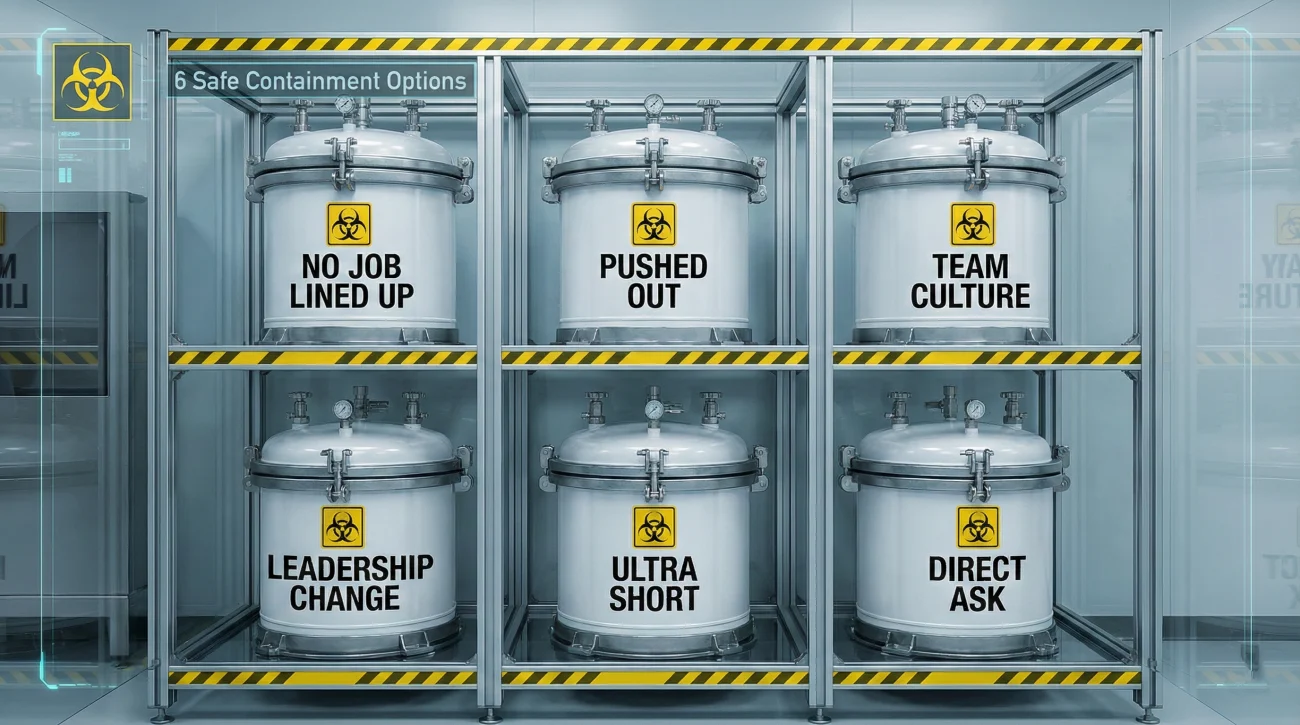
Use these when the core script does not match your exact scenario. Each one stays neutral and still sounds like an adult decision.
- When you quit without another job lined up: “I made a careful decision to step away after the role became unstable in expectations. I took a short reset, and now I’m focused on roles with clearer structure and accountability.”
- When you were pushed out after conflict: “There was a mismatch in working style and expectations that didn’t improve over time. I’m looking for a team where goals and feedback are direct and consistent.”
- When the team culture was the issue: “I work best in environments where collaboration is the default and issues are addressed early. I’m targeting teams that operate that way.”
- When it was a leadership change: “After a leadership change, the role shifted significantly and the operating style changed. I’m looking for a structure that matches how I deliver my best results.”
- When you need to keep it ultra short: “It wasn’t the right long-term fit in how the work was managed. I’m focused on roles with clearer priorities and stronger alignment.”
- When you are asked directly about toxicity: “I try not to label past teams. I can say the environment wasn’t set up for clear priorities and healthy feedback, and I’m choosing a better fit.”
One phrase you can use to keep it calm is: “I try not to label.” It signals maturity. It also quietly sets a boundary.
These alternatives also cover three common searches candidates have told me they type at 2 a.m.: hostile work environment interview, toxic team interview answer, and workplace harassment interview answer. They are different phrases, but the safe communication goal is the same: neutral, brief, closed.
Six “Do Not Say” Lines That Create Drama or Risk
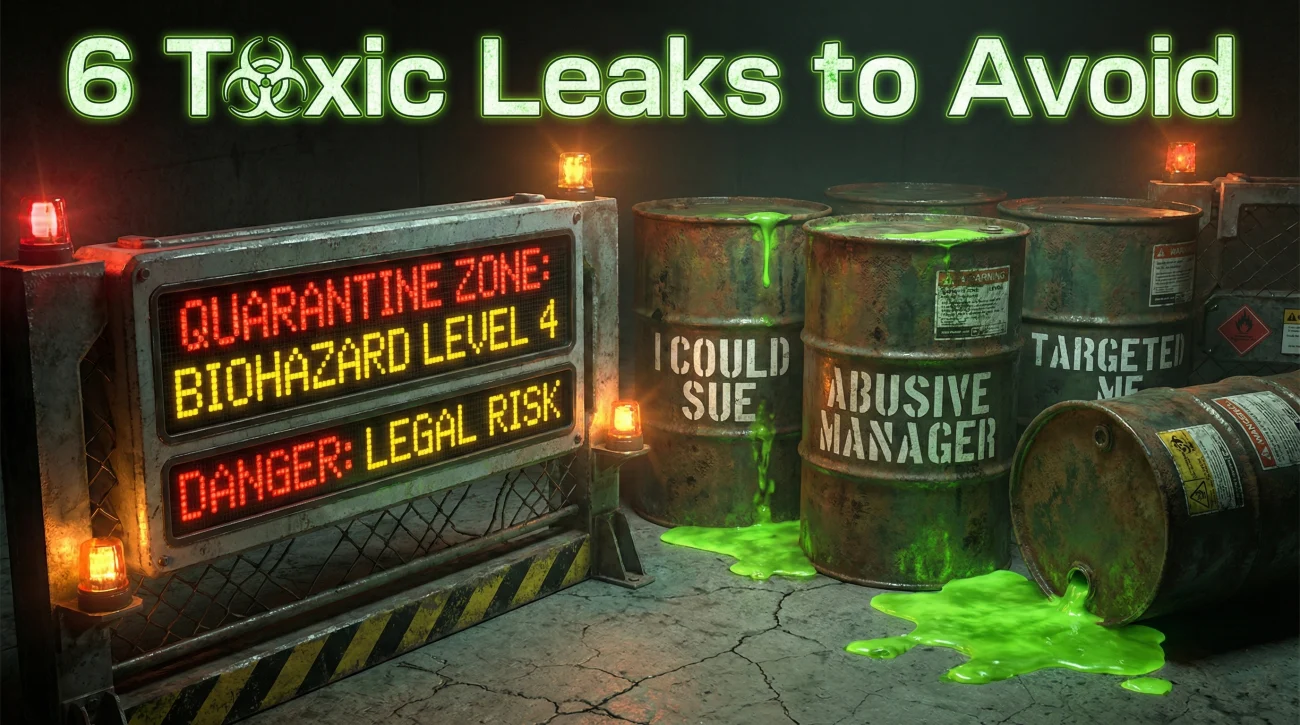
These lines are common because they feel emotionally true. They are also exactly what pulls you into a longer conversation you do not want in an interview.
- “It was a hostile work environment, and I could sue them.”
- “My manager was abusive and everyone knows it.”
- “They were harassing me and HR did nothing.”
- “The whole place is toxic, I couldn’t take it anymore.”
- “I left because they targeted me.”
- “Let me tell you what really happened.”
❌ Note: Even if every word is true, these lines make the interviewer feel like they are about to inherit a live conflict. Most interviewers will not say that out loud. They will just move on to another candidate.
How to Handle Follow-Up Questions Without Getting Pulled Under
Sometimes the interviewer probes anyway. Not because they want gossip, but because they want to test your judgment and emotional control.
“What do you mean by unstable expectations?”
Answer with one neutral example, then close. One example is enough.
The priorities changed week to week without a clear decision owner, so it was difficult to plan work and deliver consistently. I raised it and tried to align, but it stayed that way. I’m looking for a team with clearer prioritization and accountability.
Follow-up: “Was it your manager or the company?”
This is a trap question. If you pick a villain, you sound like blame. If you dodge, you sound evasive. The safe move is to reframe to fit.
I try not to reduce it to one person. What mattered was the operating environment. I do best with clear goals and direct feedback, and I’m focusing on teams built that way.
Follow-up: “Did you report it?”
You can answer without details. You also do not want to turn the interview into a compliance discussion.
I handled concerns through the appropriate channels available to me at the time. For interviews, I keep it focused on fit and the work I’m excited to do next.
“I’m happy to share what I learned from the experience, but I’d rather keep specifics about my previous employer private and focus on how I can contribute here.”
That line sounds calm, not defensive. It also gives the interviewer a socially acceptable off-ramp.
A Quick Practice Routine That Makes You Sound Calm
Most people do not fail this question because they lack a script. They fail because their body remembers the stress, and their voice starts telling the story before their brain can steer.
- Say your answer out loud three times, aiming for the same length each time.
- Record one take and listen for emotional adjectives. Swap them for operational language.
- End on a forward sentence that mentions the role you are interviewing for.
I used this with a candidate named Dev, who kept spiraling into “and then this happened.” We cut his answer down to 20 seconds. The next week he told me the interviewer nodded and moved on immediately. That is the win. Not sympathy. Control.
💡 Pro Tip: If your answer is longer than 30 seconds, you probably opened a door you did not need to open.
Final: Keep It Neutral, Keep It Closed, Keep It About Fit
You do not need to convince a stranger that your past workplace was bad. You need to show that you can describe a hard situation with professional restraint, and that you know what conditions help you do great work.
When you use conditions, fit, and closure, a hostile work environment interview answer stops sounding like a legal story and starts sounding like a clear career decision.
❓ FAQ
🧭 Should I ever say “hostile work environment” in an interview?
In most cases, no. It is a loaded label and it often invites probing. Use neutral work-conditions language instead, then close with what you want next.
🎯 What if the interviewer keeps pushing for details?
Give one neutral example, then pivot back to fit and the role. If they push again, use a polite boundary line and redirect to how you work best.
🧩 Will I look like I’m hiding something if I stay vague?
Vague is risky when it sounds rehearsed. Neutral is safe when it sounds operational. One specific condition plus a forward-looking fit statement usually reads as mature, not evasive.
🛡️ What if my exit involved HR or a formal complaint?
You can acknowledge you used appropriate channels without describing the process. Keep the interview centered on your skills, your standards, and the kind of team you are choosing now.
⏱️ How long should my answer be?
Usually 15 to 30 seconds. If you go longer, you may accidentally turn it into a story. Your goal is clarity, not a full explanation.
⚠️ Disclaimer: ResumeSolving provides resume, cover letter, job search communication, and career transition guidance for informational purposes only. Hiring practices vary by employer, role, location, industry, and individual circumstances. We do not guarantee interviews, job offers, ATS results, or other outcomes. Verify employer requirements directly and follow applicable laws and workplace policies. For sensitive situations, use only information you are comfortable disclosing and keep all statements accurate.