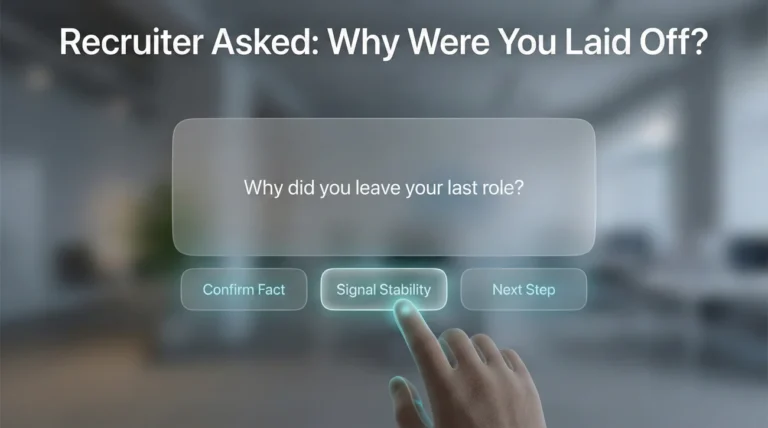
- You can be honest without naming villains. The safest version is: Neutral condition, stability signal, forward pivot.
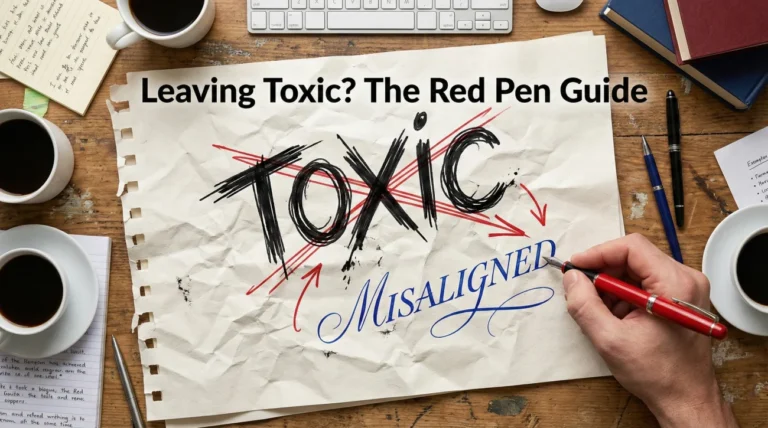
- Do not say “toxic” as your headline. Describe the working conditions, then close the topic.
- Below are 5 short answers, 5 longer answers, and 8 pivots you can practice until they sound boring.
When The Real Reason Was Messy, But The Interview Needs A Clean Story
If you have ever searched why did you leave your job toxic workplace and felt your stomach drop, it is usually because you already know the trap. The trap is not the truth. The trap is the tone.
In HR, I have seen strong candidates lose momentum on this question even when their decision to leave was completely reasonable. Not because they were lying, but because they sounded like they were still inside the conflict.
This article is for the moment you want to be factual and respectful without pretending everything was fine. You will get scripts you can actually say out loud, plus pivots that pull the conversation back to role fit and what you can deliver.
What Interviewers Are Testing With “Why Did You Leave?”
Most interviewers are not asking for the documentary version. They are trying to predict whether you will be stable, coachable, and safe to hire.
| What they ask | What they fear | What you should signal |
|---|---|---|
| “Why did you leave?” | Drama, conflict, performance risk | Neutral reason + calm closure |
| “What happened?” | Blame mindset, low accountability | Boundaries + self awareness |
| “What are you looking for now?” | Running away rather than choosing | Clear criteria + forward focus |
💡 Pro Tip: You do not need them to agree your workplace was bad. You need them to believe you will perform well in the next one. And remember, the strongest answers feel finished. They do not ask the interviewer to pick a side.
A hiring manager I worked with used to describe this as a “temperature check.” If your voice heats up, they assume the situation is still active. If your voice stays level, they move on and ask about your skills.
Short Answer Vs Deep Answer: Choose The Right Depth
One reason people crash on this question is they answer at the wrong depth. They give a deep answer to a small question, then the interviewer assumes the story is bigger than it is.

When A Short Answer Is Better
Use a short answer in early screens, with recruiters, or with interviewers who are moving quickly. Your job is to give a clean reason that does not invite a debate.
Short answers are also safer if you are worried you might overshare, or if you tend to speed up when you are nervous.
When A Deep Answer Is Better
Use a deeper answer when the interviewer is warm, curious, and clearly inviting context. This is common in second rounds, or when the interviewer is the future manager and wants to understand your working style.
The key is still the same. You give context without naming villains, and you end with what you want next.
⚠️ Warning: If you feel the urge to prove the place was “really” bad, you are drifting into a courtroom answer. Interviews are not a courtroom.
Three Rules That Keep You Honest Without Sounding Bitter

Rule 1: Replace The Label With A Neutral Working Condition
The word “toxic” can be true and still be a hiring risk. It is an emotional label, and emotional labels make interviewers wonder what they will hear later.
Instead, describe the category of problem without the heat. Think workload, priorities, communication, fairness, or stability.
Rule 2: Add One Stability Signal
Stability signals tell the interviewer you did not implode, explode, or disappear. They calm the room. Keep it simple.
- I kept my performance consistent through the transition.
- I handled it professionally and left respectfully.
- I am clear on the environment where I do my best work.
Rule 3: End With A Forward Pivot
Your last sentence should be about the role in front of you. Not the place you left. Not the person you disliked. Not the unfair thing that happened.
Forward pivots are how you stop the interviewer from digging for gossip. You give them a better direction to follow.
Key Point: If your last sentence is about the past, you invite follow ups. If it is about fit, you move the interview forward.
Three Real Situations I Keep Seeing In Interviews
Situation A: You Quit Without A New Offer Because It Was Affecting You
A candidate I will call Bri left a role with no offer lined up. Her workload was chaotic, priorities changed daily, and feedback was mostly public criticism. She was right to leave, but her interview answer sounded like she was still in survival mode.
We rebuilt her answer around a neutral condition and a stability signal. The difference was noticeable. Instead of defending the decision, she sounded like someone who made a professional call and moved on.
Situation B: The Manager Was The Problem, But You Cannot Say That
My friend Daniel once told me: “If I tell the truth, I sound like the problem. If I say ‘growth,’ I sound fake.” What worked for him was shifting the story away from personalities and toward working rhythms.
He talked about decision making, feedback loops, and clarity. The interviewer stopped fishing for conflict and started asking about how he runs projects.
Situation C: You Were Pulled Into Conflict And Now You Fear The “Difficult Person” Label
I have also seen candidates get stuck when they say “conflict” and then try to explain it. The more detail they give, the more the interviewer imagines future conflict.
The fix is one mature sentence that shows you tried, you learned, and you chose to move on. Then you pivot to what you want next.
Five Short Answers (10 To 20 Seconds)
Use these early in the process, or when the interviewer’s tone suggests they want the simple version. Each one is designed to sound calm, factual, and finished.

Short Answer 1: The “Role Shift” Version
This is the safest choice when you want to keep the conversation moving. It names change, signals maturity, and returns to the role.
It also works if you worry the interviewer might try to pull you into details.
The role changed over time and the working environment was no longer a fit, so I made a professional move. I am focused on roles where I can do steady, high quality work, which is why this position stood out.
Short Answer 2: The “Structure And Collaboration” Version
Use this when you want to show you are not running from hard work. You are choosing a setup where you can perform consistently.
It lands well with teams that value process and cross functional work.
I realized I do my best work in a more structured, collaborative environment. I handled the transition professionally and I am excited about this team’s way of working.
Short Answer 3: The “Pace And Priorities” Version
This is useful if the environment was grinding you down, but you do not want to make health the headline. You keep it professional and practical.
You name the condition, then you pivot to clarity and delivery.
I was looking for a healthier pace and clearer priorities. I stayed focused on delivery while I wrapped up, and I am now targeting roles where expectations are defined and results matter.
Short Answer 4: The “Sustainability” Version
This works when you quit without a new offer and you want to avoid the “impulsive” assumption. The stability signal is the key.
Say it once, then stop. Your pause is part of the answer.
The environment became difficult to sustain long term, so I chose to move on rather than let it affect performance. I am looking for a team where feedback is direct and goals are stable.
Short Answer 5: The “Culture Fit” Version
Use this when the interviewer talks a lot about values and how the team works. It sounds human without sounding emotional.
It also gives you a clean bridge into why you want this specific role.
I wanted a culture that aligns with how I work best. I am proud of what I delivered there, and I am ready for a role like this where I can build longer term impact.
💡 Pro Tip: Practice one short answer until you can deliver it at the same pace you would describe your day. The calmer it sounds, the less they dig.
Five Longer Answers (30 To 60 Seconds)
These are for interviewers who clearly invite context. You still avoid villain names. You still avoid the play by play. You give a higher level pattern, then you close with what you want next.
Longer Answer 1: The “I Tried First” Version
Use this if you have a short tenure and you want to show you did not panic exit. It signals responsibility without turning into a blame story.
This is also strong when you want to communicate: reason for leaving toxic job, but in language that stays professional.
I left because the working environment shifted into a pattern that was not sustainable for me long term. I tried to address it directly and kept my output consistent, but I realized the fit was not improving. I made a professional transition and I am now looking for a team with clearer priorities and a healthier feedback loop. That is what attracted me to this role.
Longer Answer 2: The “Clarity And Accountability” Version
Use this when you want to sound operational. It frames the issue as working style and structure, not personalities.
If you mention references, keep it casual. You are signaling stability, not defending yourself.
I learned that I do best in environments where expectations are explicit and collaboration is real. In my last role, the pace and communication style changed, and it started to impact how effectively I could do the work. I handled the transition professionally, and I can share references who can speak to my results. I am now targeting roles like this where accountability and clarity are part of the culture.
Longer Answer 3: The “Respectful, High Level” Version
This is for candidates who worry they might overshare. You acknowledge the reality, then you refuse to turn the interview into a story time session.
It works especially well when the interviewer looks curious in a way that feels like gossip fishing.
There were recurring issues around priorities, workload, and how feedback was delivered. I want to keep it respectful, but I did take it seriously and tried to improve the situation. When it became clear the role would not stabilize, I decided it was better to move on. What I want now is a team where the work is challenging, but the environment supports consistent performance.
Longer Answer 4: The “Operating Rhythm” Version
Use this when you want to sound steady and experienced. It signals you can work through complexity, but you need a predictable system to perform.
This is a strong alternative to the phrase why did you leave toxic workplace, because it communicates the same truth without the label.
I value direct communication and predictable decision making. In my last position, the way decisions were made became inconsistent, and it created friction that was distracting from the work. I stayed focused on delivery, completed my responsibilities, and left professionally. I am excited about this role because it sounds like the team has stronger operating rhythms.
Longer Answer 5: The “Lesson Learned” Version
This is best later in the process, when the interviewer is evaluating long term fit. It makes you sound thoughtful, not reactive.
You highlight what you learned and what you want now, without painting yourself as a victim.
I left because I wanted an environment where I could do my best work over time. I am proud of what I accomplished, and I also learned what I need in a manager and team structure. I am looking for a place where goals are clear, feedback is constructive, and performance is measured fairly. That is why I am excited about this opportunity.
Eight Pivots That Pull The Conversation Back To Fit
Pivots are your exit ramps. The pivot is what you say after your reason, when you feel the room start to lean toward “tell me the drama.”
The best pivot lines do two things. They close the past, and they open the future.

Pivot 1: The “Results First” Redirect
Use this when you want to move fast and sound confident. It works well with recruiters and structured interviewers.
It also keeps you from over explaining, which is where many candidates lose control of the story.
What matters to me now is finding a team where I can deliver consistently, and that is why I am interested in this role.
Pivot 2: The “Let’s Talk Work” Redirect
Use this when the interviewer’s curiosity feels personal. You are polite, but you are not feeding the curiosity.
Say it once, then answer the next question like the topic is closed.
I am happy to focus on the work. The reason I left is simple, and I am excited about what I can build here.
Pivot 3: The “Intentional Fit” Redirect
Use this when you want to sound mature and selective. It tells the interviewer you learned something and you are applying it.
This one lands well when the interviewer asks, “What are you looking for now?”
I learned what environment helps me do my best work, and I am being intentional about that fit moving forward.
Pivot 4: The “Professional Close” Redirect
Use this when you want to signal clean boundaries. It works well if your tenure was short and you do not want to invite suspicion.
The phrase “handled it professionally” is a stability signal without sounding defensive.
I handled the transition professionally. The bigger point is I am looking for a long term match.
Pivot 5: The “Respectful High Level” Redirect
Use this when you feel the interviewer pushing for details. It frames your boundary as respect, not refusal.
Then you immediately offer a safer topic: what you want and how you work.
I prefer to keep it respectful, but I can share what I am looking for now and how I work best.
Pivot 6: The “Short Version” Redirect
Use this when you catch yourself starting to explain. It gives you a clean stop line without sounding awkward.
It also helps when you worry your voice is getting tense.
The short version is it was not sustainable. The good news is I am clear on what I need to thrive.
Pivot 7: The “Not Carrying It Forward” Redirect
Use this when you want to reassure the interviewer you are not bringing unresolved conflict into their team.
This is especially useful if you sense they are quietly assessing emotional control.
I am not carrying that situation forward. I am focused on the next role and the results I can deliver.
Pivot 8: The “Confirm Fit” Redirect
Use this when you want to connect your choice to something the interviewer already said. It sounds thoughtful, not rehearsed.
This pivot also sets you up to ask a smart question about team norms.
I am confident this team’s structure is a better match, based on what you shared about priorities and collaboration.
💡 Pro Tip: Pick two pivots that sound like you. Practice them until they feel boring. Boring is the goal.
If They Push For Details: Three Safe “No, But” Answers
Sometimes they will ask, “What do you mean by that?” or “What happened?” You can keep boundaries without sounding defensive.
Your goal is not to refuse. Your goal is to redirect to a topic that helps them evaluate you as a hire.
No, But 1: Boundary Plus Future Focus
Use this when the interviewer is curious and you want to keep it professional. The key is saying it calmly, once.
Do not add a second explanation after the boundary. That is where you lose control.
I would rather not get into personal details, but I can say the working dynamics were not sustainable long term. What I am looking for now is a team with clearer priorities and constructive feedback.
No, But 2: Respectful Close, Then Work Focus
Use this when you want to sound diplomatic. It protects you and signals professionalism at the same time.
It also helps when you are worried the interviewer might misread your exit as “conflict behavior.”
I want to be respectful to everyone involved, so I will keep it high level. I addressed it directly and made a professional decision to move on. I am happy to talk about the work I delivered and what I can do in this role.
No, But 3: Lesson Frame
Use this when you feel the interviewer trying to pull out a story. You shift the conversation from gossip to insight.
This is also a clean option if you left because toxic workplace conditions were building over time and you do not want to list examples.
The details are less important than the lesson. I learned the environment I thrive in, and I am being intentional about fit. Based on what you shared, this role aligns with that.
⚠️ Warning: Boundaries sound confident when you say them once. Repeating the same boundary three times sounds like hiding.
Mistakes That Turn A Real Bad Environment Into A Hiring Risk
Mistake 1: Naming The Villains
Even if one person truly caused the problem, naming them turns your answer into a conflict story. Interviewers do not know the person you are describing, so they fill in the blanks with risk.
Keep it about conditions and fit. That is the lane that stays safe.
Mistake 2: Sounding Like You Are Still Arguing
If your tone becomes sarcastic, tense, or intense, the interviewer assumes the situation is not over. Tone is data in interviews.
Practice your answer until it sounds like a boring status update.
Mistake 3: Over Explaining The Moral Case
You do not need the interviewer to agree you were right. You need them to believe you can do the job and work well with their team.
A short, finished answer is usually stronger than a detailed, emotional one.
Mistake 4: Turning The Answer Into A Values Speech
Values matter, but long speeches can sound like you are building a case. Keep it practical: clarity, feedback, priorities, sustainability.
If you want to mention values, tie them to how you deliver results in a healthy way.
Key Point: The less you sound like you need validation, the safer you feel to hire.
Final: Tell The Truth, Then Close The Topic
A toxic workplace does not need to be proved in an interview. It needs to be translated into language that sounds calm, professional, and finished.
If you are answering why did you leave your job toxic workplace, aim for three beats: neutral condition, stability signal, forward pivot. When you can say your answer without heat, you stop sounding like a risk and start sounding like someone ready to do good work again.
❓ FAQ
🎯 Should I say “toxic workplace” directly in an interview?
Usually no. The label can trigger defensiveness or make the interviewer wonder how you will speak about them later. Describe the working conditions and fit instead, then pivot to what you want now.
🧩 What if they ask, “What exactly happened?”
Keep it high level and respectful. Use one boundary line, then redirect to what you learned and what environment helps you perform. Avoid names, quotes, or a timeline of conflict.
🛡️ Can I mention health or burnout as part of the reason?
You can, but it is rarely the strongest lead. If you mention it, keep it brief and frame it as a professional sustainability choice, then pivot to the kind of pace and clarity that helps you deliver.
📌 What if I quit without another offer?
Do not over justify. Give a calm reason, add a stability signal, and move forward. Interviewers relax when you sound like you made a professional call, not an emotional escape.
🔍 Will recruiters assume I was the problem?
They might if your answer is blame heavy or emotional. Neutral conditions, professional action, and a forward pivot reduce that fear and keep the conversation focused on your fit for the role.
⚠️ Disclaimer: ResumeSolving provides resume, cover letter, job search communication, and career transition guidance for informational purposes only. Hiring practices vary by employer, role, location, industry, and individual circumstances. We do not guarantee interviews, job offers, ATS results, or other outcomes. Verify employer requirements directly and follow applicable laws and workplace policies. For sensitive situations, use only information you are comfortable disclosing and keep all statements accurate.