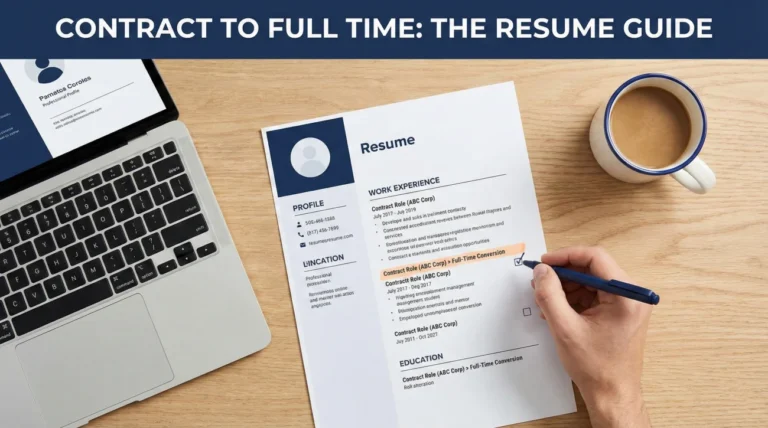
- If you look “overqualified,” it is usually because your resume signals oversized scope, not because your skills are too strong.
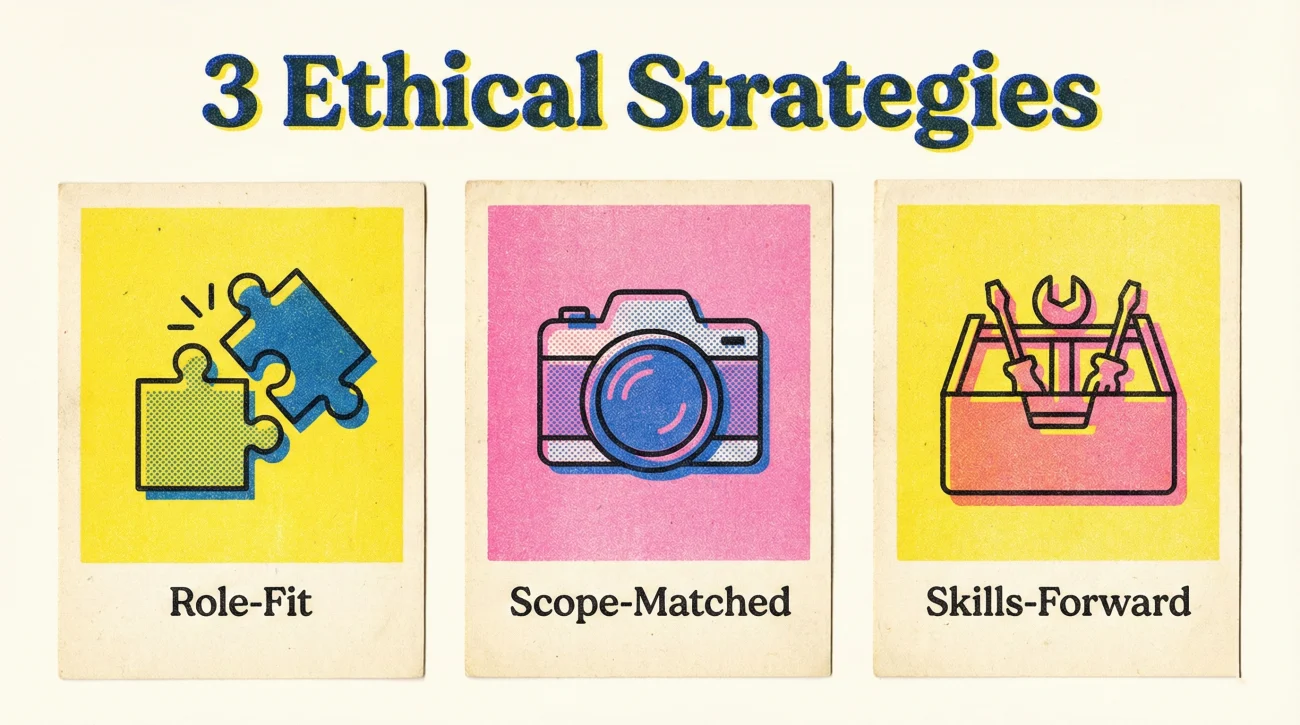
- Pick one of three ethical strategies: Role-Fit Edition, Scope-Matched Edition, or Skills-Forward Edition, then make every section consistent.
- Cut senior-only signals you will not use in the target job, keep proof you can deliver at this level, and emphasize stability and execution.
When “Overqualified” Is Really a Resume Signal Problem
I have watched strong candidates get rejected for roles they could do in their sleep, and the feedback often sounds like a shrug: “You seem overqualified.” That line is rarely about your capability. It is about what your resume implies will happen next.
Most hiring teams are reading for risk. They worry you will leave quickly, be frustrated by the scope, push for a higher title, or price yourself out. The frustrating part is that your resume can accidentally confirm those fears even when you genuinely want the role.
This guide is a practical, ethical overqualified resume playbook. It shows what to cut, what to keep, and what to emphasize so you look like a stable, motivated match for the level you are targeting.
Key Point: You do not need to “hide” your experience. You need to reframe the scope of your experience so it maps cleanly to the job you actually want.
A quick story: Melissa had led a 14-person team and owned a budget bigger than some departments. After a burnout year, she wanted an individual contributor role with cleaner boundaries. Her resume still read like an executive briefing. We did not erase her impact. We rewired the story so it sounded like hands-on delivery at the right level. The interview invites followed because the resume finally matched the role.
What Triggers the Overqualified Filter
Hiring managers rarely say “overqualified” because you have too many skills. They say it because your resume broadcasts a scope that does not fit the job, or a trajectory that looks temporary.
| Resume Signal | What It Implies | Ethical Edit That Reduces Risk |
|---|---|---|
| Senior titles dominate (Director, Head, VP) | You will expect senior scope or senior pay | Use a truthful, scope-aligned title variant when appropriate (for example: “Operations Lead” vs “Head of Operations”) and clarify scope in bullets |
| Leadership-heavy verbs (Led, Drove, Owned) in every bullet | You prefer strategy and delegation over execution | Balance with execution verbs (Built, Implemented, Shipped, Resolved) tied to outcomes |
| Org-wide metrics without context | You operated at enterprise scale and may be bored | Keep one enterprise metric, add one role-level metric that matches the target job’s scope |
| Too much “vision” language in summary | You want a bigger seat, fast | Rewrite summary around the work you want to do weekly, not the ladder you climbed |
| Degrees, awards, and prestige packed up front | You will negotiate hard or get impatient | Move prestige to a calmer placement and highlight role-relevant skills first |
Ross, a colleague of mine, used to joke that his resume “sounds like a press release.” He was not wrong. When he applied to a smaller-scope role for stability after a layoff, his bullets still screamed enterprise transformation. The hiring manager assumed he would leave as soon as the market improved. We did not remove the transformation story. We changed the frame: fewer sweeping claims, more specific deliverables, and a clear signal he enjoyed hands-on problem solving.
Does that mean you should pretend you were less senior than you were?
No. The goal is accuracy with the right emphasis. A resume is not a biography. It is a match document. You decide which parts of your true history are the most relevant proof for this job level.
Three Ethical Strategies for Downleveling Without Looking Desperate
There is no single “correct” overqualified fix. Pick the strategy that best matches your real motivation, then apply it consistently across summary, experience, and skills.
Strategy 1: The Role-Fit Edition
This works when you genuinely like the day-to-day work of the target role and want less management, fewer politics, or a cleaner scope. Your resume should sound like someone who enjoys execution, not someone temporarily settling.
What you cut: High-level positioning statements that imply you are seeking authority. What you keep: Proof you can deliver fast, collaborate well, and operate with low drama. What you emphasize: Reliability, craft, and outcomes that look normal at this level.
resume when overqualified often fails because the summary reads like “I used to be important.” Replace that energy with “I do this work well, and I want to keep doing it.”
Strategy 2: The Scope-Matched Edition
This is for candidates whose past scope was bigger, but still overlaps strongly with the target role. You keep the senior context, but you narrow the spotlight to the slice that matches the job.
Think of it like zooming a camera. The work is still the work. You simply focus the frame so the reader sees direct relevance rather than a mismatch.
A candidate I worked with, Jenna, had “Head of Customer Success” on her resume and was applying for a CSM role. She was not trying to climb down forever. She was relocating and needed a role that traveled. We made her bullets read like a high-performing CSM who had also mentored others, not like a department leader shopping for a temporary gig.
Strategy 3: The Skills-Forward Edition
Use this when your title and seniority are fixed facts that you cannot soften much, but the role cares most about specific skills. You lead with a skills snapshot, then use experience bullets as proof-of-skill, not proof-of-rank.
This strategy is especially useful in technical, analytics, operations, and specialized domains where skill clarity beats hierarchy signaling.
overqualified resume strategy is not about removing your top achievements. It is about reordering and relabeling so your value looks usable at the level you are targeting.
What to Cut, What to Keep, What to Emphasize

Here is the practical checklist I use when someone says, “I keep getting the overqualified rejection.” The trick is to remove signals that create questions and keep signals that close questions.
- Cut: “Executive” phrasing that implies you want authority more than the work (visionary, transformative leader, strategic driver).
- Cut: Bullets that only show scale, not your direct contribution (company-wide, global, enterprise) unless the target job truly needs that scale.
- Cut: Management-heavy bullets that do not exist in the job description (hiring, performance reviews, budget ownership) if you are applying to an IC role.
- Keep: One or two high-signal wins that prove competence quickly, especially if they mirror the target role’s outcomes.
- Keep: Evidence of collaboration, steadiness, and follow-through (cross-functional delivery, handoffs, documentation, stakeholder alignment).
- Emphasize: The work you will do weekly in this job, using the same nouns and verbs from the posting.
⚠️ Warning: If you downlevel the summary but keep “VP” as the loudest element on the page, the reader experiences a contradiction. Contradictions get labeled as risk.
One more real-world moment: I remember reviewing a resume where the candidate removed dates from education to avoid bias. The problem was not the choice itself. The problem was the rest of the document still screamed seniority, and now the missing dates looked like concealment. The safer move is consistency: either you are transparent and scope-aligned, or you invite the reader to fill gaps with suspicion.
Five Examples You Can Copy and Adapt
These examples are designed to sound confident at a lower level without sounding like you are hiding. Use them as patterns, then swap in your own facts.
Example 1: Summary That Signals Commitment
Notice what is missing: No “I used to run everything.” Notice what is present: A stable weekly scope that matches many mid-level roles.
Example 2: Reframing a Senior Role as Role-Relevant Proof
– Built a QA feedback loop that reduced repeat tickets by 18% and improved first-contact resolution across two support channels
– Partnered with Product on triage criteria and release notes workflow, cutting escalations by 22% over two quarters
– Mentored three team leads on metrics hygiene and coaching, improving weekly forecasting accuracy and staffing plans
This keeps the truth (Director) but the bullets read like execution and systems, not ego and hierarchy.
Example 3: Bullet Swaps That Reduce Senior-Scope Signaling
Here are quick swaps that soften “oversized scope” while staying accurate.
| Too Senior-Sounding | Scope-Matched Alternative |
|---|---|
| Owned enterprise-wide strategy for X | Implemented X improvements within the team’s workflow and tracked measurable impact |
| Led cross-company transformation | Delivered a cross-functional rollout with clear milestones, training, and adoption tracking |
| Directed global teams | Coordinated stakeholders across time zones to complete releases on schedule |
Example 4: A “Lower Position” Objective Without Saying “Lower”
Target role: Senior Specialist, Operations Support
Focus: Workflow reliability, stakeholder communication, and hands-on problem solving in a steady scope.
If you choose to include a target line like this, keep it short. The resume should still do most of the talking.
Example 5: A Calm Interview Moment, Shown as Dialogue
This is how an overqualified candidate can sound grounded without overexplaining. It is not a script you memorize, it is a tone you borrow.
“I understand why my background can look bigger than this role. What I am looking for now is a scope where I can stay close to the work, deliver consistently, and build trust over time. I am not using this as a stopgap. I am choosing this level because it fits how I want to work.”
Overqualified resume example content online often skips the tone part. Tone matters because it matches what the resume is implying: stability and fit.
The Consistency Audit That Prevents “Flight Risk” Assumptions
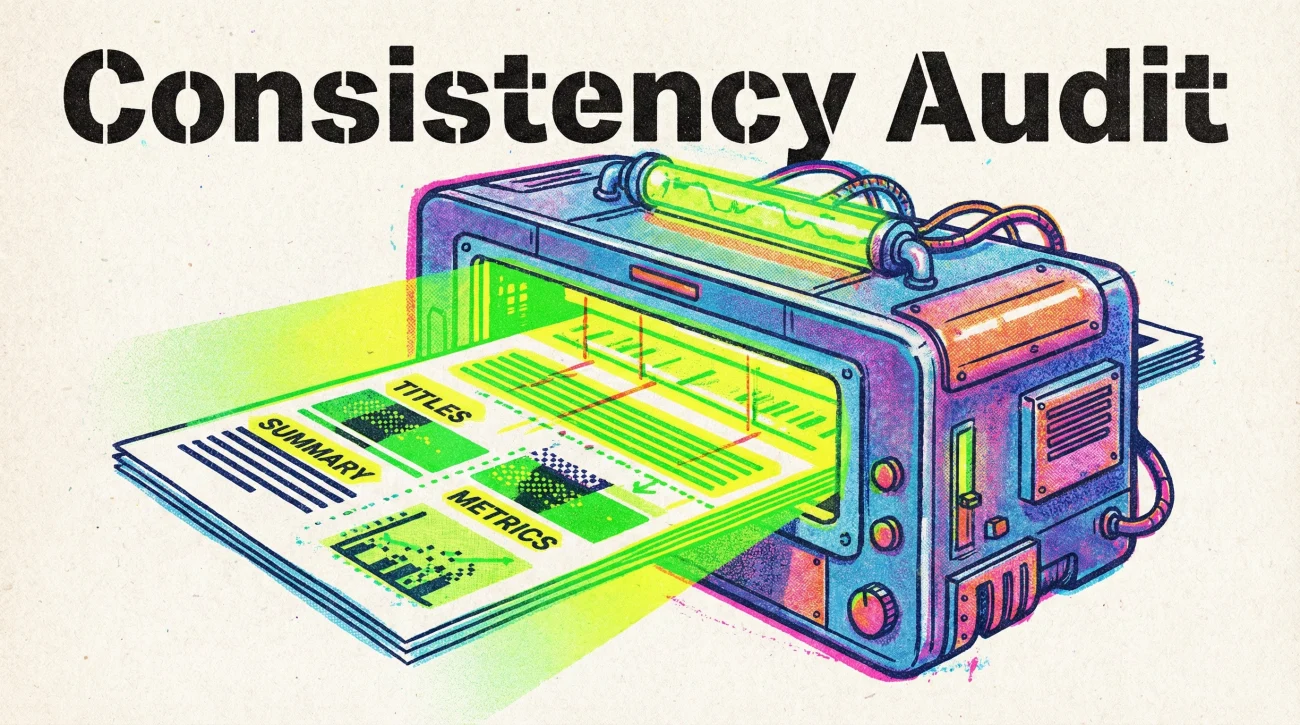
After you pick your strategy, run this audit. It is the difference between “tailored” and “credible.”
- ✅ Summary: Does it describe the work you want weekly, not the rank you had?
- ✅ Titles: Are they truthful and readable for the target role, without creating a mismatch story?
- ✅ Bullets: Do at least half sound like hands-on delivery, not just leadership?
- ✅ Metrics: Do you have role-level metrics, not only org-wide scale?
- ✅ Skills: Do the top skills mirror the posting, or do they advertise senior-only scope?
- ✅ Awards and prestige: Are they supporting relevance, or flexing hierarchy?
💡 Pro Tip: If your resume has one loud senior signal, make sure you have two calm “I will do the work” signals nearby. Readers average signals. They do not isolate them.
I have seen candidates try to “solve” overqualified by deleting half their career. That often backfires because it introduces unexplained gaps or makes the person look unstable. A cleaner approach is selective emphasis: keep the timeline believable, keep the skills relevant, and tune the scope so it matches the job.
Final The Resume Should Make This Role Feel Like a Choice
The best downlevel resumes do not sound smaller. They sound clearer. They make it easy to believe you will enjoy the scope, deliver inside it, and stay long enough to be worth onboarding.
If you want a simple rule: remove signals that create promotion and pay questions, keep proof you execute well at the target level, and make the story consistent from top to bottom. That is what turns “overqualified” into “solid fit.”
When you apply this overqualified resume approach as a full-page strategy instead of a few random edits, your experience stops looking like a risk and starts looking like usable confidence.
❓ FAQ
🎯 Should I remove senior titles if I am applying for a lower role?
If the title is accurate, keep it. Reduce the mismatch by making the bullets read like the target scope and by using a summary that signals the work you want now.
🧩 Is it okay to cut older experience to avoid looking overqualified?
Yes, if the cut is logical and does not create confusing gaps. Keep enough continuity that your story still feels stable and believable.
💬 What should my summary focus on if I look overqualified?
Focus on the work you want to do weekly, the outcomes you deliver, and the role-relevant skills. Avoid prestige and hierarchy language that implies you are seeking a bigger seat.
🛠️ How do I show leadership without triggering the overqualified filter?
Show leadership as mentorship and collaboration, not authority. One or two bullets about coaching or process ownership is usually enough if the target job includes it.
📌 Should I mention I am willing to take a pay cut on my resume?
Usually no. Your resume should focus on fit and delivery. Pay conversations belong later, and the strongest signal is a scope-aligned document that makes your motivation believable.
🔍 What is the fastest way to tell if my resume reads “too senior”?
Scan only the first third of the page. If you see mostly senior titles, org-wide language, and leadership verbs with little hands-on delivery, you are probably signaling a scope mismatch.
⚠️ Disclaimer: ResumeSolving provides resume, cover letter, job search communication, and career transition guidance for informational purposes only. Hiring practices vary by employer, role, location, industry, and individual circumstances. We do not guarantee interviews, job offers, ATS results, or other outcomes. Verify employer requirements directly and follow applicable laws and workplace policies. For sensitive situations, use only information you are comfortable disclosing and keep all statements accurate.