- Most employers ask about a pay cut to test: Motivation, retention risk, and whether you will resent the role.
- Use one of four answer patterns: “Band-first,” “Fit-first,” “Reset-story,” or “Trade-off framing,” then bridge back to the role.
- Never anchor yourself too low early: Confirm range compatibility without negotiating against yourself.
- Prepare follow ups: “Will you be bored?”, “Why now?”, and “What did you make before?” with calm, repeatable lines.
The Pay Cut Question Is Rarely About Money
I have watched this question land like a small trap door in interviews. You can be cruising through a solid conversation, then someone asks: “Are you willing to take a pay cut?” and suddenly it feels like you need to justify your whole timeline.
But most hiring teams are not judging whether you like money. They are trying to predict what happens three months after you start. Will you feel underpaid and resentful? Will you keep interviewing? Will you struggle with a smaller scope because your last title was bigger?
If you are downleveling on purpose, you need a pay cut interview answer that sounds steady, not dramatic. The goal is simple: Confirm you are realistic, protect your leverage, and move the conversation back to fit.
“I’m comfortable with a different compensation level for the right role. What I’m trying to confirm first is whether this work is the right match long term. Can I ask how you’ve structured the range for this position?”
That is the tone you are aiming for: Calm, practical, and not defensive.
What They Are Actually Testing When They Ask About a Pay Cut

Retention risk: “Will you leave as soon as you can?”
Hiring managers have been burned by candidates who accept a lower number, then keep shopping. The team invests time, trains you, and you disappear when something closer to your old pay shows up.
Your answer needs to quietly signal: “I am choosing this lane on purpose, and I am not secretly hoping to sprint back to the old lane next month.”
Resentment risk: “Will you become difficult once reality hits?”
Even good people can get weird when they feel under-leveled or underpaid. The question is their way of sniffing out future conflict: Complaining, pushing boundaries, or undermining the manager because “I used to run bigger things than this.”
This is why you do not want your answer to sound like a sacrifice story. You want it to sound like an informed trade.
Scope alignment: “Do you understand what this role really is?”
Sometimes the pay cut question is code for: “You seem senior, but this is an IC role,” or “This job is narrower than your last one,” or “We do not have a leadership ladder here.”
💡 Pro Tip: If you can name what you are choosing (scope, craft, stability, schedule, domain), you sound intentional instead of desperate.
Four Answer Patterns That Work in Real Interviews
Pick the pattern that matches your real reason. Do not mix all four. A strong answer is boring in the best way: One clear story, one calm bridge, and a question back to them.
| Pattern | Best when | What you say (core idea) | Main risk to avoid |
|---|---|---|---|
| Band-first | You want to confirm range early | “I’m aligned with the band for this role.” | Anchoring too low |
| Fit-first | You want to keep salary discussion light | “Let’s confirm fit, then align on range.” | Sounding evasive |
| Reset-story | You are changing pace or scope intentionally | “I’m optimizing for X, not maximum pay.” | Oversharing emotion |
| Trade-off framing | You can name a concrete trade | “I’m trading Y for Z, and I’m good with it.” | Sounding like you “settled” |
Pattern 1: Band-first (Range alignment without negotiating against yourself)
This is the cleanest pattern when you already know the role is down-leveled and you do not want salary to become a foggy debate. It works because you confirm you are realistic, but you do not volunteer a low number.
“Yes, I’m comfortable with a different compensation level for this scope. If you can share the budgeted range, I can confirm we’re aligned. My priority is making sure the role and expectations are the right fit.”
⚠️ Warning: Do not say: “I’ll take whatever.” It reads like desperation and invites lowballing.
Pattern 2: Fit-first (Keep it calm, then bridge back to the work)
Use this when the question shows up very early and you do not have enough context yet. The mistake people make here is sounding like they are dodging. The fix is to be direct about timing and immediately ask a role-specific question.
“I’m open to the compensation level that matches this role. Before we lock numbers, I’d like to confirm scope. What does success look like in the first 90 days, and how is the role measured?”
If you want a shorter version for a recruiter screen, keep the same logic and trim the wording.
“I’m aligned with the range for this level, and I’d like to confirm scope before we go deeper on numbers.”
Pattern 3: Reset-story (When you are downshifting on purpose)
This is for the person who genuinely wants a different rhythm: Less management, fewer fires, a tighter craft lane, or a more stable environment.
Most advice online gets sloppy here. People either overconfess (“I burned out”) or fake a story (“I’ve always wanted to work here”). A reset story can be honest without being heavy: Name the choice, name the reason in neutral language, then prove commitment with a concrete behavior.
“I’m intentionally moving into a role with a narrower scope so I can stay hands-on in the work. I’m comfortable with the compensation that comes with this level. I’ve been targeting roles like this for a few months, and I’m confident this is the direction I want.”
Pattern 4: Trade-off framing (When you can name the exchange clearly)
This pattern is powerful because it sounds adult. You are not “accepting less,” you are “buying something.” Common trades interviewers understand: Predictable schedule, location, stability, learning a new domain, or shifting from leadership to individual contribution.
“Yes, I’m comfortable with a lower base if the overall package and scope match this role. I’m trading a broader leadership scope for a position where I can focus on execution and be in one lane.”
💡 Pro Tip: If you want a reusable formula, keep it short and consistent.
[Alignment] + [Intentional Trade] + [Stability Signal] + [Bridge Question]
Example built from the formula:
“I’m aligned with the range for this level. I’m intentionally trading broader scope for deeper hands-on work, and I’m looking for a long-term fit. Can you share how the role is leveled and what growth looks like within this track?”
Bridges That Pull the Conversation Back to Fit
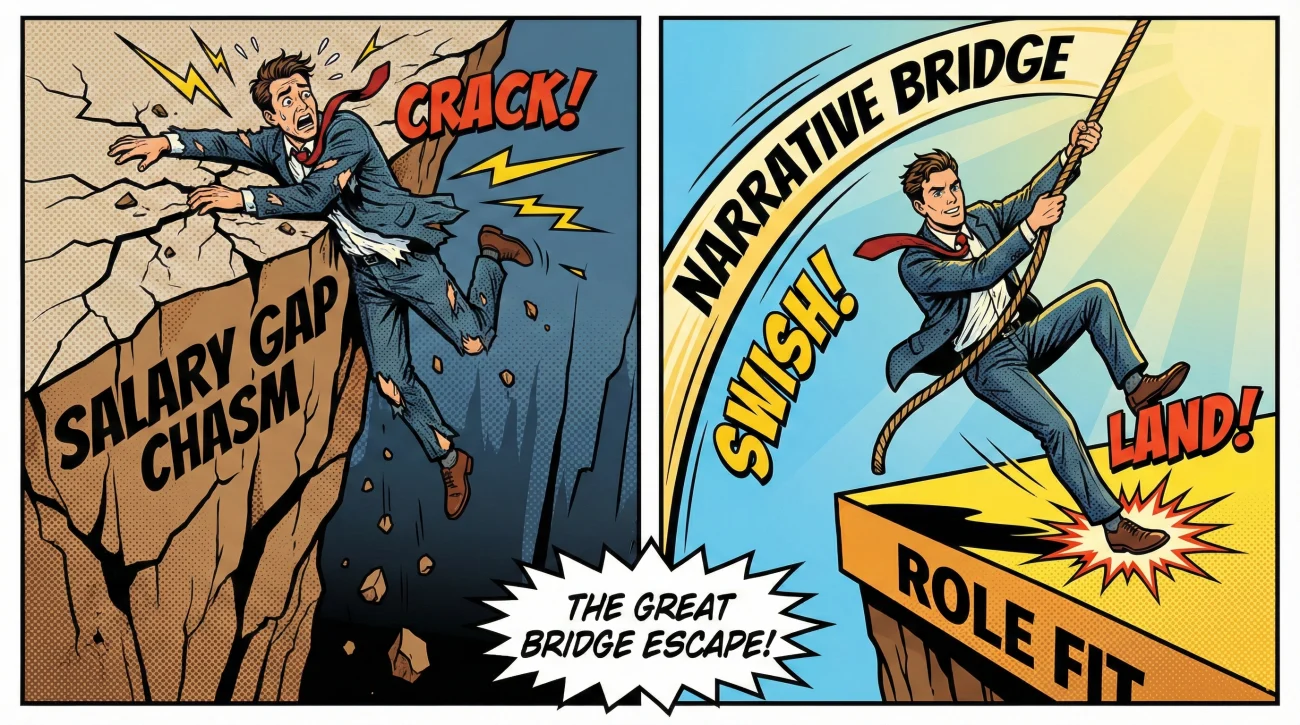
A good answer does not end with your sentence. It ends with a bridge. A bridge is how you stop salary from becoming the whole interview.
Bridge when they want a number immediately
If you give a number too early in a downlevel scenario, you can anchor yourself below the band and spend the rest of the process climbing back. The safest move is to request the range and confirm alignment instead of guessing.
“I’d like to base numbers on the level and the total package. If you can share the range you’ve budgeted, I can tell you right away if we’re in the same zone.”
Bridge when they press: “So you are OK with less?”
This is where you reinforce intention and retention. You are not “giving in,” you are choosing a scope. Keep the sentence plain and leave no room for drama.
“Yes. This is a deliberate move for me, not a temporary stop. I’m focused on the work and the scope at this level, and I’m comfortable with the compensation that comes with it.”
Bridge when they ask: “What did you make before?”
In many places, compensation history questions are sensitive or regulated. Even when they ask casually, you can keep it professional and forward-looking by anchoring to this role’s band.
“I’d rather keep the conversation centered on this role’s range and expectations. If you share the band, I can confirm alignment quickly.”
⚠️ Warning: If you do choose to share a past number, do not let it become your identity. Past pay is not the same as the value of this role.
Bridge when they worry you will get bored
This is the sibling question to the pay cut question. It is the overqualified fear in plain language. Your best move is to normalize the scope and signal you are not chasing a fast promotion loop.
“I understand the concern. I’m choosing this scope because it matches what I want to be doing day to day. I’m not looking for a fast promotion cycle. I’m looking for consistent, high-quality execution work.”
Three Real-Life Scenarios and How I’d Coach the Answer
Scenario 1: The burned-out manager who wants to be an IC again
A candidate I worked with, Sumico, had been managing a team of ten. She was good at it, but her calendar was a wall of meetings and escalations. She wanted back into hands-on work, and she was willing to take a lower level to do it.
Her first draft answer sounded like apology. It made the interviewer nervous because it felt emotional and temporary. We rewrote it into a reset story that sounded stable.
“I’m intentionally moving back into an individual contributor role because that’s where I do my best work. I’m comfortable with the compensation range that comes with this level. I’ve been targeting roles like this specifically, and I’m excited about the day-to-day work here.”
Scenario 2: The career switcher who knows the first step is lower pay
James was switching from a specialized niche into a more common function. He understood he was restarting in a new lane, but he kept explaining it like a personal sacrifice. That tone accidentally signals: “I will resent you later.”
Trade-off framing landed better because it sounded intentional and forward-looking.
“Yes, I expect compensation to align with the level in this function. I’m trading a specialized niche for broader long-term growth in this track. My focus is on the scope, learning curve, and what success looks like in the first 90 days.”
Scenario 3: The “overqualified” candidate who just wants stability
Natalia had a strong brand name on her resume and kept getting blocked with: “You are overqualified.” The moment salary came up, she tried to reassure them by saying she would take anything. That backfired because it made her sound like she was hiding a bigger problem.
We moved her to the band-first pattern with a calm bridge that protected her leverage.
“I’m comfortable with the compensation level that matches this role’s scope. If you share the range, I can confirm alignment. My priority is making sure the responsibilities and expectations are the right match so it’s a long-term fit.”
💡 Pro Tip: A steady tone is part of the signal. If your voice speeds up, the room assumes you are nervous about the truth.
The Do-Not-Say List (Because It Triggers the Exact Fear They Have)

Do not sound desperate
🚫 “I’ll take anything. I just need a job.”
Even if you feel urgency, this line invites low offers and makes them wonder what you are not telling them.
Do not insult your past pay or your past employer
🚫 “Honestly, my last job overpaid me.”
It sounds naive and it creates a new concern: “Will you undervalue yourself here and then blow up later?”
Do not promise forever
🚫 “I’ll never ask for more.”
No one believes it, and it signals you think the company is trying to trap you.
Do not make it an emotional confessional
Some candidates overshare stress, family pressure, or personal crisis. That can be real, but interviews are not therapy. If you want to reference life constraints, keep it clean and present-tense.
“I’m prioritizing stability and a sustainable pace, and this role matches that. I’m comfortable with the compensation level at this scope.”
A Simple Practice Drill So You Do Not Spiral in the Interview
This question triggers fast talking because it feels like a judgment. The fix is to rehearse a structure you can deliver slowly, then stop. Think of it as a two-step response that always ends with a question.
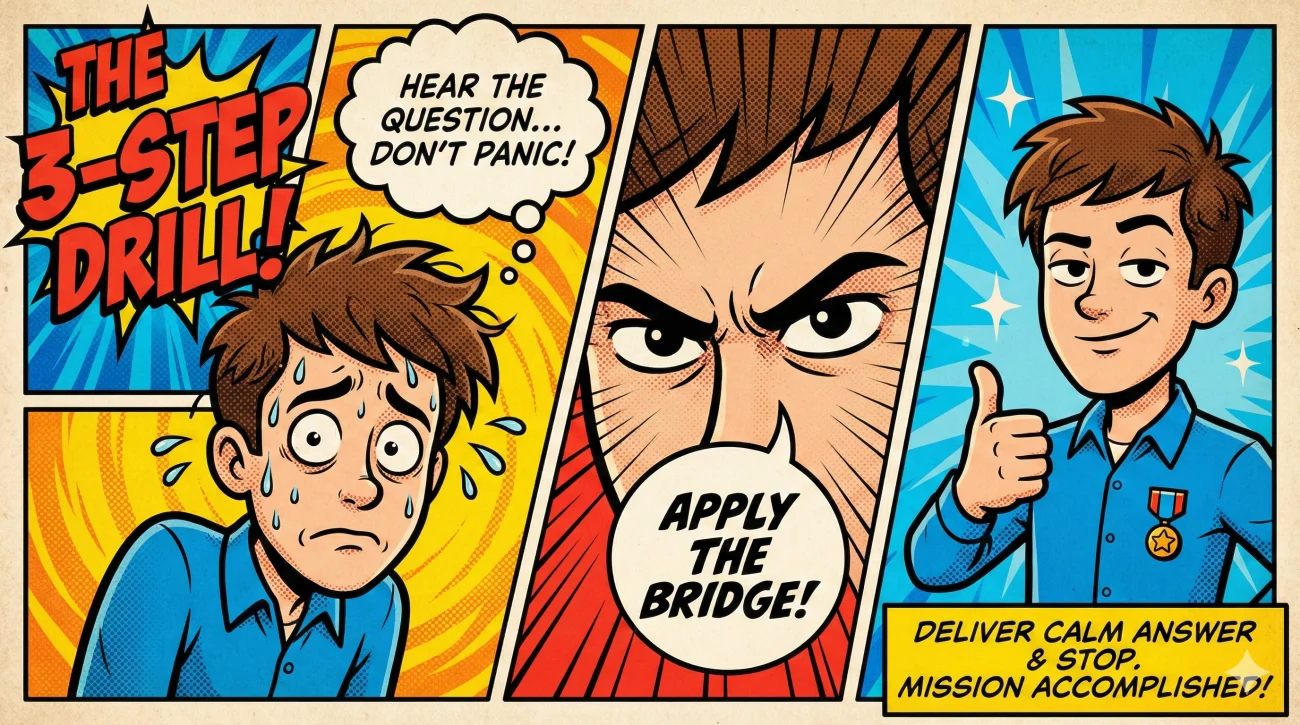
Step 1: Confirm alignment in one calm sentence
Your first line should signal that you understand level and scope. Keep it neutral. Do not pitch yourself. Do not apologize. Just confirm that a different compensation level makes sense for the role you are discussing.
💡 Pro Tip: If you hear yourself adding extra explanations, pause and shorten the sentence. Shorter reads as more confident.
Step 2: Bridge to fit with a practical question
Your second line should move the conversation away from “prove you are okay with less” and back to “can you do the job.” Ask about success metrics, leveling, or expectations in the first 90 days. That is where you look like a serious hire.
Here is a complete script you can memorize and customize with one phrase only.
“I’m comfortable with the compensation level that matches this role’s scope. If you share the range for the position, I can confirm alignment. Can you also tell me how the role is leveled and what success looks like in the first 90 days?”
That single answer works as a lower salary interview answer because it sounds cooperative while still protecting your leverage.
Final The Best Answer Sounds Like a Choice, Not a Sacrifice
The strongest responses do three things: They acknowledge the level, they explain the decision in one neutral sentence, and they redirect to the work. No speeches. No overpromising. No bargain-basement energy.
When you refine your pay cut interview answer, aim for a tone that says: “I know what I’m doing. I’m here for the scope. I’m realistic about compensation bands.”
If you keep that posture, salary expectations for lower role conversations stay straightforward, even when the numbers are not the same as your last title.
❓ FAQ
🎯 Should I admit I am taking a pay cut on purpose?
Yes, but keep it to one clean sentence, then pivot back to scope. Say you’re aligned with the range for the level, then ask a practical question about expectations or success metrics so it stays professional.
🧩 What if they ask for my current salary?
Anchor to this role’s range instead of your history. Ask for the band and confirm alignment. If they press, repeat a calm boundary that keeps the conversation forward-looking.
🛡️ How do I avoid sounding desperate when I really need the job?
Do not say you will take anything. Name one intentional reason that matches the role (scope, stability, craft focus, schedule), then bridge to fit with a question about responsibilities or leveling.
🔍 What if the pay cut is huge?
Confirm range compatibility without agreeing early. You can say you’re open to the level, but you need clarity on total package and expectations. If the band is far outside what you can accept, it’s better to learn that upfront.
🚀 What if they worry I will get bored?
Reinforce intention and stability. Explain you chose this scope on purpose, you’re not chasing a fast promotion cycle, and you’re motivated by consistent, high-quality execution in a clear lane.
⚠️ Disclaimer: ResumeSolving provides resume, cover letter, job search communication, and career transition guidance for informational purposes only. Hiring practices vary by employer, role, location, industry, and individual circumstances. We do not guarantee interviews, job offers, ATS results, or other outcomes. Verify employer requirements directly and follow applicable laws and workplace policies. For sensitive situations, use only information you are comfortable disclosing and keep all statements accurate.