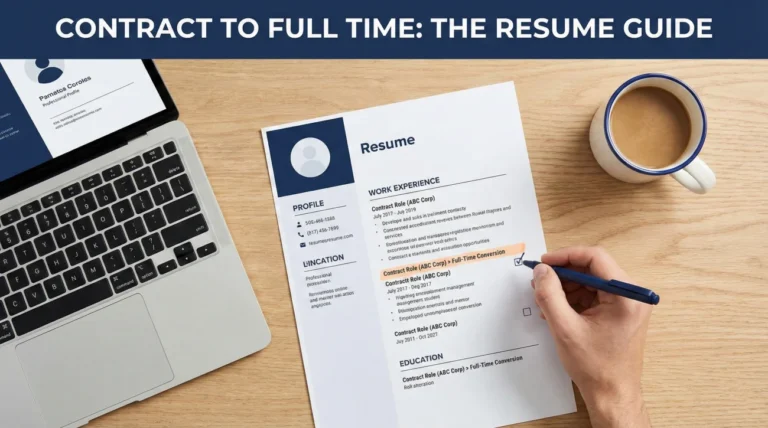
- If you have short stints, your resume line has one job: Close the question fast, not invite a follow up.
- Use a one sentence structure: Time box + neutral category + closure signal.
- Add one pattern shift line so the reader stops guessing you will leave again.
Why Short Stints Feel Loud on a Resume
Most hiring teams do not have time to investigate context. They scan for patterns, and short tenures get interpreted as either instability or poor fit. That is not always fair, but it is predictable.
Here is the good news: You do not need a long story to make this readable. When you handle short stints on resume with clean labels and a clear closure signal, the timeline stops feeling like an open problem and starts feeling like a closed chapter.
Remember:A short stint becomes a red flag when the reader cannot tell whether the same reason will repeat.
I have screened candidates who were excellent on paper but kept losing the room because their timeline felt like a series of unresolved exits. I have also seen the opposite: Candidates with three short roles in two years who got interviews because their wording made the pattern feel contained.
What Recruiters Are Actually Trying to Rule Out
When a resume shows multiple short roles, the reader is usually running a fast mental filter. They are not judging your character. They are trying to avoid a time consuming hire that repeats a problem.
| What they see | What they worry it means | What your wording must prove |
|---|---|---|
| Several roles under 12 months | You leave when it gets hard | You can commit and you know what you are selecting for |
| Short role plus vague reason | You might be hiding a performance issue | The exit was structured, not chaotic |
| Pattern continues into the most recent job | This is still happening | The pattern is over and you are now choosing stability |
| Different industries with short tenures | No clear direction | A consistent through line, even if titles changed |
A colleague of mine, Dana, once described it this way: “I do not need a perfect timeline. I need a timeline that does not create new questions.” That sentence is basically the whole strategy for short stints.
The One Sentence Structure That Keeps It Calm
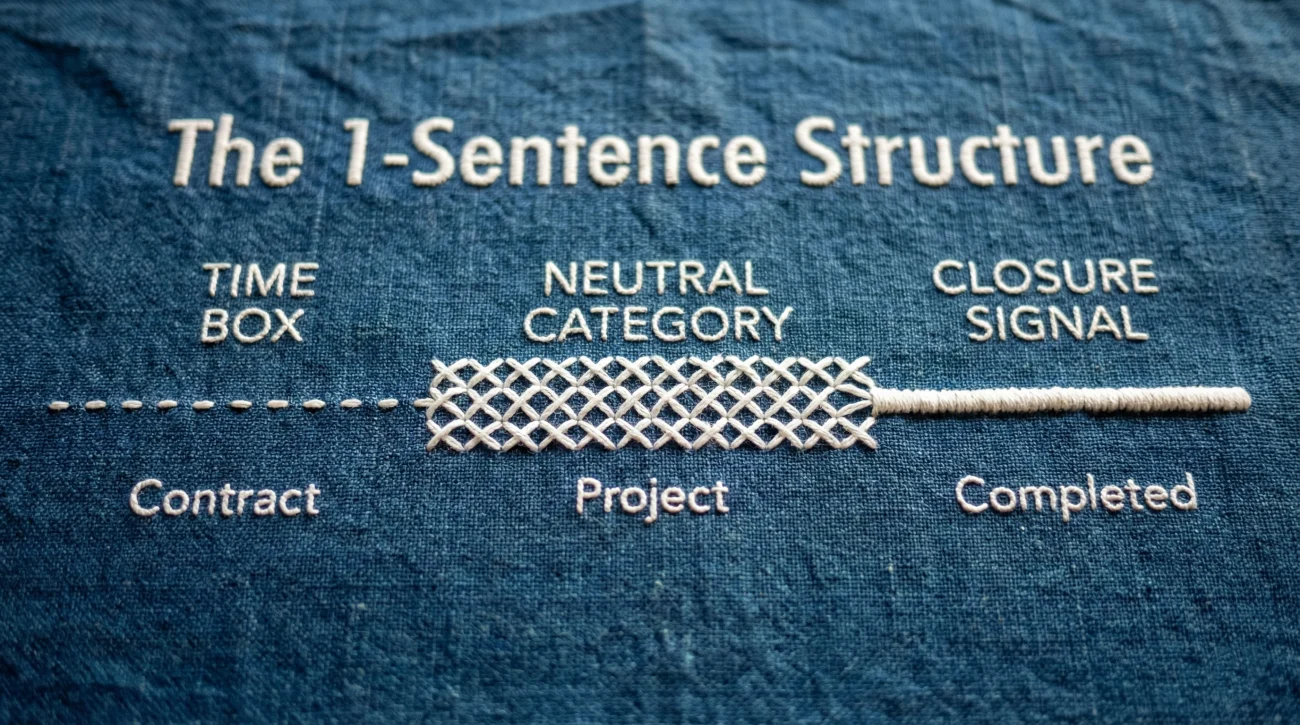
Most online advice says to be honest and brief. That is fine, but it does not tell you what to type. The cleanest approach is to write one sentence that does three things and then stops.
[Time Box] + [Neutral Category] + [Closure Signal]
What Each Part Is Doing
Time box: You anchor the short tenure so it feels bounded. The reader can relax because the line signals a contained period, not an ongoing situation.
Neutral category: You choose a label that explains the shape of the exit without creating drama. Think “contract”, “restructuring”, “role scope mismatch”, “relocation”, “project based engagement”.
Closure signal: You show the reason will not repeat, or that you are now selecting roles differently. This is where stability is communicated.
Three Real Cases and the Line That Fixed the Read

Case 1: The Startup That Changed Shape Every Month
Julia joined a seed stage startup as a generalist marketer. Six months later, the company pivoted twice, the priorities changed weekly, and her role became mostly customer support and sales enablement. She was not “job hopping”. She was stuck in an unstable definition of success.
Her old resume line tried to explain everything. It sounded defensive, and it made the reader wonder whether she would quit again when pressure showed up.
Case 2: The Contract That Looked Like a Quit
Lucas worked two contracts back to back. On paper, it looked like he bounced every eight months. The problem was not his work. The problem was that the resume did not label the roles as time bound engagements.
Once he marked them correctly, the timeline stopped looking like instability and started looking like planned work.
Case 3: A Legit Bad Fit That Could Have Sounded Messy
Jess took a role that was sold as strategy and turned out to be mostly reporting. She left at month five. She did not want to trash the employer, and she did not want to sound like she quits when bored.
We wrote a line that framed it as a role scope mismatch and then closed the loop by stating what she is selecting for now.
Eight Short Stint Lines You Can Copy Without Sounding Defensive
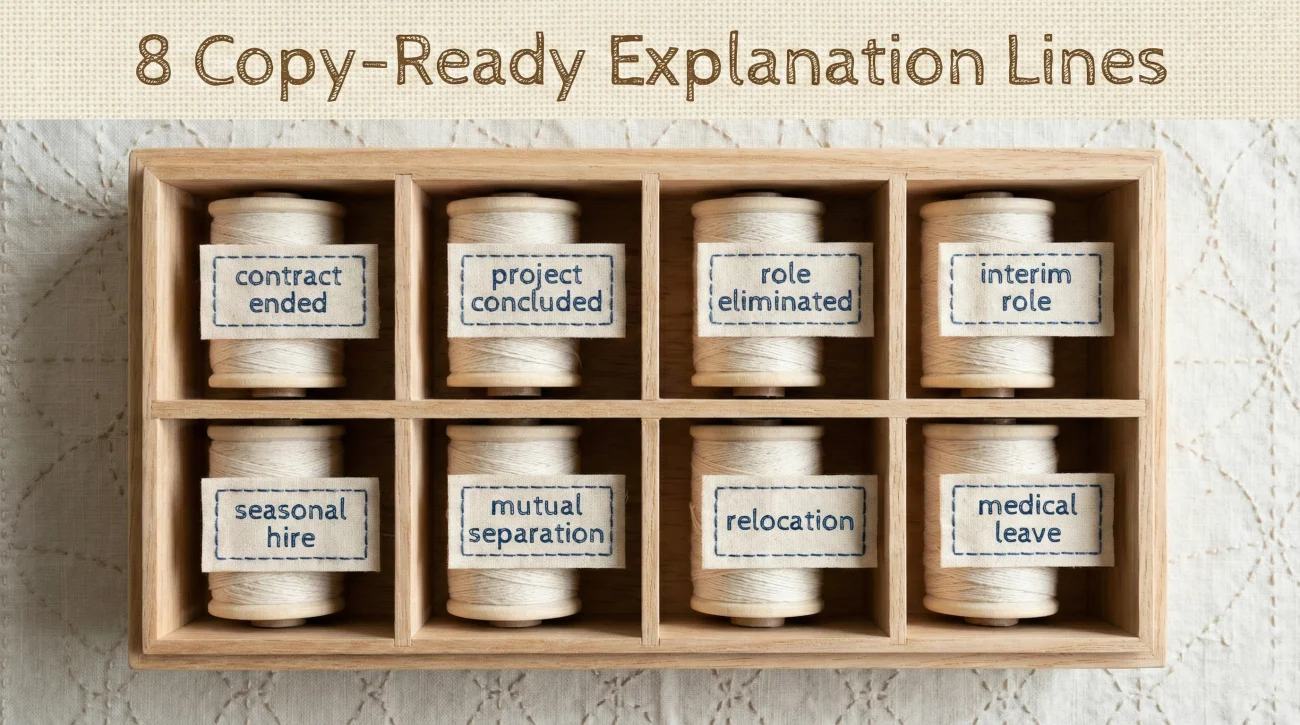
These are designed to work as small additions inside a resume, not as a cover letter paragraph. Adjust the bracketed parts, keep the tone neutral, and stop after one sentence.
- 🧩 Contract: “Fixed term contract role (8 months) supporting [project]; engagement completed and I moved into a permanent role in [function].”
- 🏢 Restructuring: “Role ended after team restructure (7 months); transitioned to a stable role with ongoing ownership in [area].”
- 🚚 Relocation: “Short tenure due to relocation (6 months); now based in [city] and seeking a long term role in [field].”
- 🧠 Role scope mismatch: “Position did not match advertised scope (5 months); refocused on roles centered on [core work].”
- 🧯 Project based: “Project based engagement (9 months) delivering [result]; project closed and I moved to a role with continuous roadmap.”
- 🧪 Trial period: “Mutual decision during early tenure (4 months) due to fit; now targeting roles with [specific environment] where I have repeatedly performed.”
- 🧾 Acquisition change: “Role changed after acquisition (6 months); shifted to a position aligned with original scope in [function].”
- 🧱 Health or family stability restored: “Short tenure during a temporary personal stability issue (5 months); situation resolved and I am fully available for a long term role.”
One line should be enough. If you feel tempted to add more, it usually means you have not chosen a neutral category yet. Keep it boring on purpose.
Six Pivot Lines That Stop the Reader From Predicting Another Exit
This is the missing piece most templates ignore. A recruiter can accept one short stint. What makes them nervous is a repeat pattern with no evidence you will choose differently next time.
You do not need to defend every move. You need one sentence that makes your next move feel intentional, so the reader stops predicting another exit.
Pick the situation that matches your story. These headings are for you, not for the resume.
1) Quick pivots recently, but you want to signal stable direction now
If your most recent period looks like a string of short transitions, the reader often assumes the pattern will continue. They may not say it out loud, but they quietly wonder whether onboarding you will pay off.
The fix is not a long explanation. The fix is one calm line that shows a stable target and a stable reason. Keep it specific enough to feel real, but not so specific it sounds like you are trying too hard.
This works best in your summary when your recent titles do not obviously connect. It tells the reader you are done “trying things” and you are choosing a lane.
2) End dates and internal moves, not restlessness
Contracts, temporary coverage, planned rotations, and internal moves can create a job-hopping look even when your choices were normal for the environment. The reader does not automatically know the context.
Give them the context in one sentence, then shift the focus to what you want next: Ongoing ownership. Ownership is the word that stops the “flight risk” story.
If you include this under your most recent role, it can reduce follow-up questions without making your resume feel like an explanation document.
3) Two time-bound engagements, and you want permanence to be obvious
Two short roles back-to-back can trigger a simple prediction: “This person does short cycles.” Even if those cycles were planned, your resume might not show that clearly.
Make the next preference explicit without sounding needy. The goal is to sound like you are choosing the right long-term seat, not begging for stability.
This line is especially useful when the reader cannot tell whether the work was contract-based just by scanning the company names.
4) You narrowed your scope fast, and you want a clear skill center now
Some job changes happen because you were narrowing your direction. That is normal. The problem is that “normal” can still look risky if the resume does not show what you learned from it.
So your line needs two parts: The shift and the center. The center is the skill you want to be known for now. Make it the anchor the reader can remember.
Use this when your titles changed quickly but the underlying work had a consistent thread. It helps the reader see the thread.
5) Market volatility created short stints, and you want to show you are optimizing for depth
Layoffs, restructures, pivots, and sudden budget freezes can compress tenures. The reader may accept that, but only if your tone is calm and the story feels closed.
Do not turn it into a complaint. Keep it structural, then end with what you are selecting for now: Depth.
This works well when the companies on your resume are known for churn or when your timeline overlaps with obvious market disruptions.
6) You learned to screen fit better, and you want to signal a deliberate long-term next move
Sometimes the real reason for quick exits is simple: You were not screening well enough early on. Most candidates learn this the hard way, and recruiters respect it when it is stated professionally.
The key is to frame it as improved decision criteria, not as regret. You are not apologizing. You are showing maturity and a better filter.
When you use this, you can also support it in interviews by naming one or two “fit checks” you now do before accepting a role, without turning your resume into a process doc.
If you are writing this and it feels too bold, that is normal. The line is not a promise. It is a signal that you understand what the reader fears, and you are not pretending the pattern does not exist.
Mistakes That Make Short Stints Look Worse Than They Are

In reviews, I see the same wording mistakes over and over. They are not “wrong”, but they add anxiety for the reader.
- 🚫 Writing a reason that sounds ongoing: “Still exploring options” or “Looking for the right fit.”
- 🚫 Over sharing emotions: “Toxic environment ruined my mental health.”
- 🚫 Using vague blame: “Management issues” without a neutral label.
- 🚫 Making the short stint the headline: Putting it in your summary as the first thing you say.
- 🚫 Hiding the pattern in a way that breaks consistency with LinkedIn or application forms.
⚠️ Warning: If you choose to omit a short role, make sure your story stays consistent across resume, LinkedIn, and any required application history. The risk is not the omission itself. The risk is contradiction.
People often search for short stints resume advice and get told to “just explain it in the interview.” In practice, you only get the interview if the resume stops raising new questions first.
Where to Put the Line So It Does Not Hijack Your Resume
You have three common placement options. Choose the one that keeps attention on your value, not on the timeline.
Option 1: A small parenthetical in the job header
This works best for contracts and project based roles. It is fast, it is clean, and it reads like normal resume metadata.
Option 2: One line under the bullets
This works best when the short stint needs one clarifying sentence, like a relocation or acquisition change.
Option 3: One pivot line in the summary
This is your pattern control lever. Use it when the timeline includes multiple short roles and you want to stop the “this will happen again” prediction.
When candidates ask me about short employment history resume optics, this is usually the fastest fix that changes the read without adding clutter.
Whichever option you choose, keep the tone professional and time boxed. The reader does not need the full story. They need the story to feel closed.
Final: Make the Timeline Feel Closed, Not Complicated
Short tenure does not automatically mean you are risky. It becomes risky when the resume makes the exits feel unresolved, emotional, or likely to repeat. If you label the stint neutrally, time box it, and add one closure signal, the reader can move on to your skills.
If you are dealing with several moves, do not try to win the argument in one paragraph. Use a calm structure, add a single pivot line, and let your outcomes carry the weight. That is how short stints on resume can read like a contained chapter instead of a warning sign.
And if you are worried the pattern is already “too obvious”, remember this: Clarity is not an apology. It is a stability signal.
❓ FAQ
🎯 Should I remove very short jobs from my resume?
Sometimes, yes, but only if you can keep your story consistent across platforms and forms. If you leave a role out, make sure the remaining timeline still makes sense and does not create a new gap that looks worse than the short stint.
🧩 Is labeling a role as “Contract” enough?
For many roles, it is. If the role truly had a fixed end date, that label often solves most of the concern. If you have several short roles, add one pivot line so the reader knows you are now selecting for long term ownership.
🧠 How do I explain a short stint that was a bad fit without sounding negative?
Use “role scope mismatch” or “mutual fit decision” language, then close it with what you are selecting for now. Avoid blaming people or describing dysfunction in detail.
📌 Where is the best place to put the explanation line?
If it is a contract, a small parenthetical in the header is clean. If it needs one clarifying sentence, place it as a short note under the bullets. If the pattern is the real issue, put one pivot line in the summary.
🔍 Will recruiters assume I was fired if I do not explain a short stint?
They may not assume the worst, but they will notice the pattern. A neutral one sentence line prevents speculation and keeps the focus on your impact.
⚠️ Disclaimer: ResumeSolving provides resume, cover letter, job search communication, and career transition guidance for informational purposes only. Hiring practices vary by employer, role, location, industry, and individual circumstances. We do not guarantee interviews, job offers, ATS results, or other outcomes. Verify employer requirements directly and follow applicable laws and workplace policies. For sensitive situations, use only information you are comfortable disclosing and keep all statements accurate.