- You are not defending your past. You are labeling the pattern, showing the thread, and closing the risk.
- A strong answer is about control: One reason category, one learning loop, one role-specific “why now”.
- Short tenure is only scary when it looks repeatable. Your job is to make it look explainable and finished.
Why This Question Feels Personal (Even When It Is Not)
When an interviewer asks, “Why have you had so many jobs?”, it can feel like they are questioning your character. Most of the time, they are not. They are doing basic risk math. A short-tenure pattern is one of the fastest proxies for “Will this person stay long enough to be worth onboarding?”
If you go into explanation mode, you accidentally confirm the fear: That you are reactive, that something keeps going wrong, or that you will re-enter the market the moment this role gets hard.
The goal of this guide is simple: Give you a why so many jobs interview answer you can deliver in about 45 seconds without oversharing, without blaming, and without sounding like you are trying to sell them a fairy tale.
💡 Pro Tip: Your best answer is not the most detailed answer. Your best answer is the one that makes the pattern feel predictable, explainable, and unlikely to repeat.
What They Are Actually Testing When They Ask “So Many Jobs?”
In HR screening, this question is rarely curiosity. It is a pressure test. They want to see if you can talk about your own history without becoming defensive, chaotic, or negative. They also want to see whether you can identify a pattern and show you have control over it.
| What They Might Fear | What Your Answer Must Show | What Not To Do |
|---|---|---|
| Flight risk: You leave when bored | A clear reason category and a “why this role is different” signal | “I get restless fast” or “I hate routine” |
| Conflict pattern: You clash with people | Neutral language and a learning loop, not a villain story | Long explanations about managers or politics |
| Performance issues: You get pushed out | Evidence of impact and stability signals (scope, outcomes, references) | Overpromising or blaming “unfair expectations” |
| Indecision: You do not know what you want | A consistent thread across roles, even if titles changed | A timeline that sounds like random wandering |
| Market churn: You were hit by instability | A structural explanation with calm closure | Sounding like “bad luck follows me” |
Key Point: The interviewer does not need every reason. They need one pattern that makes sense and one reason to believe it will not repeat here.
I have watched candidates lose control right here. Not because their history was terrible, but because they tried to explain every job change. The longer the explanation, the more the interviewer assumes there is something you are hiding.
The 45 Second Structure That Works in Most Industries

This structure is short enough for a live interview and strong enough for a skeptical interviewer. It is designed to answer the question and then move forward. Not sideways.
[Pattern Label] + [Learning Thread] + [Why This Role Is Different Now]
Part 1: Pattern Label (One Sentence, No Drama)
Pick one reason category that covers the majority of your moves. Not every move. The majority. The more categories you include, the more you sound like the common denominator in a long list of problems.
Good pattern labels are boring: Contract cycles, early-career exploration, relocation, restructure and layoffs, scope mismatch, industry volatility. Boring is safe.
Part 2: Learning Thread (What You Took, Not What They Did)
When people job hop, interviewers worry there is no growth or no accountability. Your learning thread is the part that shows maturity. Keep it concrete. Skills, scope, and decision criteria. Not feelings.
If you can name a rule you use now, you sound stable. For example: “I only move when the role is expanding scope, not just changing titles.”
Part 3: Why This Role Is Different Now (Closure Signal)
You are not promising forever. You are giving them a reason this move ends the pattern. That reason has to be job-specific. Talk about scope, manager style, team stage, product maturity, or learning curve. Something real.
⚠️ Warning: Do not say “I am looking for a company I can stay with long term” unless you can explain what makes this one different. Otherwise it sounds like a line you reuse everywhere.
Six Real Scenarios, With Copy You Can Say Out Loud
The best way to avoid rambling is to prepare a version that matches your story. Below are six common situations. Pick the closest one, then adjust the nouns, not the structure.

Scenario 1: Contract and Project Work That Looks Like Job Hopping
This is common in tech, operations, creative, healthcare staffing, and interim management. The resume looks jumpy even when the work was normal for the market.
Your job is to make the pattern sound intentional and standard, not like you could not keep a job.
“Most of my recent roles were contract and project-based, so the timeline looks more active than a traditional full-time path. The thread across them is that I was brought in to stabilize delivery and ship specific outcomes. I learned I do my best work when I own a defined scope with clear metrics. That’s why I’m excited about this role, because it is a long-term seat with the same kind of ownership, not a short assignment.”
💡 Pro Tip: A tiny clarity line often helps: job hopping interview question energy drops fast when you say “contract cycle” once and then move on.
Scenario 2: Startup Volatility, Restructures, and Layoffs
Short tenure inside high-churn companies is different from personal instability. But you have to say it calmly. If you sound angry, the interviewer hears “future conflict.”
Keep the explanation structural: funding, restructure, role consolidation, product pivot. Then close it with what you chose to do differently next.
“A couple of my moves were driven by company changes. One team was reorganized after a funding shift, and another role was consolidated during a restructure. What I learned is that I want to be in a more stable stage where priorities are clearer. That’s what I’m looking for now, and it’s what this role signals to me based on your team structure and roadmap.”
Notice what is missing: No blame. No long story. Just a category and a forward-looking fit.
Scenario 3: Early-Career Exploration That Became a Clear Track
Early career can be messy. Interviewers can accept that, but only if your story shows you have moved from exploration to decision.
Focus on what you discovered and what you now filter for. This turns “random moves” into “data gathering.”
“Early on, I moved a bit because I was narrowing my direction. Each role taught me something specific, and the pattern that emerged is that I’m strongest in roles that combine stakeholder management with operational follow-through. For the past two moves, I’ve been consistent in that lane. I’m applying here because this position is a direct continuation of that track, not another experiment.”
💡 Pro Tip: If you say “I was figuring things out,” follow it with a rule you now use. That is your stability signal.
Scenario 4: Role Mismatch and Scope Confusion (Without Throwing Anyone Under the Bus)
Sometimes the job you accepted was not the job you got. It happens. The danger is how you describe it. If you sound like a victim, the interviewer worries you will do the same to them.
Use neutral language. Talk about scope, expectations, and alignment. Then explain what you now screen for before you accept a role.
“In two of my earlier moves, the role scope ended up different from what we aligned on during hiring. I take responsibility for that because I could have validated expectations earlier. Since then, I’ve become more deliberate about clarifying success metrics and decision rights upfront. That’s one reason I’m interested in this position, because the scope and measures you described are very clear.”
⚠️ Warning: Avoid naming a bad manager or calling a workplace “toxic.” Even if it is true, it creates uncertainty about how you handle friction.
Scenario 5: Relocation, Family Logistics, or a Two-Body Problem
When life drives the move, interviewers usually understand. The mistake is oversharing. You do not need a personal essay. You need closure: It is solved and not ongoing.
If you are settled now, say so in one calm sentence. That is the risk reducer.
“A couple of transitions were driven by relocation. That period is behind me now, and I’m fully settled in this location. The common thread in my work is still consistent: I’ve been building repeatable processes and improving team execution. I’m looking for the next role where I can do that for the long term with a stable base.”
This is also a good fit if your resume shows several moves in a short geographic window. The closure line matters.
Scenario 6: You Left Fast Because the Role Was Not Sustainable (But You Must Keep It Professional)
This is the hardest version. If you complain, you lose. If you lie, you risk references. The safest approach is to label it as a mismatch in expectations and show what you learned about your decision criteria.
Keep it short. Then pivot to why this role matches your criteria better.
“One role was a mismatch in expectations and pace, and it became clear quickly it was not sustainable for either side. I learned from that. I now screen for clarity in priorities, realistic resourcing, and decision-making structure before committing. From what I’ve learned about this team, it aligns much better with those criteria.”
❌ Note: Do not say “I burned out” as your main explanation in this specific question unless you can frame it as a closed chapter and keep it work-focused. Otherwise the interviewer hears “still risky.”
How To Add One “Proof Marker” So Short Tenure Feels Less Risky

If your timeline is busy, you need at least one signal that you can land, deliver, and be a steady teammate. The easiest proof marker is fast impact language: measurable outcomes and repeatable contributions.
When I coach candidates with short stints, I look for one missing piece: They describe the reason they left, but they do not prove they did anything while they were there. If all you give is context, the interviewer assumes weak performance.
– Cut weekly reporting time by 35% by rebuilding the dashboard workflow and clarifying ownership
– Standardized store-level exception handling, reducing escalations by 18% within eight weeks
– Built a handoff checklist that kept the process stable through leadership changes
Those bullets do something powerful: They make the tenure feel purposeful. If you can speak to similar outcomes in the interview, your answer stops being about “why you left” and becomes “what you delivered.”
💡 Pro Tip: A short tenure with clear outcomes often reads better than a long tenure with vague descriptions.
Common Mistakes That Make the Pattern Sound Worse
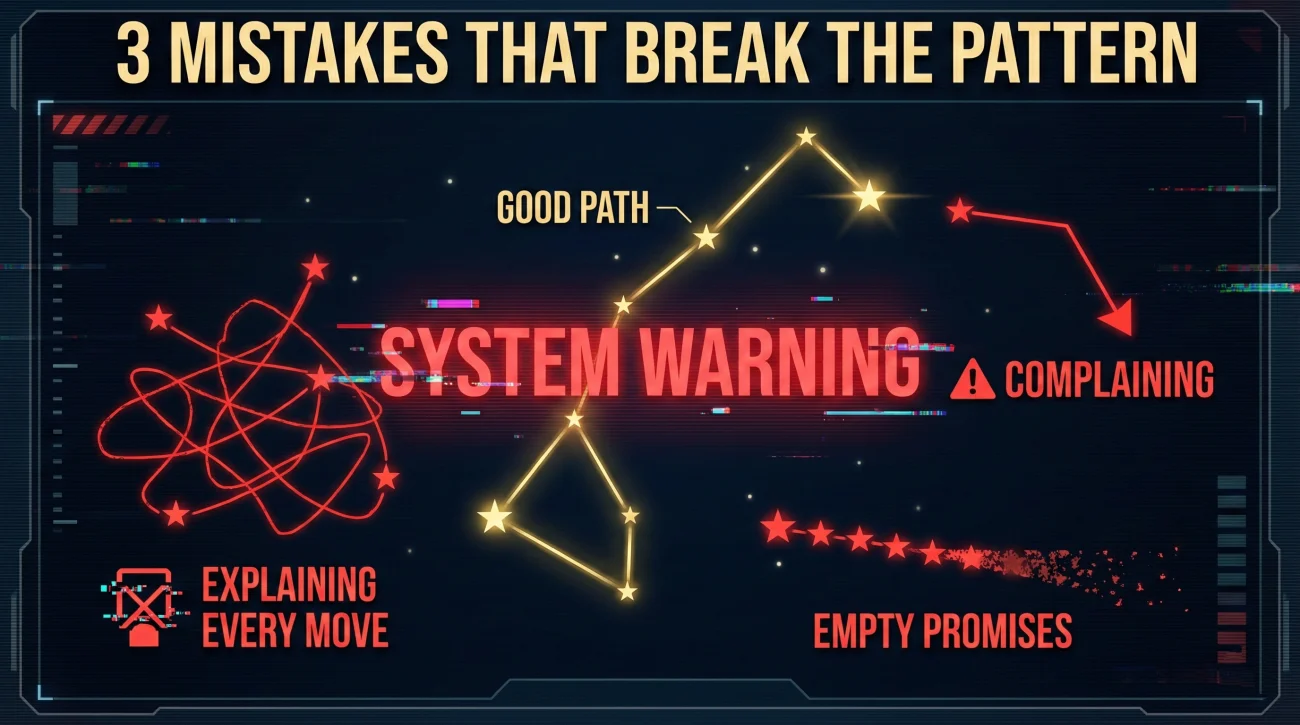
Mistake 1: Explaining Every Single Move
It feels honest, but it lands as unstable. The interviewer hears six reasons and concludes you will always have a reason. Pick the category that covers most transitions and keep it there.
Mistake 2: Turning the Answer Into a Complaint
Even when the company truly did something unfair, complaints create a new question: “Will this person complain about us next?” You can be truthful without being emotional.
Mistake 3: Making Promises You Cannot Control
“I will definitely stay five years” sounds good, but it is not believable. Replace it with a stability signal: what you are looking for and why this role fits it.
Mistake 4: Using Therapy Words Instead of Work Words
Words like “toxic,” “triggered,” or “unsafe” might be accurate in your life, but they are risky in this specific question. Translate your story into work language: scope, expectations, clarity, resourcing, and decision-making.
⚠️ Warning: If you feel your past roles involved sensitive issues, you can keep it vague and still honest. Vague is not lying when the details are not job-relevant.
A Simple Practice Method So You Do Not Ramble Under Pressure
Most people fail this question because they talk too long. The fix is not more confidence. The fix is constraint.
Step 1: Record a 45 Second Version
Say your answer once, record it, and listen for three things: multiple categories, emotional language, and missing closure. If you hear more than one “because,” your answer is too wide.
Step 2: Add One Reassurance Line and Stop
Pick one reassurance line that fits the job and then end. For example: “That’s why I’m being selective now and focusing on roles with clear scope and stable priorities.”
Interviewer: “Why have you had so many jobs?”
You: “A lot of that timeline is contract and project-based work, so it looks more active than a traditional path. The thread is that I was brought in to deliver defined outcomes quickly, and I learned I do best with clear ownership and measurable goals. That’s why this role stands out: It’s long-term ownership with the same kind of outcome focus.”
That is enough. If they want details, they will ask follow-ups. Your job is to stay calm and consistent.
💡 Pro Tip: If you can deliver your answer with the same tone you would use to explain a project timeline, you will sound stable.
Final: Make Your Moves Look Explainable, Not Repeatable
The strongest version of this question is not a story about your past. It is a short explanation that labels the pattern, shows what you learned, and closes the risk in a job-specific way. When you do that, the interviewer stops thinking “Why so many?” and starts thinking “What did this person actually deliver?”
If you want one line to anchor your preparation, treat it like a crisis screening moment: A clean, calm why so many jobs interview answer should reduce uncertainty, not invite a debate.
❓FAQ
🎯 Should I explain every short job on my resume?
No. Most interviews do not need a job-by-job defense. Use one pattern label that covers the majority of moves. If they ask about a specific job, answer that one directly and briefly.
🧭 What if I left multiple jobs in under six months?
Keep the answer tight and focus on your decision rule, not on the drama. Say what you learned about fit and how you screen roles now. Then anchor the conversation on what makes this role different.
🧩 Can I say the job was a bad culture fit?
You can, but translate it into work terms. “The role scope and decision-making structure were not aligned” lands better than “toxic culture.” The goal is to sound professional, not wounded.
📌 What if I was laid off several times and it looks like job hopping?
Use structural language and calm closure. Restructures and funding shifts happen. Pair that explanation with proof markers: outcomes, projects shipped, and stability signals you can control.
✅ How do I prove I will stay without promising a number of years?
Give a stability signal instead of a promise. Explain what you are selecting for now, and name one or two concrete reasons this role matches those criteria.
⚠️ Disclaimer: ResumeSolving provides resume, cover letter, job search communication, and career transition guidance for informational purposes only. Hiring practices vary by employer, role, location, industry, and individual circumstances. We do not guarantee interviews, job offers, ATS results, or other outcomes. Verify employer requirements directly and follow applicable laws and workplace policies. For sensitive situations, use only information you are comfortable disclosing and keep all statements accurate.